
Home Blog Page 21

Hungarian Gov’t Aims to Create Baby Boom with Generous Financial Help

The Fidesz government has always been generous with families, but its current policies will raise the world’s highest GDP-ratio dedicated to family support even higher. Unconfirmed until now, Fidesz will soon begin instituting progressive solutions.

The Hungarian population has been continuously decreasing for three decades. The demographic decline has been of utmost importance to Hungarians since the Harderian prophecy proclaimed they would disappear and melt into surrounding nations.

Previous Hungarian systems suffered famous demographical issues. During the Austro-Hungarian times and the Horthy-era, public discourse focused on the only child model of middle-sized Hungarian farm families. The public considered the issue the main cause of “national death.” Later, the Socialist regime introduced a draconian policy aimed at increasing fertility rates. In the ’50s, Hungary banned abortion and taxed individuals without children. Referred to as the Ratkó-era, these years led to a baby boom in the country.

The Prime Minister wants to see more children

The new measures were announced by Viktor Orbán, who himself has five children. The announcement came as no surprise as the government has been spending a lot on families. It considers itself a Christian-conservative political power and identifies traditional families as its voting base. After the election, Orbán announced one of the main goals of the new parliamentary cycle: increased fertility rates.

The Fidesz-government declared war on low fertility rates nine years ago. Meanwhile, the government has continuously increased funds devoted to family benefits. The 2019 budget allocates 2000 billion forints (1 billion HUF is 3.2 million euros) to family policy goals—twice as much as in 2010.

It is rare to find a government that takes its family policy as seriously as the Hungarian state: five percent of the GDP is dedicated to it, the OECD average is around 2,5 percent.

According to the new family protection plan:

  • Every woman under 40 years of age will be eligible for a preferential loan when they first get married.
  • The preferential loan of the family home purchase scheme (CSOK) will be extended; families raising two or more children will now also be able to use it to purchase resale homes. The earlier regulation only covered newly built houses.
  • The government will repay 1 million forints of the mortgage loans of families with two or more children. This measure was first announced in August 2017 for families with three or more children, with the government paying off 1 million forints of the families’ mortgages for every third and subsequent child from January 2018. The measures have now been extended to include families raising two children.
  • Women who have had and raised at least four children will be exempt from personal income tax payment for the rest of their lives.
  • The government will launch a car purchase subsidy programmed for large families. Families raising at least three children will be eligible for a grant of 2.5 million forints to buy a new car seating at least seven people.
  • The government will create 21,000 creche places over three years.
  • Grandparents will also be eligible for a child-care fee if they look after young children.

As a result of these new policies, some families can expect their income to increase exponentially. According to some estimates, a family could purchase a car and a home in the country-side if they receive all the government subsidies offered for having three children.

According to Index.hu, a woman in Hungary with four children will now be able to receive almost 55 million HUF in state support under the new measures. (This scenario is only possible if all requirements are met and every opportunity is taken; therefore, it is highly unlikely to occur.)

The government estimates the total cost of the new measures to be 150 billion forints a year. Meanwhile, economists and analysts expect the total cost to be closer to 300 billion forints a year.

What have the last eight years of policies achieved?

Last year’s final data showed that 91,577 children were born in Hungary. Between the beginning of the century and 2009, the number of newborn babies ranged from 95 to 100 thousand each year. But, between 2010 and 2013, this figure dropped below 90,000 and has been stagnating since 2014.

In post-socialist countries, fertility rates have decreased significantly since the transition; the average fertility rates were below 1.3 at the turn of the millennium. However, the numbers have begun to improve in the region—Hungary being the exception.

Although the willingness to have children has increased, the fertility rate has remained at 1.5 percent. Some experts believe the slight improvement is merely a natural result of playing catch up and is unrelated to the government’s policies. According to a study called Demográfiai Portré(Demographical Portrait), those having more children are not the group the government intended to target with its policies. The measures were meant to support middle-class families that already have enough capital to build a home. Families must receive a regular income to qualify for the subsidies and family-based tax refunds.

It will have some negative effects on the economy

Hungary’s real estate prices are already skyrocketing, and with the new announcement come even higher rental prices. According to Ingatlan.com, middle-sized flats in Budapest and larger towns in the countryside are likely to become more expensive.

Featured Image: officina.hu

Source: hungarytoday.hu

Reklám
Tas J Nadas, Esq

Nigel Farage: Orbán Represents the Future of Europe

Nigel Farage, one of the loudest Euro-skeptics in the EP and the main orchestrator of Brexit, has given an interview to Válaszonline.hu. Nigel Farage became widely known in Hungary for defending Viktor Orbán during the EP debates on the state of rule of law in Hungary. Herepeatedly compares Brussels and the Soviet Union, and his visions of the European Union fit comfortably with Fidesz’s “freedom fighter” rhetoric.

He thinks Hungarians are still as oppressed as they were 30 years ago:

I can assure you when you go into Article 7 procedures, you effectively are not free people.”

Farage often set democratic values against the centralized bureaucratic European Union. He has built his political movement on claims that the top institutions of the EU are not elected by the people and, therefore, don’t have the authority to act on the citizens’ behalf.

This is why Farage praises politicians like Viktor Orbán and Greece’s Yanis Varoufakis. He said

Orbán actually believes in things. He does not sheepishly, slavishly go along with the European project as he firmly believes in the concept of the nation-state. He clearly is a strong defender of, as he sees, the Hungarian culture and is not afraid to say and do these things despite huge criticism from the European Union.”

Farage also doesn’t see a threat in the transformation of the juridical system or the often cited erosion of the free press. As he put it:

I just do not see [distortion of democracy] as being true, as far as the judiciary is concerned. There is a lot of Communism alive in Hungary and all over the former Soviet bloc.”

Farage also agrees with Viktor Orbán and Fidesz accusing George Soros of interfering in European Politics: “I agree completely of course; his influence is all across the Western democracies.”

He believes that “Europe is going to become much less focused on the EU and Brussels and more focused on the nation states and national interest. This is the whole drift and change of politics in Europe. God knows why [Orbán] comes here so often. It makes him more popular at home I think. He comes, gets abused by everybody, then goes back and it helps his rating.”

In response to being asked if he sees Orbán as a “little authoritarian monster”, Farage replied that he doesn’t: “He represents the future of Europe.”

featured photo by europarl.europa.eu

Source: hungarytoday.hu

Reklám
Tas J Nadas, Esq

Pope Francis to Canonize Blessed John Henry Newman, Declares Cardinal Mindszenty Venerable

The Vatican announces major advances in the causes of the famous 19th century English theologian and convert from Anglicanism, and the 20th century heroic Hungarian cardinal who stood up to fascism and communism.


Blessed Cardinal John Henry Newman is to be canonized following a Vatican announcementon Wednesday that the Pope had formally approved a miracle attributed to his intercession.

Oratorian Father Ignatius Harrison, postulator for Blessed John Henry’s cause, told the Register Feb. 13 that he heard the news with “enormous elation.”

Everyone at the Birmingham Oratory, which Cardinal Newman founded, is “absolutely delighted that the heroic sanctity has been recognized,” Father Harrison said, “and we look forward to many more graces with his help.”

The papal decree comes after the Vatican last year judged the healing of a woman to be miraculous.

The case relates to a law graduate in the archdiocese of Chicago who had been inexplicably healed in 2013 after praying for Blessed John Henry’s intercession while suffering from a “life-threatening pregnancy.”

The woman, whose name has yet to be made public, was inspired to pray for the intercession of the cardinal after reportedly watching a film about him on EWTN.

The mother had “unstoppable internal bleeding which threatened the life of her child in the womb,” said Father Harrison. “She had long been a devotee of Blessed John Henry, and in prayer she directly and explicitly invoked Newman’s intercession to stop the bleeding.”

“The miraculous healing was immediate, complete and permanent,” Father Harrison said, adding that the “child was born normally.”

The date of the canonization of Blessed John Henry has not yet been announced, but is expected to take place later this year. “We are now hoping that it will be sooner rather than later,” Father Harrison said.

The founder of the Oratory of St. Philip Neri in England, Cardinal Newman was one of the most prominent converts to the Catholic Church from Anglicanism in the 19th century and was a renowned preacher and theologian.

The author of 40 books and 21,000 letters, his most famous are his book-length Essay on the Development of Christian DoctrineOn Consulting the Faithful in Matters of DoctrineApologia Pro Vita Sua — his spiritual autobiography up to 1864 — and Essay on the Grammar of Assent.

Born in London in 1801, Newman was named a cardinal in 1879 and took as his motto Cor ad cor loquitur — “Heart speaks to heart.” He died in Edgbaston, England, in 1890.

Benedict XVI beatified Newman in England on Sept. 19, 2010, after the Vatican approved the miraculous healing of Deacon Jack Sullivan, a native of Braintree, Massachusetts, who recovered from a crippling spinal condition after praying to Newman for his intercession — and was also inspired to pray to him after watching an EWTN program.

Father Harrison told the Register that this second miracle attributed to Blessed John Henry’s intercession had “dominated my mind and heart since it happened in 2013, and since then we’ve been working hard and praying hard that it would come to fulfillment.”

It was therefore “wonderful news” that the Holy Father had now approved the decree.

In a Feb. 13 statement, the postulator for the cause said today’s news “will be welcomed by Catholics and Anglicans alike, and many others.”

“Newman was a central figure within the Oxford Movement in the Church of England, and this helped him to make his unique theological and spiritual contribution to Catholicism after his conversion in 1845,” Father Harrison said.

“Newman’s long spiritual pilgrimage ‘out of shadows and images into the truth’ encourages all Christians to persevere in their quest for God above all else. His conversion to Catholicism is a clear example of how God uses all the circumstances of our lives to draw us to himself, in his own good time, and in so many different ways.”


Venerable Cardinal József Mindszenty

The Congregation for the Causes of Saints also announced today that Pope Francis had authorized the promulgation of a decree declaring that Hungarian Cardinal József Mindszenty possessed heroic virtue.

This means the he will now be known as “Venerable,” the first major step towards beatification.

In a Feb. 13 statement, Cardinal Péter Erdő, archbishop of Esztergom-Budapest and primate of Hungary, said the Hungarian Church has “learned with immense joy” the news of today’s papal decree, adding that it is an “important step towards beatification.”

Cardinal Erdő pointed out that it is now possible to “study the graces received and the miracles” obtained through the cardinal’s intercession, and that the “positive result” of this is that it will show Cardinal Mindszenty to be not only an example of Christian heroism, but “someone who can support us with his effective intercession.”

He added that that being able to declare the cardinal “venerable” is a “special grace” after decades of “prayer and commitment,” and he expressed his gratitude to the Pope.

“There is great, great joy at this news,” said Hungary’s ambassador to the Holy See, Eduard Habsburg.

For five decades and with great faith and courage, Cardinal Mindszenty fought at considerable personal cost for religious freedom in Hungary and was implacably opposed to both fascism and communism in the country.

During the Second World War, the Church of Hungary’s “Prince-Primate” was imprisoned by the Nazis and then tortured by the country’s Communist regime. In 1949, he received a life sentence for his opposition to Marxist rule and persecution.

Freed in 1956 following the Hungarian Revolution, he was granted political asylum in the United States embassy in Budapest, where he would spend the next 15 years confined to the embassy compound.

He regained freedom in 1971, lived in exile in Vienna, and died in 1975 at the age of 83.

Documentation pertaining to his cause for beatification was sent to Rome in 1996.

During those years in which Cardinal Mindszenty was holed up in the embassy, an arrangement which was opposed by some in diplomatic circles, he never let up campaigning for freedom and human rights.

In his “semi-captivity,” he wrote a large number of letters and messages, sent through diplomatic channels, to four US presidents and their secretaries of state.

The missives, documented in a recent book called Do Not Forget This Small Honest Nation (see here my 2013 interview with Tibor Zinner, one of the book’s authors), contained political advice on how to defend Hungary and Eastern Europe from Soviet Bolshevism.

In particular, he consistently advocated for human rights and expressed his concern for the fate of thousands being persecuted by the Kadar regime that ruled Hungary after 1956.

As well as the causes of Blessed Newman and Cardinal Mindszenty, the Vatican also announced today papal decrees advancing six other causes.

This article has been updated to include Cardinal Erdo’s statement and more information about the miracle attributed to Blessed John Henry’s intercession.

Source: ncregister.com

Reklám
Tas J Nadas, Esq

Hungary’s FM Disses Pompeo, Goes on Tucker Carlson Who Cheers His Pro-Family Policies

On Wednesday we published an article about large and important pro-family conference taking place in Italy which Salvini is headlining, to which the Hungarian government is sending their key ministers involved with the family policy. The same conference occurred two years ago in Budapest, where Viktor Orban was the star speaker.  Join 100s of Americans in Italy – World’s #1 Anti-Globalist, Pro-Family Conference – Salvini to Speak – March 29-31, Verona  The conference is a big deal, and we encourage people to go.


Peter Szijjarto makes a surprise visit on Tucker’s show to explain Hungary’s new program two days after humiliating Mike Pompeo (see video below)

The program gives mothers who have four or more children exemption from income tax for life, along with other proposals.

Hungary has a birth rate around 1.5 children per women, and is working to get back to sustainable fertility rates.

ucker suggests that American policy follow the Hungarian example. Many people are unaware of this but even including minorities in America the birth rate is unsustainably low:

For a stable population, one that’s neither increasing nor decreasing, you need a birth rate tad higher than two per woman, to allow for people who don’t reproduce.

Last year the overall rate for the U.S.A. was 1.76. That’s down from 1.82 the year before, a three percent drop in just one year.

It’s interesting Tucker reached out to Hungary given the current political conflict between America, Hungary, and Russia, considering that this same foreign minister just publicly humiliated Mike Pompeo for his aggressive Russia-bashing.  RT has a very good write up of it.

YouTube player

Transcript below:

Secretary of State Mike Pompeo has failed to convince the Hungarian Foreign Ministry that they need to stop their cooperation with Moscow. At a joint press conference, Hungarian Foreign Minister Péter Szijjártó criticized Washington’s position on the relations with Moscow. It should be noted that Pompeo arrived in Budapest as part of his Europe tour.

Péter Szijjártó, Hungarian Foreign Minister:

“When it comes to Russia, and I’ve already said it to Mike Pompeo, the West has a very hypocritical attitude towards Russia in the political arena. Look at the dialogue of the top participants of the Western Europe energy market with Moscow. Then you will understand that Hungary is on the right track in its relations with Russia.”

After Hungary, Pompeo is leaving for Slovakia, Poland, Belgium, and Iceland. In addition, before the tour, the State Department repeatedly stated that it was necessary to strengthen the American presence in Europe in order to oppose Russian and Chinese influence.

Hungary is one of the few European countries which is doing things right – it accepts zero immigrants, it promotes Christianity, it has very strong family policies, and it rejects the hostility with Russia, which is a hoax largely kept alive by American Jewish elites who strongly influence the media and the US government.

Consider this poll on Russophobic sentiment:

The government is actually working in the interests of the Hungarian people and not against them, as is the case in most of Western Europe and the US.

On Wednesday we published an article about large and important pro-family conference taking place in Italy which Salvini is headlining, to which the Hungarian government is sending their key ministers involved with the family policy. The same conference occurred two years ago in Budapest, where Viktor Orban was the star speaker.  Join 100s of Americans in Italy – World’s #1 Anti-Globalist, Pro-Family Conference – Salvini to Speak – March 29-31, Verona  The conference is a big deal, and we encourage people to go.

This post first appeared on Russia Insider

Reklám
Tas J Nadas, Esq

Budapest Wins Best European Destination 2019 Title

Budapest has been voted first on the European Best Destinations contest for 2019, from a list of 20 locations that made the finalists’ list of this year’s competition, organized by European Best Destinations (EBD).

For the tenth edition of the competition, more than half a million travellers voted for their favourite European destinations between January 15 and February 5, and Budapest won first place, preceding Braga, Portugal, which took the second and Italy’s Monte Isola, which took third place.

EBD writes on their website about Budapest that “the pearl of the Danube is not only the best European destination, it is also one of the most beautiful and safest cities in the world. Budapest offers the elegance of Paris, the architectural heritage of Vienna, the charm of Porto, Stockholm’s gentle way of life.”

The Hungarian capital received a total of 62,128 votes. According to the statement of Mayor István Tarlós, posted on budapest.hu on Tuesday, No other previous winner received as many votes from abroad as Budapest, with 77 percent submitted from other countries.

This year’s list also included Athens, Florence, Bratislava, Metz and Paris. The trendiest destinations in Europe will be promoted throughout the year to millions of travelers – and will be authorized to display the title “European Best Destination” in their marketing. The cities receive year-long promotion on the European Best Destinations website, in the international press and on numerous social media platforms and travel portals.

According to EBD, winning the competition has a significant impact on growth of tourists with +16 percent in growth of tourism for Porto rewarded in 2017, and +13 percent for Bordeaux, which was rewarded in 2015.

featured photo: Botond Horváth/European Best Destinations

Source: hungarytoday.hu
Reklám
Tas J Nadas, Esq

Exciting! one of Europe’s most complex playgrounds to be built in Budapest

The next phase of the Liget Budapest Project is to be focused on family-friendly additions. Hungary’s biggest and most modern playground will be built in City Park, on a designated area of over 13 thousand square metres. Located on the south-eastern part of the park, the playground will be secure and available for children and families from autumn 2019.

As part of the Liget Budapest Project, there will be seven new playgrounds in City Park. According to ligetbudapest.hu, construction of the first one – that will be the biggest out of the seven – is going to start in the next few days.

Apparently, it will not be just an ordinary playground – the special equipment and the specific elements designed to urge children to explore and learn about nature and the environment is going to be one of a kind in the capital. For instance, there will be an area with sand and water where children can learn through the fossil-copies that will be hidden in the sand, waiting to be discovered.

This is just one example of how those behind the plans want to inspire children to let their imagination loose but also to learn something in the process.

The plans reveal that the playground will be suitable for both younger and older children. The small ones can play in a secure area that parents can supervise from the nearby benches, but the older ones can also have fun – this playground caters to all needs. Children can learn about Physics by checking their speed on the slides or by seeing how far they can jump – and what animal’s abilities that distance resembles. The older ones can enjoy a skate park, a climbing wall and an area designated for rollerblading and scootering, while there will also be a pump track for the BMX-enthusiasts.

It is interesting to note that, besides landscape architects, teachers and psychologists, children also took part in the designing of the playground.

The centrepiece of the playground will be a multi-level climbing frame inspired by a painting of Pál Szinyei Merse, portraying a hot-air balloon. This also helps with the art education of children, encouraging artistic associations.

According to Benedek Gyorgyevics, the CEO of the company responsible for the Liget Budapest Project, inclusion was an important goal when making the plans.

“It is an important goal to make sure children with various health conditions and impairments can play with non-disabled children, so we aim to plant several playing devices that are made accessible for everyone.

It is one of our goals to ensure that the entire park and all its equipment reflects the societal needs, meaning the playing devices and items must represent the values of sustainability, equality and the integration of those whose development is not necessarily typical, such as children with disabilities.”

The playground is designated to be a diverse place where the young can meet up, get to know people from different backgrounds and learn about the current social structures. Gyorgyevics added that

“The concept of the playgrounds is founded in the cultural and scientific heritage as well as the folk traditions of our country.

With the new City Park, we can also contribute to ensuring the youngest citizens of Budapest can lead a healthier lifestyle than what is common right now, since the park gives them the opportunity to be active and enjoy the fresh air in a way that is a true alternative to playing video games or spending time inside, just sitting around.”

Watch the video below to get a better sense of what the playground will look like:

YouTube player

Since spring and good weather are fast approaching, check out this article about Budapest’s hidden parks and recreational sites worth visiting.

Featured image: MTI/Városliget Zrt.

Source: ligetbudapest.hu / dailynewshungary.com


Reklám
Tas J Nadas, Esq

Fire at Budapest halls of residence suspected arson

It is suspected that a recent fire at a university halls of residence in Budapest’s 9th district, which claimed a life, was arson, the Budapest police chief said on Friday.

The fire that gutted the Károli Gáspár Reformed University dormitory on Jan. 23 was started on purpose, Tamás Terdik told a press conference.

Three young people from Budapest have been interviewed by police on suspicion of endangering the public and they admitted to starting the fire, he added.

Terdik said the suspects expressed remorse. So far they have not been taken into custody, he added.

For that matter, the dormitory of the Danubian Reformed Church District that houses over 130 theology students caught on fire on 23 January. The fire started late in the evening. Thirty fire trucks arrived on the scene, and over 100 firefighters took part in the extinguishing process.

Featured image: MTI

Source: MTI / dailynewshungary.com

Reklám
Tas J Nadas, Esq

Foreign Minister: EU Policy on China ‘Hypocritical’, Cooperation All-Europe Interest

Brüsszel, 2017. december 7. A Külgazdasági és Külügyminisztérium (KKM) által közreadott képen Szijjártó Péter külgazdasági és külügyminiszter a jogállamiság magyarországi helyzetérõl tartott meghallgatáson az Európai Parlament (EP) belügyi, állampolgári jogi és igazságügyi szakbizottsága (LIBE) ülésén Brüsszelben 2017. december 7-én. MTI Fotó: KKM

Foreign Minister Péter Szijjártó called the European Union’s policy on China “hypocritical” and said cooperation between the bloc and Beijing was in the interest of the whole of Europe.

It is also in Europe’s interest that central Europe should develop its infrastructure by utilising Chinese resources, Szijjártó told Hungarian public media on the sidelines of an informal meeting of EU foreign ministers in Bucharest on Friday.

Romania, which currently holds the rotating EU presidency, put EU-China relations on the agenda of Friday’s meeting and EU candidate countries have also been invited to the second part of the talks.

Szijjártó said it was obvious that China would soon become the largest economy in the world and the success of European cooperation with China would be therefore vital for the competitiveness of Europe. An old dogma that capital only travels from west to east, in search of cheap labour, has fallen, he added. Companies from the East and the West are now equally dictating the speed at which global economy changes and in many industries the technologies required for future competitiveness are developed and first introduced in the East, he said.

As a result, cooperation with the Chinese is especially important because if the EU cannot cooperate with China then the latest technology in many industries will be inaccessible to us and this would result in a drop in Europe’s competitiveness”

The EU’s China policy is hypocritical under the current circumstances when trade turnover increased by more than 30 percent in one year, reaching almost 600 billion euros last year and those countries had the largest turnover, including Germany, France, Italy, UK and the Netherlands, that are the loudest critics of China, Szijjártó said. Central Europe wants its share of the benefits of cooperation which will serve not only regional but all-European interests, he added.

“Cooperation between China and central Europe basically concerns infrastructure development projects that are not covered by European resources. As such, the utilisation of Chinese support for infrastructure development in north-south direction is an all-European interest and what’s more, this cooperation also yields development for the Western Balkans which will therefore become ever more prepared for EU accession,” Szijjártó said.

Source: hungarytoday.hu

Reklám
Tas J Nadas, Esq

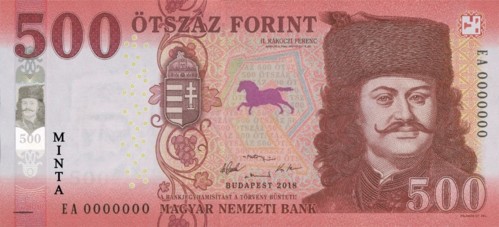
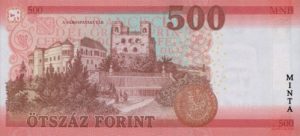
New 500 forint bill enters circulation

Photo: www.mnb.hu

Hungary’s new 500 forint banknote (EUR 1.6), upgraded with enhanced security features, will enter circulation on Feb. 1, the National Bank of Hungary (NBH) said on Thursday.

The old 500 forint bills will be withdrawn from circulation on November 1, 2019, but may still be exchanged, free of charge, at banks and post offices for a period of three years, and at the central bank for twenty years.

Photo: www.mnb.hu

new hungarian forint

The 500 forint banknote is the last bill to be upgraded in the framework of a programme launched by the NBH in 2014.

Featured image: www.facebook.com/MagyarNemzetiBank

Source: MTI / dailynewshungary.com


Reklám
Tas J Nadas, Esq

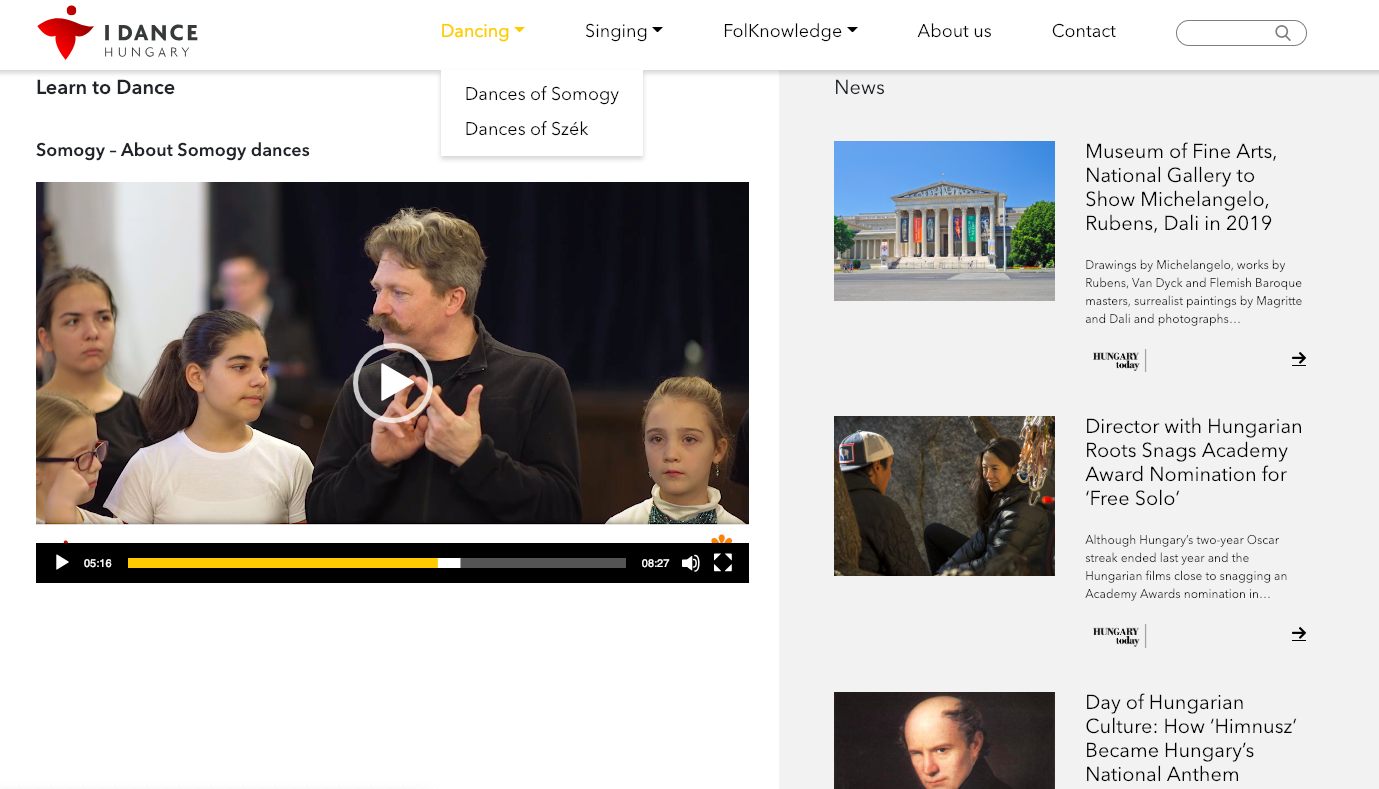
I Dance Hungary – Website with Folk Dance Tutorials for Non-Hungarian Speakers Launched

I Dance Hungary, the first online platform in the world dedicated to the non-Hungarian speakers of the dance house movement, started today under the patronage of the Friends of Hungary Foundation, publisher of Hungary Today and Ungarn Heute. The platform uses tutorials to help dance-lovers learn the basics of folk dance without needing to know Hungarian.

The main aim of the platform is to create a bridge between non-Hungarian speakers, the Hungarian diaspora and Hungarian culture via folk dance. By the 21st century, the dance house movement became one of the most important retaining powers of the Hungarian diaspora. It also served as a vital tether to Hungarian culture for those with no other connection to the country.

I Dance Hungary – Your first steps to Hungary

Posted by I Dance Hungary on Friday, January 25, 2019

Mihály Rosonczy-Kovács, violinist, art director at Fonó Music House and mastermind behind I Dance Hungary, explained the reasoning behind the project at a press conference earlier today:

Hungarian folk music and folk dance are wonders that can be used to make our culture understood abroad. With the help of this English-language online platform that has just been launched, Hungarians living abroad, or those who are just interested in foreign countries, are given the tools to get to know our culture better.

At the launch, Orsolya Karlócai, managing director of the Friends of Hungary Foundation and implementer of the project, explained why the foundation supports the project and discussed Dance Hungary’s motivations and goals. Karlócai detailed how the Friends of Hungary Foundation has worked tirelessly to create a more complete and accurate public image of Hungary and Hungarians since it got its start in 2011. She added that the Foundation thinks of itself as a bridge between academic figures and those involved in public life in Hungary and abroad. With the help of I Dance Hungary, they can address those interested in Hungary and Hungarian culture and inform them about the country. Karlócai added that the webpage is also connected to Hungary Today, the leading English-language news portal in Hungary. Along with the most recent cultural and lifestyle news, audiences of I Dance Hungary can also broaden their interest in Hungarian culture.

However, the most important pillar of the I Dance Hungary platform is the dance lesson tutorials accompanied by English subtitles—a vital addition allowing anyone interested in Hungarian culture to learn folk dance. The courses – focused on the traditional dances of two regions, Szék and Somogy – are led by masters of Hungarian folk dance. Norbert Kovács “Cimbi” is the project’s dance director, and the dances are taught by Szilárd Szabó “Sziszi” and Rubinka Szabó. The videos were recorded with three cameras, focusing thoroughly on the movement of the upper body, legs and body as a whole. The tutorials are accompanied by music performed by well-known folk musicians Júlia Kubinyi, Szabó Szilárd “Sziszi” and Halmos Attila. Kubinyi also performs folk songs in the song section of the page. The songs are available with karaoke versions as well as English translations.

Alejandra Blum’s family emigrated to Uruguay, and despite living with her grandparents who only spoke Hungarian, she didn’t learn the language. She joined a Hungarian community in Montevido where she was able to learn folk dance and a form a special bond with Hungary and its culture. Because of this strong connection, she decided to move to Hungary at the age of 18. Now that she has studied and learned the language, she considers herself Hungarian and is passionate about the importance of passing on the knowledge and culture of her ancestors. A full interview with Alejandra can be found in the first volume of Remigrates (Visszidensek), published under the patronage of the Friends of Hungary Foundation. In the book, journalist Péter Gyuricza interviews twelve Hungarian people who have decided to return home despite leaving the country decades ago.

At the event, attendees enjoyed a special video message from Kenneth Tse, one of the living examples of the importance of and necessity of the project. Tse, a folk dancer from Hong Kong, decided almost a decade ago to found a Hungarian dance group with his Asian fellows after 30 years of culture cultivating. Since then, Tse has traveled multiple times, selling out several concert venues with his dancers across the globe. This summer, Hungary Today had the pleasure of meeting Tse and speaking with him about his dance group and experience with Hungarian folk culture:

Mihály Rosonczy-Kovács shared that an added introduction to the dance lesson videos informs users that the tutorials are meant to serve as complementary aids for those who can’t find an in-person instructor. The team behind I Dance Hungary encourages anyone interested in learning Hungarian dance to visit the villages in the Carpathian basin.

I Dance Hungary will host a webpage launching dance house event at 8 pm this Saturday at Fonó music house in Buda.

Source: hungarytoday.hu

Reklám
Tas J Nadas, Esq

Special Pilgrimage Train Will Bring Believers to Csíksomlyó Papal Mass

Pope Francis’ upcoming visit to Csíksomlyó (Sumuleu Ciuc), Romania is a “historic opportunity” for the region’s nations to come together and make peace with one another, a government official said in Csíksomlyó on Thursday.

The Hungarian government will support the city’s preparations for the papal visit with an initial grant of approx. 20 million forints (EUR 63,000), State Secretary for the Church, Minority and Civil Society Relations Miklós Soltész stated at a press conference. The government will soon receive a detailed funding request for the visit from Csíksomlyó’s Franciscan monks, he said, adding that Hungary will aim to transfer the funds as quickly as possible.

Soltész urged as many Catholics to turn out for the June 1 visit as possible, insisting that it could help support the survival of Christianity and the nations. Soltész stressed the importance of the visit by claiming that there have been several examples of increased minority inclusion following other such high-profile events.

A special pilgrimage train will bring believers to the papal mess

Managing Director of Misszió Tours (Christian Mission Tours) László Budai informed the press that trains will depart from Budapest, Szombathely and Miskolc and connect in Püspökladány. The pilgrimage train will continue its journey with seventeen cars and is scheduled to arrive in Csíkszereda the next morning, where the pilgrims will take part in the Latin Mass of Pope Francis. The train will return to Hungary later in the afternoon. Thousands of pilgrims will be able to travel from Hungary to the papal mass as a result, he affirmed.

Csíksomlyó, MTI/Veres Nándor/ Mti/State Secretary for the Church, Minority and Civil Society Relations Miklós Soltész

Bishop András Veres, chairman of the Hungarian Catholic Bishop’s Conference and the Lords Protector of the pilgrimage trains, said that traveling together creates a special atmosphere and opportunity for joint preparation. He also pointed out that the pilgrimage is open to everyone, and based on past years’ experience, many non-believers also wish to experience a common pilgrimage.

Secretary of State of the Ministry of Human Resources Attila Fülöp emphasized that trains to Szeklerland would contribute not only to the religious experiences of attendees but also to the Hungarian national event as a whole.

Via: Mti

Featured Image: Mti/State Secretary for the Church, Minority and Civil Society Relations Miklós Soltész

Source: hungarytoday.hu

Reklám
Tas J Nadas, Esq

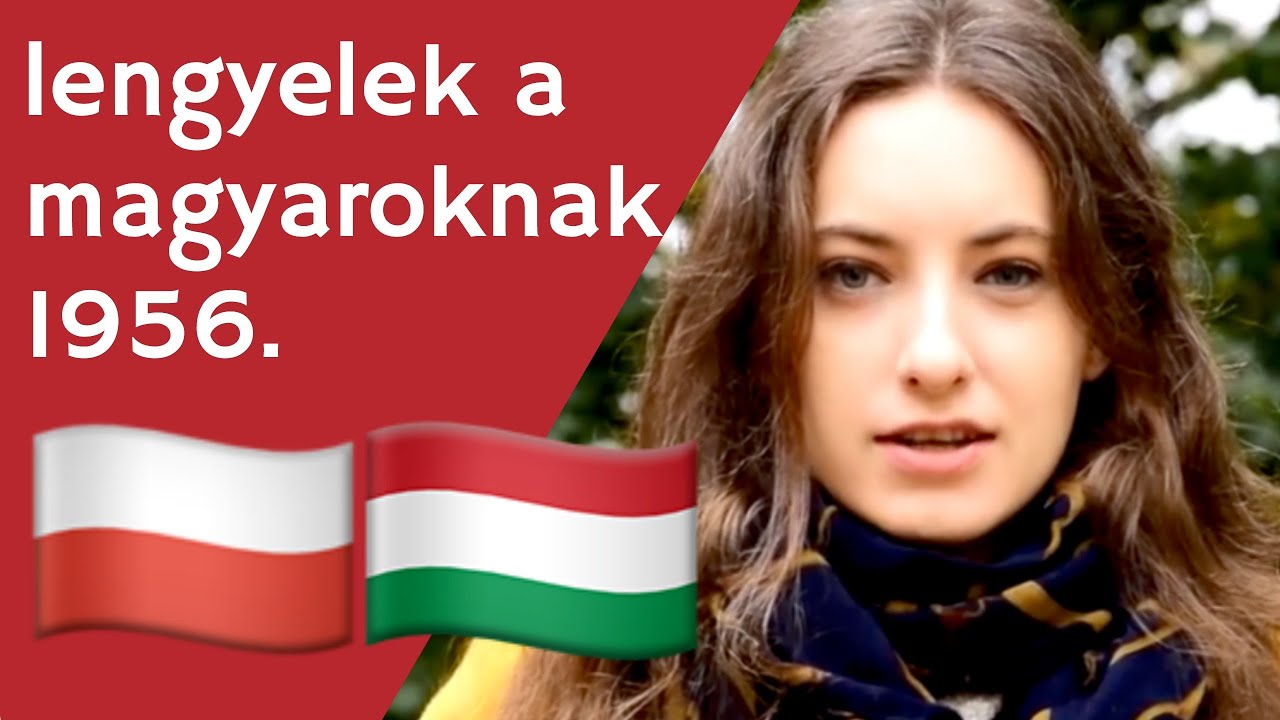
Impressive! Polish vlogger learns to speak Hungarian

The Hungarian language is one of the most difficult languages to be learnt by non-natives. This makes the fact that a Polish girl decided to go ahead and face the challenge of learning to speak the language, documenting her journey online and securing followers from both Poland and Hungary in the meantime, all the more impressive.

Her channel offers refuge to those seeking to learn more about Polish-Hungarian relations and about the friendship that exists between the two countries. She found the perfect balance: some of her videos are in Polish, to help spread information about Hungary and Hungarian culture among Polish people, while some of her videos are in Hungarian, to gain Hungarian viewers and to help with her language learning journey.

Olga majored in Hungarian studies at university; however, due to other obligations, she could not finish her degree – reports Femina. She is working at the moment but does not want to forget everything she learned at uni.

That is why she started the channel – to practice the language and make progress with it anyways, even if it cannot be in an academic setting.

Her first video served as an introduction to her background and motivations for learning the language.

YouTube player

She posted a short note on Reddit to share her journey:

“Hi, my name is Olga, and I am from Poland. I started my channel a few weeks ago, where I speak Hungarian. I want more people to see it, so I thought I could write about it here. I would be grateful if you helped me find other places to share it on the ‘Hungarian web’, and please subscribe.”

She received encouraging messages and a lot of support on her videos. By now, she has over three thousand subscribers, and some of her videos have tens of thousands of views already. She offers content from various fields, dealing with both Polish and Hungarian culture.

YouTube player

She knows a lot about Hungarian literature, for example. Her favourite authors include Sándor Márai and Péter Esterházy. She is also fascinated by Hungarian history, especially the events of 1956, but she also follows current Hungarian politics closely.

However, there is one aspect of Hungarian life she is not a fan of – gastronomy. Although Olga admits Hungarian dishes taste good, healthy eating is important to her, so she is not crazy about the greasy and fatty foods of Hungarian cuisine.

Like anyone else of her age, she is also a fan of films and music. She has lots of Hungarian artists on her playlist, but she also actively participates in any Hungary-related event organised in Poland. She recently founded an online portal with her friends, focusing on programmes and events in Hungary as well as anything Hungary-related, all written in Polish. Their aim is to bring the two nations closer together, and they seem to be on the right path – the just three-people editorial staff had to be expanded and now employs about fifty people.

When it comes to living in Hungary, it is not in her plans right now. She visited the country a few times already and had the opportunity to get to know Budapest quite well when she worked in a hostel. Later, she and her friend hitchhiked all the way to Pécs, Siófok, Székesfehérvár and Győr, too. Nevertheless, she is still passionate about the culture and making the ties between the two countries stronger.

We wish good luck to her journey!

For more news, check out this article about a Polish artist’s works of beautiful Hungarian landscapes.

Featured image: www.youtube.com/user/olgagroszek94/videos

Source: femina.hu / dailynewshungary.com

Reklám
Tas J Nadas, Esq

Myth or reality: The health benefits of drinking pálinka

If you have ever met someone Hungarian, then it is highly probable that the impression they gave you is that pálinka is good for everything: before eating, for better digestion, to prevent illnesses, if you are sick, to live longer, to cheer up. 

Dívány has collected everything you need to know about the positive benefits of quality pálinka on your health and how to know if the pálinka you are drinking is top-notch.

According to popular legend, the origins of the pálinka can be traced back to the 13th-14th century, more precisely to Charles I of Hungary and Queen Elizabeth. It is said that while they were on their way to Naples, the queen had fallen so ill, that they had to return to Hungary. All sorts of medicine were employed to improve the queen’s state, but only one did the job: an alcohol and rosemary infused concoction, which was named aqua vitae(water of life). Regarding the Hungarian jolly-joker drink’s name, Dívány writes that the word ‘pálinka’ did not appear until the 17th century, and its origins are the Slovak word ‘palenka’.

Good or bad – a guide

There are those who claim that good pálinka is the one that leaves your throat with such a burn that despair runs through your joints, but in reality, this is not what makes the drink actually good. Such strong pálinka’s will only knock you out real quick, and the next day you will wake up with such a hangover that makes you say ‘I swear I will never, ever drink again’. Here is what an expert, Attila Fabulya (head taster at Gyulai Pálinka Manufaktúra Kft.), has to say about this:

Pálinkas that leave you with a pungent, stinging and burning sensation will do only one thing: the chemicals in them are so hard to digest that your body will be fighting a headache and sickness even if you drank enough water.

If you turn to good quality pálinka, with sufficient water intake while drinking, there is a high chance that you will not feel sick on the next day”.

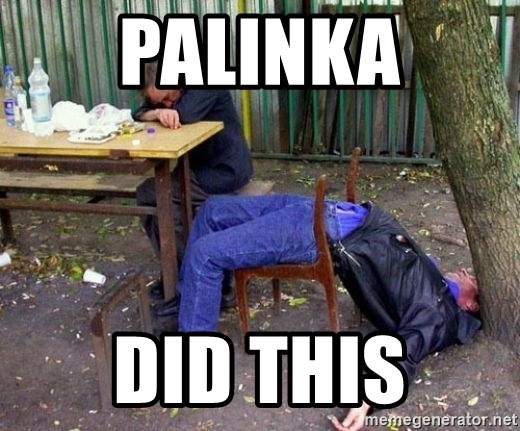
memePhoto: www.memegenerator.net

What this means is that dehydration is still an issue even if you drink good quality pálinka, so make sure that you drink enough water, not just spritz or beer. But when push comes to shove, dehydration is not the major issue with bad pálinka: it is the badly brewed chemicals that give you a throbbing headache and sickness.

Boosts your appetite – a myth or truth?

Hungarians often drink or encourage you to drink a shot of pálinka before major meals, but pálinka as an aperitive might not be the best idea. Fabuly explains that what you feel after one or two shots of pálinka is not hunger, but it is the alcohol burning your stomach, so your organism will want to help this immediately.

“In western cultures, spirits are drunk after a meal, since alcohol boosts digestion. I would suggest drinking pálinka in the same fashion: after eating”

A cure-all or not?

A piece of advice from our grandparents that we often heard growing up in Hungarian communities is that you should bring pálinka with you on trips since if you get infected with something, the alcoholic drink will cure your stomach – but it also works to prevent illnesses, thanks to its antiseptic qualities. This is why it is also suggested to gulp down pálinka if your throat is sore or if you feel like you are coming down with something.

However, this is not the case in reality. Alcohol is antiseptic indeed, but only above 70 degrees. The strongest pálinka is usually around 60 degrees, which is not strong enough to possess antiseptic qualities.

“It was taken for centuries as a cure-all potion, and many still believe in this, but this has never been proven medically. On the contrary, it was proved not to help at all” – weighs in Fabuly.

Before you set out to make 70 degrees plus pálinka, you must know that it brings more pain than pleasure to your taste buds and throat. You will no longer be able to taste the fruit, and it will be so strong that your organs will be thrown off balance, so you should rather not try distilling or drinking such pálinka.

If you would like to be creative with pálinka or are bored of simply drinking it, you can try using it as a cocktail base, or you can actually bake some heavenly cakes with it, the limit does not exist.

featured image: agroinform.com

Source: divany.hu / dailynewshungary.com

Reklám
Tas J Nadas, Esq

This Incredible Gothic Church In Cleveland Was The First Hungarian Church In The Country

Local churches offer an incredible glimpse into an often forgotten piece of Cleveland’s past. Churches and cathedrals tell the stories of some of our earliest residents, and they reveal where many local immigrants came from. Not only do they capture a certain sort of heavenly beauty, but these incredible edifices are also something of a living time capsule. A few Cleveland churches are unlike any other in the nation, and this one Hungarian church has a history worthy of exploration.

Read more here.


Source: onlyinyourstate.com

Reklám
Tas J Nadas, Esq