Home Blog Page 22

Cleveland Museum of Art Ranked 2nd Best Museum in the U.S.

Erik Drost/Flickr

We may not be number one, but considering the competition it’s hard not be satisfied with the #2 spot.

The Cleveland Museum of Art was named the second best museum in the U.S. by Business Insider magazine. The CMA was only topped by the Metropolitan Museum of Art in New York City, which isn’t entirely a surprise. Here’s how they came up with the rankings.

 According to the US government, there are upwards of 35,000 museums in America. For comparison, there are about 13,000 Starbucks across the country.

Using data provided by Foursquare, INSIDER ranked the top 25 museums in America.

The National Museum of the Air Force in Dayton, another dynamite Ohio location, came in 11th place.

Featured image: Erik Drost/Flickr

Source: clevescene.com

Reklám
Tas J Nadas, Esq

Bosch to Invest HUF 14.1 bn at Hungary Base

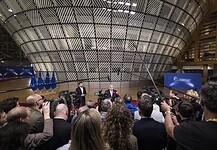
German engineering giant Robert Bosch will invest 14.1 billion forints (EUR 43.8m) at its automotive unit in the northeast Hungarian city of Miskolc, company executives told a press conference on Friday.

Hungary’s government is supporting the investment with a 2.65 billion forint grant, Foreign Minister Péter Szijjártó told the press conference.

Péter Szijjártó, Minister of Foreign Affairs and Trade, with Frank-Stephan Kupfer, CEO of Robert Bosch Energy Body and Systems. Photo by János Vajda/MTI

He noted the “outstanding” performance of Hungarian economy in an “extraordinary economic environment”. Companies announced 98 large investments at a record value of 1,380 billion forints, bolstered by a total of 135 billion forints government grants, he said.

Robert Bosch Energy and Body Systems makes vehicle parts, relays and electric drives. Among the parts it makes are next-generation products such as brake servomotors and ESP systems used in hybrid and electric cars. The current investment will add production lines for next-generation products as well as testing systems by 2021.

featured photo by János Vajda/MTI

Source: hungarytoday.hu

Reklám
Tas J Nadas, Esq

Three Polish Citizens Accused of Attacking Hungarian Center in Ukraine

According to the prosecutor’s allegations, three Polish citizens were hired by a German journalist to burn down a building belonging to the Hungarian cultural institute in an effort to deteriorate Ukrainian-Hungarian relations.

The Mazovian Department of the National Prosecutor’s Office of Poland has brought a court case against three Polish citizens. According to allegations, they were behind the burning of the Uzhgorod (Ukraine) headquarters of Zakarpattia Society of Hungarian Culture, a border city of 114,000 people with a significant Hungarian minority.

According to the Polish news agency TVP.info, the three Polish citizens have been charged with terrorism. The investigation revealed that the accused received 1,000 zlotys ($267) from a German journalist likely acting on instructions from Russian intelligence.

According to the TVP.info reports, the prosecution believes that suspect “Michal P.” is a member of the Polish far-right organization Falanga, recruited by two Polish extremists, identified as “Adrian M.” and “Tomasz Sh.”  The perpetrators filmed the attack and sent it to “Michal P.” to provide evidence of the operation’s success.

Apart from this, several other targeted incidents have affected the Hungarian minority in the region: para-military groups have marched and threatened the minority populations of many villages and police have attempted to intimidate Hungarians from crossing the Ukrainian border. Along with this newly erected anti-Hungarian sentiment, Ukraine has been conducting an anti-Hungarian campaign in the local media for months.

Via: 24.hu/kyivpost.com

Featured Image: 24.hu

Source: hungarytoday.hu

Reklám
Tas J Nadas, Esq

“On Tuesdays, the whole XX. century comes alive at the tables”: Interview with Ildikó Nagy, Director of the Hungarian House of New York

Operating within the framework of the Széchenyi István Society, the Hungarian Scouts Association in Exteris and the American Hungarian Library and Historical Society, the Hungarian House of New York opened its doors in 1966 to Hungarians who were looking for a little bit of Hungary in New York. From the very beginning, thanks to the work of hundreds of generous supporters and volunteers, thousands of visitors were able to learn about Hungarian culture in the House. 

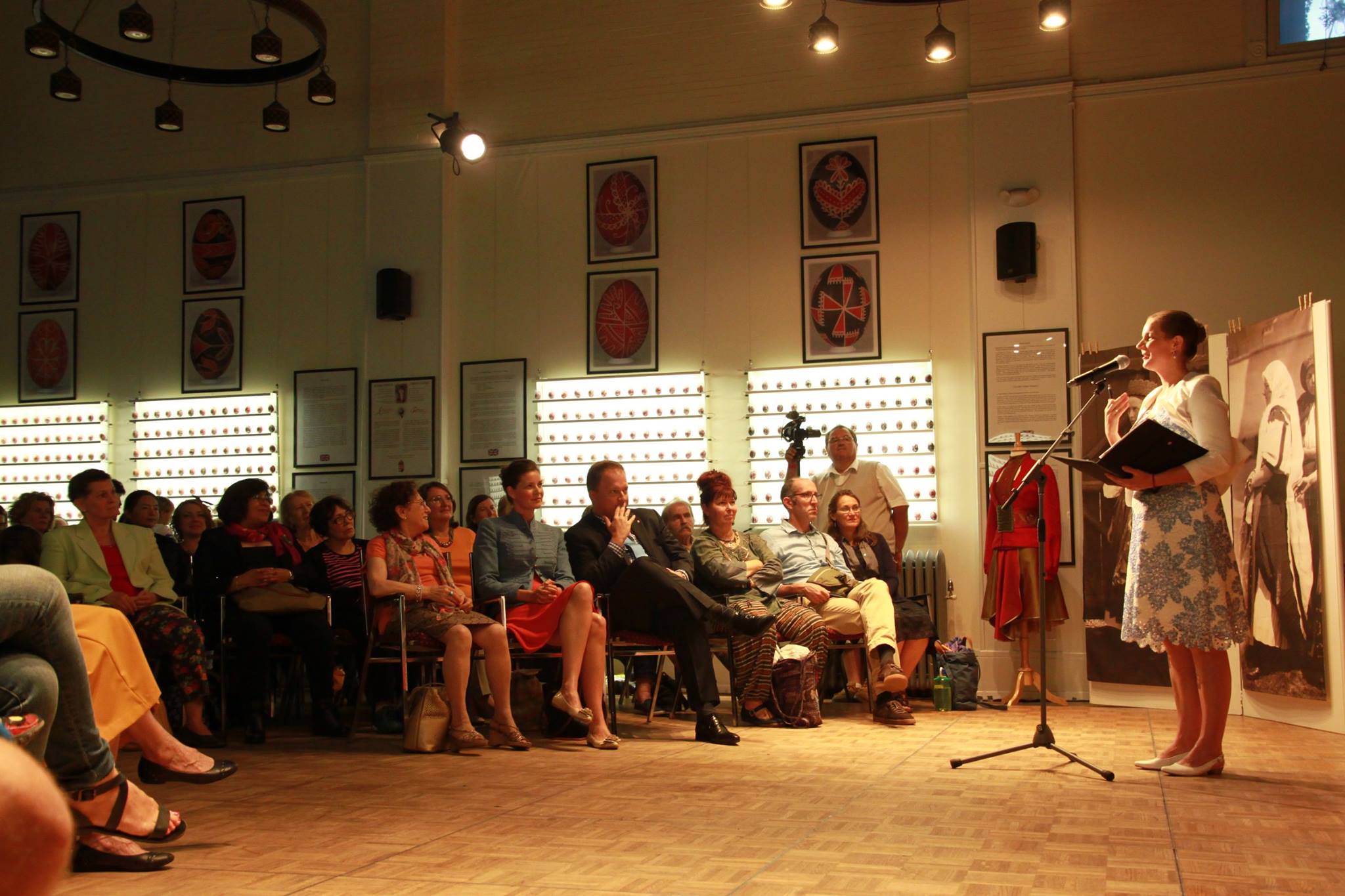
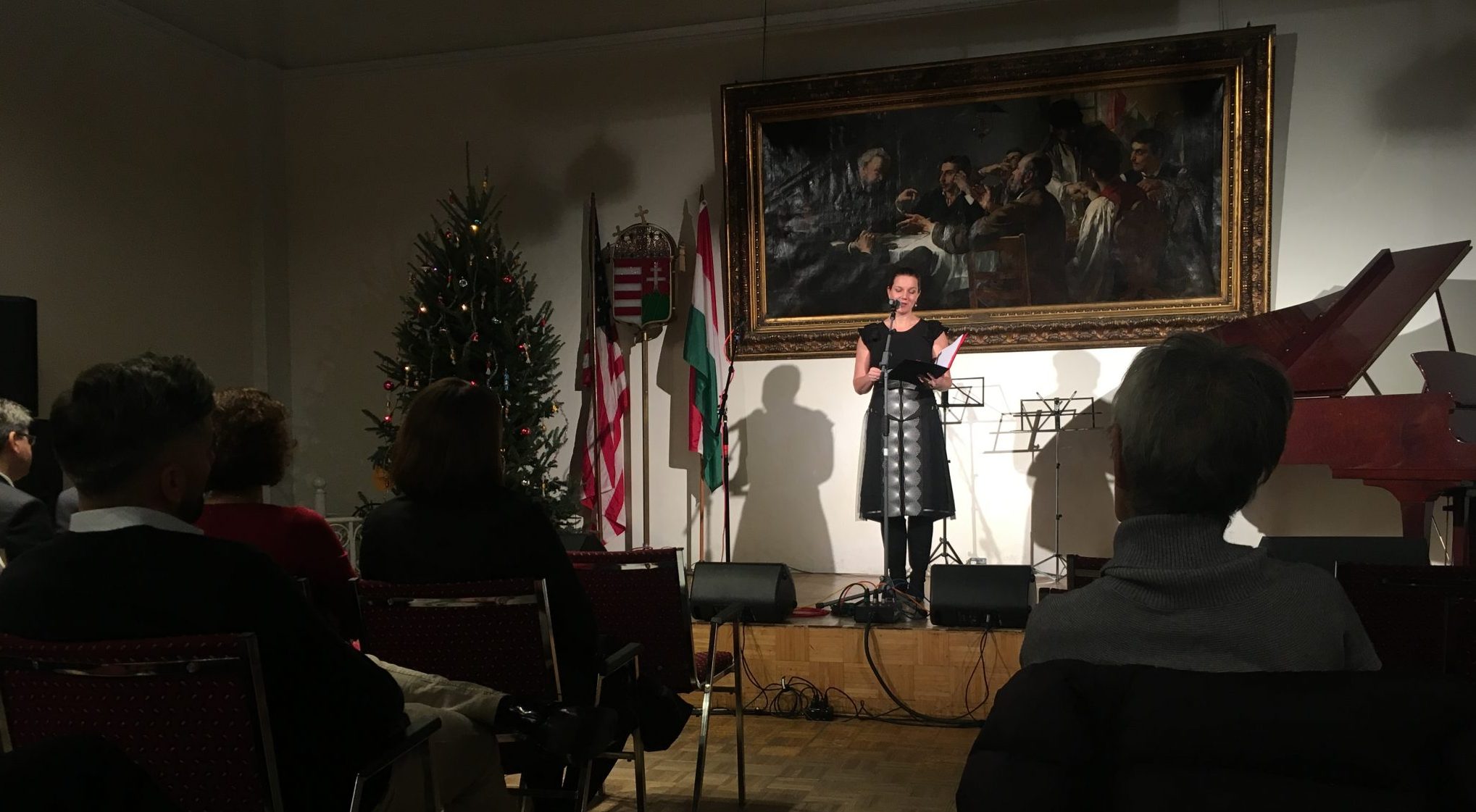
During the Third Hungarian Heritage Festival earlier this month, Hungary Today had the opportunity to sit down for an interview with Ildikó Nagy, director of the House. For four and a half years, she has been responsible for the numerous special events and programs organized for the Hungarian community. She spoke in detail about the operation of the organization and the beauties and struggles that come with keeping the Hungarian House and the Hungarian community alive in a city she calls a ‘parking lot’.

This interview has been edited for concision and clarity and translated from the original language of Hungarian.

***

Tell me a little bit about the Hungarian House and the community. 

The Hungarian diaspora is not homogeneous; every community is special in its own way. The fate of Hungarians is a bit different in every community. There are several Hungarian houses in America, and the Hungarian immigration wave can be observed in the compositions of the towns. What it was like in that period and how the communities were formed is still visible today. When the Hungarian House of New York opened in 1966, Hungarians paid a membership fee to cover the expenses of the house and to be able to visit the programs. Back then, it was a ‘home, away from home’ for Hungarians. Since then, the community has changed a lot. Today, with modern technology, anyone can call their relatives. Therefore, they do not necessarily seek out the Hungarian House, but instead, expect services from us. It’s understandable, though. In the 50s, people could reach a much higher standard of living a lot faster. Now the US middle class suffers from a job shortage while cheap labor flows in from the third world and lowers salaries. I think this country no longer can offer much more for European immigrants than Europe.

Have you traveled to other cities to see how other Hungarian houses work?

Although they look close on a map, for example Washington and Boston are four to five hours away. Someone who is committed to a community and takes responsibility for its programs usually does not have the time to travel such distances. Unfortunately, we are not traveling diplomats but community leaders. As the head of the House, I even have my minutes organized; I have to be at every event, and sometimes all the time in the world is not enough to deal with the problems of my own community. Sometimes I deal with house-related tasks at dawn or at night. I often ask my friends to assist me at events as volunteers. However, the annually organized Diaspora Council in Budapest is a great platform for meeting with other community leaders. Aside from sharing knowledge of Hungarian communities in the diaspora and the government’s diaspora policies, it is also wonderful for exchanging stories.

How do other Hungarian communities differ from the one in New York? For example, those in Boston or New Jersey?

Boston is a really young community; it has been very inspirational to watch. Over the last twenty years, many young intellectuals have arrived in Boston, often with their families. This is why a very young, strong and determined community has emerged there. A strong bond with Hungary, its culture and political life is visible within the community. They are familiar with contemporary poets, musicians and plays, so they visit many programs. New Brunswick, a hundred-year-old community that was an important destination for Hungarians emigrating after the turn of the century, is the exact opposite. After ‘56, Camp Kilmer, the Hungarian refugee camp, was also there. It is a very strong and cohesive, but old community. However, it has been quite touching to see the event opened by the same person for almost 50 years or the amount of grandparents and grandchildren to be at the same community center at the same time, like in a village in Hungary.

What about New York?

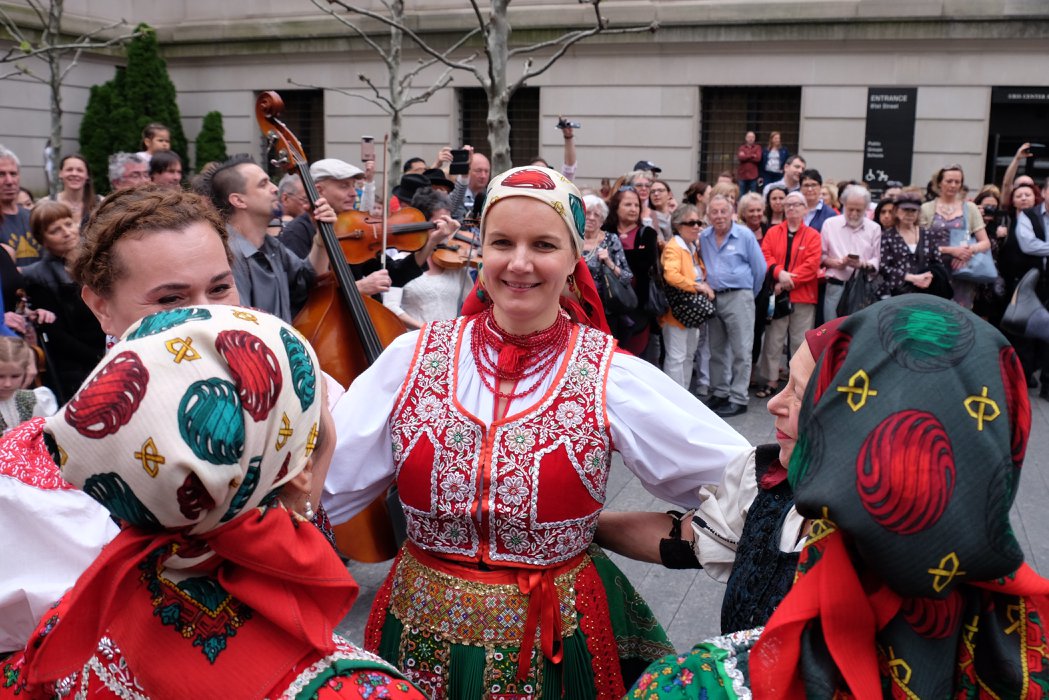
New York is different; I would say it is a ‘parking house.’ Those who come here are adventurous, hard workers. However, some of them are going home or moving away. When people start a family, they would rather move to New Jersey or Boston, because it is very difficult to live here for the middle class. Unfortunately, the community is rapidly changing and we have to adapt to that. I have been leading my folk dance group for six years now and since then, its members have changed two or three times over. They come, stay for a couple of years and then go. However, it is a good thing that the house attracts Hungarians from a larger area. There are people who are willing to travel about one and a half hours for our programs.

Does the house attract non-Hungarians as well?

Of course. The rule is that we need to explain everything in Hungarian, but we have begun including those who only speak English as well. It is important not only to preserve our culture but to show it to non-Hungarians.

What kind of programs do you have?

We organize approximately 20 special programs, mainly around the holidays when members of the community are more likely to come. In addition, there are seven or eight permanent programs weekly which we organize with the other owners of the house, such as Hungarian language lessons, folk dance, the Hungarian school and scouting, Hungarian Mommy-and-Me class. Plus, every Tuesday for fifty years the Társaskör gather together and play cards. I always say that the whole history of the 20th century comes alive at that card table: there is a baroness from Transylvania, ‘56 refugees and Holocaust survivors. They are amazing.

You mentioned that most people expect a service from you and the House. Do they expect too much sometimes?

The other Hungarian community centers always say that in New York, it’s certainly not that hard to attract participants for our programs. It is true that there are many Hungarians and the city never sleeps, but that’s why we have to compete with New York and all its programs. For example, the Metropolitan Museum is in the neighborhood and if I’m organizing an exhibition, I’m practically competing with the MET. I once invited film historian Gábor Gelencsér for a debate and screening of Sindbad. The community informed me that there are far better cinematic experiences for $10–some even with sound coming from the chairs. Our program is always measured against the thousands of other programs New York has to offer.

You also mentioned that sometimes you ask your friends for help. Is it that difficult to find volunteers?

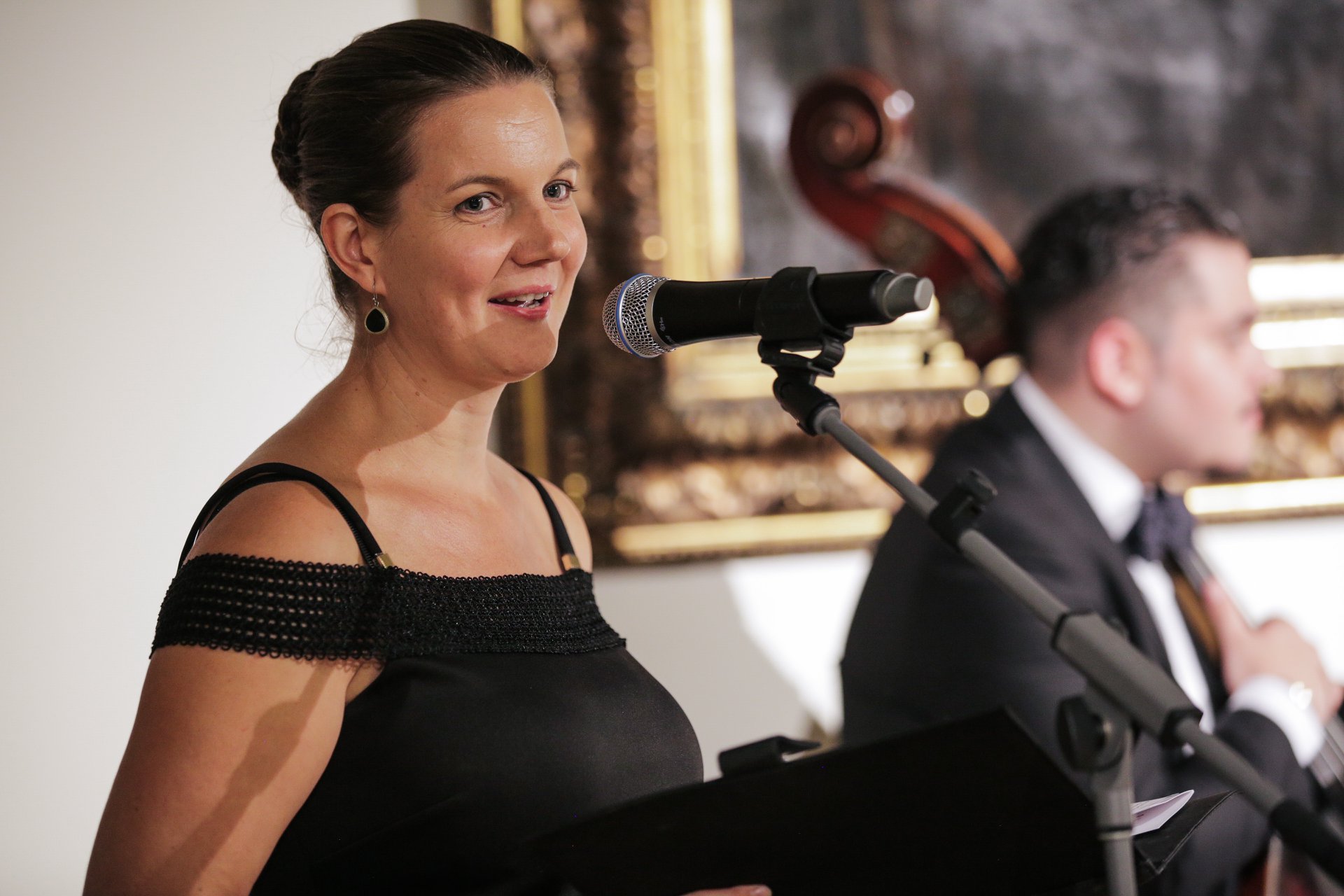
Yes, for example, Nikolett Pankovits, an excellent jazz singer who recently performed at the Lincoln Center, will be the ticket collector at the opening day of the the 3rd Hungarian Heritage Festival. Usually, everyone is a volunteer; there are no employees at the Hungarian House, not even me. I am simply glad if people even come to the programs and are interested. I do not expect them to collect money or clean. But I always say–as a Hungarian lady in California once said–that knowing you are not the only one who spends Friday night cutting papers, glueing pictures and preparing lesson plans for the next day’s Hungarian school is a big source of encouragement.

At least you have an event room and your own house in Manhattan. Is it hard to maintain the House?

Everyone says how good it is for us New Yorkers that we have our own house. Yes, it’s great, but if we do not organize any events, it still costs 50,000 dollars a year just to maintain the house. We do not have the Hungarian state or local government as a maintainer or financer. We must collect this amount, even if we do not have any community programs. Unfortunately, if the timing or the weather is bad or it clashes with another program, people will not come. A couple of time I even used my own money to pay for the room rental after a less successful event because even we pay room rental after our own event.

How do you manage to get money for all the expenses of the House? I imagine entry tickets are not covering it.

Yes, and these are mostly self-supporting programs. For example, the proceeds of the concerts are paid to the performers. The Hungarian House has three pillars of income: tickets of our own event, room rentals for Hungarian and American cultural, community of private events and donations. Recently, tender applications from Hungary opened to us as well, which is a great help. Much of our programs–especially the highlighted programs, such as the third Hungarian Heritage Festival on the occasion of Advent–will be realized from the money from those.

Aren’t you afraid that with the money won on tenders, Hungarian politics will filter into the life and programs of the Hungarian House?

I think that no matter who holds the power in the government of Hungary, it is legitimate, and as a leader of the house, I have to communicate with the legitimate powers and find the best way to cooperate with them for my community. Many politicians and state secretaries are visiting New York and want to see the Hungarian House. I always show the house to them and tell them how it works. This way the decision-makers will know what is happening in the diaspora. Because otherwise, how would they know from Hungary? However, it is very important that we do not politicize. So I do not allow any political events to take place in the house, not even for those who would pay for the room rental. It has happened before, during a Hungarian or an American election, where one of the party’s sympathizers wanted to organize an event here. But it would only divide people, and the aim of the house is to unite the community.

***

Reporting and translation by Fanni Kaszás

Photos: Hungarian House of New York

Source: hungarytoday.hu

Reklám
Tas J Nadas, Esq

Ernő Rubik: The Cube Represents Man as a Thinking Being

Ernő Rubik

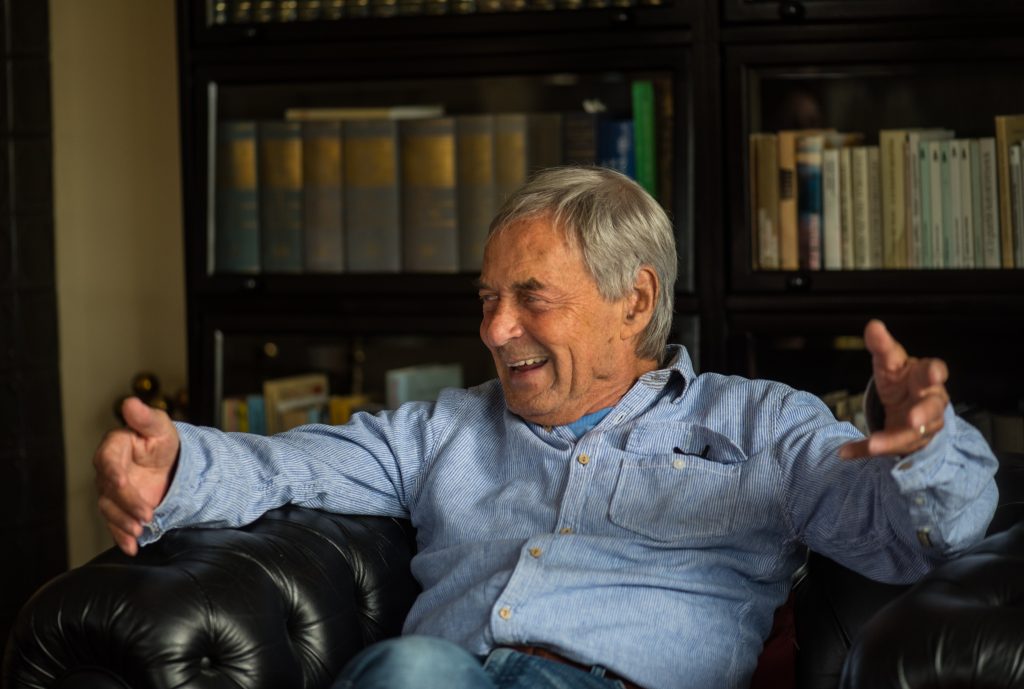
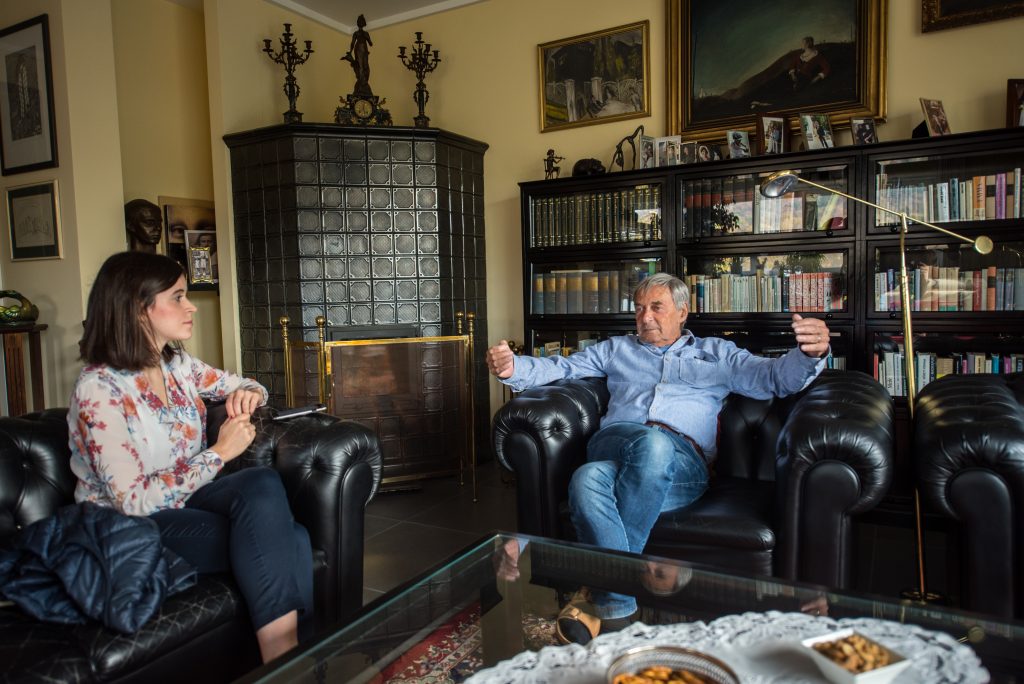
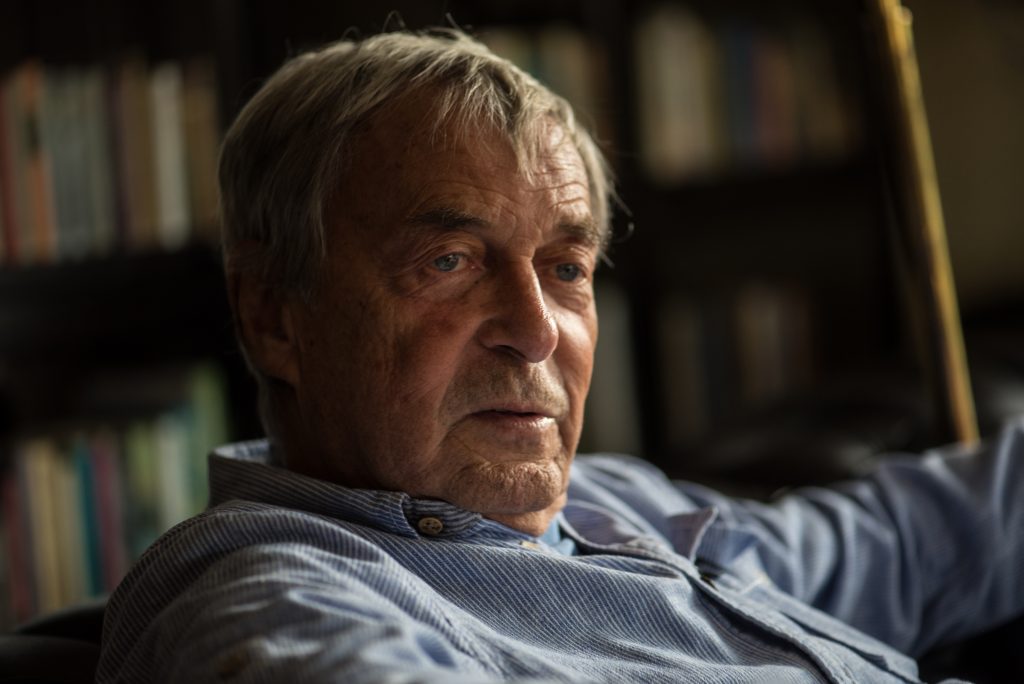
Without a doubt, Ernő Rubik is one of the most well-known Hungarians of the XXth Century. He hardly ever gives an interview but made an exception for Hungary Today. Ernő Rubik discussed the creation of his most popular invention, the Rubik’s cube, its path to enormous success and its influence. He also revealed what he is up to nowadays.

Calvin Klein, the American-Hungarian fashion designer once said “I have met with so many people who think Calvin Klein is just a brand name. They don’t believe I actually exist.” Have you ever felt this when introducing yourself?

I don’t think I have – not that it would bother me much.

I’m sure you’ve heard of Edward Snowden too. He was able to smuggle top-secret National Security Agency information in a Rubik’s Cube, which caused an international storm. How do you respond to these types of situations? Are you still capable of being surprised?

That’s only in the movie, in reality, the cube was probably just used as a signal at a secret meeting…
I’ve seen quite a lot of surprising developments with the Cube, especially on the occasion of the 2014 “Beyond Rubik’s Cube” anniversary exhibition, which I helped to prepare. This was a convenient opportunity for me to do a little research as well, because previously I usually just accidentally discovered some relevant news item. But still, I am continuously surprised: like, for example, in early 2018, MIT’s deep-learning machine managed to solve the Cube within 42 hours, or, when I noticed that the number of cube-competitions internationally (in more than 100 countries) will surpass 1000 this year.

What do you think made the Rubik’s Cube so popular? A complex scheme, yet so simply presented?

The effect of the Cube on the world and humanity is even more interesting to me than the puzzle itself. An explanation of rare, global influences is more complicated and elongated to decipher than to solve the Cube. Why? The key is human nature, how we think. How similar and yet how different we are, and what this actually consists of. We do not hide from a challenge but rather positively respond. Starting out in the late 1970s it was a big obstacle to get the toy trade understand how the Cube could possibly be a commercial success; why would people buy it if it was impossible to solve and only resulted in failed attempts?! Soon reality thoroughly contradicted this. As to how and why this happened, that is a more complex question. Certainly, the Cube touches intimate human emotions through its contrast of simplicity and complexity, as well as its illusion of infinity—just like when people look up to the sky and survey the stars, meanwhile knowing that there is no such thing as infinity because these stars are countable.

The puzzle is a great example of how knowledge is shared in a society. The Cube is around the same age as the internet—when it was a much simpler version, working only as a network among universities. Back then already, a virtual mailing list of mathematicians, physicians titled “Cube Lovers” was circulated and it is still there today, just with many more members.

Can you recall when the Rubik’s Cube became a worldwide phenomenon? For instance, from when the first version was created. How were you able to market it under socialism? Were there difficulties with this? How did it first reach foreign markets?

When one is thrust into an unfamiliar situation, it’s difficult to fully grasp what is happening. As if you were just dropped into the middle of a huge storm or battle. In the past century, the Cube has had three deciding historical phases. The first, when it initially appeared in the marketplace towards the end of the 70s in Hungary’s planned economy, when straplines like “toys from the toyshop” were the cutting edge in marketing. Within a few years, 300 000 cubes were sold, which is an outstanding quantity, even today, for such a small market. A critical change came about once the Cube’s distribution reached the West – the other side of the Iron Curtain. The next three years were an immediate and unprecedented success story. Its popularity was decisive in the USA, but it spread throughout the entire western world, and lines even formed in Moscow’s famous GUM store. The unpredicted, enormous quantities and speed of sales caused serious supply shortages; we successfully “exported” the main issue plaguing socialist economic plans– lack of supplies– to the rest of the world. The third phase began in ’83 when the constant growth of sales began to slow and eventually decline. I think this was partly the fault on the business side: initially, analysts underestimated the demand and later overestimated it. By the end of the third year (1983) basically everyone on the standard market had a cube, with more than 100 million sold. An astonishing number.

The truly interesting period came at the turn of the century. Not only did the Cube remain relevant, but it became increasingly popular—thereby refuting worries of a youth fully addicted to the digital world. Even today, if a cube finds its way into a classroom, everyone eventually wants one too. Likewise, hundreds of Cubers’ clubs got established organically around the globe; competitions are held in almost 100 countries, made official by the rules of the WCA (World Cubing Association) which was formed in the beginning of the century. It has gone so far as to have 1,000 competitions per year!

It’s still intriguing that only a minimal amount of customers can actually solve the cube on their own. Countless videos exist on the internet teaching you how to solve the cube with anywhere from 20 to 40 million views. In the 80s when the internet was not widely available, you could only find the solution in books. Around six-seven million copies were produced of these books, occasionally even appearing on the New York Times bestseller list. According to an article from the Scientific American, figuring out the cube is quite similar to the methodology of scientific research: One experiments, creates theories, then tests them, and perseveres tirelessly. For actual mathematical researchers it took over 30 years to prove “god’s number” which is the maximum number of moves needed to work out the 43 252 003 274 489 856 000 cube solutions: 20.

Aside from Ferenc Puskás’ name, perhaps the Rubik’s Cube is the most internationally recognized Hungarian “product”.

Product? How do we define a product? Unfortunately, Puskás is not around any more to protest, but maybe I still can… In the same manner that the 6:3 victory in London meant something more to him, so the Cube represents something more to me than just the success of a product.

As a world traveler, what do you think, to what extent do people associate the Cube with Hungary?

It depends on where I go and who I meet. Unfortunately, people rarely care to seek information even if easily accessible. Not only do we not know enough, but a majority of our knowledge is outdated, incorrect. But of course there are many who do know that the Cube’s inventor is Hungarian, they just aren’t sure if he’s still alive!

How much does your life consist of Cube-related events and invitations?

It is a part of my life, I get more invitations than I can possibly respond to. The travelling, flying, and jet-lag is becoming more of a struggle, especially with long, overseas trips. But I do actively partake in larger events so that the brand which carries my name may develop and remain strong, stable and successful for a long time.

Aside from your university work and the Rubik Studio, you also develop game-software. Could you tell us about these?

My generation closely followed the birth of the computer and the amazing success of IT. I was not, and am not, a software developer – I’m much more interested in the opportunities: the vast potential and also some dangers of artificial intelligence. Browsing the internet, I see the daily creation of new Cube game programs. I have collected about 2000, which indicates a myriad of developers who are inspired by the task, but also many more players.

How fast can you solve the Rubik’s Cube?

I’m not sure, but I’m definitely slower now than I was 40 years ago! I appreciate that some may be interested in such trivia, but where should I rush? First of all, I am slowly reaching the age where one is happy to simply be able to do something that was previously natural and effortless. Furthermore, I still believe that the true measure of success is the quality of a result, not just its speed.

Interview by Balázs Horváth and Lilla Horváth
Translation by Katrina Hier
Photos by Péter Csákvári

Source: hungarytoday.hu

Reklám
Tas J Nadas, Esq

‘Call in the Cavalry’: Hussar Exhibition in London

An exhibition looking “at the shared heritage between the Hungarian and British hussars” opened in London’s famed National Army Museum. The exhibit includes contributions from the Hungarian Military History Institute and Museum.

In one of the most iconic photos of young Winston Churchill, the UK’s former Prime Minister is dressed in a Hungarian-like uniform. Not by coincidence, as at that time he served in the 4th Queen’s Own Hussars of the British Army. Across the world, cavalry regiments adopted traditions, in name and uniform, established by the Hungarian hussars of the 17th century. Currently, there are three royal hussar regiments in the United Kingdom.

Winston Churchill, aged 21, in his hussar uniform.

As the material placed in the Museum’s exhibition room reveals, British cavalry regiments were called hussars from the 19th century and were involved in the Battle of Waterloo. At the opening ceremony, Hungary’s Ambassador to Great Britain, Kristóf Szalay-Bobrovniczky, said that hussars represent a living tradition both in Hungary and the UK, and are, therefore, a source of national pride in both countries. Brought together by this common tradition, the British and Hungarian armies are now also joined within the same military alliance, working for common goals, he explained.

The exhibition will run until the 9th of June with free admission. For further information, click here.

via korosiprogram.hu

featured image via Lehel Kelemen / korosiprogram.hu

Source: hungarytoday.hu

Reklám
Tas J Nadas, Esq

Budapest Aims to Host ‘Best-Ever’ World Championships in Athletics

According to past predictions, Budapest will host the 19th IAAF World  Championships in Athletics in 2023, which, besides the Olympic Games and Football World Championships, is the third most important multi-day sporting event in the world.

Interestingly, aside from 10 Olympic gold medals, Hungarian athletes haven’t managed to emerge as world champions in any outdoor events. Thus far, Hungary’s only gold medalist in athletics is shot-putter Anita Márton with her triumph at the Athletics World Indoor Championships in Birmingham earlier this year. Although it’s doubtful that this trend will change, organizers expect that it will have a good effect on Hungary sport-wise and economically. An income of tens of billions of HUF is predicted and one billion people could potentially follow the events on TV. In addition, the event could be beneficial for the areas of South-Pest and Csepel, a formerly run-down neighborhood within the city.

For the World Championships, a brand new stadium will soon be built with the capacity to seat 40,000. For future events, that number would be reduced to 15,000 and the stadium would operate at the center of Hungarian Athletics. As it can be seen in the picture below, it would be located on the eastern bank of the Danube River on the city’s south side between Lágymányosi bridge and the northern tip of Csepel Island.

Source: Centre of Key Government Investments (KBKK)

“In the past 30 years, Hungary has organized every single world and European Championships, indoor and out – on the road, cross country – available to us except for the World Athletics Championships, and we are incredibly proud that this collection will be complete in just under five years’ time,” said Márton Gyulai, CEO of the bid committee for Budapest 2023, IAAF reported.

Over the course of the past few years, the major sporting events hosted by Hungary included the FINA World Swimming Championships and the World Judo Championships in 2017. Even though Budapest withdrewits bid for the 2024 Olympic Games following a successful signature drive, Hungary won’t lack major sports events in the future. Besides the Athletics World Championships, Hungary will host the European Aquatics Championships in 2020 and Budapest will co-host the football European Championships in 2020 along with a number of other events.

featured image: Balázs Baji finishing third in sprint hurdling in 2017; via Andrej Isakovic/AFP

Source: hungarytoday.hu

Reklám
Tas J Nadas, Esq

The Spirit of Christmas

Buckeye Road, 1951 (CSU Special Collections)

by Ferenc N. Somogyi
For Christmas Eve, December 24, 2018


He wore his weather-beaten black fedora at a slight angle. As he walked along the quiet brick street, he held the collar of his charcoal-gray woolen overcoat close to his neck. The street was sparsely lit by a few old streetlamps, which shined gentle beams of light toward the ground and illuminated the fragile snowflakes flurrying about in the windy night. The street itself was lined on both sides by turn-of-the-century American houses, most of them gray or white or beige. Those houses, most of them dark at this hour, were most properly workingmen’s estates, but in that dismal year of 1930, they were palaces to their residents.

By his own standards, the man in the black fedora felt himself lucky. In his fifteen years in the United States, he had made for himself a respectable, but by no means glorious, living. Factory work was dull and repetitive, of course, but it was certainly a step up from the farming lifestyle of his youth. Somehow, though, he missed those days. The rolling plains of his native northeastern Hungary were where he had grown up and eventually met his wife, God rest her soul. There was something so temptingly simple about that past life, so beautiful and pure, something no smog-producing factory tower in “the land of the free” could replace.

It was true, America had been good to him. It truly was a place of opportunity… but it was also fraught with problems that had never interested the man in the black fedora in the slightest. Mortgages and stocks and politicians and billionaires and all sorts of other hoopla – in his opinion, everybody should’ve just kept to themselves, and the Depression would’ve never happened. But it was what it was, the man scolded himself, and there was no point mulling over the past now. The situation would have to be dealt with. He had been out of work for nearly three months, and he didn’t fancy himself accepting help from Cleveland’s soup kitchens. He was Hungarian. He could fend for himself.

As the man made his way along the street, focused intently on the steps he made in the snow, a movement on the other side of the street caught his eye. Stopping, the man looked up and through the snow. His gaze fell upon a male figure heading in the opposite direction who, by the looks of him, was about the same height as the man with the fedora. Strangely, the figure was not clad in the customary overcoat of the time, but instead he was wearing some sort of white shirt. He did not notice the man with the fedora. His arms were held close to his body as if to conserve heat.

More out of curiosity than anything, the man with the fedora watched the white figure for a few seconds. Suddenly, the figure seemed to stumble on the icy sidewalk, and fell over into the snow. Then, driven by a strange impulse his very private self usually neglected, the man with the fedora set off in a brisk walk on an intercept course with the figure.

When the man with the fedora had reached the other figure, he held out his arm for the person to take. The figure accepted the help, and, with a strange calmness about him, smiled pleasantly, as he stood up. Slightly out of breath, the man with the fedora promptly asked, “What are you doing out here in the snow? It’s Christmas Eve. Don’t you have family?” Only after he had said this did he realize he had fallen back to the same type of abrupt talk he had always tried to break. After an awkward pause, he continued, “My name’s János Szatmári,” and he held out his hand.

The other man, who looked about the same age as János, took his visitor’s hand and shook it firmly. “You have an accent,” he said, continuing to smile.

“So, do you,” said János, slightly too defensively.

“My name’s Nicolae Sibianu. You’re Hungarian, are you not? From Satu Mare. I worked with some Hungarians back at home, so I could tell your name gives away your hometown.”

János responded cautiously. “You are Romanian. From Nagyszeben. I… also speak some Romanian. Similar reasons. Your name… also gives away your hometown.”

Nicolae smiled some more. “Look at us. We call our home-cities different things, but both our peoples live in them. And somehow, we both end up in this foreign place, meeting as neighbors again. And we recognize each other by our last names! And, most importantly, we seem to get along. That is a rarity in these modern days among our peoples.”

János digested Nicolae’s words. Then, he said, “Are you from around here?”

“From a little way to the west, yes,” Nicolae answered, “In the Romanian neighborhood. But tonight, I wander into the Hungarian neighborhood.”

János thought this strange. “Have you no home or family?”

Nicolae shrugged in reply. “My family is in Romania, awaiting my return. I came here five years ago to make money to take home, and things looked good until the stock market crash. I have been stuck here since. As for my home…. Another Romanian family, one with fourteen children and no house for two months, needed it more than I did. I gave it to them for now – it is Christmas, after all.”

János listened to this quietly. He looked the Romanian up and down, and to his surprise, realized the white clothing was nothing other than the traditional peasant clothing of Romanians.

Nicolae saw János’ expression. “My clothing is peculiar here, isn’t it? But it’s all I have. I sold the American stuff just recently for money. But this… well, I would never sell it. Besides, I doubt anyone would want it.”

János suddenly felt a pang. Only weeks ago, he had sold his own traditional coat from Hungary. Maybe he should have kept it, like this man kept his clothes. It would have kept him warm….

“My friend, you seem better off than me,” Nicolae added. “Do you not have a family? Or a home?”

“I – well, no. I am staying with some friends down the street. They are nice people – wanted to share a humble Christmas with me – but… no, I didn’t feel right there. My wife has been dead for seven years and my two children are in New York with a better-off cousin of mine,” János revealed.

Nicolae twisted his mouth in thought. “Well, neither of us have anywhere to go – except onward, of course. Do you mind if I join you in your walk? No one should spend Christmas alone.”

János apprehensively considered, then nodded in agreement. “Your people and my people don’t get along, but – you are different.”

Nicolae gave another grin. “Thank you. You, too, are a welcome symbol of friendship among our peoples.”

János objected quietly. “I do not make friends quickly… not with you, not with anyone.”

Nicolae shrugged. “Which way shall we walk?”

“Yours,” János said briskly. There was a stubborn reason to this decision that Nicolae chose to not explore. The situation was fragile enough as it was: members of two proud nations, brought together under extreme circumstances and cordially accepting each other. It was best to leave it at that, and find bonds between the two, not divisions.

Silently, as the two began to walk, they seemed to subconsciously agree that no political discussions would tarnish their extraordinary relationship. It was Christmas, after all – a time for unity.

* * *

Nicolae and János did not talk much as they walked. Their only discussion was about the nature of Christmas – something to which they could both relate.

“How beautiful, that our Lord would come to earth as a baby boy to save us,” Nicolae sighed. Looking to his left at his quiet counterpart, he asked, “Are you religious?”

János grunted. “Religious? I… I’ve always been Catholic, but I’m… I’m not religious. Stopped going to Mass a few years ago. You know, work. God has to understand that. I work to keep my children and myself well. God won’t force me to go to Mass. He probably doesn’t care anyway.”

Nicolae disagreed, but he changed the topic. “Your mustache is very manly. I have always envied Hungarians for their skill with mustaches.”

János looked over at Nicolae, some rare brightness in his eyes. “Thank you.”

The two had been walking for a good time by then. While the style of the houses around them hadn’t changed, the residents certainly had. The two men had entered the edge of the west side German enclave, and the German spirit was strong and steadfast. All seemed quiet for a while, but as Nicolae and János admired some of the nicer homes of the better-off poverty-stricken immigrants, some yelling pierced the cold night air. Curious, Nicolae and János turned a corner and found themselves in front of a small hardware shop nestled between two houses. At the door of the hardware shop was a bedraggled, red-bearded man in dirty brown overalls and an undersized newsboy’s hat. The man was banging on the shop door, angry and fierce.

“Open up, you rascal! I ain’t going to tolerate this here attitude! I work here an’ I wanna stay here tonight! The weather’s a wee bit chilly, if you hadn’t noticed!” The man had a heavy accent.

A voice from inside the shop responded, overpowering even the strength of the shop walls and reverberating in the night. “No one is staying in this shop! Nein! I am the owner and I decide!” This man also had an accent, but of different sort.

János would’ve rather stayed away from the fight, but Nicolae ran over to the shouting. “What’s this noise? It’s Christmas Eve!”

The red-bearded man turned on Nicolae. “Go away, you Easterner!”

Nicolae was unfazed by the nationalist insult. “Who’s in the shop?” he asked.

“My German boss, that’s who,” the man said. “I’ve got no family, and he won’t even let me in his place on Christmas to sleep!”

Nicolae narrowed his eyes. Then, turning to the door, he said something angry in German.

A dark-haired, dark-eyed man emerged slowly from the tiny shop, eyeing Nicolae with amazement. “You – you speak German? You do not look German!”

“I’m not,” Nicolae said. “I’m Romanian, but I have family in Germany. I spent time there as well. And I’m from one of the biggest Saxon-German cities in Romania.”

The German looked thunderstruck, but regained himself quickly. “Well – stay out of our fight! This Irishman and I will not be disturbed!

Interestingly, the Irishman seemed to agree.

Suddenly, János stepped up. “Excuse me, but this is ridiculous. It is Christmas Eve and you two want to fight.” He peered into the rickety shop carefully. In the darkness, he could just barely make out an old camp bed (military grade, by the looks of it) and a dirty bucket. János then glanced at the German. The man was wearing pieces and parts of what must once have been a fine black suit. He was unshaved and jittery. He was also unnaturally thin, and his overall composure was one of rugged self-reliance and mistrust of anyone else.

János spoke slowly, but confidently. “This shop is no home, nor is it a proper substitute for one… do not lie to me and tell me it is,” he said, addressing the German. He waited for a response.

The German’s eyes drifted, embarrassed, to the ground for a moment, after which they darted silently back to focus on the other men.

His assumption proven, János continued, addressing the German and Irishman. “If you don’t have a place to go… why don’t you join my… my friend and I?” This was unnatural for him – that is, labeling others as friends.

Nicolae watched with awe. János, no longer reserved and unfriendly, had extended a hand of companionship to lonely souls – and called someone he would have considered a foe a friend!

The German surveyed the scene carefully. He looked to the Irishman, who was also processing the situation. Finally, he clicked his heels together, bowed slowly, and said, “I am Klaus Schmidt. My company is yours.”

The Irishman, feeling pressure to not be left alone, quickly added, “Brian O’Flaherty, at your service,” extending his hand.

János shook O’Flaherty’s hand.

Nicolae jumped to introduce himself. “My name is Nicolae Sibianu. I am Romanian.”

“And I am János Szatmári. Hungarian,” János said.

More handshaking followed, after which the four set off in the direction the original two had been heading, towards the middle of the city. Conversation was easier now, with four men instead of two. They exchanged backstories as they walked. As it turned out, all were in a similar economic predicament. They were friends before too long, and the Irishman and German forgot their argument.

“You know, once back in Cork in Ireland, I drank so-ooo much whiskey I –” Brian was cut off in the middle of his story as the four saw two figures running toward them. One was throwing snowballs at the other.

“Go away, you foreign runt!” the snowball-throwing figure called in a young male voice. “Go back to your own neighborhood!” That voice was without accent….

The smaller figure was looking behind him at the apparent bully, running without hesitation. Suddenly, he ran straight into Klaus, sending the two flying to the ground. Before any apologies could be exchanged, the bully caught up, surveying the crowd with apprehension. A glance at Nicolae convinced him his lingering hunch was right, but as he prepared to spew nativist insults, Brian inched towards him, as red in the face as he was in the beard.

“Now, you listen here, boy… you may be an American, but I’ve got news for you. So are we! And the fact that we’re not like you doesn’t change one bit of the fact that we’re stuck together, and we’ve got to get along! And how dare you take this holy night for your sinful activities! Go home to your family! Go! Your clothes give it away, you’re not poor! Go, and learn a lesson about common human decency!”

The boy darted away quickly. Brian’s attention turned to the other boy, now up from the ground and apologizing profusely to Klaus.

“What’s your name, sonny?” Brian asked.

The boy looked about nineteen. He was skinny and dressed in clothes too small for him. Nervously, he said, “Thank – thank you. My – my name is Andrzej Nowak. I – I speak bad English. I – I am Polish.” The boy seemed to want to say something else but couldn’t find the words.

“We are also foreign,” Klaus said. “We have no families. Do you have one?”

“Y-yes,” Andrzej answered slowly. “I – I was with my friends – they are American, and they are kind… not like that boy. They help me learn English. But I was chased by the no… no kind boy and need to get home, for I am… I am… la…?”

“Late,” Nicolae said. “You are late is what you mean?”

Andrzej nodded.

“Is your house far from here?” János asked. “We can accompany you.”

“It is… it is not f-far,” the boy stuttered. “F-f-f-follow me.”

And so, the group, now five in number, set off together. Andrzej proved to be an intelligent and kind young man. Soon, he was reminiscing with the others and feeling at ease with them.

Finally, the group came upon a modest house in the Polish neighborhood – the Nowak residence. As János, Nicolae, Brian, and Klaus prepared to bid Andrzej goodnight, the boy spoke up. “Please – my friends – come share Christmas Eve with us. It is just my parents and I.”

Danke, but –” began Klaus for the group, but Andrzej insisted.

The men looked at each other cautiously. In the short time of wandering through the streets of Cleveland, they had become companions, and friends. They were all quite different, but their American stories made them all similar. They were nothing less than brothers.

“We would be delighted to join you,” Nicolae said to Andrzej politely.

The group then entered the warm household, following the beam of light from the open door that beckoned them warmly. And as the last man shut the door behind him, a clearing in the cloudy winter sky appeared. A star – brighter than any other – shone from that clearing onto the home. In that place, the spirit of Christmas was alive and well.


The Spirit of Christmas by Ferenc N. Somogyi


NOTE: This story is based on how Cleveland’s West Side neighborhoods existed in the 1920s and 1930s. The characters are entirely fictional, but are meant to reflect and explore the ethnic composition of early twentieth-century Cleveland. Below is a map showing the progression of the characters through the city, starting from the left star and ending approximately at the right star. Key: Rm=Romanian; Hu=Hungarian; Ge=German; Po=Polish. The blank area to the right of the Polish neighborhood is American and where the American boy in the story lives.


Reklám
Tas J Nadas, Esq

Hello Wood: Masters of Wood Installations

A tree made from sledges and Christmas lights in Granary Square at King's Cross

What started as a nonprofit business and teaching platform has transformed into one of the country’s most notable design companies – Hello Wood. It was voted one of Hungary’s favorite workplaces and can be found throughout the country: at festivals, in the pop-up installation in Városhaza Park and the Christmas markets. All the while, social responsibility and education have remained one of their main goals; Europe’s foremost wood craftsmanship camps are organized by Hello Wood for college students and younger generations.

One of their most well-known projects is the now nine-years-old international Hello Wood camp held in Csóromfölde. This year, the Cabin Fever program brought together carpenters from 30 different countries to build, within a week, seven livable and contemporary weekend houses—which were later furnished by Hungarian furniture suppliers. With the help of the Hello Wood team and professional international mentors, members of the summer camp learned to build movable, livable, and unique “wooden cabins” which will eventually have the potential to be prototypes for designer-hotels placed in the Bakony Mountains or the Kal Basin. “We are experimenting with a type of instruction which maintains the value and intensity of learning, while simultaneously producing developable products for future consumers. This level of direct connection to the demands of the market is not possible in the classic university teaching style,” said Péter Pozsár, one of the founding members of Hello Wood and a participant in the summer camp. Amongst other skills, campers had the opportunity to learn the basics of good insulation and tin roofing. They also familiarized themselves with the latest research and technologies.

The team finds it important to take part in not just the planning phases of a project, but also the actual carrying out of the said project; it is their educational goal to supplement the university’s “abstract and overly theoretical” approaches with practical experience. All three founding members of the company taught previously in a university. “As teachers, we witnessed the issue of students having no access to practical experience, no opportunity to use their two hands to handle the qualities of the tree or see its potential,” explained András Huszár to Lakáskultúra magazine.

A wood installation built on the “Építész mustra”. Photo by Bujnovkszy Tamás/Hello Wood

Largely for this reason, they established “Építész Mustra”, a building-festival which started in 2013 under the name “Balatoni Hekk”. In 2017 the camp moved to the Tokaj wine region where the more than one hundred creative college students in their twenties were able to see the potential of the land. In the week of the camp, they built wooden installations in all eight of the area’s villages. Since last year, the 10 participating institutions of the festival have included the event in their lesson plans; participants help in the development of an entire project, from start to finish—thus completing Hello Wood’s theoretical aspects with their full support.

Hello Wood’s summer camp. Photo by Marcos Llerena/Hello Wood

The Hungarian National Tourism Agency supports Hello Wood’s creativity camps given that the prototypes, installations and tourist attractions produced in this program successfully put Hungarian design and creativity on the national and foreign radar.

Aside from the summer camps, the team can be credited with numerous other accomplishments and installations. Their creations can be spotted at various festivals throughout the summer, but also in Budapest’s Városháza Park which houses, for the second summer, Hello Wood’s alternative outdoor furniture.

Christmas Tree at MÜPA Budapest.

András Huszár told Lakáskultúra magazine of their most loved works: “The Christmas tree made of sleds in front of the MÜPA impressed many, and we have made similar creations since, in several locations. Our London installation was named in London’s Top 5 alternative trees. The charity tree we built on Elizabeth square was made of usable firewood which was later donated to those in need, as were the sleds which constructed the tree at MUPA. In Manchester, our installation was made up of a future pub’s fixtures, counters, chairs, and tables—all of the material was later utilized in the furnishing of an actual pub constructed by the clients. The distinctiveness of all these projects, and the wood, is that nothing is wasted. In fact, most of the time, the materials become much more valuable after the project is completed. Somewhere, within this, is the goal of Hello Wood: construction, the applied designs, and societal cooperation”.

on the featured photo: Hello Wood’s Christmas Tree in London

Source: hungarytoday.hu

Reklám
Tas J Nadas, Esq

Baranya Police Wish Everyone a Merry Christmas in Cute Video

With the holidays fast approaching, the police department in Baranya wanted to wish everyone a Merry Christmas. The outcome has been positively heartwarming, making it one of the cutest police videos ever made.

The idea for the video came up a few weeks ago, according to Dejan Popovics, spokesperson for the counties’ police.

“During the year, we uploaded several videos. Now we just want everyone to know that the police from Baranya wish them a Merry Christmas,” said Popovics, who holds a sparkler with her daughter at the end of the video.

YouTube player

The video, which shows the police forming a large Christmas tree with their cars, was shot in several locations throughout the county.

Via: PoliceHungary

Source: hungarytoday.hu

Reklám
Tas J Nadas, Esq

Transylvania’s Prospects for the Forthcoming Decades

With Great Romania established in 1918, the old dream of having all Romanians in one state was fulfilled. The enlarged Southeastern European country, however, can boast just as many failures as successes concerning its past one hundred years. As a nation-state, it has undoubtedly been successful since no considerable number of Romanians live outside the mother country as minorities (Moldova is an independent state with a two-third Romanian speaking population). In addition, the Romanian state has been able to assimilate a large number of people belonging to ethnic minorities living within its borders. On the other hand, catching up with Western European countries has remained an unfinished project.

Similarly to other post-communist countries, the transition from the communist social model to a western style society has proved to be quite difficult, and in certain fields, even shocking. Since the beginning of the 2000s, the Romanian economy has been undergoing immense growth. Transylvania is no exception, and the Kolozsvár and Temesvár regions have also helped set the pace. At the same time, regional differences have also increased, and as a result, Transylvania’s historically strong starting position has become even more tangible when compared with other regions of the state besides Bucharest. Consequently, Transylvanian regionalism is expected to strengthen. Citizens in Transylvania, including Romanians, are getting more and more frustrated by the dismal state of education, the health system and local infrastructure despite the fact that the region contributes a larger amount than average to the overall GDP. One of the most important questions concerning Romania in the 2020 ties will be whether this Transylvanian regionalism will be intensified. Bucharest is trying to alleviate the discontent. Recently the government announced that motorways will be accelerated and a high-speed railway system, something like TGV in France, will be built. It is still debatable whether these developments will actually be accomplished, however.

As far as the future of Transylvania is concerned, it is fundamental that the trust between ethnic communities, especially among Hungarians and Romanians, be strengthened. Transylvanian Hungarians are not enemies of Romania, and as Szeklerland is in the middle of the country, there is virtually no chance that the area will break away from the Romanian state. Hungarians in Transylvania are interested in the prosperity of the local economy, decreasing poverty, developing infrastructure, decentralization and strengthening minority rights.

Transylvania has the chance to become one of the leading success stories in Europe in the forthcoming decades, but only if Romanians and Hungarians are able to cooperate with the assistance of the political elite. If it happens, the long-neglected region may evolve back into the ’fairyland’ it was once considered.

By Dénes Sályi

featured photo by expedia.com

Source: hungarytoday.hu

Reklám
Tas J Nadas, Esq

Govt: More than 1 million ‘National Consultation’ Surveys Completed

So far 1,117,000 people have filled in the government’s “National Consultation” survey on family policy, a government official said on Friday.

Csaba Dömötör, the cabinet parliamentary state secretary, told public media that the strong response indicated that “this is a very important issue that affects us all”.

Hungary now devotes twice as much spending on family support as it did in 2010, he said, adding that the economy was performing well, so the family support system could be further expanded.

This consultation can serve as a basis for future action.”

Dömötör insisted that the opposition attacked the government for holding the consultation, but its real grouse was with the whole family support system. “If it could, it would eliminate it,” he said.

He noted that the questionnaire, filled in on paper and online, should be completed by December 21. He added that less than 7 percent of the completed questionnaires were filled in online, suggesting that Hungarians still prefer the postal option.

via MTI

Source: hungarytoday.hu

Reklám
Tas J Nadas, Esq

Demonstrations against Overtime Bill: Police Arrest 51 Protesters over past 2 Days

In the wake of demonstrations in Budapest on Wednesday and Thursday, police put 51 people under arrest, the Budapest Police Headquarters (BRFK) said on Friday.

Wednesday’s demonstration resulted in 35 arrests and 13 were taken into custody, while 16 arrests were made at Thursday’s protest. One man was suspected of an infraction while another 15 people were suspected of a criminal offense.

Meanwhile, on the first day nine policemen were injured, while on the second five were hurt. Fully eight police cars were damaged by protesters, the statement said.

The opposition Democratic Coalition (DK) called on the police to release anyone who was “baselessly arrested” during Wednesday and Thursday’s demonstrations.

Gergely Arató, DK’s deputy group leader, told a news conference on Friday that police had wrongfully apprehended several peaceful protesters as well as some passers-by who had not attended the demonstrations.

He also slammed the police for using tear gas and pepper spray without giving prior warning.

via MTI
featured photo by Márton Mónus/MTI

Source: hungarytoday.hu

Reklám
Tas J Nadas, Esq

Dohar Meats’ bacon, hurka, head cheese back at Cleveland’s West Side Market (recipes)

Reklám
Tas J Nadas, Esq