
Home Blog Page 33

“MY LOVE AFFAIR WITH HUNGARY BEGAN IN 2006”: EXCLUSIVE INTERVIEW WITH APRIL H. FOLEY, FORMER US AMBASSADOR TO HUNGARY

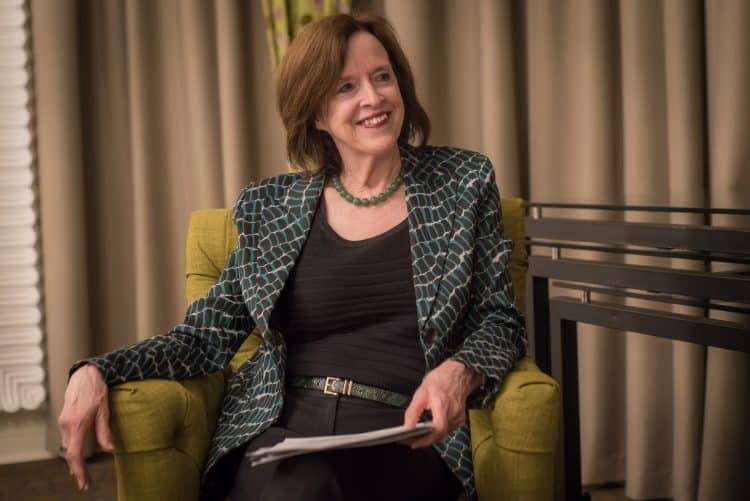
Last week, Hungary Today had the opportunity to interview April H. Foley, the United States Ambassador to Hungary from 2006 to 2009. Prior to her service as ambassador, Foley held, among other distinguished positions, the role of Vice Chairman of the Export-Import Bank of the United States. She currently serves as the Chair of the Board of the Hungary Initiatives Foundation, and is involved with the US-based think tank the Atlantic Council.

This interview has been edited for concision and clarity
Could you speak a bit about the Atlantic Council, and how long you’ve been involved with the Council’s work?

I came to Budapest with the Atlantic Council. The Atlantic Council is one of the oldest NGO-s actively promoting atlanticism in Washington and around the world. It was founded by American citizens not long after the North Atlantic Treaty was signed, so it is very well respected. It’s a little different than the other think thanks because it doesn’t do just research and papers, it actually engages with people in the government, corporate life, the military, and civil society. And it’s really a wonderful convener. The Atlantic Council wanted to come to Budapest because it views itself as a friend of Hungary and a friend of the government of Hungary. We’re very interested in strengthening the ties between the US and Hungary, and letting Hungary know that there are people in Washington who really care about Hungary.

What sort of policy platform positions does the Council advocate for? From the name, I assume it’s pro-NATO?

Yes, the Council advocates for a strong transatlantic relationship as a fundamental basis of a stable international system. So, it’s in favor of strengthening the military relationship between NATO partners, it’s in favor of strong government-to-government as well as people-to-people relationships among the transatlantic community and prospective NATO members. The question is really, how can we strengthen this relationship and make it more productive and happier for both sides.

You mentioned Hungary; are there any specific countries that are the main focus of the Atlantic Council’s advocacy?

We do a lot in Central Europe. It’s mostly the European countries, EU and NATO countries I would say is the primary focus. But the Council is also very active in countries where there is a history of NATO engagement, in the Middle East and Balkans.

Could you talk a bit about how you became Ambassador?

Well, I attended Harvard Business School with George W. Bush. He and I were classmates, and were friends at the time. He was a buddy of mine, and we just stayed in contact with each other over the years. When he ran for Governor of Texas I supported his campaign, and then of course he ran for President of the United States, and I supported him in that. When he came into office, he wanted to have the best record on women of any US President, and so he contacted me, and said “I want you to serve in my administration.”

So first I served as the Vice-Chair of the Export-Import Bank of the United States, Ex-Im Bank. When my term expired there, he asked me if I would be the US Ambassador to Hungary. I was really honored by that, because that’s a plum position. I was just delighted to be offered that position.

Had you ever been to Hungary before becoming Ambassador?

No, I had never been to Hungary before, and most of my recollections were of the 1956 Revolution when I was a young child, seeing pictures of the Pesti boys on the cover of [Time] magazine. As a child, it really touched my heart.
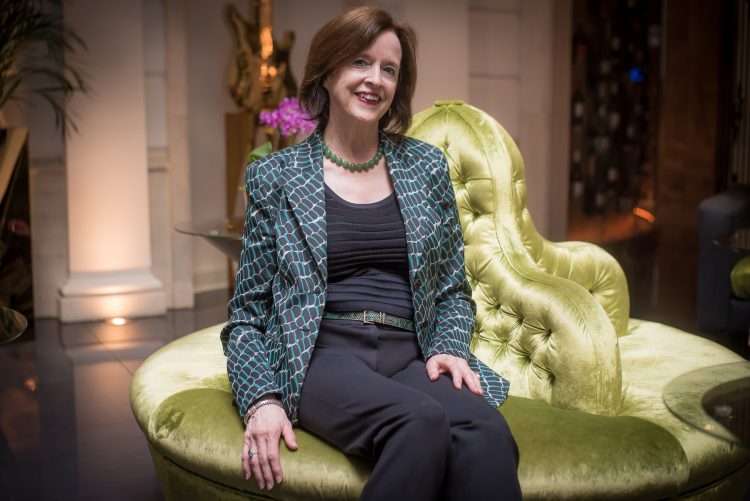
Overall, how would you describe your experience as Ambassador?

I just had a fabulous time. My love affair with Hungary began in 2006, and I’ve just continued to love Hungary all the way through, I’ve never stopped loving Hungary. I love the people. Serving as the US Ambassador was really one of the high points of my life. I just enjoyed every minute of my time here. The Hungarian people are so warm and open and helpful to me all the time. And I felt like I was able to do things here as well.

I’ll tell you about a few accomplishments I’m most proud of. The first relates to the Táncsics Mihály property, over in Buda, which is an old historic building. It’s an absolutely magnificent piece of property that was an old prison, it overlooks the Danube and has spectacular views of the river. I think the US bought the property after World War II to help provide the Hungarian government with some liquidity, but then they wanted that property back, because it had such historic significance. So, we worked out a way to do a property swap: The US Embassy is on Szabadság Tér, and there were two buildings right next to where our embassy was, so we swapped the Táncsics property for these two contiguous buildings, giving us a whole block right on beautiful, leafy Szabadság Tér.

A second one was to get Hungary into the Visa Waiver Program. At the time, western European countries were in the visa waiver program, which enabled citizens of those countries to have a very expedited and simplified process for getting a visa into the United States. And although Hungary was a member of the NATO alliance, and a member of the EU, it was not in the Visa Waiver Program, and Hungarians basically wanted equal treatment. At first, I thought, “Oh my gosh, I cannot deliver on this,” because it requires an Act of Congress…But, what happened is that, when George W. Bush came here in 2006 for the 50th anniversary of the 56 Revolution, he heard that same message, that Hungarians wanted to be in the Visa Waiver Program, and so when we worked it out with Hungary to meet all the hurdles for that program, President Bush provided the effort to get it through Congress. And so, Hungary got into that program. The Hungarian American community was also very engaged in promoting this in Washington at the time.

The third thing is the Pápa airbase. Hungary decided that it wanted to have a NATO airbase somewhere in the NATO countries. The Pápa airbase is an absolutely magnificent airbase, it’s wide-open, it’s huge, it’s well maintained, but there was nothing happening there, there was no business. And so, they wanted Pápa to be the location for the new C-17 program, heavy-lift aircraft. And so, my embassy and I worked very hard with the Ministry of Defense, with the Pentagon in Washington, and with our contacts at the NATO alliance to support Hungary’s bid to get it here. There were other countries that were competing, but we were able to get it here in Hungary, so I was happy about that.

So, you were here on October 23, 2006, when major protests broke out on the 50thanniversary of the Hungarian Revolution.

Yes, and part of it was at Szabadság Tér. I arrived in July 2006, so I had a bit of time. But things are a bit slow during uborka season [salad days] …[laughs]…

As Ambassador, was there any crisis management you had to engage in?

Yes. Strangely enough, our embassy goes through security exercises for crisis management. They’re called table-top exercises, where you say “Ok, here’s a crisis, how are you going to handle it?” And each person goes through it. We had just done a crisis exercise, about 10 days before this, and so everything was very fresh in our minds. But we had to close the embassy, call in the marines, all those things.

Did the embassy end up putting out any official statements or anything similar about the protest?

No, we viewed it as a Hungarian domestic issue.

Having lived here for three years, what do you miss the most about the country?

Well, certainly I miss crossing the Danube River. The ambassador’s residence is on the Buda side, and the embassy of course is on the Pest side. So, every day I would go back and forth across the Danube River, and no matter how many times I went across the river, that sight always grabbed me. It just grabbed me, it’s so dazzlingly beautiful that I just never got over that.

Another thing is, I love Hungarian goose liver, I absolutely adore it. And there’s nothing in the United States that is remotely like Hungarian goose liver, nothing.

I miss hearing the Hungarian national anthem, it’s such a soulful song, and so now if I go to a Hungarian event in New York or Washington and they play that national anthem I just become bitterly homesick for Hungary.

I miss days like today. There are sunny days of the summer when families are out, and people are out on the streets, and they’re walking around the castle district, and they’re eating and having fun, and they have their children, they’re shopping, it’s just blissful.

I miss the Parliament building. That long red staircase that you go up, to go to your meetings, I miss that sense of excitement and anticipation that I would have going up that staircase, but also feeling like you’re in a historic building, with echoes of a bygone era. It’s magical being in there.

And finally, I miss hand-kissing. I mean, I wish there was hand-kissing in the United States of America. Americans have a lot to learn from Hungary about life.
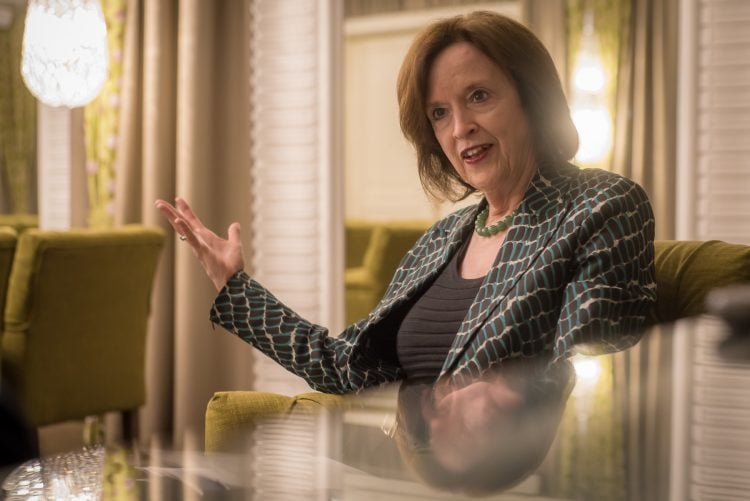
You’re currently heading the Hungary Initiatives Foundation. I was just wondering if you could talk about how you became involved with the Foundation.

Prime Minister Orbán was very interested in strengthening the ties of friendship between the US and Hungary. And so, he worked with parliament to set aside some funds to endow a foundation in the US that would support strengthening the people-to-people relationship between the two countries. He invited me to chair the Hungary Initiatives Foundation. First of all, I was pleased that he had the vision and wisdom to make this happen. There are some other countries who have similar initiatives, but Hungary was not one of them. But he was willing to take a bold step, and make this happen. So, I was really honored, and I share his desire to strengthen the bonds of friendship between our two nations.

And I’m really proud of what we’ve been able to do at the Hungary Initiatives Foundation. Last year, we made grants of about $600,000. We supported Hungarian-American organizations that are doing wonderful things promoting Hungarian culture in the United States, we supported scholarships, we supported internships, we supported artists and scientists, who were planning to go over to the United States with a program. We helped them make ends meet for their trip, so that their trip could become a reality. We did a lot of work on the celebration of the 60th anniversary of the 1956 Revolution.

The ’56 Revolution really resonates with Hungarian-Americans, and we supported all kinds of things, from memorial concerts to lectures to folk-dance performances to inaugurating ’56 memorials in the United States. So, it was a very touching and unifying year for the Hungarian-American community, and I feel happy that we were able to contribute to that. And I also feel that, when Hungarian students are able to spend a year in the United States, or even a semester in the United States, it changes their attitude toward the United States, really, for many of them, for their entire lives. And that’s a very positive contribution that we can make to support talented Hungarians.

So, the Foundation’s main purpose is to distribute grants to Hungarian-American organizations and to other groups as well?

The foundation is an independent, Washington-based, non-profit – as we say in America, a 501c3 – organization with an endowment large enough to allow us to think long term. So we invest in fellowship and leadership programs for young Hungarians, we provide graduate and conference support scholarships and also make grants to Hungarian American and other US-based organizations that are interested in promoting Hungarian culture within their larger community.

How much does this work overlap with the kind of work you did as ambassador here?

It’s very similar, because I have a great devotion to Hungary, and this enables me to keep my contacts with Hungary fresh. But it also enables me to build bonds of friendship here, and it enables me to act on the needs of Hungarians in a way that strengthens their ties to the United States. And I think it also enables our organization to give Hungarians a more positive view of the United States at the same time, which I think contributes to stronger long-term relationships between our two countries.

The ongoing “Lex CEU” controversy triggered a reaction from the current Chargé d’affaires and all over the world. I was wondering what your reaction has been to that?

I don’t feel equipped to comment on that really, I just don’t know enough of the ins and outs of it, sorry.

I have a similar question about the NGO law that the Hungarian government passed recently that likewise triggered a similar response from the Chargé and the embassy.

Here again, I’m just not that familiar with the specifics of the law to comment.

Have you seen the recent ‘Soros’ billboard campaign, that recently drew comment and concern from Mazsihisz, the Jewish community here? Do you have any reaction to that either?

I don’t.

I know you served under a different Republican administration entirely, but do you have any thoughts or inkling of who the next Ambassador to Hungary might be?

Well, I’ve heard a lot of speculation, and there are a lot of names that are floating around, and all of them I would say are very highly qualified people. But I have no idea, I have no special insight into who the first choice will be. I hope that President Trump is able to appoint an ambassador soon, because it’s an important job, and it needs to be filled.

No personal favorites that you’d like to see fill the post? No gossip you’d like to share?

No… [laughs]

Reporting by Tom Szigeti

Photos by Vivien Cher Benko

Source: hungarytoday.hu

Reklám
Tas J Nadas, Esq

BUDAPEST 2017: VISITORS AND LOCALS SHARE THEIR REACTIONS TO THE FINA WORLD AQUATICS CHAMPIONSHIPS

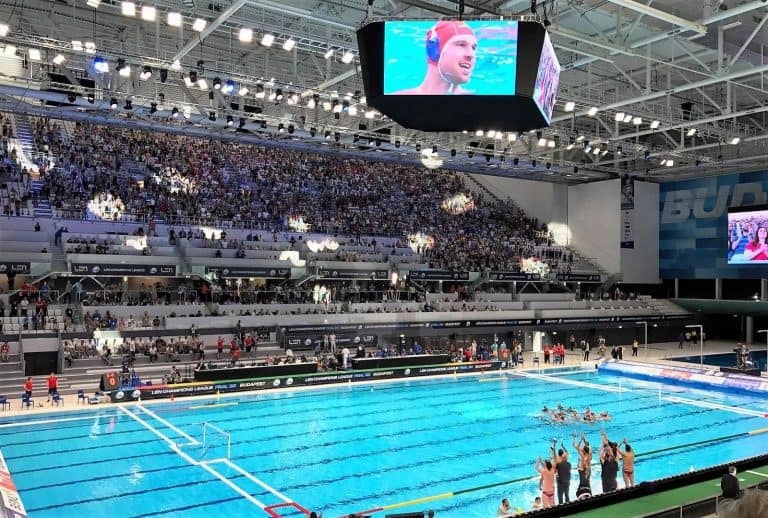
Now that they have come to a close, it is perhaps a good time to sit back and take stock of the FINA World Aquatics Championships. To that end, surveys have been conducted to measure Hungarians and visitors’ reactions to the huge sporting event. 

Four out of five visitors said they would recommend that their friends make a trip to Hungary as well. Two-thirds of foreigners who visited Hungary during the 2017 FINA World Aquatics Championships between July 14 and 30 definitely plan to return to the country, a survey by the Hungarian Tourism Agency showed.

The FINA Championships drew tourists to Hungary who may have otherwise never visited the country, the head of the tourism agency said at a press conference in the Duna Arena, one of the main venues of the event in Budapest. The average stay of visitors during the period rose to 9 days from 2.4, Zoltán Guller noted. The FINA Championships, the biggest international sporting event ever hosted by the country, attracted around 485,000 spectators.

The leaders of the International Swimming Federation (FINA) expressed “maximum satisfaction” with the championships after all. FINA President Julio Maglione called the event the “best ever” championships in the federation’s history.


What do Hungarians, whose country played host to the event, think of all this? Four fifths of Hungarians say hosting  the world aquatics championships was ‘good idea’ Fully 80 percent of Hungarians asked said that hosting the recent world aquatics championships was a good idea, while merely 11 percent said the opposite, a representative survey by Nézőpont shows.


The pollster surveyed a sample of 1,000 just before the competitions that took place from July 14 to 30, and another 500 after the championships ended. In July the ratio of Hungarians disapproving of the country hosting the championships was 21 percent. The shift in approval reflects the success of the event, Nézőpont said. The rate of those satisfied with the way the championships were organised rose from 58 percent to 72 percent, the survey said. Over two thirds, 68 percent of Hungarians agreed that Hungary should apply to host other sports events of the same scale, Nézőpont said.

via: hungarymatters.hu / hungarytoday.hu

photos: nezopontintezet.hu; fanzone.fina-budapest2017.com; fina-budapest2017.com

Reklám
Tas J Nadas, Esq

HUNGARIAN ECONOMIC DEVELOPMENT PROGRAM TO EXTEND 200 MILLION EUROS TO SERBIA’S VOJVODINA REGION

Wire service MTI reports that the Hungarian government has so far extended 9 billion forints (29.6 million euros) in grants and credit with businesses as part of an economic development program in Vojvodina (Vajdaság), Serbia’s northernmost region, which is home to a large ethnic Hungarian community.

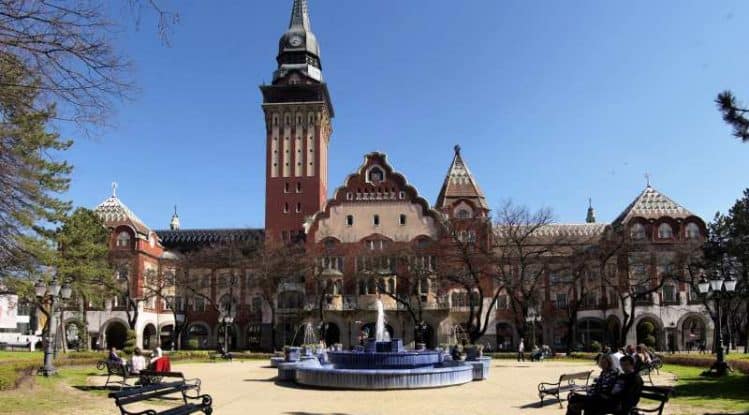
Speaking in Subotica (Szabadka), the second-largest city in Vojvodina, Hungary’s state secretary for economic diplomacy Levente Magyar offered some updates on the program.

In total, he said, the 9 billion forints distributed this year are part of a three-year, 60 billion-forint (approximately 198 million euros) program that was launched last year. Through this program, the Hungarian government has signed contracts with six local businesses in Subotica, which will undertake farm investments of over 10 billion forints (32.9 million euros).

Magyar added that the program, which has aided more than 6,200 businesses, is focused on the agricultural and tourism sectors, as well as on the development small and medium-sized enterprises (SMEs). Through its investments, the program hopes to reverse the trend of the migration of young people out of the region.

Via MTI and Hungary Matters / hungarytoday.hu

Image via szecesszio.szegedvaros.hu

Reklám
Tas J Nadas, Esq

Hungarian PM Orban pledges to support Poland against ‘European inquisition’

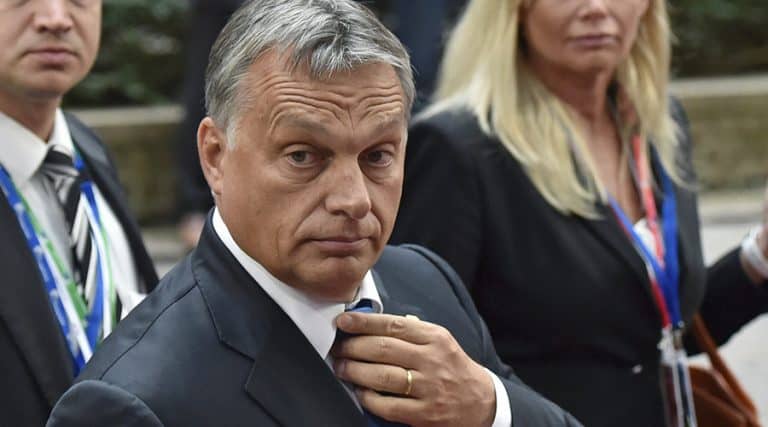
Hungarian Prime Minister Victor Orban © Eric Vidal / Reuters

Hungary will stand by Poland in a row with the European Union, the country’s prime minister Viktor Orban has said, blasting Brussels for its “inquisition offensive” against Poland which has been threatened with sanctions over its controversial judicial reform plans.

“The inquisition offensive against Poland can never succeed because Hungary will use all legal options in the European Union to show solidarity with the Poles,”Reuters cited Orban as saying Saturday.

Orban’s statement of support came as Poland’s upper house passed the Judiciary Reform bill, which, if approved by the president, will enable lawmakers to designate judges to the Supreme Court.

Deemed a major blow to the constitution, the proposed new legislation has triggered massive protests across Poland, with thousands expected to rally again Saturday.

Poles have urged President Andrzej Duda to reject the bill while Brussels warned it was “very close to triggering Article 7.”

If there is “a clear risk of a serious breach” of the bloc’s values, Article 7 of the Lisbon Treaty may be activated which among other measures would “suspend certain of the rights,” including Poland’s voting rights in the European Council.

“If adopted, [the laws] would seriously erode the independence of the Polish judiciary,”First Vice-President of the European Commission, Frans Timmermans said.

Speaking in Romania, Orban lashed out at Timmermans, referring to him as “an inquisitor, who steps up against those who speak up.” He said Timmermans was involved in an “effort to weaken patriotic governments”, adding Poland was now his target.

Last month, the European Commission launched infringement procedures against Budapest, Warsaw and Prague over a “breach of their legal obligations”under the EU refugee relocation scheme, saying, the trio haven’t relocated “a single person” from more than 100,000 stranded in Italy and Greece.

Known for his vehement opposition to the EU’s migration policy, Orban remains defiant, claiming that Hungary can’t “show solidarity with ideas and peoples whose goal is to change our lives.”

“We can’t show solidarity or we risk losing our identity,” Orban said.

“Will Europe be inhabited by Europeans? Will Hungary be inhabited by Hungarians, Germany by Germans, France by the French, Italy by Italians? Who will live in Europe?” he went on.

Source: rt.com

Reklám
Tas J Nadas, Esq

BUDAPEST IS LISTED AS THE 5TH MOST BEAUTIFUL CITY IN EUROPE

The capital city of Hungary is mentioned on the top list of yet another travel website. Travel and Leisure asks its readers every year to share their travel experiences and rank cities by different aspects. We are happy and proud to report that Budapest is ranked in the illustrious 5th place

Travellers rank the cities by their landmarks, culture, cuisine, friendliness, shopping and overall value. Italy and Spain kept their leading positions, but the only top-ranked city (top 7) from another country was Budapest.

Readers seem to be in love with the lights of the city as several of them suggest taking twilight cruises or walks along the Danube. “The night lights of the city and bridges were breath-taking!” one wrote. “If you weren’t in love, you could fall in love very easily!” Moreover, the article highlights new, popular accommodations like the Aria Hotel and the Ritz-Carlton.

THE TOP 15 CITIES IN EUROPE:

  1. Florence, Italy
  2. Rome, Italy
  3. Barcelona, Spain
  4. San Sebastian, Spain
  5. Budapest, Hungary
  6. Siena, Italy
  7. Seville, Spain
  8. Krakow, Poland
  9. Porto, Portugal
  10. Lisbon, Portugal
  11. Prague, Czech Republic
  12. Venice, Italy
  13. Edinburgh, Scotland
  14. Istanbul, Turkey
  15. Madrid, Spain

Ce: bm

Source: travelandleisure.com / dailynewshungary.com

Reklám
Tas J Nadas, Esq

HUNGARY HAS A SABRE FENCING WORLD CHAMPION AFTER 27 YEARS

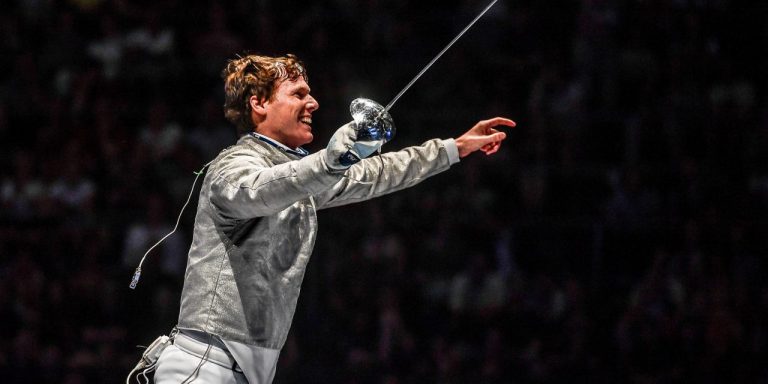
Even though everyone is focused on the World Aquatics Championships right now, we should take a moment to congratulate András Szatmári who became a world champion in sabre fencing. This is a huge success considering, that the last Hungarian world champion in men’s sabre was György Nébald in 1990, when András Szatmári wasn’t even born yet.

According to index.hu, the first day of the World Championships held in Leipzig was about men’s individual sabre fencing. However, this time the competition wasn’t about two-time Olympic champion Áron Szilágyi, but the 24-year-old András Szatmári instead. He had already won a Junior World Championships, and now he made his breakthrough in the senior field.

The final fencing-bout was full of tension and excitement. The South Korean Gu started out quite aggressively, but András was able to keep up with the tempo. He gradually fell into line with his opponent and took over the lead with perfect timing.

“I’m the world champion, this was my dream! Our official goal was to reach the quarter final, but we were secretly hoping for a medal. How was I able to turn the bout around from 4:8? This is partly due to my master’s support. In the break he emphasized that one doesn’t get the chance to become a world champion every day. And this fuelled me” said András Szatmári.

Congratulations!

Featured image: MTI

Source: index.hu – dailynewshungary.com

Reklám
Tas J Nadas, Esq

Pope names Bishop Nelson J. Perez as new leader of Cleveland diocese

CLEVELAND, Ohio – Bishop-designate Nelson J. Perez, born in Miami but most recently serving in New York state, has been named the new leader of the Cleveland Catholic Diocese.

Bishop Nelson J. Perez is introduced as the new Bishop of the Diocese of Cleveland, during a press conference, Tuesday, July 11, 2017. (Marvin Fong / The Plain Dealer)(Marvin Fong)

Pope Francis’ decree was made public this morning and the new bishop will be introduced at a 9 a.m. news conference.

He will also celebrate the noon mass in downtown Cleveland. Both events will be held at the Cathedral of St. John the Evangelist at East 9th Street and Superior Avenue.

Perez replaces Bishop Richard Lennon, who announced his retirement in December after his diagnosis with vascular dementia.

Perez will be installed as the 11th bishop of the Cleveland diocese in September, according to a statement released by the diocese this morning.

“I am so very happy to be here with you, to learn from you, grow with you, and serve you with pastoral devotion,” Perez said in the statement. “Please don’t hesitate to say hello, if you see me as I venture out, eager to experience my new home. God bless you, all!”

Perez, 56, was born in Miami in 1961 to Cuban parents who had fled the government of Fidel Castro almost two years earlier, Newsday.com reported.

He has a degree in psychology from Montclair State University in New Jersey. He taught elementary school in Puerto Rico before attending seminary. He was ordained as a priest in Philadelphia in 1989.

In 1998, he was named a chaplain to His Holiness by Pope John Paul II and Prelate of Honor in 2009 by Pope Benedict XVI, Long Island Catholic reported.

In June 2012, Perez was named auxiliary bishop of the Diocese of Rockville Centre, N.Y. Perez served as the Episcopal Vicar for the Eastern Vicariate and Vicar for Hispanic Ministry. He served as a member of the Corporate Board of Directors for Catholic Health Services; Vice Chair of Catholic Charities; Priests Personnel Board, the Presbyteral Council and the Diocesan Advisory Committee for Hispanic Ministry.

“I was ordained a priest for the Archdiocese of Philadelphia on May 20, 1989. I certainly never imagined then, that I would one day serve as auxiliary bishop in the Diocese of Rockville Centre and now, here today, to begin my service as your bishop,” Perez told Newsday.

Bishop Daniel E. Thomas has served as the apostolic administrator for Cleveland’s diocese while the Vatican completed its search for a leader for the eight-county region. Thomas is the bishop of the Toledo diocese. He will continue to oversee Cleveland until Perez is installed.

“In Bishop Nelson Perez, the Diocese of Cleveland is receiving a faithful, enthusiastic and joyful shepherd for Christ and His Church,” Thomas said in the Diocese statement.

The Cleveland Catholic Diocese includes eight northeast Ohio counties. It has a total population of 2.7 million of which 677,219, or 24 percent, are Catholic.

The diocese will livestream the 9 a.m. press conference.

Congratulations are being posted on Twitter from churches and supporters.

 Cleveland is getting a Latino Bishop!! Welcome to Cleveland Bishop Nelson J. Perez. Thank you @Pontifex for his… https://t.co/RIM7HbMwT1


Source: cleveland.com

Reklám
Tas J Nadas, Esq

Hungarian Gulyas Festival about food, fun, tradition

Norridge United Church of Christ will hosts its 10th Hungarian Gulyas Festival with music, dancing, kids activities and the Gulyas Cookoff. (Hungarian Gulyas Festival)

Goulash lovers unite!

That’s what’s going to happen at the Hungarian Gulyas Festival, the 10th annual celebration of Hungarian traditions, July 8 and 9, at Norridge United Church of Christ.

The highlight of the festival is the annual Gulyas (Hungarian spelling) Cook-off on Saturday. Judges select a winner and visitors to the event also vote for their favorite version of the Hungarian take on chili.

Pam Csekme, a member of the church’s board of directors who assists English-speaking people at the event, noted that the gulyas is cooked in “the authentic Hungarian way. It’s all made from scratch. You can’t do anything ahead of time except slice the vegetables.” The gulyas is cooked in a cauldron hanging on a tripod over an open fire.

“They have to make a minimum of five gallons so that the public and the judges can taste it,” Csekme said. The entire process takes three-to-four hours.

Visitors won’t go hungry while the cooks are at work, though. There’s a “bottomless” gulyas cauldron both days. “It’s about four feet across and two feet deep,” Csekme said. “It holds possibly about 75 or more gallons.”

Kate Smith, another church board member, reported that the contestants work in teams. “There are usually 10-15 teams competing,” she said. The teams are generally composed of two to three people. One person couldn’t possibly handle the entire process because they are cooking over an open fire.

People must complete an application form in order to participate in the contest. Most of them come back year after year. “We never have a problem finding people,” Smith said.

Surprisingly, none of the church members compete in the cook-off. Smith said that’s because they are too busy running the event.

Once the contestant teams finish cooking, visitors can sample a 2-to-3-ounce tasting portion of each gulyas before they vote.

Other traditional Hungarian foods will be available, including crepes, Kürtőskalács (rolled sweet dough) and lángos (elephant ears). Csekme noted that while Americans tend to put powdered sugar on their elephant ears, the Hungarian way of eating them is with sour cream, cheese and garlic. “Since I’m American,” Csekme said, “I convinced them to also put out powdered sugar.”

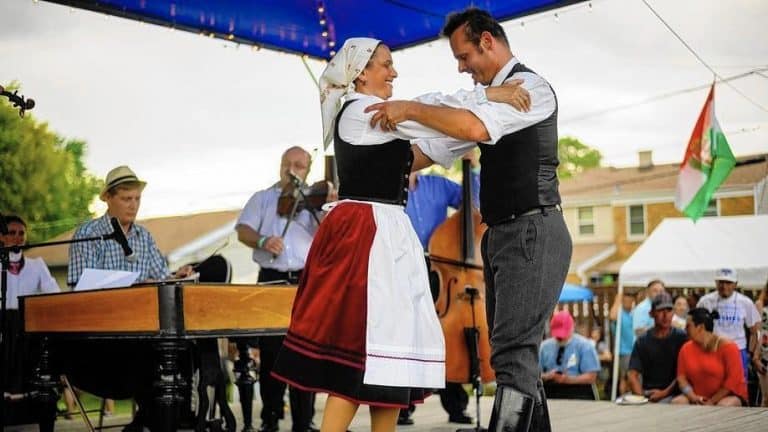
Entertainment will be provided by Hungarian bands and authentic Hungarian folk dancers. “This year we have a group of ten dancers that will dance along with the band throughout the day,” Smith said.

There will be face painters, games and activities for children.

Csekme and her husband will sell T-shirts to raise additional funds for the church. There will also be vendors selling Hungarian items and the folk dancers will sell handmade jewelry and purses.

“We try to keep everybody busy and happy,” Csekme said.

Hungarian Gulyas Festival

When: noon-9 p.m. July 8 and 9

Where: Norridge United Church of Christ, 8260 W. Foster Ave., Norridge

Tickets: $20; $30 for both days; $5 for ages 6-12

Information: 708-456-3398; www.gulyasfestival.com

Source: chicagotribune.com

Reklám
Tas J Nadas, Esq

How to piss off a Hungarian

Photo: Fredrik Håkansson

FIRST THINGS FIRST: I am not Hungarian.

I visited Hungary for the first time in 2005 with my Hungarian friend, Anita, and have returned to Magyarország 12 times since marrying her six years ago. We now run a business together and spend all day side by side. Therefore (and I think she will agree), I’m highly qualified as a Hungarian Piss-er Off-er. I’ve had practice.

Here’s how to do it.

Write an article about how to piss off a Hungarian.

No matter what I write below this line, a Hungarian living somewhere, maybe in Tuvalu, will be pissed off about it.

Refuse a shot of házi pálinka.

This “Magyar moonshine” is usually made from stone fruits and, while packing a punch, has a smooth fruity finish that warms your insides. Just about everyone makes it or knows someone who does, each distiller lauding the quality of his batch.

When visiting a household for the first time or at a house party, you will be offered a shot of homemade pálinka. Refuse and you’ll not only insult your host, but will be on the receiving end of stern looks and shaking heads. Say “Egészségedre,” put the glass to your lips, and throw your head back. Switch to beer after your third shot or you might end up floating down the Danube in a 55-gallon drum.

Assume life in Hungary is exceptionally better since the fall of Communism.

“Goulash Communism” may have had a cleaner human rights record than the hard-line Stalinist structures in Eastern Bloc nations, but Hungary was still more or less under Communist rule from the end of WWII until 1989.

When the Berlin Wall crumbled, some thrived, but many are still feeling the effects of having been hung out to dry by the collapse of the steady industrial work Communism provided. Ongoing corruption within the government and infectious pessimism don’t help either. My mother-in-law sums it up:

“It was better. Steady work and steady pay. But obviously it was unsustainable. Once Russia and the Eastern Bloc failed, there was no market for our products. Life was good back then.”

Overlook Hungarian food.

There are two things Hungarians are engulfed in an obsessive, passionate, and incendiary affair with: water sports (water polo, kayaking, swimming) and their food.

Hearty soups and stews, slow cooked in a cauldron over open fire, rode in with the nomadic tribes over 1,000 years ago. Two dishes stand out as quintessentially Magyar: gulyás, a robust soup made of beef or pork with potatoes, carrots, Hungarian peppers, and a base of onion, garlic, caraway, and paprika (of course). Imagine beef stew. Now imagine it smokier, richer, slightly piquant, and deeper in its seductive layers. And another classic, halászlé, a soup made from freshwater fish and copious amounts of onion and paprika. It incarcerates your senses while it bubbles with its brilliant red broth and spicy, soulful flavor.

Magyarország also serves up a delectable panoply of sausages, soups, entrees, and desserts. Sour cream, túró (similar to ricotta cheese), and numerous pickled delights are added to, or accompany, most dishes. Seriously, if you’ve never tasted Hungarian salami, then you have not lived, my friend.

Make a joke about “hungry Hungarians,” or say “I’m hungry, too!”

Yeah, not very clever. I’ve always preferred, “If you’re hungry, why don’t you go over to Turkey and then fry it in Greece?” At least that requires some thought.

And yes, Hungarians are pretty hungry because their aforementioned food is delicious, dammit.

Lump Hungarians in with all the other Slavic peoples of Central and Eastern Europe.

The Magyars are said to have been a nomadic group of seven tribes that settled in the Carpathian Basin around 895. Their origin is a topic of much debate, especially among Hungarians themselves.

Most evidence points to a culture that migrated from the West Siberian steppes to the southern Ural Mountains near the Black Sea. Here they mingled with Turkic Bulgars and Huns, thus adding to their skill set and customs. Eventually the Magyars settled in the area of present-day Hungary. Some Hungarians don’t buy into this theory and instead believe they are descendants of an alien race. I’m not kidding.

And then there is the Hungarian language. Said to be distantly related to Finnish, Hungarian has no connection to Romance, Germanic, or any other Indo-European language groups. It’s widely considered one of the hardest languages to learn as a foreigner. Suffixes are used to change the meaning and function of words and adhere to the rules of vowel harmony. It’s just f’ing hard to master.

Hungarians are intensely proud of their language and are quick to point out its versatility, richness, and poetic grace. The alphabet contains 44 letters and the longest word in Hungarian is: legeslegmegszentségteleníttethetetlenebbjeitekként(loosely translated as “like those of you that are the very least possible to get desecrated”).

So don’t call them Russian or Slavic or you might end up abducted and anally probed by people speaking a strange and beautiful language with frighteningly long words.

Be insensitive about the Treaty of Trianon.

Prior to WWI, Hungary, aligned with the Habsburgs of Austria, held control of a territory three times its current size. Being on the losing side of that war, Hungary was put on the chopping block by the 1920 Treaty of Trianon in Versailles, France. The borders of new nations were drawn up leaving Hungary a third of its original land and displacing millions of ethnic Hungarians as minorities in foreign countries. Along with the loss of property and population, certain natural resources and access to the Adriatic Sea were also relegated as a thing of the past.

Today, Hungary shares borders with seven nations: Slovakia, Ukraine, Romania, Serbia, Croatia, Slovenia, and Austria. Relationships with these neighbors are for the most part cordial. For many Hungarians, however, the wounds inflicted by Trianon’s butcher knife are still fresh. Occasional news stories of discrimination against their compatriots in bordering lands stir up emotions of injustice and resentment. The memory of past glory and present sorrow is kept in public view by bumper stickers in the shape of “big Hungary” that some display on their cars.

Let’s just say it’s complicated. History, language, politics, and even food. Being a crossroads between East and West will do that to a place.

But a few simple rules will keep you from being a seggfej: Drink like you mean it, eat like you mean it, bring up history/politics only if you know what the hell you’re talking about, and — bazd meg! — learn some Hungarian cuss words!

Source: matadornetwork.com

Reklám
Tas J Nadas, Esq

Romanian media overflooded with nationalistic messages

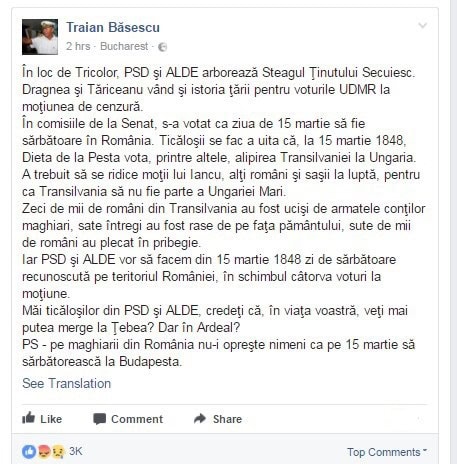
Anti-Hungarian sentiment and hate speech have risen to alarming proportions in recent days in Romania, as social media and news channels have been overflooded with nationalistic messages directed against the Hungarian community by Romanian politicians, journalists, social media influencers and opinion-makers. In the midst of a political crisis, the Romanian political elite, with considerable boost from the media, once again flashes the so-called “Hungarian card”, and turns the public opinion against the Hungarian community in Romania. Instead of focusing on the issues at hand, namely an internal crisis within the largest political formation in Parliament – the Social Democratic Party (PSD) – with the potential of turning into a veritable governmental crisis, the media quickly managed to divert the public’s attention by launching a tirade of lies and openly xenophobic comments against the Hungarian community.

Former president Traian BĂSESCU distorting historical facts and openly lying in order to appeal to dormant nationalistic sentiment

Last week, the leader of PSD, Liviu DRAGNEA, announced that they propose a vote of no confidence in Parliament against prime minister Sorin GRINDEANU and his cabinet for not fulfilling the promises made during the campaign. In preparing the motion, DRAGNEA and his party had conversations with several members of Parliament, among them the Democratic Alliance of Hungarians in Romania (UDMR/RMDSZ), who were prepared to back the motion, on  condition that the PSD-ALDE coalition supports a law aiming to extend the linguistic rights of the Hungarian community in Romania, as well as allow the use of their regional symbols, among other things. As soon as news of this reached the media, news outlets generated a nationalistic hysteria within hours, raising false alarms that the Hungarians were planning to take Transylvania from the Romanians.

Among the first to strike a chauvinistic tone was former president Traian BĂSESCU. He posted a message on his Facebook page in which he expressed anger and dismay at the idea that the coalition parties voted a law in the Senate, which allowed the 15th of March to become a national day for Hungarians in Romania. BĂSESCU launched into a series of lies and exaggerations claiming that the respective day is insulting to Romanians, because “tens of thousands of Romanians from Transylvania had been killed by the armies of the Hungarian counts, and entire villages had been wiped off the face of the earth” during the 1848-1849 revolution. Not content with distorting historical facts and openly lying in order to appeal to dormant nationalistic sentiment, and thus building political capital for himself, the former president ended his message by practically denying the Hungarian community their right to celebrate the national day of Hungarians within the territory of Romania: “Nobody is stopping Hungarians in Romania from celebrating the 15th of March in Budapest”. Ironically, it was the same Traian BĂSESCU, who on the 15th of March 2010, while still in office, called Hungarians in Romania his “dear fellow countrymen”, and praised the Hungarian revolutionaries of 1848-1849 for fighting for the common ideals of the European people.

Captions displayed with the sole purpose of inflaming the spirits and capturing the attention of the viewers with their sensationalistic content.

The main propagators of the nationalistic hysteria have been certain news channels, with particularly xenophobic rhetoric displayed by politicians and journalists on talk shows of Realitatea TV and B1 TV. The host and the guests of Realitatea TV’s evening talk show entitled ”Jocuri de putere” (Power games) outdid each other in anti-Hungarian comments, fuelled by purposely incorrect interpretations of the law proposed by UDMR/RMDSZ. At one point the host, Rareș BOGDAN, with the purpose of shocking viewers, ranted about a “separate state in the middle of Transylvania”. One of his guests, the journalist Oreste TEODORESCU, referred to Hungarians as “backward and anachronistic”, simply for wanting more rights, and he openly threatened the Hungarian community with a veritable uprising of the Romanian majority, if they refuse to give up their requests. What is more, blatantly false captions were displayed during the entire duration of the show, with the sole purpose of inflaming the spirits and capturing the attention of the viewers with their sensationalistic content: “The Szekler flag becomes mandatory in Transylvania”, “Region with Kosovo-type special status in Transylvania”, “Transylvania in danger! Dragnea wants to auction it”, etc.

A well-known journalist and political analyst, Cristian Tudor POPESCU, went on Digi24 TV to share his views on the 15th of March becoming a national day for Hungarians in Romania, and like BĂSESCU and others, he spoke of historical facts in purposely exaggerated terms, further adding to an already agitated public mood and fuelling the anti-Hungarian rhetoric that had permeated the media: “The 15th of March represents the humiliation, the discrimination, the discrediting, the attacking and the killing of Romanians by the Hungarians.”

These are but a few examples of the xenophobic-chauvinistic messages and comments that have been circulating in the media and online in the past couple of days. The Mikó Imre Legal Services Assistance for Minority Rights condemns the extreme form of anti-Hungarian rhetoric that appeared in the Romanian mass-media and in the social media. Our organisation has submitted complaints to the National Council for Anti-Discrimination (CNCD) against politicians, journalists, social media influencers and all those who publicly voiced anti-Hungarian messages and thus contributed to propagating false, misleading and xenophobic content about the Hungarians in Romania, hurting the dignity of an entire community.

Source: The Mikó Imre Minority Rights Legal Services Assistance


Reklám
Tas J Nadas, Esq

Hungarian Americans Together Conference Held at Marymount University in Arlington, VA – May 19 – 21

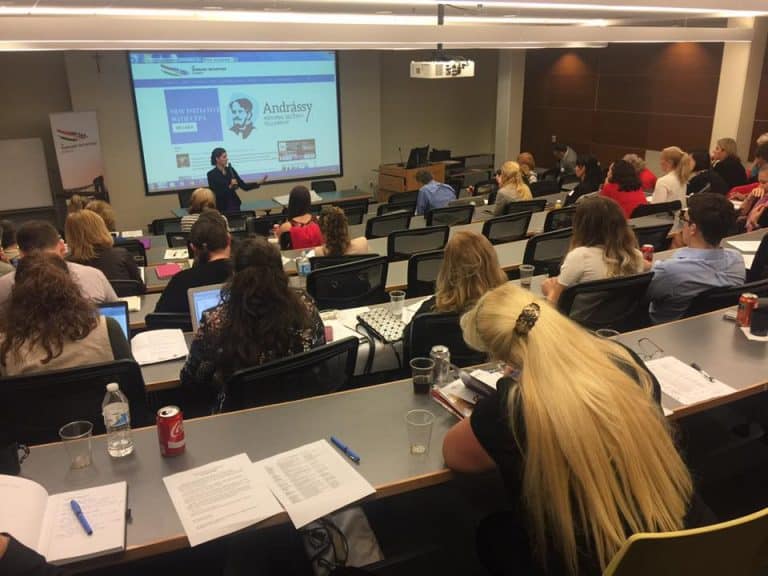
HATOG participants listen to the presentation of Mrs. Anna Smith Lacey, Executive Director of the Hungary Initiatives Foundation at Marymount University in Arlington, VA

Washington, DC – The tenth Hungarian Americans Together conference (HATOG X) was held in the Washington, DC area on May 19-21, 2017.  HATOG is generally held annually, in a different U.S. city, to provide a forum for Hungarian organizations that work to maintain Hungarian heritage and culture in their communities.

This year’s conference was organized by the American Hungarian Heritage House (AHHH), the Hungarian American Coalition (Coalition), and The Hungary Initiatives Foundation. More than 60 representatives from 16 states and Hungary, attended the conference. With a real focus on attracting young up-and-coming leaders, approximately 70% of the participants were attending their first HATOG conference.

HATOG participants listen to the presentation of Mrs. Anna Smith Lacey, Executive Director of the Hungary Initiatives Foundation at Marymount University in Arlington, VA

“The HATOG Conference Series has really taken on a special role in the community. It is an opportunity to strengthen regional networks of organizations, provide opportunities for professional development but also to bring everyone together to address community-wide challenges, which oftentimes mimic what we see as challenges in our own organizations,” explained Andrea Lauer Rice, President of the Coalition and longtime HATOG organizer, “In our day-to-day lives, we are always focused on the next event or that week’s challenge, but HATOG allows us to step away from all that, albeit briefly, to really look at the big picture with fellow leaders from across the US. At HATOG X, we focused on youth outreach, which was extremely beneficial in terms of bridging the generations and working together to understand each other’s challenges. I fully expect this approach to become part of all future HATOGs!”

Stefan and Erika Fedor, President of AHHH, and Andrea Lauer Rice, did the lion’s share of the work in preparing and managing this conference. Coalition interns, who are in DC as part of the Coalition Internship Program, also helped at every stage.

HATOG’s initial networking event was to participate in the Hungarian Charity Ball held on Friday, May 19 at Sheraton Premiere in Tysons Corner, VA. The proceeds of this event, organized by AHHH and the Hungarian Scouts of Washington, will support the Eszeny Bocskai Istvan Middle School, a Hungarian school in Ukraine and will help to establish Hungarian scholarship fund for Hungarian American students.

The two-day HATOG conference was held at Marymount University in Arlington, VA.  The event began Saturday, with short presentations on each participating organization’s activities. Coalition President Emeritus Max Teleki and Coalition Chairman of the Board Agnes Virga presented an overview of the mission and programs of the Coalition.  Stefan Fedor’s introduction of AHHH followed during which he expressed his goal of cooperating with other organizations and providing opportunities to hold events at Marymount.

László Hámos, President of the Diaspora Council’s U.S. Section then reported on the council’s work in Budapest and at Regional Diaspora Meetings organized by the Embassy of Hungary. The Diaspora Council focuses on eight topic areas: nurturing Hungarian cultural heritage; Hungarian language teaching; Reconnect Hungary Birthright Program; Kőrösi Csoma Sandor Program; promoting Hungarian business and trade; world-map of Hungarians; advocacy of important issues; Memory Project Hungarian America Visual History Archive.

During Mr. Hamos’ presentation, he invited several participants involved in the various initiatives to update the conference. The first was Kathleen Horan, a 3rd generation Hungarian American, who described her experience of the ReConnect Hungary (Birthright) Program.  She emphasized its educational value and its ripple-effect in the greater Hungarian American community.

Gabe Rozsa, Executive Director of the Kossuth Foundation, then followed with a presentation on the history and current situation of the Kossuth House in Washington, DC.

Marymount University President, Dr. Matthew Shank and Vice President of University Advancement Joe Foster appeared briefly to welcome HATOG participants and said they were grateful for their partnership with the AHHH.

After lunch, Endre Szentkiralyi made a presentation on the history of the Hungarian American community in the U.S., with a special focus on recently established Hungarian Scout Troops as indication of the survival of Hungarian communities in certain geographical areas.

His remarks were followed by Andrea Lauer Rice’s report on the present state of the Hungarian American community, and a summary of the results of the pre-conference survey of HATOG participants. She also described Dezso Farkas’ sociological research project, entitled ‘American-Hungarian or Hungarian-American? – The identity of the modern-day Hungarians in the U.S’.

Two professional development sessions followed for which participants were divided into two groups. The first group talked about Strategic Planning – Fact-finding Interview with Community Representatives’ led by Barbara Sahli of Chroma Design and Communications.  The second half of participants were split into two “youth leader” break out groups, who discussed the following questions: Where do you see the community in 20 years?; Out-of-the-box Ideas on Sharing Heritage; If you were Supreme Leader of the Hungarian American community, what would you do?; How have you successfully engaged the youth in the Hungarian American community? How would you like to improve? Advice? These group discussions were led by Faye Gillespie with each group leader presenting their findings to all conference participants.

After the presentations of all break-out groups, Melissa Katkó Pepin, Executive Director of the Hungarian American Foundation (New Brunswick, NJ) gave an update on the work of the Foundation and talked about her goal of maintaining founder August J. Molnar’s legacy while also modernizing the foundation for future generations. Ildikó Nagy then spoke about the challenges of maintaining the building of the Hungarian House in New York and expressed a need for a best practices workshop for Hungarian community centers in other cities.

The program continued with Andrea Lauer Rice’s report on the Memory Project, launched in 2015 by Andrea and Réka Pigniczky, Coalition member and award-winning documentary filmmaker. The Memory Project: Hungarian American Visual History Archive has more than 100 video interviews with Hungarian-Americans who immigrated to the United States in WWII (as Displaced Persons) or in 1956. After showing a brief trailer of the project she discussed next steps to build an internship program to train young people across the US to conduct these interviews within their own communities. She also mentioned they were looking into the possibility of taking the entire project global.

Anna Smith Lacey, Executive Director of the Hungary Initiatives Foundation, concluded the day’s presentations.  She explained the most important criteria HIF considers when deciding on project grants, and gave practical advice for organizations on how to apply.

In the evening, participants attended dinner and a Hungarian wine-tasting at Marymount University’s Reinsch Library Board Room and Reception area. Ambassador Réka Szemerkényi, and HIF Board Member Dr. Tamás Fellegi, who were on campus for the day’s commencement ceremonies, dropped by the dinner to mingle with participants.

On Sunday morning, Elizabeth (Dyar) Stiff, Co-Founder of Native Collaboration, held a social media outreach and strategy workshop for participants. She provided a brief overview of various forms of social media platforms and led an exercise on how to develop a strategic communication plan.

Next, Anna Voloshin, Senior Director of Development at The McCain Institute for International Leadership, held a professional development session on fundraising and grant writing. She led an interactive discussion on the basic tenets of successful fundraising events and strategies, while asking for participants to share their own personal examples.

After lunch, Csilla Grauzer, President, Minnesota Hungarians and VP of the Coalition joined Melissa Katko Pepkin, AHF, to share stories about non-traditional funding vehicles that had been successful in their own communities. They provided practical advice on where to access lists of potential grants and how to reach outside of the Hungarian community for support.

Grauzer, who has attended several HATOG Conferences in the past, addressed the focus on youth outreach at this year’s event. “Bringing younger and older Hungarian community members together to talk, share ideas, skills and knowledge allows both groups to understand more about each other and the needs of the community. The HATOG atmosphere encourages everyone involved to learn new skills, think creatively and make new relationships. Joining forces as equal partners gives young people real ownership and power in planning and decision-making and encourages them into leadership roles.”

Andrea Lauer Rice closed the conference by highlighting ways to keep the lines of communication open for this group and how to continue working together to solve community challenges. She also mentioned that the Coalition would likely be looking to organize the next HATOG XI somewhere on the West Coast.

Among the participants, enthusiasm was high. Piros Pazaurek, HungarianHub in Daytona Beach attended her first HATOG, said “It was an honor to participate and experience a long weekend in the incredible atmosphere of Washington D.C. During the HATOG conference with Hungarians from all across the United States, we had the chance to share best practices and learned a lot about fundraising events and what other communities are doing. Overall this event was very beneficial to myself and to the HungarianHub as well.”

The organizers will post a report on HATOG X with the presentations in the near future.

The following organizations and their representatives attended the conference:

Emese Asztalos – Putnam Memorial Presbyterian Church – A Hungarian Community, Daytona Beach, FL

Anne Bader – Hungarian American Coalition, Washington, DC

Alice Balla Tomasino – Hungarian Club of Colorado; HUNGARICUS Hungarian-American Cultural
Society, Denver, CO

Akos Balogh – Boston, MA

Tibor Baki – Hungarian Scouts of Cleveland, OH

Noemi Banhidi – Hungarian American Coalition, Washington, DC

Timea Boross – Midlands Hungarians, Columbia, SC

Viktoria Butala – Makvirag Ovoda, Orlando, FL

Lorand Csibi – Hungarian Media Foundation (Bocskai Radio), Cleveland, OH

Miklos Czaun – US West Coast Club of Hungarian Scientists, Los Angeles, CA

Erika Fedor – American Hungarian Heritage House, Washington, DC

Stefan Fedor – American Hungarian Heritage House, Washington, DC

Eszter Gagnon – Triangle Magyar Klub, Charlotte, NC

Faye Gillespie – Hungarian Society of Massachusetts, Boston, MA

Csaba Gondola – Tom Lantos Fellow, Washington, DC

Csilla Grauzer – Minnesota Hungarians, Minneapolis, MN

Peter Gyombolai – Embassy of Hungary, Washington, DC

Laszlo Hamos – Hungarian Human Rights Foundation, New York, NY

Anna Hargitai – Hungarian Scouts of Washington, Washington, DC

Istvan Hargitai – Hungarian Scouts of Washington, American Hungarian Heritage House; Washington, DC

Krisztina Hargitai – Hungarian Scouts of Washington, American Hungarian Heritage House; Washington, DC

Monika Harmund – HungarianHub, Daytona Beach, FL

Kathleen Horan – Reconnect Hungary, New York, NY

Kinga Hydras – Hungarian Academy / DC Magyar Iskola, Washington, DC

Zsuzsanna Igyarto – Metroplex Magyar Cultural Circle, Dallas, TX

Botond Igyarto – Metroplex Magyar Cultural Circle, Dallas, TX

Ildiko Juhasz – Hungarian Society of Massachusetts, Boston, MA

Eva K. Balogh – World Club New England Chapter, Boston, MA

Melissa Katkó Pepin – American Hungarian Foundation, New Brunswick, NJ

Erika Klatyik – Global Friendship Foundation/Magyar Fesztival, Sarasota, FL

Fanni Lakatos – Hungarian Club of Chicago, IL

Edith Lauer – Hungarian American Coalition, Cleveland, OH

John Lauer – Hungarian American Coalition, Cleveland, OH

Andrea Lauer Rice – Hungarian American Coalition, Atlanta, GA

Christoph Ludwig – Hungarian Cultural Institute Chicago, IL

Judit Ludwig-Janosy – Hungarian Cultural Institute Chicago, IL

Eva Lukonits – Intern, Hungarian American Coalition, Washington, DC

Zita Merenyi-Bolla – Hungary Initiatives Foundation, Washington, DC

Borbala Mezo – Hungarian Scouts of Hollywood, CA

Zsolt Molnar – Bocskai Radio, Cleveland, OH

Luca Morocz – Intern, Hungarian American Coalition, Washington, DC

Adrienne Myslenczki – Hungarian Scouts of Washington, AHHH, Washington, DC

Ildiko Nagy – Hungarian House, New York, NY

Krisztina Osvat – Embassy of Hungary, Washington, DC

Zsofia Parragh – Calasanctius Training Program, Washington, DC

Piros Pazaurek – HungarianHub, Daytona Beach, FL

Eszter Pigniczky – Hungarian Scouts of Cleveland, OH

Mariann Polgar-Turcsanyi – Bela Bartok Hungarian Kindergarten and School (Boskola), Boston, MA

Viktor Polya – Calasanctius Training Program, Buffalo, NY

Anna Powless – Hungarian American Club of New Mexico, Albuquerque, NM

Gabor Rozsa – Kossuth Foundation of the Hungarian Reformed Federation of America, Washington, DC

Anna Smith Lacey – Hungary Initiatives Foundation, Washington, DC

Elizabeth Szabo Vos – Magyar Marketing, Evansville, IN

Csilla Szekely – United Magyar House, Los Angeles, CA

Janos Szekeres – Hungarian American Coalition, Washington, DC

Zsolt Szekeres – Hungarian American Coalition, Washington, DC

Endre Szentkiralyi – Cleveland United Hungarian Societies, Cleveland, OH

Zsuzsanna Szikora – Talpra Magyar Sport Kupa, Orlando, FL

Noemi Szilagyi – Hungarian Christian Society; Hungarian Scouts, Sarasota, FL

Maximilian Teleki – Hungarian American Coalition, Washington, DC

Judit Trunkos – Midlands Hungarians, Columbia, SC

Agnes Virga –Hungarian Society of Massachusetts, Boston, MA

Eszter Volner – Korosi Csoma Sandor Program intern, Washington, DC


May 26, 2017 | Washington, DC

Source: hacusa.org

Reklám
Tas J Nadas, Esq

Annual Gala Honors Ambassador April H. Foley

Award ceremony (from left to right):Mr. Stefan Fedor, Mrs. Andrea Lauer Rice, Ambassador April H. Foley, Mrs. Edith K. Lauer, Dr. Ágnes Virga, Mrs. Csilla Grauzer, Mr. Max Teleki

Washington, DC – On May 19, 2017, the Hungarian American Coalition (Coalition) honored Ambassador April H. Foley, U.S. Ambassador to Hungary between 2006 and 2009 and Chair of the Board of Trustees of The Hungary Initiatives Foundation (HIF), at its 13th annual Gala Dinner.

His Excellency János Áder, President of Hungary, was Honorary Chairman of the event, held at the House of Sweden in Washington, DC.

Coalition President Andrea Lauer Rice welcomed the distinguished guests: Ambassador April H. Foley and her children and their spouses, Mr. Gifford Foley and Mrs. and Mrs. Katherine Foley, Mr. James Foley and Mrs. Tara Foley, and Ms. Catherine Foley; her brother-in-law Ambassador Thomas C. Foley and Mrs. Leslie Foley; Gala Co-Chairs Mrs. Edith Lauer, Chair Emerita of the Coalition, and Mr. John Lauer, Honorary Economic Consul to Hungary; Ambassador Kurt Volker, Executive Director of the McCain Institute for International Leadership of Arizona State University; Ambassador Richard Swett; Ambassador Dr. Réka Szemerkényi, Hungary’s outgoing Ambassador to the United States and her husband, Mr. Szabolcs I. Ferencz; Mrs. Annette Lantos and her daughter Mrs. Annette Lantos Tillemann-Dick; Ambassador Colleen Bell, former U.S. Ambassador to Hungary; Mr. Timothy A. Betts, Senior Advisor for Security Negotiations and Agreements at the State Department, former DCM in Budapest and his wife, Mrs. Helen Betts; Mr. John Lipsky, former acting Managing Director of the International Monetary Fund and Mrs. Zsuzsa Kárász Lipsky; Mrs. Anna Smith Lacey, Executive Director of HIF; Dr. Tamás Fellegi, former Minister of National Development in Hungary and Board Member of HIF; and Mr. Damon Wilson, Executive Vice President at the Atlantic Council.

Other prominent guests included: Mr. Max Teleki, President Emeritus of the Coalition and his parents Mr. and Mrs. István and Beatriz Teleki; Ms. Alice Balla, President of the Hungarian Club of Colorado; Rev. Emese Asztalos, associate pastor of First Presbyterian Church of Daytona Beach and Ms. Piros Pazaurek; Mrs. Éva Kovács of the St. Stephen Catholic Community in Washington; Mrs. Joe Anne Barnhart, Executive Director of the Magyar Foundation of North America and her colleagues; Mr. Matt Mowers, Senior White House Advisor and Ms. Cassie Spodak; Mr. Ryan Williams, Senior Vice President of Communications at FP1 Strategies and Ms. Annie Starke.

Also in attendance were Coalition board members Zsolt Szekeres, Treasurer; Coalition Vice President Mr. Stefan Fedor and Mrs. Erika Fedor, founders of the American Hungarian Heritage House; Coalition Vice President Csilla Grauzer, Honorary Consul of Hungary in Minnesota and President of the Minnesota Hungarians; Coalition Chairman of the Board Dr. Ágnes Virga, President of the Hungarian Society of Massachusetts; Mrs. Anne Bader; Mr. Gabe Rozsa, Chairman of the Kossuth Foundation; and Mr. Julius Varallyay.

Many Embassy of Hungary staff were also in attendance: Mr. Zsolt Hetesy, Chargé d’affaires; Brigadier General Zsolt Sándor, Defense, Military and Air Attaché and Mrs. Katalin Sándor; Ms. Krisztina Osvát, Counselor in charge of outreach to the Hungarian American community; Ms. Dorottya Mártonffy-Nagy, Commercial and Economic Attaché; Mr. Péter Gyombolai, Counselor, Hungarian Diaspora Liaison and Mrs. Eszter Gyombolai; Mr. Béla Gedeon, First Secretary, Political and Public Affairs Officer and Dr. Mónika Varga.

After her welcoming remarks Mrs. Lauer Rice together with Max Teleki and Ágnes Virga announced a surprise award ceremony on behalf of the Board of Directors and members of the Coalition, they expressed their gratitude to outgoing Ambassador Dr. Réka Szemerkényi for her dedicated and inspired service, representing the best interests of Hungary as Ambassador to the United States in 2015-2017, and for her genuine interest and warm friendship for the Hungarian diaspora in the United States.

In accepting the award, Ambassador Dr. Réka Szemerkényi thanked the Coalition for its friendship and said. “One of the greatest assets we have in Hungarian-American relations is this fantastic Hungarian-American community across the United States; I very much appreciate your friendship, your openness in receiving me and I really hope that this strong friendship that we have built will continue.”

Next, Mrs. Lauer Rice reported on the latest developments of the Memory Project initiative, launched in 2016 by Mrs. Lauer Rice and Réka Pigniczky, Coalition member and documentary filmmaker, and showed a compilation video entitled ‘What are your first memories of emigration?’. The Memory Project commemorates the spirit of 1956 through 100 video interviews with Hungarian-Americans who were witnesses and participants in the 1956 events.

In her remarks after dinner, Mrs. Lauer Rice presented the major achievements of the Coalition in 2016, highlighting the organization’s 25th anniversary and the commemorations of the 60th anniversary of the Hungarian Revolution of 1956 last year which involved Hungarian-American communities across the United States. She emphasized the importance of the Coalition’s ongoing educational programs, with a special focus on its flagship project, the Coalition Internship Program, and mentioned some of the remarkable alumni. Mrs. Lauer Rice said: “Thank you to each and every one of you for your support for these oftentimes life-changing programs. A very special thank you to the Hungary Initiatives Foundation for their continued support in making the Coalition Internship Program such a success.”

After Mrs. Lauer Rice’s remarks, Mrs. Edith K. Lauer introduced Ambassador April H. Foley, the Coalition’s 2017 honoree, praising her accomplishments as ambassador, Chair of HIF and skillful business executive, and thanked Ambassador Foley for her continued strong commitment to US-Hungarian relations and her genuine love of their homeland. Before Mrs. Edith Lauer’s laudation, a short video interview with Ambassador Foley was shown (the video is available here).

Award ceremony (from left to right):Mr. Stefan Fedor, Mrs. Andrea Lauer Rice, Ambassador April H. Foley, Mrs. Edith K. Lauer, Dr. Ágnes Virga, Mrs. Csilla Grauzer, Mr. Max Teleki

In accepting the award, Ambassador Foley thanked everybody for their attendance, with a special recognition to her children and friends from Waccabuc, NY and Smith College, and emphasized her love of Hungary and its culture by saying: “My love affair with Hungary started in 2006 and it is just never going away: it has been such a source of joy and fulfillment in my life”.


May 21, 2017 | Washington, DC 

Source: hacusa.org


Reklám
Tas J Nadas, Esq

“NOMEN EST OMEN” – KINCSEM HAS BROKEN THE BOX OFFICE RECORD

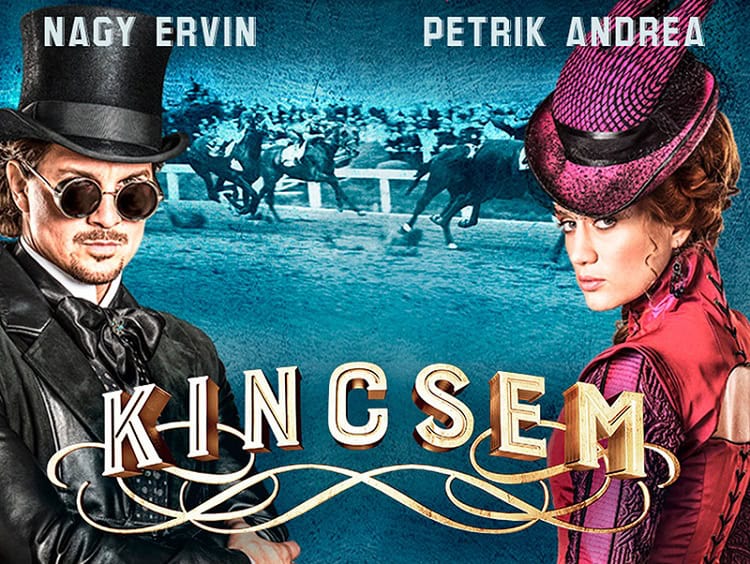
Kincsem, a film paying homage to the world’s greatest thoroughbred race horse, has broken the box office record for a Hungarian film, distributor Forum Hungary.

The box office receipts of the film directed by Gábor Herendi reached 500 million forints (EUR 1.6m) on Tuesday, Forum Hungary said. More than 374,500 people have seen the film since it opened a little more than two months ago. The Hungarian National Film Fund contributed more than 2 billion forints to the film’s 2.9 billion forint budget.

Kincsem, foaled in Hungary in 1874, won 54 races for 54 starts, a record that still stands today.

via: hungarymatters.hu / hungarytoday.hu
photos: filmbook.blog.hu; pecsplaza.hu

Reklám
Tas J Nadas, Esq

THE HUNGARIAN LIGHTING FLOWER GOT INTERNATIONAL AWARD

There is a great Hungarian invention you haven’t heard of: the luminous flower. This unique thing got the Hungarian Quality Product Award this year and the company had huge plans for the future too: they wanted to conquer the whole world with their plants.

They did it, the flAvatar got the bronze award on the international A’ Design Award & Competitionre. The product of Richárd Kun is got a appreciative third place in the category of lighting design projects.

But what are we talking about? “flAvatar – Lighting Flowers” is exactly what its name suggests: flowers that glow in the dark. It’s nothing harmful or gene manipulated. FlAVATAR Magical Flowers are custom developed products where cut flowers and pot plants are treated with a 100% plant-based substance on their surfaces that makes them glow in the dark.

via: szeretlekmagyarorszag.hu; budnews.hu / hungarytoday.hu

photos: szeretlekmagyarorszag.hu; budnews.hu;

Reklám
Tas J Nadas, Esq