
Home Blog Page 34

Prime Minister Viktor Orbán’s speech in the European Parliament

Dear Mr President, esteemed Vice-President of the Commission, dear Members of Parliament,

The European Parliament is once again holding a debate on Hungary. I came here to you to Brussels, to participate in this debate. During my nearly 30 year tenure as a representative, I have always highly valued debate and the confrontation of different views. Democracy is based on reasoning, and it also gives the moral basis of the European Union. I am convinced that better decisions are made, when they stem from debate and not unilateral revelations. With my participation, I would also like to help you make an informed decision, when Hungary is on your agenda. I remember that the resolutions of the previous Parliament did not stand the test of truth. Just think of the visible and universally embarrassing failure of the Tavares Report. You may know that we Hungarians never give up the fight, and I will today once again try to apply the power of common sense in this debate. We have a dispute with partly with you and partly with an American financial speculator. I know that the power, size and weight of Hungary is much smaller than that of the financial speculator, George Soros, who is now attacking Hungary and who – despite ruining the lives of millions of European people with his financial speculations, and being penalized in Hungary for speculations, and who is an openly admitted enemy of the euro – is so highly praised that he is received by the EU’s top leaders. But this is no reason to condemn us based on falsehoods, because fairness does not depend on a country’s size.

Esteemed Parliament,

I came here to protect my country in this debate. But it is also important to give you an account of the success stories. In 2008 we started from a point where Greece was. The government of Hungary at the time was the first to turn to the Monetary Fund and the EU for a loan. Since then, we have fully repaid this money, ahead of maturity. Since then, we have created hundreds of thousands of jobs. Hungary is on the road to the lowest unemployment rate in the European Union. This is 4% currently. We have created a workfare society, we are giving jobs instead of benefits to everyone who wants to work. Our aim is full employment. Our budget deficit has exceeded the level you required for years – it was 1.8% recently – the state debt is decreasing, and our economic growth is steadily around 4%. We have a number of problems to solve, but we have reason to be proud. I am convinced that the success of Hungary is also a European success, and the EU is in great need of success stories nowadays. It would be foolish if this fact did not get enough attention, due to ideological differences.

Esteemed European Parliament,

It seems to me that there are several issues that may be of interest to you. The news has spread that the Hungarian government – using the power of law – has closed the Budapest-based private university of American financial speculator George Soros. The rector of this university wrote the following to the lecturers and the students of the institution, I quote: “We would like to emphasize that the existence of the Central European University is not threatened by anything, the university will continue to operate under any circumstances.”

Esteemed Commission,

This charge is therefore baseless. It has no factual basis. The situation is absurd. It is like when someone is accused of murder and convicted, while the victim of the alleged crime is alive and well. And pointing and shouting “murderer” at the convict himself. The reality is that the small amendment adopted by the Hungarian National Assembly affects 28 foreign universities operating in Hungary, and does nothing but unifies the rules that apply to them, closes the possibility of speculations and abuses, demands transparency, and eliminates the privileged position these institutions enjoyed over European universities. You are European legislators. It is my duty as Prime Minister of Hungary, the leader of an EU member state to ensure that European and Hungarian universities are not in a disadvantage compared to their competitors outside the EU. No matter how vast and rich person their owner may be.

Esteemed Parliament,

The other issue on the agenda is the national consultation, recently announced by my government. I would like to inform you that it has become commonplace in Hungary in the past decade to regularly ask for the opinion of our citizens. In the past years, we have held four national consultations. I wholeheartedly recommend this method to you. During the current consultation, the Hungarian government has asked for the support of the Hungarian people, in order to formulate its position on concrete issues to be represented in Brussels.

Esteemed Representatives,

I would like to make it clear that the commitment of Hungary and the Hungarian government towards the European Union cannot be questioned. Hungarian politics has been built on this base for the past thirty years. This is the reason I gave my signature and the reason why I fully agree with the recently adopted Declaration of Rome, and the programme of my party family – the European People’s Party – adopted in Malta. At the same time, Mr President and Mr Vice-President, we are in many respects dissatisfied with the functioning of the European Union. We are formulating criticism because we want to correct mistakes and we want to reform the European Union. We are convinced that we can only regain the trust of citizens towards European institutions, if we do everything we can to eliminate the causes of bad and inefficient operation. For the therapy we need a clear diagnose and the unequivocal names of our maladies. I for one, but we Hungarians in general are in favour of straight talk. We talk clearly and unambiguously, so everyone can understand, even if we know that this may not appeal to everyone. We on the other hand are irritated by the restrained political language, unable to name things for what they are, that has become widespread in European public life nowadays. But I don’t think that we should expect the same temperament and debate-style in all 28 member states of the European Union. This is the reason I personally like European political culture and the reason I find it exciting. If you break down your prejudices against us, you will find a refreshing, innovative and creative way of political thinking. This is also true for the consultation.

I am convinced that Hungary’s results are due to this. Regarding the questions raised by the national consultation questionnaire – to put it in a straightforward way – the basic stance of the Hungarian government is contrary to the intentions of the Commission. Our position is clear: we do not want, and do not think it is in accordance with the founding treaties of the Union, to settle migrants in our country in a mandatory way. The decision on who we live with can only be made by the Hungarian citizens. It is important information that George Soros and his NOGs want to transport one million migrants to the EU per year. He has personally, publicly announced this programme and provides a financial loan for it. You could read this yourselves. We reject this. We do not want to lose the right of national ratemaking for public utilities, because we fear that this would increase the burdens of the people and once again lead to a drastic prices increase, from which Hungarian families have suffered enough. And we do not want to entrust the Union with the right of formulating our taxation policy – currently under national jurisdiction – either, because we think this would undermine our competitiveness. And we don’t understand why the Commission is criticising the Hungarian public work program year after year in its annual report, which is an important element of the workfare and not welfare society that we built. These are currently debated issues. Our position is that we do not want change in these questions, we don’t want to reorganise national and Union competences in these matters, thus we are defending the current status quo – formulated by our common will. Hence the term “Stop Brussels”. Is this a sin? We adopted the current set of rules – that we now want to defend – together, they are also common EU achievements. I don’t think you can consider the Hungarian position and the Hungarian consultation anti-European for this. It is also true that our vision is based on a strong Europe of strong member states. In such a Europe, member states bear responsibility instead of running away from it. Responsibility for state debt, the budget and border protection.

Dear Representatives,

We want to influence decision making here using the tools of debate, reasoning and persuasion. I advise anyone who does not like the position of our country to contend their own arguments with ours, so we can fight this debate, but please, do not condemn us because Hungary has her own, independent opinion.

Esteemed Parliament,

The third issue is the regulation on non-governmental organisations. The currently discussed Hungarian proposal – I mean the proposal discussed in Hungary – follows the American example. Many countries of the Union and if I am correct, even this Parliament, in the framework of the Pieper Report is dealing with the complicated question of how we can make the operations of financially strong foreign external lobbies, willing to influence democratic decision-making, transparent to everyone. The Hungarian legislation builds on the principal of clarity and transparency. We want nothing else but to be able to know of NGOs what kind of money and what kind of interests are behind them. This does not undermine their constitutional rights to have their voices heard, represent their interests and be able to organise themselves freely.

Dear Representatives,

It is also important to note that the attitude of the Hungarian government has been free of detours and consistent on wanting to comply with the rules of the club, and we have always complied so far. We are aware that EU membership comes with not only rights, but also obligations. We have tried to resolve the conflicts of the past years through dialogue and negotiations. I am glad to inform you that as a result of this we have been able to conclude – by mutual consent – such complicated issues as media regulation, the new Hungarian constitution, the transformation of the judicial system, or the development of nuclear energy. These are successfully concluded cases. I would like to assure the Vice-President that we will strive for this outcome on the issues currently on the agenda.

Dear Mr President,

Hungary is a proud country. Hungarians have always considered themselves an important nation, devoted to the Christian values of Europe, and wanted to have their say in the decisions that concerned them. My government in Hungary is working to strengthen Hungary’s commitment to the European Union. Our work has been successful. The European Union’s support is the highest among member states in Hungary, over 70%. And we are proud of this. Believe me, people will support, but will only support the European Union if it is fair and built on open debates, capable of admitting that it needs reform from time to time.

Dear Mr President,

We have always given you respect. I would like to ask you, when Hungary is concerned, please be critical of the prejudice, please stick to the truth and I ask you to always apply the same standards. Only this way can we be worthy of being called Europeans.

Thank you for your attention!


Source: abouthungary.hu

Reklám
Tas J Nadas, Esq

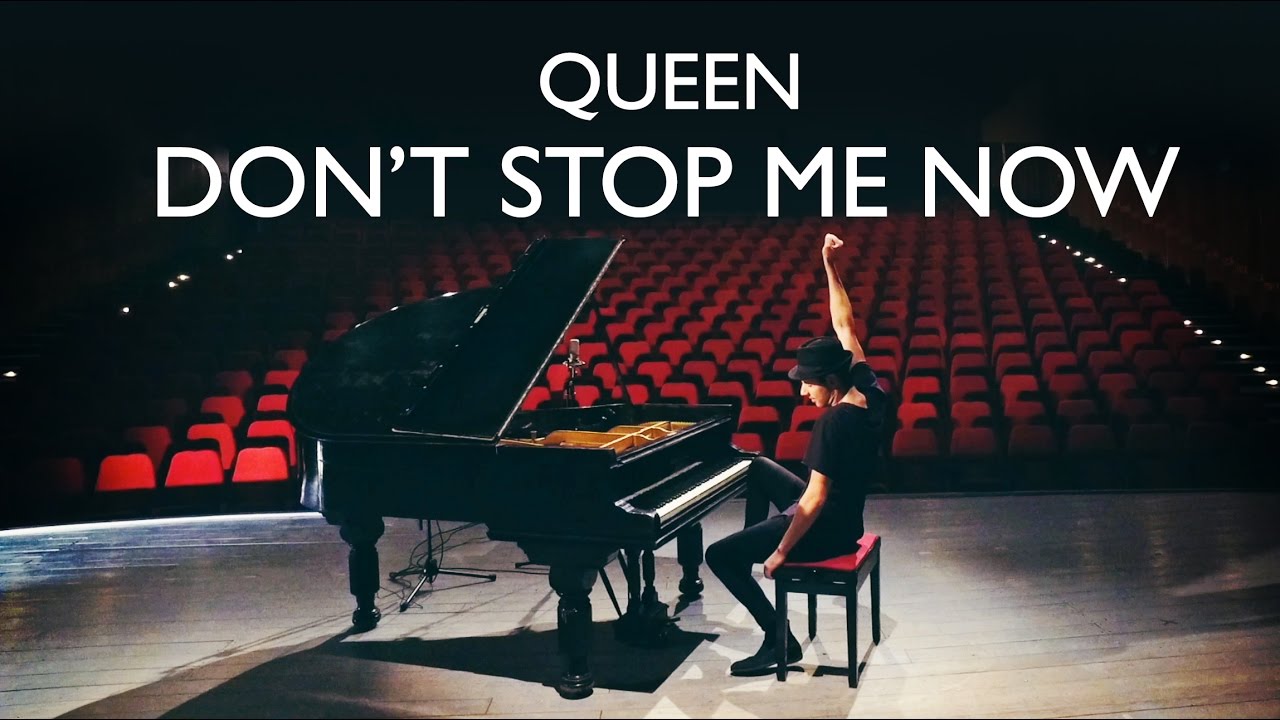
HUNGARIAN PIANO VIRTUOSO PLAYS ASTONISHING QUEEN SONG – VIDEO

The Hungarian pianist Bence Péter holds the Guinness World Record of “The World’s Fastest Piano Player”, szeretlekmagyarorszag.hu writes. He frequently shares his piano covers on his YouTube channel and now he has chosen to play the happiest song in the world.

In 2013, Jacob Jolij, a neurologist at the University of Missouri scientifically determined, based on various criteria and with the help of thousands of volunteer, which one is the world’s happiest song. The winner was ‘Don’t Stop Me Now’ by Queen.

YouTube player

Bence Péter’s version has attracted more than 3 million views on Facebook. Fun fact: the pianist was born on September 5, the same day as the legendary frontman of Queen, Freddie Mercury.

Source: szeretlekmagyarorszag.hu / dailynewshungary.com

Reklám
Tas J Nadas, Esq

HUNGARIAN PMO CHIEF VISITS CSÍKI BEER FACTORY IN TRANSYLVANIA, DISCUSSES HEINEKEN TRADEMARK DISPUTE

According to Hungarian wire service MTI, Minister of the Prime Minister’s Office (PMO) János Lázár visited the Igazi Csíki Sör (Real Csíki Beer) factory, located in Csíkszentsimon (romanian: Sânsimion), Romania.

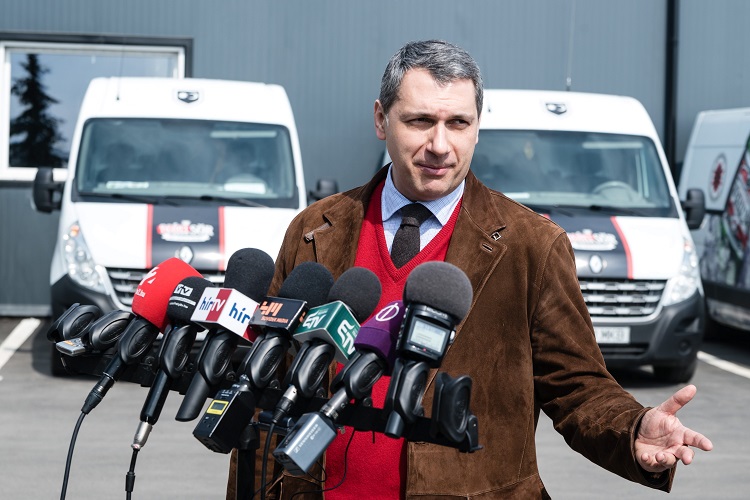
Csíkszentsimon, 2017. március 24. Lázár János Miniszterelnökséget vezetõ miniszter sajtótájékoztatót tart az Igazi Csíki Sört gyártó csíkszentsimoni sörfõzdében 2017. március 24-én. Az Igazi Csíki Sör betiltásáról hozott január végi ítélet óta a gyár Tiltott Igazi Sör néven gyártja a sört. MTI Fotó: Veres Nándor
PMO Chief János Lázár holding a press conference at the Igazi Csíki Sör factory in Csíkszentsimon, Romania (Photo: MTI- Nándor Veres) 
While at the Transylvanian brewery, Lázár the Hungarian government’s hope that Heineken and Csíki Sör, or as he referred to them, “David and Goliath”, can come to an agreement in their ongoing debate over copyright issues.

Following the lengthy legal battle between ‘Igazi Csíki Sör,’ a small brewery run by members of the Szekler Hungarian minority in the Transylvania region of Romania, and the Netherlands-based beer multinational, several Hungarian government officials, including Lázár, called for a boycott of Heineken products.

The dispute between the two brewers stems from the ‘Igazi Csiki Sör’ name. ‘Igazi Csíki Sör’ (‘The real beer of Csík’), has a similar name to a Romanian beer owned by Heineken, “Ciuc beer” (“Csík” means “Ciuc” in Romanian language and refers to a small region of Transylvania with massive ethnic Hungarian majority).

In January, a Romanian regional court ruled in favor of Heineken against the local Hungarian beer in their age-long legal dispute over the brand copyrights.

The Romanian ruling directly contradicts an EU court, which ruled in favor of the Hungarian product and against Heineken on 9th of December 2016.

The producer of ‘Igazi Csíki sör” employs about 140 people in Transylvania. The company said the Romanian court’s ruling was an attack against a local company, which is proud of its Hungarian identity, language and symbols.

Csíkszentsimon, 2017. március 24. Lázár János Miniszterelnökséget vezetõ miniszter (b2), Lénárd András, a Csíki Sör Manufaktúrát üzemeltetõ Lixid Project Kft. vezetõje (b), Simonffy Árpád sörfõzõ mester (b4) és Borboly Csaba, a Hargita megyei önkormányzat elnöke (b5) az Igazi Csíki Sört gyártó csíkszentsimoni sörfõzdében 2017. március 24-én. Az Igazi Csíki Sör betiltásáról hozott január végi ítélet óta a sörfõzde Igazi Tiltott Sör néven gyártja a sört. MTI Fotó: Veres Nándor
PMO Chief János Lázár visiting the bottling line at the Igazi Csíki Sör factory in Csíkszentsimon, Romania (Photo: MTI- Nándor Veres)
Since the ruling, the company changed its labels, and now sells “Tiltott Igazi Sör” (Banned Real Beer), in a direct dig at the Romanian court ruling.

And in the past few weeks, the Hungarian government has proposed a bill that would amend a current law in order to ban the commercial use of “symbols of tyranny”; these would include the swastika, arrow cross (the Hungarian Fascists’ symbol), Hammer and Sickle, and the Red Star.

Perhaps not coincidentally, Heineken’s logo just happens to have a red star in it.

But Lázár himself somewhat walked back threats of employing such a law to ban Heineken’s logo at a press conference yesterday, saying that the bill “would not harm freedom of expression.”

And in Transylvania today, the PMO head said that representatives of the Hungarian government have been in talks with Heineken’s Hungarian management, as well as with the Dutch ambassador, asking them to help resolve the ongoing dispute.

Lázár added that the government respects the fact that Heineken employs Hungarians both in Hungary and in Transylvania, and pays a significant amount of taxes as well. “For this reason, we ask that the Heineken Group accept the principle of live and let live,” he said.

His speech also included some thinly-veiled threats directed at the Dutch brewing conglomerate, as Lázár told his audience that Hungarian companies can rely on the help of the Hungarian government if they get into trouble. He added that those multinationals that use their power to the detriment of Hungarian companies can count on the Hungarian government stepping up to oppose them.

Lázár added that

If Heineken does not show cooperation….and further wants to stomp on Igazi Csíki Sör, the government has tools that it is ready to employ in the defense of Hungarian national values.

The minister also announced that the government is going to recommend that Parliament raise the amount that a beer manufacturer can produce and still receive a tax discount, from 8000 hectoliters per year to 200,000. This, Lázár said, would “we hope, help every Hungarian and beers sold directly on the Hungarian marketed beers, as well as beer factory and beer producer.” Upon being asked, he clarified that this law would apply to Csíki Beer as well.

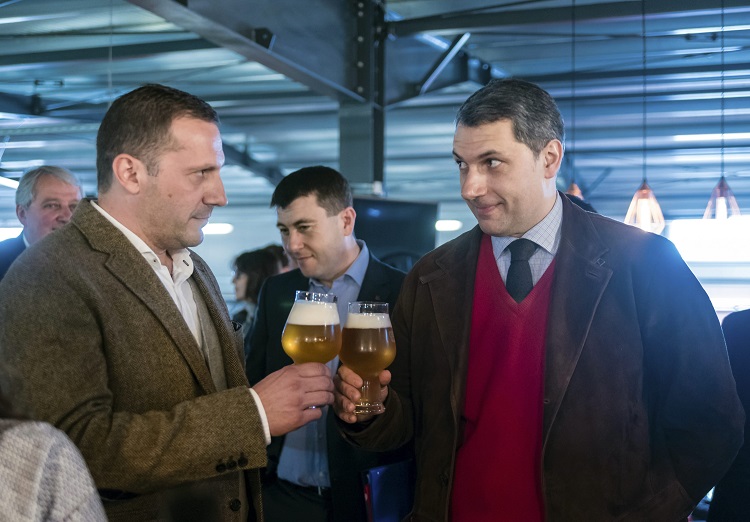
Csíkszentsimon, 2017. március 24. Lénárd András, a Csíki Sör Manufaktúrát üzemeltetõ Lixid Project Kft. vezetõje (b) és Lázár János Miniszterelnökséget vezetõ miniszter sörrel koccint az Igazi Csíki Sört gyártó csíkszentsimoni sörfõzdében 2017. március 24-én. Az Igazi Csíki Sör betiltásáról hozott január végi ítélet óta a gyár Igazi Tiltott Sör néven gyártja a sört. MTI Fotó: Veres Nándor
PMO Chief János Lázár sharing a beer with András Lénárd, head of Igazi Csíki Sör, at the company’s factory in Csíkszentsimon, Romania (Photo: MTI- Nándor Veres)
Speaking to MTI, András Lénárd, head of Csíki Sör, said that discussions have already begun with Heineken Romania, and that he believes that an agreement will be reached between the two parties.

Via MTI / hungarytoday.hu

Images via MTI


Reklám
Tas J Nadas, Esq

HUNGARIAN DEFENSE MINISTER: NATO GUARANTEES HUNGARY’S SECURITY

István Simicskó, the defence minister

NATO is Hungary’s security guarantee, István Simicskó, the defence minister, said at a NATO Transformation Seminar in Budapest.

Speaking at the opening of the two-day conference, he said that a strong and effective NATO is the cornerstone of security in Europe. Security crises can snowball, so its stability is essential. Europe’s security environment has deteriorated severely in the past few years due to an increased number of destabilised countries in the region, mass migration, terrorist attacks in Europe, the general increase in terrorist activity worldwide and the crisis in Ukraine, he said.

The EU faces difficulties on its southern and eastern borders simultaneously, the minister said, adding that “every problem is an opportunity for joint action” and this can strengthen cooperation and solidarity between the alliance’s member states. Hungary supports a call by US President Donald Trump and Secretary of Defence James Mattis to expand the alliance’s role in fighting terrorism, Simicskó said. Also, it agrees that Europe should do more towards securing its defence. Hungary has a ten-year development plan under its belt to prepare the Hungarian military for new challenges. It is also setting up a new research centre for defence this year, he said.

20170322BGA_3325
NATO Deputy Secretary General Rose Gottemoeller speaking at the NATO Transformation Seminar in Budapest (photo: Gergely Botár – kormany.hu)

NATO Deputy Secretary General Rose Gottemoeller said the alliance would only remain strong if it succeeded in adapting to change. NATO has faced challenges before, she said, but efficient cooperation, innovation and the member states’ commitment to common objectives always guaranteed success. Apart from investing more in security, clever financing is also essential, she added. Péter Siklósi, the deputy state secretary for defence policy and defence planning, told public television earlier that the conference – this year attended by around 350 participants – tackles current challenges facing the organisation every year. In 2017, the main topics are Russia, the Islamic State terrorist organisation and the fight against terrorism, as well as challenges posed by digital development, he said. Jens Stoltenberg, the Secretary General of NATO is attending the seminar today.

Meanwhile Defence Minister István Simicskó met Chairman of the NATO Military Committee Pert Pavel on Wednesday. The talks were attended by chief of staff Tibor Benkő and deputy state secretary for defence planning Péter Siklósi. Pert Pavel appreciated Hungary’s endeavour for launching a large-scale scheme to develop its armed forces, and its commitment to raising its defence spending to 2 percent of GDP by 2026 as expected by the alliance. Simicsko said Hungary did not share the concerns about NATO’s future. “Hungary considers NATO a cornerstone of its security and that of Europe as a whole,” he added.

On 10th of March, the Hungarian Atlantic Council celebrated its 25th birthday. The memorial event of the non-governmental organisation, whose original mission was to promote Hungary’s NATO accession and to contribute to the broadest possible acceptance of Euro-Atlantic principles and values in Hungarian society, was among others attended by Tacan Ildem, NATO’s Assistant Secretary General for Public Diplomacy, who gave an exclusive interview to Hungary Today’s sister-site, the German-language Ungarn Heute. The interview’s English translation can be found here.

via hungarymatters.hu and MTI

Source: hungarytoday.hu

Reklám
Tas J Nadas, Esq

HUNGARIAN FOREIGN MINISTER MEETS TRUMP AIDES, INCLUDING SEBASTIAN GORKA, IN WASHINGTON D.C.

Hungarian Foreign Minister Péter Szijjártó (right), with United States Special Representative for International Negotiations Jason Greenblatt (PHOTO: MTI- KKM)
Hungarian Foreign Minister Péter Szijjártó and International Negotiator Hungarian-American Sebastian Gorka

According to Hungarian wire service MTI, Hungarian Foreign Minister Péter Szijjártó met several members of US President Donald Trump’s White House Staff in Washington D.C. on Tuesday. 

These included Jason Greenblatt, Trump’s former lawyer and the incumbent of the newly-created position of United States Special Representative for International Negotiations, as well as Hungarian-American Sebastian Gorka, Deputy Assistant to the President for national security affairs.

Hungarian Foreign Minister Péter Szijjártó (right), with United States Special Representative for International Negotiations Jason Greenblatt (PHOTO: MTI- KKM)

Gorka, a national security expert who has served as a Fox News contributor and national security editor for far-right news site Breitbart, has been in news lately over a controversy surrounding his father’s membership in the Order of Vitéz (Vitézi Rend). This has led to some news outlets accusing Gorka of somehow having ‘Nazi’ affiliations (read our in-depth article on the “controversy” here).

He was also charged with a weapons offense last year for attempting to bring a gun onto an airplane, a charge which has since been dismissed.

Born in London to parents who had fled the Hungarian Revolution of 1956, Mr. Gorka has in the past served as an advisor to Hungarian Prime Minister Viktor Orbán. He also worked at the Hungarian Ministry of Defense during the Prime Ministry of József Antall, Hungary’s first PM following the end of Communism.

In addition to meeting Gorka and Greeblatt, the Hungarian Foreign Minister officially opened Hungary’s new embassy building in Washington D.C.

Following a greeting by Hungarian Ambassador to the United States Réka Szemerkényi, Szijjártó expressed his hope that the inauguration of the new embassy building would mark the start of a better relationship between Hungary and the United States.

Speaking after Ambassador Reka Szemerkényi’s opening address, Szijjártó expressed hope that the opening of the new building would mark the start of new initiatives resulting in a “common success story” with the United States. The Foreign Minister claimed that, since Donald Trump’s election, America is pursuing “more patriotic” policies. He also expressed the Hungarian government’s view that Trump’s presidency will “be successful in making America safer and greater,” which, he claimed, would make the world a safer and greater place.

Szijjártó claimed the world is now facing a discernable fresh start a “fresh start”. He expressed his belief that what he termed the “age of hypocrisy and political correctness” has come to an end. He argued that the previous US Administration’s “intrusion into Hungary’s internal affairs” has also ended, and that “America’s new approach to Hungary is much more constructive.

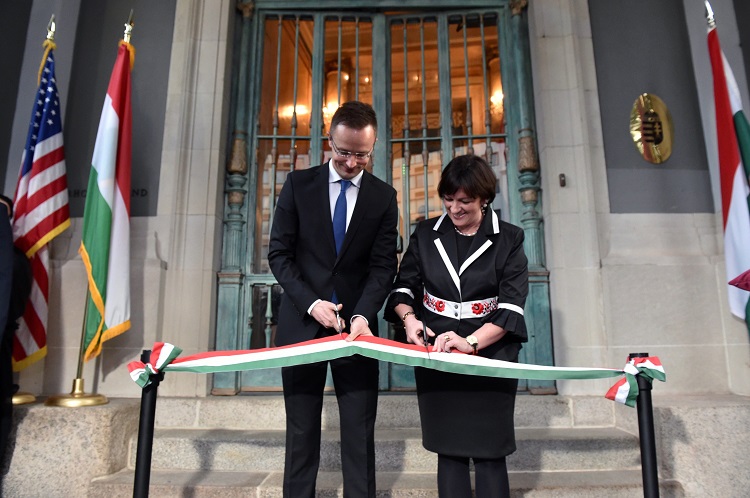
Washington, 2017. március 22. A Külgazdasági és Külügyminisztérium (KKM) által közreadott képen Szijjártó Péter külgazdasági és külügyminiszter és Szemerkényi Réka washingtoni magyar nagykövet felavatja Magyarország új washingtoni nagykövetségének épületét 2017. március 21-én. MTI Fotó: KKM
Hungarian Foreign Minister Péter Szijjártó officially opening Hungary’s new embassy building in Washington, DC, with Hungarian Ambassador to the United States Réka Szemerkényi (Photo: MTI- KKM)

Szijjártó added that the fight against ISIS, and against terrorism in general, remains the greatest threat currently facing the civilized world. He called for a redoubling of efforts to defeat the Islamic State, and expressed Hungary’s pride in being one of 27 countries fighting alongside the United States in this effort.

Perhaps referring to Trump’s hardline stance and recent, controversial executive actions regarding “illegal migration,” Hungary’s Foreign Minister said that it was “only natural” for a country’s leadership to put the security of the nation and its citizens first, adding that “Hungary has been doing the same, heavy criticism notwithstanding.”

Later in the day, Szijjártó spoke at a business dinner held by the American-Hungarian Chamber of Commerce, where he praised the effects on world economics of supposed “changes in American economic policy.” Attendees at the event included representatives of Lockheed Martin, Fedex, Comcast, Citibank and Procter and Gamble.

The next day, Wednesday, Szijjártó addressed a meeting of the foreign ministers of the countries that are part of the global coalition fighting ISIS and terrorism.

Via MTI / hungarytoday.hu

Images via MTI

Reklám
Tas J Nadas, Esq

The Columbus Hungarian Cultural Association commemorates Hungary’s 1848-49 Fight for Independence, March 19, 2017


Keynote Address by István Hargitai

Ladies and gentlemen,

It is a great honor for me to address this congregation today to commemorate Hungary’s struggle against tyranny in 1848 on behalf of those very principles which underlie the structure of our own Republic here in the United States. I have given a lot of thought about what message should I convey to Hungarian-Americans who either were born here in this country or have arrived here in their youth. The latter happens to be true in my case. As Hungarian Americans, we learned early in our school years about this America’s struggle for independence and its efforts to establish a free nation founded on some lofty principles based on the Declaration of Independence of July of 1776. To all Americans freedom and liberty is symbolized by its July 4th festivities and celebrations. John Adams wrote the following to his wife Abigail one day before Congressional approval of the Declaration of Independence: “July, 1776 will be the most memorable epoch in the history of America. I am apt to believe that it will be celebrated by succeeding generations as the great anniversary festival. It ought to be commemorated as the day of deliverance, by solemn acts of devotion to God Almighty”.

America has a pantheon of individuals who are considered champions of liberty, individuals, such as Thomas Jefferson, Benjamin Franklin, George Washington and many others. It is not surprising then, that in 1848 many Americans were sympathetic towards Hungary’s struggle against the Austrian empire in the Spring of 1848. It is also a fact that some Hungarian leaders of that era cited the American War of Independence as an inspiration.

In the early 1830s, a reformist group led by Ferenc Deák came to power in the Hungarian Parliament (Diet). Some of its members looked to the United States as a model, in particular, for its jury trial system and religious tolerance. At around the same time, a group of „Parliamentarian Youth” began to attend the sessions. One member was Lajos Kossuth, a lawyer appointed a delegate on an absent baron. In 1841, Kossuth began a new political journal, Pesti Hírlap, which exposed social injustice and called for reforms, sometimes based on the „capitalism and political liberalism” of Western Europe and the United States.

This attitude characterized the political thinking of the period before the Hungarian Revolution in 1848. In March of that year, caught up in the revolutionary furor that had seized France, Kossuth (as member of the Diet) urged the body to send the opposition’s demands to the Habsburg court. The opposition sought responsible and representative government and civil liberties in a de-feudalized Hungary, as well as „freedom of the press and full equality before the law.” In Vienna, students and workers demonstrated on March 13, forcing Chancellor Clemens von Metternich from power. On March 15, 1848 thousands of students marched in Pest, and disturbances spread around the country.

The revolution started in the Pilvax coffee palace at Pest, which was a favorite meeting point of the young extra-parliamentary radical liberal intellectuals in the 1840s. On the morning of March 15, revolutionaries marched around the city of Pest, reading Sándor Petőfi’s Nemzeti dal (National Song) and the 12 points (their twelve demands) to the crowd which swelled to thousands. Declaring an end to all forms of censorship, they visited the printing presses and printed Petőfi’s poem together with the demands. We are all too familiar what transpired next: Petőfi’s recital of his impassioned poem, Nemzeti Dal (National Song) electrified the multitude as a mass demonstration was held in front of the newly built National Museum, after which the group left for Buda to the Office of the Governor-General on the other bank of the Danube. So did a peaceful mass demonstration in Pest and Buda forced the Imperial governor to accept all twelve of their demands.

On March 18, Emperor Ferdinand agreed to the Diet’s demands: Hungary would remain part of the Empire through „personal union” with the emperor, and a constitutional government would be established. A new Hungarian cabinet was formed, led by Count Lajos Batthyány, with Deák as Justice Minister and Kossuth as the Minister of Finance. The Diet passed the April Laws, which provided for a hereditary constitutional monarchy, a legislature, equality before the law, and an end to restrictions on land use and transfer.
In August, after a new a parliament was elected, the Batthyány Government announced its refusal to support Vienna in the event of a war with Frankfurt, and at the end of the month, Vienna announced that the April Laws were not valid. The Croatian army at the behest of Vienna crossed into Hungary under the leadership of Josip Jelasic but the Hungarian army stopped them on September 29 near Pákozd. On October 3, Vienna issued decrees dissolving the Hungarian parliament and installed Jelasic as a royal commissar in charge of Hungary. In response, the Hungarian legislature created a National Defense Committee headed by Kossuth. Viennese leaders were forced to crush another uprising at home in early October, before turning their attention to Hungarian military efforts.

On January 1, 1849, the Hungarian revolutionary government was forced to evacuate from Pest-Buda, and moved to Debrecen, bringing with it the crown of St. Stephen. Fighting continued throughout the spring, and on April 14, Hungary proclaimed itself an independent republic. The Parliament then elected Kossuth as its President. After a series of lost battles to the Hungarian Army, the Habsburg ruler appealed to the Russian Tsar for military assistance in early May, which came in the form of 200,000 Russian troops entering Hungary and spelling out ultimate defeat and surrender at Világos in August 13, 1849.

As you can see now, Hungarians too have established their own symbol for liberty in their struggle against tyranny in their pursuit of independence and the establishment of a national constitutional government. That symbol is March 15th, 1848, the start of the Revolution and the War for Independence from Austria. In that great struggle men of vision and excellent statesmanship emerged, who are also considered champions of freedom. These names are all familiar to Hungarian Americans, and they are Petőfi, Kossuth, Széchenyi, Batthyány, Wesselényi, Deák and many others.

Today I would like to focus in on one such revolutionary statesman, an individual who is well known even in the United States to show how everyday Americans saw this extraordinary Hungarian effort and its leader, who is none other than Lajos Kossuth and who became known in the USA as the champion of freedom. I believe that the US Post Office in 1958 has issued a stamp in his honor giving him the title Champion of Liberty.

None of the revolutionary movements of 1848 excited so much sympathy in the United States as that of Hungary. Hungary’s attempt in 1848 to establish an independent republic and the picturesque leadership of Kossuth had an almost magical effect upon Americans. In Hungary’s fight for freedom, Americans saw a defense of their own principles. The people watched eagerly the course of the uprising. Abraham Lincoln, representative from Springfield, Illinois, in Congress, presented a resolution of sympathy with the cause of Hungarian freedom. On February 17, 1851, Senator Henry S. Foote introduced a joint resolution, which called upon President Millard Fillmore to invite Kossuth and to transport him to the United States in a national ship. Within the next two weeks both houses of Congress endorsed the resolution. On September 10, 1851, Captain John C. Long received on board of the warship Mississippi, Kossuth, his family and some fifty other refugees. Kossuth, accompanied by his wife arrived at New York on the night of December 4. As his ship came within sight of Governor’s Island, thirty-one cannon shots were fired for each of the States then composing the Union. At the Battery in lower Manhattan, 200,000 people awaited to greet him and gave him an ovation which only two men had ever received – George Washington and the Marquis de Lafayette.

When Lajos Kossuth landed in New York, Dec. 5, 1851, he was not an unknown personage. He and his native land had been made known to the people of the United States by the Revolution of 1848 and the contest of 1849 for the independence of Hungary. Until these events occurred, Hungary was only a marked spot on the map of Europe, and the name of Kossuth, as a leader in industrial and social progress, had not been written nor spoken on this side of the Atlantic.

At a lavish congressional banquet held in his honor on the evening of January 7, all the dignitaries present were completely entranced by his singularly captivating eloquence. “The ‘Hungarian Whirlwind’ certainly carried away everything,” recorded the Rev. C. M. Butler, chaplain of the Senate, “and mingled all parties into confused mass of admirers, prostrate at Mr. Kossuth’s feet.” Webster offered the toast: “Hungarian independence, Hungarian control of her own destinies; and Hungary as a distinct nationality among the nations of Europe.”

On January 31, 1852, Cleveland Mayor William Case headed a welcoming committee, which boarded Kossuth’s train in Newburgh for the short ride to Cleveland; his arrival was heralded by a round of cannon fire and an excited crowd. After a 1-day rest, Kossuth spoke to a large crowd on the 2nd of Februray in front of the American House Hotel on Superior Ave.; that afternoon, he addressed the thousands who had paid $4 for reserved seats and $3 for general admission at the Cleveland Melodeum. There, Mr. Starkweather publicly addressed him in a highly energetic speech which ended by saluting Kossuth as “rightful Governor of Hungary”.

Kossuth spent 3 days in Cleveland and then he traveled to Columbus in the company of Governor Woods of Ohio. In Columbus he addressed the Ohio legislature and gave the well known historic speech on February 16, 1852 that included some familiar sounding words that later inspired Abraham Lincoln:

“The  Spirit of our age is democracy. All for the People

and all by the People; nothing about the people without the People.”

– That is Democracy!

The renowned Ralph Waldo Emerson said in greeting Kossuth on his arrival at Concord Massachusetts on May 11, 1852.  “We have been hungry to see the man whose extraordinary eloquence is
seconded by the splendor and the solidity of his actions.” The General Assembly of the State of Ohio adopted a list of Resolutions addressed by the President of the Senate, Hon. William Medill, of which I shall mention only one:

“Whereas Louis Kossuth, Governor of Hungary, has endeared himself to the people of Ohio by his great military and greater civic services rendered to the cause of Liberty, be it resolved by the General Assembly of the state of Ohio that the war in which Hungary was lately seemingly overcome, was a struggle on behalf of the great principles which underlie the structure of our government…

Free and independent themselves, the people of Ohio cannot look with indifference on the great contest in which you are engaged. The history of that fearful struggle which resulted in the achievement of their own independence is still fresh in their recollection. Always on the side of the oppressed, no cold or calculating policy can suppress or control their sympathies.
The cause of Hungary, which you so eloquently plead, and which it is your high and sacred mission to maintain, is the cause of freedom in every quarter of the world.”

Soon it became evident, however, that Kossuth came to the Unites States with far higher aims than raising money for the continuation of the Hungarian War of Independence. He hoped to bring about a fundamental change in US foreign policy: to convince the country that time was ripe for taking an active role in international affairs, commensurate with its strength and to make Americans realize that freedom and democracy in Europe is also of vital interest to the young American Republic.

Today, Hungarian Americans have every reason to be proud that Kossuth then made such an impact on the United States, and we must do our utmost not let his name let alone his ideals be forgotten in this great country. The Kossuth statue erected by the Hungarian-Americans stands tall in Cleveland, commemorating the man “who linked the greatest American ideals, freedom and the determination to fight for freedom, with the idea of Hungary for all eternity.”

Éljen a magyar szabadság, éljen a haza!
Long Live the Hungarian Homeland and Liberty!


Sources:

Wikipedia
The Life of Louis Kossuth, by P.C. Headley, Auburn: Derby and Miller, 1852
Select Speeches of Kossuth, Francis W. Newman, New York, C. S Francis & Co., 1854


Reklám
Tas J Nadas, Esq

WHAT DO HUNGARIANS CELEBRATE ON MARCH 15?

More than 160 years passed, but the Hungarian Revolution of 1848 associated with Petőfi’s name is still commemorated by the Hungarian people. Multiple elements of the 12 points composed by the Pilvax Circle are still a relevant topic in the present, utisugo.hu reports.

A long time under pressure eventually led to a revolution on March 15, 1848. The same monarch ruled over the Kingdom of Hungary and the Austrian Empire, and the National Assembly of Hungary could only hold sessions in Latin or German language. Hungary couldn’t gain autonomy and the lowered taxes alone were not enough for the positive perception of the social opinion climate.

Although the French Revolution of 1789 ended decades ago, it had an enormous influence on the intellectual class. Moreover, the French declared war against the Habsburg Monarchy, which reached the territory of Hungary in 1805. Napoleon then ordered Hungarian nobilities to separate from the Habsburg dynasty, however, he lost the war in 1815. The demand for home products then decreased rapidly and the inflation hit.

More than 160 years passed, but the Hungarian Revolution of 1848 associated with Petőfi’s name is still commemorated by the Hungarian people. Multiple elements of the 12 points composed by the Pilvax Circle are still a relevant topic in the present, utisugo.hu reports.

A long time under pressure eventually led to a revolution on March 15, 1848. The same monarch ruled over the Kingdom of Hungary and the Austrian Empire, and the National Assembly of Hungary could only hold sessions in Latin or German language. Hungary couldn’t gain autonomy and the lowered taxes alone were not enough for the positive perception of the social opinion climate.

Although the French Revolution of 1789 ended decades ago, it had an enormous influence on the intellectual class. Moreover, the French declared war against the Habsburg Monarchy, which reached the territory of Hungary in 1805. Napoleon then ordered Hungarian nobilities to separate from the Habsburg dynasty, however, he lost the war in 1815. The demand for home products then decreased rapidly and the inflation hit.


translated by Réka Jancskar

Photo: cultura.hu, abonyvaros.blogspot.com

Source: utisugo.hu / dailynewshungary.com

Reklám
Tas J Nadas, Esq

THE SOLUTION IS UP TO THE COOPERATION OF THE US AND RUSSIA – PÉTER SZIJJÁRTÓ SAID IN UN SECURITY COUNCIL

Without cooperation between the United States and Russia, it will not be possible to face up to Europe’s security challenges effectively, Foreign Minister Péter Szijjártó said in New York, where he is participating in a meeting of the United Nations Security Council.

Szijjártó told MTI before a meeting with counterparts that he would analyse Europe’s post Cold-War situation and how it must confront simultaneous and grave challenges and conflicts. “These conflicts and security challenges are not exclusively European, but many … with global components and global causes are burdening Europe all at the same time,” the minister said.

Solutions to the various crises and armed conflicts which threaten European security do not expressly depend on Europe, he said. “It appears that a realistic resolution can only be found … if the Russians and Americans decide to repair their relations and switch to a more pragmatic relationship,” he said. In his speech, Szijjártó will refer to Hungarians’ historical experiences. “Our historical experiences are entirely clear: Europe, and especially central Europe, lost out whenever there was a conflict between East and West … So now we are very much rooting for the new American administration and the Russian administration to build better relations.” Szijjártó said he would point out that the deal with Iran on containing its nuclear developments would not have come about had the US and Russia not negotiated on the same side. “We Hungarians support every initiative that brings the US and Russia closer together, and we regard as damaging every decision that digs ever deeper trenches, be they political or economic. We urge dialogue between the US and Russia based on mutual trust that respects international law, because without such cooperation it will not be possible to deliver the final blow to Islamic State, which in turn is the only realistic way to end the migrant crisis plaguing Europe,” the minister said.

The security of the region abutting Europe has a direct influence on European security, he said, underlining the importance of US-Russian cooperation in providing a robust response which underpins security. Szijjártó is scheduled to hold personal meetings with UN Secretary-General Antonio Guterres and his deputy. He will tell Guterres that Hungary firmly supports the Secretary-General’s preventative diplomacy, namely endeavours to prevent conflicts from arising. “We are ready to give financial and professional contributions towards the work of the new SecretaryGeneral,” he said. “Besides this, we maximally support the goals of the UN Secretary-General in respect of the fight against terrorism in view of the fact that the migration crisis and the security of Christian communities cannot be achieved without stepping up the fight against terrorism.” Hungary also backs efforts by Guterres to restore the credibility of the United Nations and to increase the effectiveness of its operations, and it will support reforms at the organisation, he said. Further, Hungary will participate in efforts to change “the culture of impunity” whereby war criminals around the world get off scot free. Hungary is contributing 50,000 euros towards creating a mechanism for investigating the most severe crimes against humanity committed in Syria, he said.

via: hungarymatters.hu; mno.hu / hungarytoday.hu

photos: mno.hu; un.org

Reklám
Tas J Nadas, Esq

TOP TEN COUNTRIES WITH THE LARGEST HUNGARIAN DIASPORA IN THE WORLD

In Hungary Today’s new weekly series “Thursday Top Ten” our readers can learn about the most interesting things one can find about Hungary and Hungarians in connection with a given topic. In this week’s edition we are focusing on the Hungarian diaspora around the world. You may now the saying “Hungarians can be found everywhere in the world”. Well, there are about 5 million Hungarians living all around the world in diaspora. Although the Hungarian diaspora is a term that encompasses the total ethnic Hungarian population located outside of current-day Hungary, the expression is mainly used to describe the ’western-diaspora’ of Hungarians, meaning those Hungarians living outside the Carpathian Basin.

In the following article, you can read about the ten countries outside of the Carpathian Basin that have the most Hungarian inhabitants

U.S.A. ~ 1.400.000 Hungarians; Cities with major Hungarian population: New York, Jersey City, Cleveland 

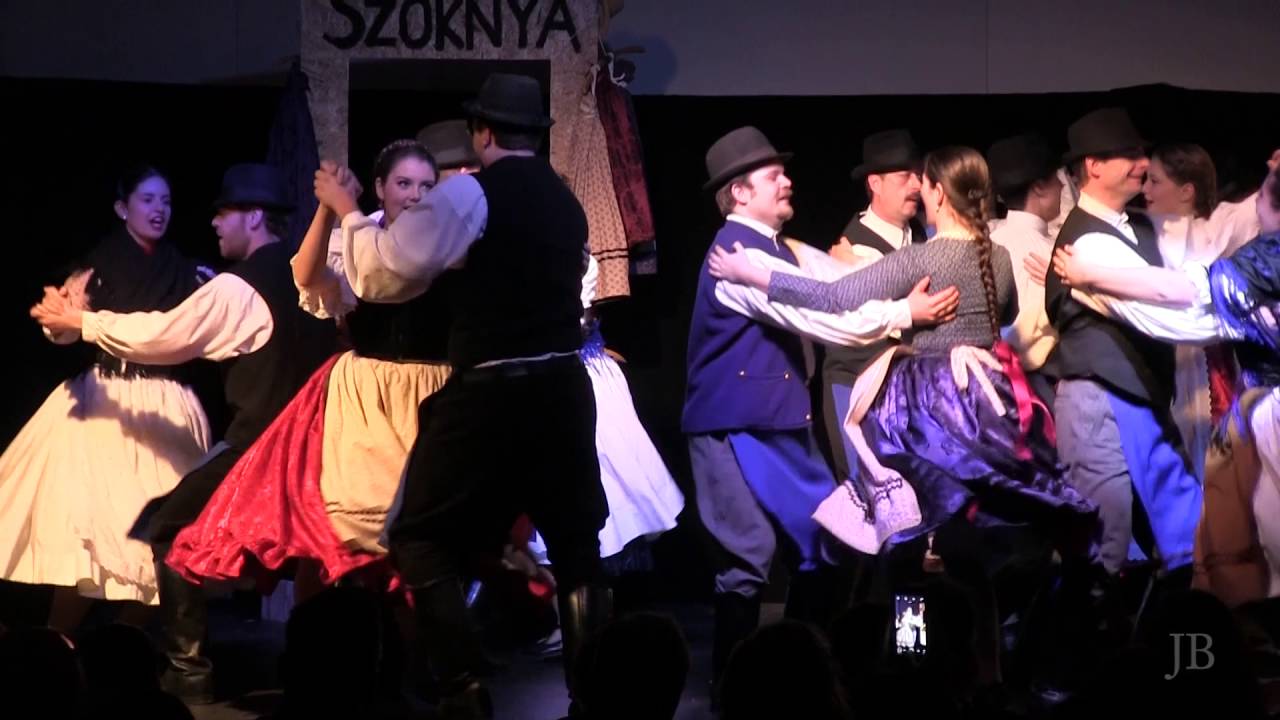
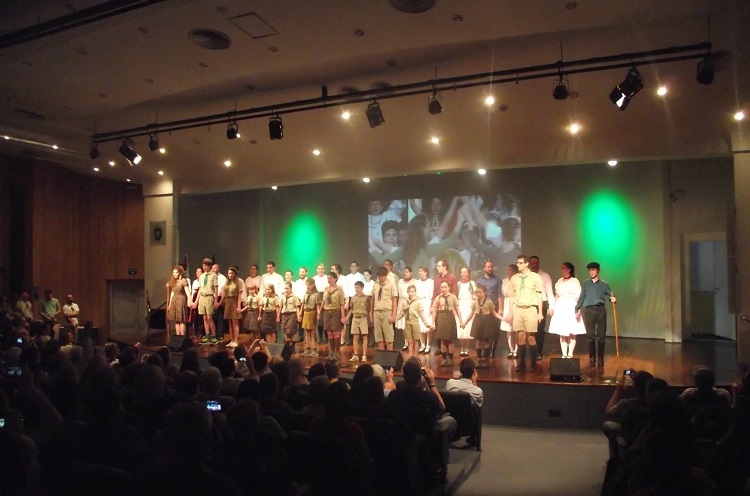
While this may not come as a surprise to many of our readers, the largest number of Hungarians outside the Carpathian Basin can be found in the Unites States of America. The ‘new world’ was a top destination for emigrating Hungarians from 1800s onward. Most Hungarians live in the Northeast of America. On the east-coast, New York City and New Brunswick, located in New York and New Jersey respectively, have the largest Hungarian populations. In the Midwest, Cleveland, which for many years was known as the “2nd largest Hungarian city,” has the largest population of Hungarian-Americans. In the West, Los Angeles, California is a major Hungarian hub, as is San Francisco. The Hungarian Scout Association in the US is one of the most influential and largest Hungarian organizations in the diaspora. Here is a quick look at the annual Hungarian Scout Festival in Cleveland:

YouTube player

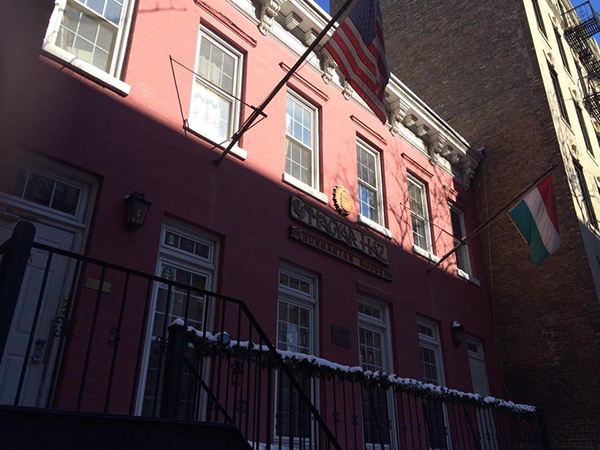
In the US, there are strong Hungarian communities with long histories, who have been living as Hungarian-Americans for generations. This can be seen in New York City, where there was an active Hungarian-district around E 82nd street and Lexington Avenue, with Hungarian churches, cultural and community hall, shops, and Hungarian schools. Today there are not nearly as many Hungarians in the area, but the city’s Hungarian House, as well as the Hungarian Reformed Church, remain in the neighborhood to this day.

Half of the Hungarians in Canada lives next to the American border, in the province of Ontario. The Hungarian minority is the 23rd largest ethnic group in the land of maple syrup and polar bears. Immigrants flowed to Canada from Hungary, particularly after the World War II, with the wave peaking after the 1956 Hungarian revolution against communist rule; following the defeat of the Revolution, over 100,000 Hungarian refugees made their way to Canada. Canada is well-known for its colorful multiculturalism, a country built and colored by the ethnic groups of the country, including Hungarians. In Toronto, you can find a Hungarian dance group, music band, restaurant, while a Hungarian-English Cultural Magazine, the Kalejdoszkóp, is edited from here; and of course, there are Hungarian churches and community halls.

YouTube player

Israel ~ 200.000 Hungarians; Cities with major Hungarian population: Jerusalem, Tel Aviv

Most immigrants are Hungarian Jews who left Hungary for Israel. In the beginning of the 20th century, a great Jew population lived in Budapest. An impressive legacy of this large community can still be seen today: Budapest’s Dohány Street Synagogue, also known as the Great Synagogue, is the largest in Europe, and the third-largest on earth. Most of the members of Hungarian diaspora in Israel, came from Hungarian-Jewish communities, fleeing the horrors of the Second World War and the Holocaust. Although the Hungarian population in Israel may be large (200.000), here 2nd and 3rd generation Hungarian-Israelis don’t take part in Hungarian culture, nor are they as interested in Hungarian identity, as the younger generations are in the USA or in Canada; this difference is due in large part to the organizations that keep traditions ‘alive’ in America, such as dancing, scouting, and other Hungarian cultural communities.

izrael

United Kingdom – London ~ 150.000+ Hungarians

The looming specter of Brexit will impact many Hungarians living in Britain, namely those London-based Hungarians who came to the UK for work. Since 2004, when a number of Central an Eastern European countries joined the European Union,  the number of Hungarians in London has doubled. Apart from Eastern Europe, most of the job seekers going to Britain come from the south of the Euro-zone. More than 100.000 have people left Hungary in the last few years for the better labour conditions and greater opportunities that are available in the United Kingdom. It is really hard to guess how many Hungarians are in London, but that there are a great many is certain. Every person in Hungary has a friend or at least a friend-of-a-friend who has gone to London to work, for a short or long-term stay…

YouTube player

In truth, we can say the second biggest Hungarian city after Budapest is, in fact,  London (sorry Cleveland). Several great cultural initiatives and organizations have been formed as a response to this huge demographic shift, such as the New Generation Centre London.

Germany  ~ 120.000 Hungarians; Cities with major Hungarian population: Frankfurt, Stuttgart, Munich

Hungarians have emigrated to Germany since the Middle Ages. However, after World War I, their number began to grow at an increased pace. Only about 60% arrived with a Hungarian passport, as many of them arrived from areas of the former Kingdom of Hungary that were lost in the 1920 Treaty of Trianon.

2014-09-10-18-20-01

Major Hungarian immigration waves to Germany would follow: About 30,000 arrived after 1945, while after the Revolution of 1956 only about 25.000 Hungarian went to Germany. After 1975 many Hungarians moved there from Transylvania. Today, thanks to the opportunities provided by EU membership,those who might otherwise go to London end up moving to one of the larger German cities such as Stuttgart, Frankfurt or Munich. Hungarian communities have a colorful life here, as scouting, dancing thrive, and performers from Hungary can arrive easily as well. They have built up a little Hungary for themselves, organizing fairs and other community events.

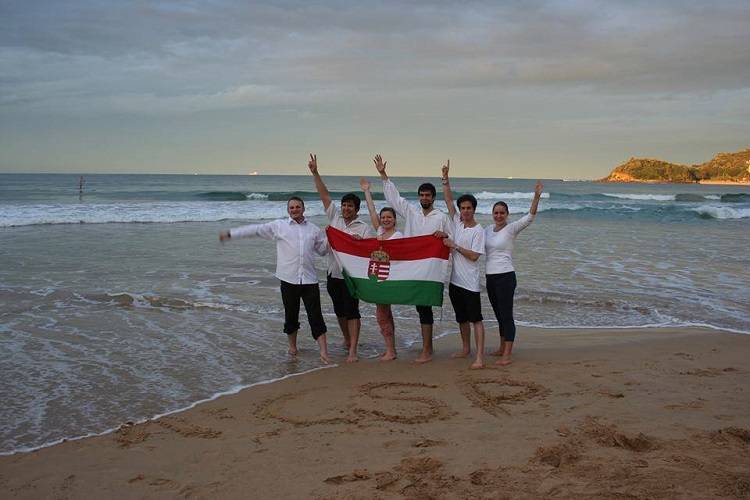
Brazil ~ 75.000 Hungarians; Cities with major Hungarian population: São Paulo

Although ethnic Hungarians live in all the countries of South America, active community life and organizations exist only in Brazil, Argentina, Chile, Venezuela and Uruguay. According to data received from local Hungarian communities, the number of grandparents and parents who immigrated from Hungary to Brazil is between 33,000 and 65,000. Their descendants were already born in the country.

In truth, we can say the second biggest Hungarian city after Budapest is, in fact,  London (sorry Cleveland). Several great cultural initiatives and organizations have been formed as a response to this huge demographic shift, such as the New Generation Centre London.

Germany  ~ 120.000 Hungarians; Cities with major Hungarian population: Frankfurt, Stuttgart, Munich

Hungarians have emigrated to Germany since the Middle Ages. However, after World War I, their number began to grow at an increased pace. Only about 60% arrived with a Hungarian passport, as many of them arrived from areas of the former Kingdom of Hungary that were lost in the 1920 Treaty of Trianon.

2014-09-10-18-20-01

Major Hungarian immigration waves to Germany would follow: About 30,000 arrived after 1945, while after the Revolution of 1956 only about 25.000 Hungarian went to Germany. After 1975 many Hungarians moved there from Transylvania. Today, thanks to the opportunities provided by EU membership,those who might otherwise go to London end up moving to one of the larger German cities such as Stuttgart, Frankfurt or Munich. Hungarian communities have a colorful life here, as scouting, dancing thrive, and performers from Hungary can arrive easily as well. They have built up a little Hungary for themselves, organizing fairs and other community events.

Brazil ~ 75.000 Hungarians; Cities with major Hungarian population: São Paulo

Although ethnic Hungarians live in all the countries of South America, active community life and organizations exist only in Brazil, Argentina, Chile, Venezuela and Uruguay. According to data received from local Hungarian communities, the number of grandparents and parents who immigrated from Hungary to Brazil is between 33,000 and 65,000. Their descendants were already born in the country.

15310911_10211260534889575_1015637350_o

In the case of Argentina and Brazil, the discrepancy between estimates may originate from the fact that the Hungarian diasporas in those two countries can look back to one-and-half century of history, and the fact that the ethnic identity of the non-first generation population of Hungarian origin is already vague in many cases. In terms of organization and social cohesion, the strongest Hungarian communities are those in Brazil and Argentina.

Australia ~ 67.000 Hungarians; Cities with major Hungarian population: Sydney, Melbourne, Adelaide

The constant movement of Hungarian immigrants has included several waves to Australia as well. Most of the Hungarian immigrants to the continent came after World War II and after 1956. Hungarian Australians mostly live in state capital cities.

995839_547468915291297_728557848_n

Generally, before and after the founding of the Australian federation, Hungarian immigration to Australia has been the result of severe politico-economic crisis in Hungary which devastated the country forcing portions of the population to a marginal existence. Revolutions, wars and their consequence misery created mass refugee-waves to the outside world. Today the center of the Hungarian communities are Sydney, Melbourne, Adelaide.

Argentina ~ 40.000 Hungarians; Cities with major Hungarian population: Buenos Aires

The presence of Hungarians in Argentina dates back to the 18th century, when a number of Hungarian Jesuit priests came to North Argentina and Paraguay and settled in Jesuit Reductions. After the fall of the Hungarian Revolution of 1848 a number of Hungarian officers fled to Argentina.Today, there are between 40,000 and 50,000 people of Hungarian descent living in Argentina, mostly in Buenos Aires.

10003073_276937925808288_168142116_n

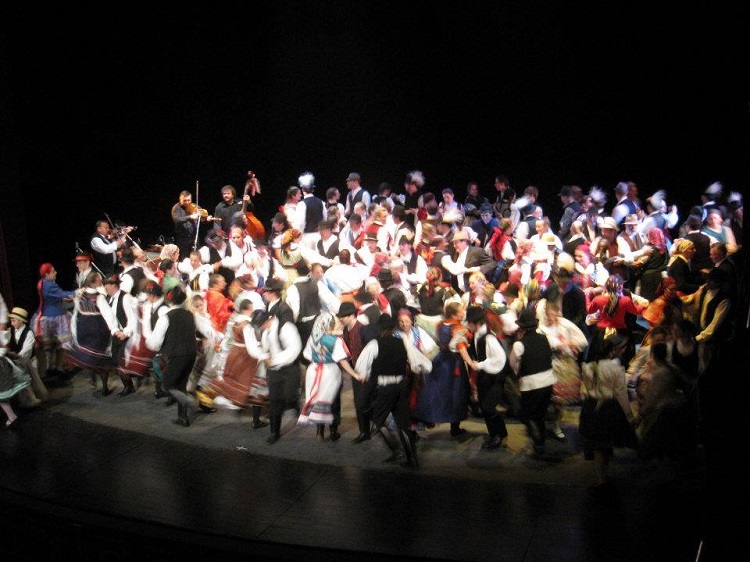
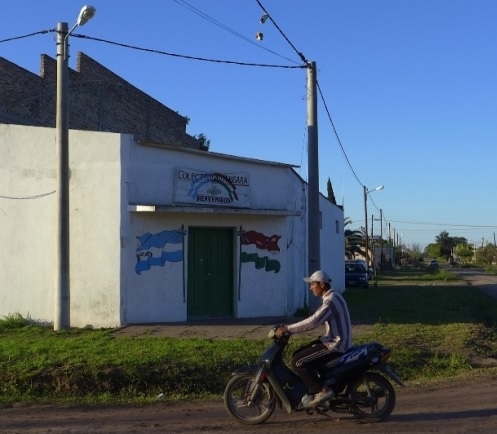
In Argentina there is a very strong and active Hungarian folk-movement. The South-American dance groups and ensembles annually hold reunions in Argentina, and together host the South-American táncháztalálkozó. In addition, there are Hungarian churches and schools there. What’s more, in Argentina there is a village (Coronel Du Graty) in the province of Chaco, where the people speak Hungarian with a Transylvanian dialect; even the Mayor is Hungarian!

chaco

“Benelux States” – Belgium, Netherlands, Luxembourg ~ 30.000 Hungarians; Cities with major Hungarian population: Brussels, Amsterdam

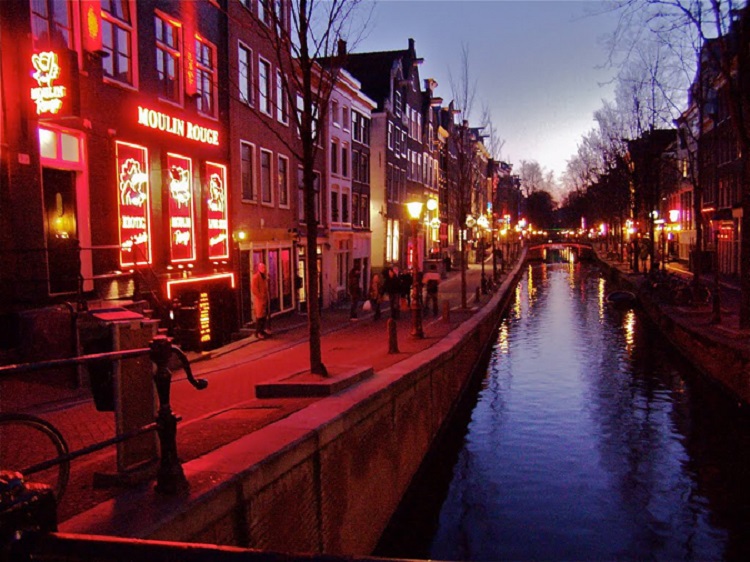
In the “Benelux” States of Europe there is a very interesting situation with the Hungarian diaspora. Of course, there are traditional emigre communities, but for the most part, while Hungarians are famous in Amsterdam, it is not for their goulash. In the capital of the Netherlands, prostitution is  legal. According to magyarnarancs.hu, there are about 20-25 thousand “sexual workers” in Amsterdam; most of them are Hungarians, Romanians and Bulgarians working in the “red light district”.

moulin-rouge-red-light-district-amsterdam

Not far from here in Belgium there is a totally different type of Hungarian emigre. Most of them are entrepreneurs, politicians, or students who work and live mainly in Antwerp and Brussels as it is the capital of the European Union. In Brussels you can find Hungarian restaurants, and the Hungarian diaspora organizes an annual ball there as well.


via: nemzetismeret.hu; hungaryfoundation.org; 444.hu; magyarnarancs.hu; wikipedia.org; korosiprogram.hu; bgazrt.hu

Dániel Gazsó – A Magyar Diaszpóra Fejlődéstörténete / https://bgazrt.hu/_dbfiles/blog_files/9/0000013729/book_kisebbsegi_szemle_I_04_2016_10_21.pdf
Szilvia Bába – Magyar Identitás A Tengeren Túli Diszpórában/ https://www.idi.btk.pte.hu/dokumentumok/disszertaciok/babaszilviaphd.pdf
Dániel Gazsó – A Diaszpóra Tudományos Megközelítése/ https://www.korosiprogram.hu/diaszpora

photos&videos: mishpaha.weebly.com; euronews.com; facebook.com/Kodaly.Ensemble; amsterdam-travel-guide.net; globalplaza.hu; facebook.com/aliz.kiss.90; facebook.com/delamerikaimagyarneptanc; facebook.com/balazs.f.molnar

Source: hungarytoday.hu

Reklám
Tas J Nadas, Esq

BUS CRASH TRAGEDY IN ITALY – HUNGARY OBSERVES DAY OF MOURNING – PHOTOS – UPDATE

Budapest, January 23 (MTI) – Hungary’s national flag was hoisted and lowered to half-mast on Monday morning, to pay tribute to the 16 Hungarians who died in a bus crash in Italy.


The ceremony was attended by President János Áder, House Speaker László Kövér, and Prime Minister Viktor Orbán.

The bus, which was transporting students and teachers of the Szinyei Merse Pál Secondary School in Budapest, as well as family members, crashed and caught fire on the Venice-Verona motorway just before midnight on Friday. The group was returning home from a ski trip. Eleven students and five adults died in the accident.

UPDATE
By early afternoon on Monday, four of the most seriously injured survivors of the crash had been brought back to Budapest and were taken to military Honvéd hospital, the national ambulance service said on its website. Two other survivors, in critical condition, are being treated in hospitals in Verona, while people with light injuries are on their way back to Hungary.

Photo: MTI

Source: MTI / dailynewshungary.com

Reklám
Tas J Nadas, Esq

6.5 KILOMETRE PROMENADE TO BE BUILT IN THE HEART OF BUDAPEST

Index.hu wrote two years ago on their Urbanist blog that we would be able to walk along the Danube from the Liberty Bridge until Dagály Bath on a 6.5 kilometre promenade in 2-3 years’ time. Now they report that it seems like this is going to happen, at least new details, dates and visuals were published on budapest.hu. Let’s see the facts.

The part in question falls between the Parliament and Rákos Stream, and it will be developed in two phases this year:

The northern section (between Dráva Street and Dagály) will include a 4 metre wide pedestrian walk, a 2×1.25 metre wide cycling lane, and the two will be divided by a set-up lane. Even though it has been argued, car traffic will be led away. Construction works started in October and they will be finished in the spring of 2017. The section between Dráva Street and Árpád Bridge will be called Moscow Promenade.

The southern section (between Dráva Street and Margaret Bridge) has to make do with less space, because car traffic will be allowed there on an almost 10 metre wide lane (2×1 traffic lane in the width of 3.5 metres, with a 3 metre wide parking space, and a 3 metre wide service lane with 45° parking facility). A 6 metre wide promenade will be constructed for pedestrians. However, there’s no sign of cycling lanes. The plan was to let cyclist ride from Kossuth Square until Dagály, but according to the official explanation, the designers realised that they have to watch out for pedestrians. So they took away space from cyclists instead of cars or pedestrians. Construction works started last week and they are expected to be finished in spring.
The section between Kossuth Square and Margaret Bridge will be renewed after the World Aquatics Championships in July. To sum up, the change is absolutely positive, walking along the Danube on a longer period will be great – even if we missed the chance to balance the different traffic branches in regions closer (aka more valuable) to the city centre.


Photos: www.budapest.hu

Copy editor: bm

Source: index.hu / dailynewshungary.com

Reklám
Tas J Nadas, Esq

BREAKING: HUNGARIAN SHORT FILM SING RECEIVES OSCAR NOMINATION!

Today, the American Academy of Motion Picture Arts and Sciences (AMPAS) released the names of this year’s Oscar nominees, and among this year’s nominees is a Hungarian short film, Mindenki (Sing).

To clarify, the film, directed by Kristof Deák, was not nominated for the Best Foreign Language Film Oscar; that category, which was won last year by the Hungarian film Son of Saul, is reserved for feature length films. That does not, however, take anything away from the enormity of Deák’s achievement.

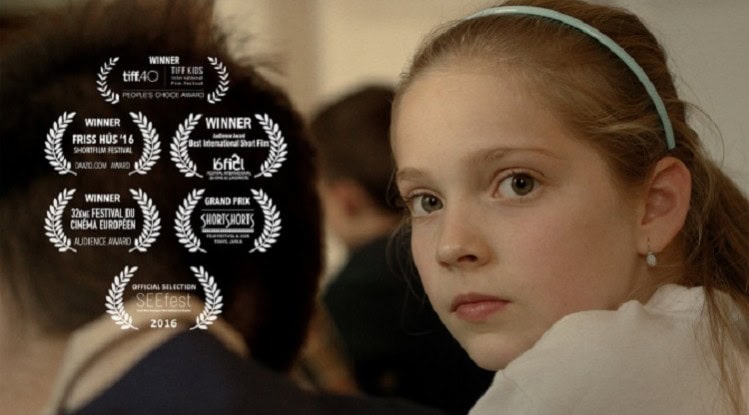
Sing has already had a great degree of international success before today’s nomination in the Live Action Short Film category: the film won the Grand Prix prize at the Short Shorts Film Festival in Tokyo, the People’s Choice Award at the Toronto International Film Festival’s Kids category, and the Adult Jury Prize in the Live-action Short Film category at the Chicago International Children’s Film Festival (read our full article on Sing and other Hungarian Oscar contenders here).

YouTube player

In addition, this past November the film made the Oscar nomination shortlist. In total, then, Sing, along with the four other films nominated, beat out 70 other short films from all over the world.

The film, which is 25 minutes long, takes place in Budapest in 1991. According to the film’s director, it is inspired by a true story, and “follows an award-winning school choir, their charming teacher and the new girl in class whose arrival starts a series of events that might expose the dark truth behind their fame.” The film stars two child-actors, Dorka Gáspárfalvi and Dorottya Hais, while the teacher is played by Zsófia Szamosi, who has a prominent role in the new, warmly received Hungarian Psycho-Thriller Strangled (A Martfűi Rém), playing the part of the wrongly convicted man’s sister (read our article on Strangled here).

The other nominees in the Live Action Short Film are the Spanish film Timecode; Danish film Silent Nights; Ennemis Intérieurs (Enemies Within), from France; and La Femme et le TGV, from Switzerland.

Today’s announcement makes sing only the second Hungarian live-action short film to receive an Oscar nomination; the first was 1963’s Concert, directed by István Szabó, who would go on to direct Mephisto, Hungary’s first Foreign Language Film Oscar winner.

YouTube player

While we will have to wait until the actual Oscars ceremony, which will be held on February 26th, to know whether or not Sing will bring another gold statue home to Hungary, being nominated is a huge achievement, and a huge step in the right direction for Hungarian cinema as a whole.

Via Oscars.org and MTI

Image via kristofdeak.co.uk

Videos Youtube

Reklám
Tas J Nadas, Esq

HUNGARIAN NATIONAL SECURITY EXPERT EXPECTED TO JOIN TRUMP’S WHITE HOUSE STAFF

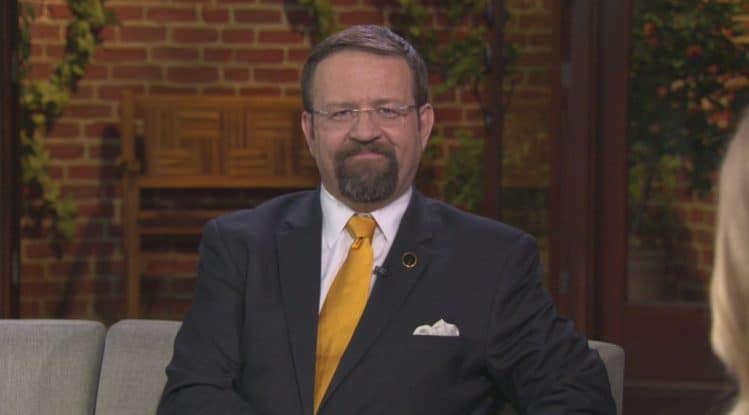
According to news site Business Insider, Sebastian Gorka, a national security expert who has served as a Fox News contributor and national security editor for far-right news site Breitbart, is “expected to join President Donald Trump’s White House.” He was also charged with a weapons offense last year for attempting to bring a gun onto an airplane. 

The news came from an unknown source, who also claims that Gorka will likely receive a position in Trump’s National Security Council.

Gorka, who was born in London to parents who had fled the Hungarian Revolution of 1956, has also in the past served as an advisor to Hungarian Prime Minister Viktor Orbán. He also worked at the Hungarian Ministry of Defense during the Prime Ministry of József Antall, Hungary’s first PM following the end of Communism.

Mr. Gorka entered Hungarian public life following the 9/11 terror attacks in 2001, when he appeared multiple times on Hungarian television as a security expert.

Following a break with Orbán and Fidesz in 2006, Gorka briefly attempted to establish his own alternative right-wing party in Hungary, called the New Democratic Coalition (Új Demokratikus Koalíció), but without much success. In an interview with Hungarian newspaper Magyar Nemzet, Gorka said that he currently has no political relationships or consulting roles in Hungary, “only personal relationships.”

Speaking of Hungarian and the Orbán government, Gorka has said that, after years of dancing between Russia and NATO, Hungary has to decide “if it will follow the Western and Western European system of values, or not,” and added that “this cannot be put off forever.”

In addition to his activities in Hungary, Gorka, who holds a PhD in political science, has taught at Georgetown University, and has served as an advisor to the US Military and the Department of Defense.

Gorka has written for Breitbart since early 2014, and in addition wrote for the Hungarian weekly magazine Heti Válasz in 2005. He is the author of a New York Times best-selling book, entitled Defeating Jihad. He has also written policy papers for Trump and was paid by Trump’s campaign for ‘policy consulting.’

Gorka, whose official relationship with Fox News was reportedly ended “when he informed executives of his new position,” is far from the first Breitbart face to join Trump’s administration. Stephen Bannon, Breitbart’s chairman, had served as the campaign’s CEO and currently holds the title of White House Chief Strategist; in addition, Julia Hahn, a “hardline immigration writer for Breitbart,” is also expected to join Trump’s White House as a special assistant.

According to the Washington Post, in early 2016 Gorka was charged with a weapons offense after attempting to bring a 9mm handgun onto an airplane at DC’s Reagan National Airport. Transportation Security Administration (TSA) officials said that the gun was detected and confiscated.

Via Business Insider, valasz.hu, 444.hu, Magyar Nemzet, and the Washington Post

Image via foxla.com

Source: hungarytoday.hu

Reklám
Tas J Nadas, Esq

WHAT CAUSES EARTHQUAKES IN HUNGARY?

According to origo.hu, compared to other regions of the Earth, the Carpathian Basin counts as a relatively peaceful place from a seismic view. But the truth is that it is not peaceful at all. Due to the very deep plate tectonic processes, more than one million quakes bust the crust every year.

The majority of these quakes can only be detected by special instruments, the number of moderately strong (at least magnitude 6 on the Richer scale) earthquakes is only around 200, while there’s only 2-3 truly destructive (magnitude 8 or more) earthquake every year.

Hot upwelling from the depths of the Earth

Earthquakes are globally caused by the drift of substances – the thermal motion of the cape’s hot, melted detritus – in the core of our planet. The plates of the firm crust, the lithosphere, are “floating” on the viscose asthenosphere due to thermal motions that are coming from the deep. The lithospheric plates are in constant, slow movement.

The plate motions can happen affront each other, which signifies percussive or convergent plate borders, but the lithospheric plates can also move away from each other, which creates divergent plate borders. Also, the plates can slide by each other.

High energy tensions pile up in the crust in all three cases, and, when they bust, we can talk about seismic activity or earthquakes. 90% of the earthquakes can be detected at the plate borders.

Unpeaceful microplate at the depth of the Adriatic Sea

Hungarian earthquakes are caused by the collision of the African and Eurasian plate. This process has been going on for a very long time on a human scale. India joined Asia about 37-35 million years ago, at the end of the Eocene period. This, the coalescence of Africa and the Arabian plate, and then its collision with Eurasia triggered the Alpine orogenesis, and the upthrust of the Eurasian Mountain Range, including the Pyrenees, the Alps, the Carpathians, the Dinarides and the Himalaya. The African-European plate border is still active.

The upthurst of the Eurasian Mountain Range

However, the plate border doesn’t fall in place with Africa’s geographic northern border, in other words, the southern coastline of the Mediterranean Sea. It actually deeply streches under the Mediterranean basin instead. The microplate lying under the Adriatic Sea, called the Adriatic thorn, belongs to this plate border. The Adriatic microplate moves in a northern-north eastern direction, while turning counter clockwise. The complicated movement of the Adriatic thorn determines the tectonic and seismic conditions of the Apennines, the Alps, the Dinarides and the Carpathians.

Due to the rotating movement of the Adriatic microplate, significant tensile stress piles up in the crust, which’s burst causes the Italian earthquakes for instance.

The northern movement of the Adriatic thorn has a pressurizing effect on the Carpathian Basin, which is the cause of earthquakes in Hungary.

The biggest Hungarian earthquake

Origo.hu writes that there are approximately 100-120 earthquakes registered by experts every year in Hungary. The majority of them is less than the strength of 2.5, so most of them can’t even be sensed.

Strong, destructive earthquakes of 5.5-6 strength can only be expected in every 40-50 years. The most serious Hungarian earthquake happened on the 28th of July, 1763. The epicentre of the quake was in the vicinity of Komárom, and it had a strength of 6.3 according to the Richter scale.

The Zsámbék Premontre monastery church

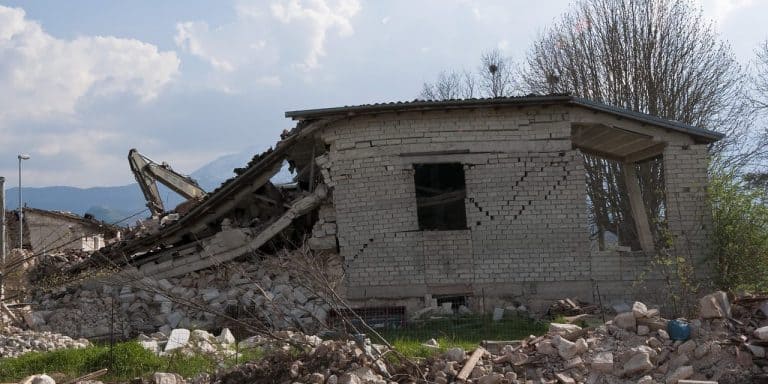
The natural disaster took a toll on the nneighbourhood, causing many casualties: 63 deaths and more than 120 injuries. Seven churches – including the famous church of Zsámbék, the 13th century Prémontré abbey church – and 279 buildings were completely demolished, and 353 buildings suffered serious damages. The quake was accompanied by a strong sound effect.

The last big earthquake happened on the 12th of January, 1956, when the epicentre of the seismic occurrence was in Dunaharaszti. It was caused by the dislocation of a deep dolomite ball of earth. It caused two deaths, injured 38 people and damaged 3144 buildings (out of 3500).

Photo: www.eurekalert.com

Copy editor: bm

Source: origo.hu / dailynewshungary.com

Reklám
Tas J Nadas, Esq