Home Blog Page 39

The 6 Top European Cities for Startups

Today, Rocket Internet-backed startup NestPick released a list of the top six European cities to start a startup.

NestPick provides Airbnb-like functionality for international students looking for medium- and long-term accommodations. Their top six picks are based on their experience in various cities plus research into the political, cultural, and economic factors affecting the local startup scenes. Let’s take a look at the top 6 European cities for startups:

1. Berlin, Germany

top European cities for startups berlin

Population: 3.5 million

On AngelList: 848 Berlin startups, 5,392 Berlin angel investors

Berlin Startup Success stories: SoundCloud, Wooga, Zalando

A McKinsey report quoted by NestPick estimates that Berlin startups will create over 100,000 jobs by 2020.

2. Budapest, Hungary

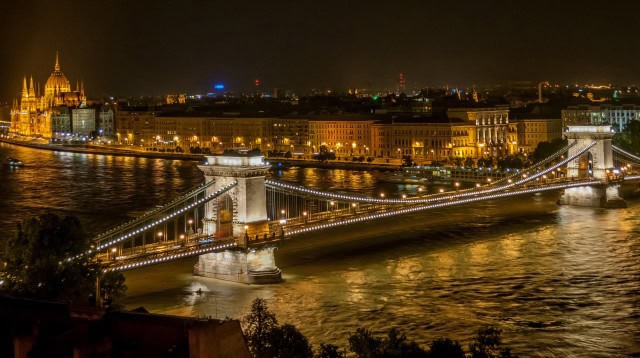
European-cities-Budapest-640x358

Population: 1.73 million

On AngelList: 168 Budapest startups, 4,646 Budapest angel investors

Success stories: Prezi, Ustream, LogMeIn

“The majority of young Hungarians have a high educational level, the Internet is exceptionally fast all throughout the city, and there are initiatives that offer venture capital from the European Investment Fund to finance innovative startups,” says NestPick.

3. London, UK

top European cities for startups london

Population: 8.31 million

On AngelList: 4,112 London startups, 7,143 London angel investors

London Startup Success stories: Mind Candy, Hailo, Shazam

The UK government has invested £50 million to help the London startup scene thrive (and compete with its rival, Berlin).

4. Barcelona, Spain

top European cities for startups barcelona

Population: 1.62 million

On AngelList: 404 Barcelona startups, 4,985 Barcelona angel investors

Barcelona Startup Success stories: Catchoon, Social & Beyond, Omnidrone (via Wired)

“The Spanish government improved entrepreneurial conditions in terms of tax breaks and funding programs, and will stick to those adjustments in the following years [after the economic crisis],” says NestPick.

5. Amsterdam, Netherlands

top European cities for startups amsterdam

Population: 780,000

On AngelList: 500 Amsterdam startups, 4,935 Amsterdam angel investors

Amsterdam Startup Success stories: Human, The Clockroom, Ace & Tate (via Wired)

According to NestPick, Amsterdam is ranked as the most creative global city and has an entrepreneurship rate that’s 6% higher than the European average.

6. Tallinn, Estonia

top European cities for startups tallinnPopulation: 400,000

On AngelList: 151 Tallinn startups, 4,674 Tallinn angel investors

Estonia Startup Success stories: GrabCad, Erply, Pipedrive (via Wired)

The Wall Street Journal says that “Estonia is the 132nd smallest country in the world by land mass yet it produces more startups per head of population than any other country in Europe.”

Images courtesy of Wikimedia Commons

Source: tech.co

Reklám
Tas J Nadas, Esq

John Molnar Sr. Obituary

Nekro2


MOLNAR JOHN S. MOLNAR, age 80, beloved husband of Magda (nee Lovas), dearest father of John (Patty) and Miklos. Dear grandfather of Justin and Johnny (Shannyn). Great-grandfather of Adrianna. Brothers and sister deceased. Neices and nephews in Hungary. A Memorial Mass will be held Thursday, January 21, 2016 at 6:30 PM at St. Emeric Church, 1860 West 22nd St., Cleveland 44113. Private interment at Holy Cross Cemetery. In lieu of flowers, family suggests memorial contributions to St. Emeric Church. ARRANGEMENTS BY RICZO FUNERAL HOME 440-842-4080


Reklám
Tas J Nadas, Esq

Brussels vs. Budapest

To the Editor:

Re “Hungary’s Angry Stance on Migrants, Once Vilified, Gains Some Acceptance” (news article, Dec. 21):

Brussels and Budapest do not differ only on the migrant issue. They have a different view of the future of Europe itself.

The Hungarians want a federation of independent nations, a federation that respects the different identities, cultures and traditions of the member states.

The Hungarians, the Poles and the other Central and Eastern Europeans also want to re-establish the power balance of Europe. But the unelected bureaucrats in Brussels are defending the status quo and their goal of a “multicultural” and Western-dominated Europe.

It is time to let the Europeans decide their own future. It is time to hold direct elections to resolve this conflict.

BÉLA LIPTÁK
Stamford, Conn.

Reklám
Tas J Nadas, Esq

Hungarian Birthright Program

Hungarian Birthright Program a unique cultural immersion experience Proud of your Hungarian heritage and want to experience it in a meaningful, unique and fresh way? Explore your heritage and discover the Hungary of today with a scholarship that connects you to other young Americans and Hungarians! Summer 2016 Join other young Americans and Canadians for a fun-filled and eyeopening experience of your culture, traditions and history while exploring the country. See first-hand the trends, innovations and ingenuity driving Hungary today. What you need to know:

• any degree of Hungarian heritage

• for ages 18 – 28

• 2 trips in June 2016

• scholarship limits your expenses to $1,500 Your heritage


Learn more: www.ReConnectHungary.org

A public-private partnership supported by Hungarian-American and Canadian organizations and the Government of Hungary E-mail: info@ReConnectHungary.org

120 East 90th Street #5D • New York, NY 10128 Toll-free: 1-844-4-MAGYAR (462-4927)


Reklám
Tas J Nadas, Esq

The Romanian authorities are threatening the peace of the country!

Since three days the public opinion of the country is focused on the announcement made by the authorities, stating that on the National Day they have prevented a terrorist attack and arrested the man who planned it. According to the accusation he planned to produce a hand made bomb from fireworks that are available in stores for public use and to fire it in the center of Kézdivásárhely/Tg-Secuiesc.

Knowing that in fact the man was retained a day earlier, it is possible that this is not about the prevention of a real danger, but a manipulation of the authorities, but whatever the truth is, some things have to be pointed out.

Logically there are two possibilities, and both of them are worth to be examined.

The first is that the young man who was arrested really planned to fire a bomb. In this case must be taken in consideration that despite the fact that Romania became member of the Council of Europe and the European Union, ratified a number of documents related to the rights of minorities, in the last years, with the active contribution of the authorities, it is visible the increasing of the anti-minority sentiments. The authorities chase the Szekler symbols and the Hungarian inscriptions, withdraw existing rights, declare that the autonomy movement of the Szeklers is a security risk, and the secret services assume openly that they are acting for preventing Szeklerland to gain autonomy. Based on these, the Romanian population considers the Szekler people dangerous and enemy of the country. The Szekler National Council drew the attention of the domestic and international decision-makers on the risks of these actions, but neither this, nor his calls for dialogue were taken in consideration. If the young man from Kézdivásárhely/Tg-Secuiesc was really planning to fire a bomb, two of the main reasons of that must be considered the way how the authorities are dealing with the Szekler issue and the indulgence of the international organizations. If Romania would respect her international commitments, than such things could not happen. We condemn all forms of violence, but we also state, that in this case the responsibility of the authorities who are permanently provoking the Szeklers is significant, and if they do not change their attitude, than the situation can even turn worse.

The other possibility is that the charge is false and we are facing a provocation of the authorities. This is at least equally serious problem, because playing with the fire in the actual European context is dangerous. We can state without exaggeration that this is also plausible, because the communication of the authorities, as well that of the politicians and other opinion leaders goes far beyond the facts in this case, they stigmatize the whole Szekler and Hungarian community and criminalize their legitimate claims. It is symptomatic that in front of the TV-cameras a well known politician, former minister affirmed, that this could happen just because the authorities were far too tolerant with the minorities. This is a clear call for collective punishment, irresponsible and dangerous.

Concluding we can state, that whichever of these two possibilities is true, it is without doubt that the Romanian authorities are on the wrong way, they are fueling permanently the interethnic tensions and that cannot lead to a good end. They have to change their attitude as son as possible and have to begin dialogue with the legitimate leaders of the Szekler people, in order to find a peaceful solution for the problem of Szeklerland, in accordance with the relevant international principles and documents.

A great responsibility falls also on the international organizations. It is time for them to face, that by not intervening, they encourage the Romanian authorities in their anti-minority acts and that can lead to undesired consequences. So we ask them to assume an active role in solving the problem of Szeklerland, according to their mission. In this sense we expect them to observe with special attention the case of the arrested young man, and to assure that the authorities will not commit any abuses against him.

https://supportszeklerland.hu/


Reklám
Tas J Nadas, Esq

ON THIS DAY – IN 1918 HUNGARY LOST TRANSYLVANIA TO ROMANIA

On 1st of December 1918 Romania officially declared its union with Transylvania (Erdély / Ardeal / Siebenbürgen), an ethnically mixed and culturally colourful Central European region, which previously had belonged to the Kingdom of Hungary for centuries. For Romanians, this day is a great national holiday and a good reason to celebrate, while for Hungarians it is one of the most tragic days in the nation’s history. In particular for the ethnic Hungarians of Transylvania, who were promised comprehensive minority and language rights 97 years ago, but still struggle for chances of self-governance and national autonomy.

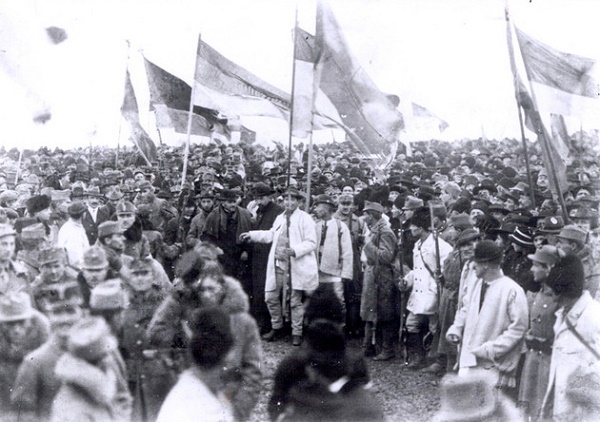
Assembly of the delegates of ethnic Romanians in Gyulafehérvár (Alba Iulia) in 1918

In fact an assembly of the delegates of ethnic Romanians was held in the city of Gyulafehérvár (Alba Iulia) by the end of 1918, and it declared the union of Transylvania with Romania on this day in front a public event attended by tens of thousands of Romanians. In that period of time Hungary was sunk into deep political and social anarchy as the result of losing the First World War in alliance with imperial Austria and Germany. The new revolutionary Hungarian elites, who came to power in October 1918, were not able to prevent the Czech, Serbian and Romanian armies from occupying large parts of the collapsing country.

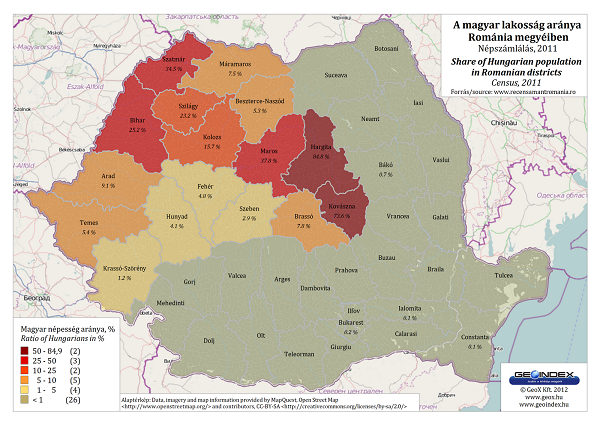
According to the last pre-war census, Transylvania had a population of 5,262,495 in 1910, of which 53.8% were Romanian, 31.6% Hungarian and 10,7% German (Saxon) with the dominance of the latter two in most of the larger towns and cities. The percentage of Romanian majority in Transylvania has significantly increased since it became part of the country, however, still about 20% of the Transylvanian inhabitants belong the the Hungarian minority, composing majority in the Szeklerland (Székelyföld) region and significant minority in other counties of Transylvania.

Share of Hungarian population in Romanian districts in 2011

Since the day of 1st of December has remained a rather controversial issue between the two nations, public opinion shapers never let this day go away without making further comments every year. In conservative daily Magyar Nemzet Hungarian journalist Csaba Lukács  argues today that Romania’s national holiday is necessarily malevolent as it marks the tragedy of a neighbouring country.

“This is how things work in this corner of Europe”, says Lukács, adding that it is understandable why ethnic Hungarians in Transylvania are not willing to celebrate on this day, especially when Romanian extremists regularly set up provocations both in Hungary and in Hungarian-populated towns of Transylvania. It is hard to gain any sign of mutual respect until local Hungarians are treated as “scapegoats” for all the past, present and future problems of Romania, the Hungarian journalist insists.

Whatever Hungarians feel today, Romania’s national holiday meets with warm response in other parts of the world. US Secretary of State yesterday, sending his best wishes to Bucharest. “Nearly a century ago, a group of Romanian leaders came together to establish aunited, democratic state that promoted the equality and freedom of its citizens“, Kerry says without hesitation.

“Today, we honor those early visionaries and those who have followed in their footsteps, dedicating themselves to advancing the shared values of dignity and human rights around the world”, he added. We cannot know how familiar Mr Kerry is with Central Europe’s modern history, but if a tiny proportion of these “values” had had anything to do with reality in the last 97 years in Romania, both Hungarians and Romanians would have more reason to celebrate on this or any other day of the year.

source: rubicon.hu and mno.hu

Reklám
Tas J Nadas, Esq

International Education Day at Cleveland State University

The Center for International Services and Programs at Cleveland State University held its International Education Day program on November 18, 2015, from 10 am to 2 pm. Visitors learned about the countries and cultures of various nations represented at the University. Hungary was also represented at the event with a Hungarian information desk where — thanks to the generosity of the Cleveland Hungarian Heritage Museum — Hungarian objects, pictures, videos, and numerous other interesting objects helped attendees get acquainted with Hungarian culture and the country of the Magyars, as well as get information about the Hungarian courses offered at CSU during the Spring 2016 semester.

During International Day, the various participating countries also presented their traditional dances, songs and music. The Hungarian Scout Folk Ensemble organized the Hungarian presentation, during which Bendegúz Pigniczky, Krisztina Nádas and Mátyás Tábor performed dances from Kalotaszeg; Mónika Gyerman sang songs originating from Mezőség; and Hungary’s Kőrösi Csoma Sándor Scholarship recipient Ádám Török Dancsó played Hungarian music on violin and on zither. The Ensemble then invited the audience to participate in a Moldavian circle dance, an opportunity many took advantage of!

The cultural presentations were followed at noon by an International Fashion Show, during which everyone could admire the beautiful traditional clothes of the various countries, including those of Hungary (Krisztina Tábor, her niece Lydia Eppley, and Dénes Mátyás participated in the Fashion Show, dressed in traditional Hungarian clothing). Visitors could taste exquisite Hungarian double smoked sausage, double smoked bacon and walnut roll throughout the whole program through the generosity of Dohar Meats Inc. (West Side Market, 1979 West 25th Street, Stand F-1 & F-2, Cleveland, OH 44113) and Farkas Pastry Shoppe (2700 Lorain Avenue, Cleveland, OH 44113).

The International Day, as well as the Hungarian performances and participation in the event, was a big success and provided an excellent occasion for both CSU students and our wider community to familiarize themselves with Hungarian arts and culture. The organizers of the Hungarian presentation and informational desk, Dénes Mátyás and Tímea Német, would like to express their thanks to the Hungarian Heritage Museum and its President Éva Szabó, to Ádám Török Dancsó, Intern at the Kőrösi Csoma Sándor Program, to the Hungarian Scout Folk Ensemble and its Co-Director Mátyás Tábor, as well as to all Cleveland Hungarians contributing to the success of the event.

We hope that numerous similarly exciting programs can be realized in the future, both at Cleveland State University, and in the wider Cleveland community.

Reklám
Tas J Nadas, Esq

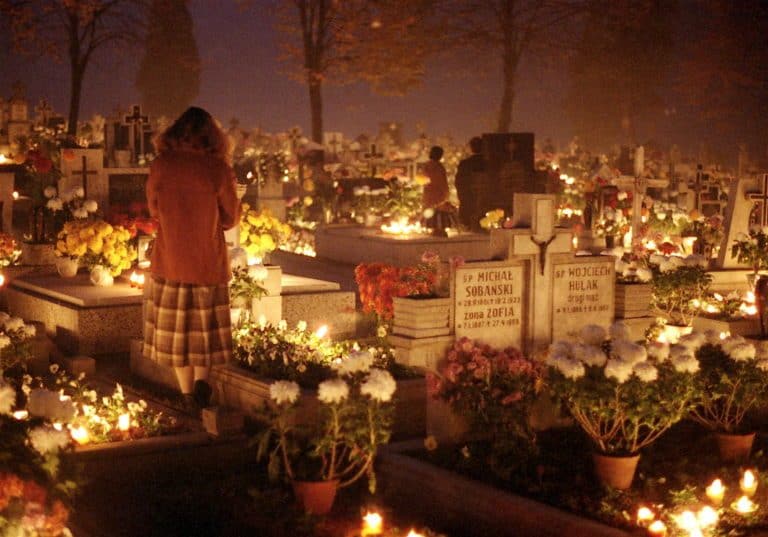
Instead of Halloween, Hungarians head to the cemeteries for All Soul’s Day

Unlike the fun parade that is American Halloween, All Saints’ Day and All Soul’s Day in Hungary are holidays that address the dead in a rather different way.

all soul's day

Otherwise known as ‘Halottak Napja’ ‘the day of the dead’ or ‘the day of remembrance’, All Soul’s Day and All Saints’ Day are two of the more popular holidays in Hungary that people celebrate. It’s a sentimental kind of national holiday in Hungary that lasts two days, the 1st and 2nd of November after fall has taken hold and the winter is soon upon us. Unlike the fantastical representation of everything dark, sinister and frightening, like the American holiday of Halloween, death is nothing unusual here. Halloween is not celebrated in central Europe but All Saints’ Day and All Soul’s Day is, they are comparable but radically different. Instead of glorifying the world of the dead by dressing up in ghoulish apparel, the Hungarians first honor the dead saints and then go and visit the hallowed ground upon which their past family members have been laid to rest.

Hungarians don’t carve pumpkins into faces or ride around on brooms either. The word ‘Halloween’ derives from an old English phrase, ‘All Hallows’ Eve’ and is comparable in Hungary to Halloween only in so much as it involves food and wicks that flicker. All Saints’ Day and All Soul’s Day aren’t for dressing up in a costume or bobbing for apples either. All Saints’ Day was moved by Roman Catholic church leaders from March to November 1rst in the year 835 AD to divert attention from the pagan traditions of the Druid’s similar holiday—Samhain, the Celtic New Year when the spirits of the dead returned to converse with the spirits of the living. Hungarian culture does speak of a halottlátó or ‘death seer’ who generally is an elderly woman who can communicate with the souls of the recently departed and in this, All Soul’s Eve divines a little magic. As a Catholic nation since the 11th century, Hungary takes the holiday to heart as public establishments close for the purpose of allowing people to travel to churches for services and/or for families to visit grave sites. At the churches in Hungary, Catholics pray and hold to the conviction that through prayer and self-denial the faithful can hasten the deliverance of souls from purgatory and into heaven. The Catholic doctrine teaches that some Catholics still have a kind of purification process that they must undergo after dying before they reach heaven. The prayers of living Catholics are believed to lighten the way for those living in purgatory.

Unlike American children who go in search of candied treats from door to door for Halloween, Hungarians go to cemeteries with bright yellow chrysanthemums and light red votive candles to decorate the graves of their beloved departed. Some people even leave food and drinks for their prior loved ones. Special masses are held in many churches all over Hungary to uphold the memory of the Christian martyrs and saints. Sometimes a parish priest will say prayers and blessings at people’s gravesites. The night of All Soul’s Day is one of the biggest times for flower sellers, they line the entrances of the cemeteries making it easy to purchase flowers and candles burn brightly in the dark. If you don’t have anyone to visit at the cemeteries that you know personally visit famous cemeteries like Kerepesi Cemetery coined a ‘decorative’ cemetery that contains ancient wooden graves known as ‘kopfa’ that date back to the original Magyars, carved boats symbolizing the journey down the river of death. Kerepesi Cemetery is also the resting place of many influential Hungarian figures such as the revolutionary Lajos Kossuth, Count Lajos Batthany, Ferenc Deak, János Kádár, József Antall, Blaha Lujza and Jozsef Atilla. At the Farkasréti Cemetery, visitors can find the graves of Béla Bartok and Zoltán Kodaly. Of the saints remembered in Hungary, two of the more popular were once members of the Arpad house, the first dynasty of the Hungarian kings and include, St. Stephen King and his son, St. Imre Prince. Another honored saint was from Venice and his name was St. Gerardo. The Americans, on the other hand, instead of honoring saints or deceased relatives honor a world of their imagination, one of phantoms, and, oh yeah, of candy!

Reklám
Tas J Nadas, Esq

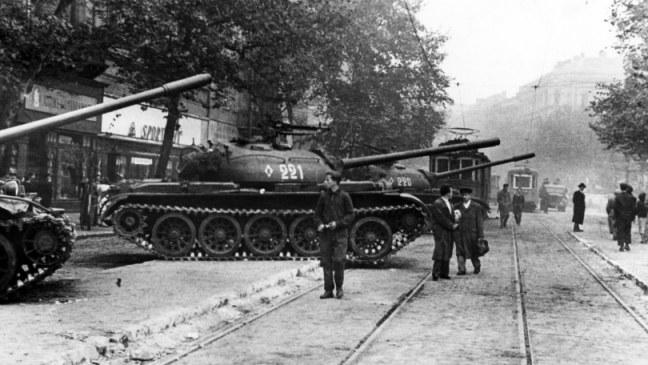
November 4, 1956: Hungarian revolution meets a brutal end as Soviet tanks roll into Budapest

A movement to free Hungary from Moscow’s influence ended in tragedy as Khrushchev’s patience gave in and the Red Army descended on Budapest.

1364014504115

The Cold War belied its name on this day in 1956 as Soviet tanks rolled into the Hungarian capital to crush “the forces of reactionary conspiracy”.

As the video above recalls, Moscow’s bloody “counter offensive” stamped out an uprising that sprang from student-led protests and grew into a popular revolt that saw Budapest’s pro-Soviet regime buckle and fall.

Keen to distance himself from the excesses of his predecessor Joseph Stalin, Soviet leader Nikita Khrushchev had initially dismissed Hungarian temerity as an inert riposte to the process of “de-Stalinisation” that had ushered him into power.

He didn’t flinch at the elevation of reformist Imre Nagy to Prime Minister, even though the former premier had been dismissed from the Hungarian Working People’s Party for falling out with the Soviet Politburo. And he even agreed to withdraw Soviet troops from Budapest as its inhabitants began to cut the Communist coat of arms from the Hungarian flag.

The Kremlin’s apparent lassitude emboldened the rebellious Hungarians, as did overtures from US leaders which spoke of support for the “captive peoples” of eastern Europe.

With the wind of change at his back, Nagy sought the abolition of one-party rule and announced that Hungary was withdrawing from the Warsaw Pact.

Moscow finally responded. The Kremlin had heard enough. Khrushchev’s velvet glove fell away to reveal the iron fist of old.

Operation Whirlwind began in the wee hours of November 4, 1956. With the light of dawn still hours away, Soviet fighters began to bombard Budapest from the air as artillery units pounded the capital from the surrounding hills.

Nagy took to the airwaves at 4.20am local time as Soviet tanks began to rumble through the city. Speaking in English, he sought to “notify the people of our country and the entire world” of his country’s predicament.

His broadcast on Radio Budapest was followed by a repeated SOS signal which fell silent at 7.25am. When transmission resumed at 8.15pm it was in the hands of the Red Army. Hungary’s tilt at freedom had met its end.

Do you recall Hungary’s transient rise and fall? Share your memories in the Comments section below.

The Hungarian Revolution – Did you know?

  • The abortive revolution claimed the lives of around 3,000 civilians and some 200,000 more were forced to flee the country. A further 22,000 Hungarians were sentenced for crimes such as treason, 13,000 imprisoned, and several hundred executed. Moscow quickly abandoned “de-stalinisation” and ratcheted up repression across the Eastern Bloc.
  • The final broadcast from Hungary’s last rebel-held radio station hit the airwaves on the afternoon of November 4. An unidentified woman’s voice intones: “Civilized people of the world: On the watch tower of 1,000-year-old Hungary the last flames begin to go out. Soviet tanks and guns are roaring over Hungarian soil. Our women – mothers and daughters – are sitting in dread. They still have terrible memories of the army’s entry in 1945. Save our souls! This word may be the last from the last Hungarian freedom station. Listen to our call. Help us – not with advice, not with words, but with action, with soldiers and arms. Help Hungary. Help, help, help.”
  • Despite an apparent promise of help, western governments failed to come to the aid of Hungary in her hour of need. Confrontation with the USSR could have sparked nuclear war, but Richard Nixon, then US Vice-President, would later put US reticence down to the concurrent Suez Crisis. He said: “We couldn’t on one hand, complain about the Soviets intervening in Hungary and, on the other hand, approve of the British and the French picking that particular time to intervene against Nasser”.
  • The revolution saw Cardinal Jozsef Mindszenty, the leader of the Catholic Church in Hungary, sprung from the jail where he had served eight years of a life sentence for opposing communist rule. Following the Soviet assault on Budapest, he was granted political asylum at the city’s US embassy, and the next 15 years of his life were spent within the building. He was finally granted permission to leave the country in 1971. He died in exile in 1975 in Vienna, Austria.
  • Imre Nagy and others involved in the revolution were secretly tried and executed in June 1958. Nagy’s trial and execution were made public only after the sentence had been carried out. A source within the Kremlin allegedly reported that Nikita Khrushchev had Nagy executed “as a lesson to all other leaders in socialist countries”.
  • On July 6, 1989, Hungary’s Supreme Court acquitted Nagy of the charges of high treason for which he had been executed. Janos Kadar, the Soviet puppet who took over from Nagy and ruled the country for the following 30 years, died in hospital on the very same day.
  • Nagy’s remains were reinterred during a formal public funeral on the 31st anniversary of his execution. There were over 100,000 mourners in attendance.
  • Just two months after Nagy’s reburial, his country played an important part in accelerating the collapse of Communism when it opened its border with Austria, allowing thousands of East Germans to escape to the West. Soviet troops finally withdrew from Hungary in 1991.

Source:home.bt.com

Reklám
Tas J Nadas, Esq

LONELY PLANET: HUNGARIAN-POPULATED TRANSYLVANIA WORLD’S BEST REGION TO TRAVEL IN 2016

Transylvania, the region in modern-day Romania that historically belonged to Hungary and remains home to an ethnic Hungarian community of some 1.5 million people, has been named the world’s top tourist destination for the year 2016 by Lonely Planet, the largest guide book publisher in the world. Within the region, Lonely Planet particularly recommends Saxon fortified churches, the Carpathians, spicy Szekler goulash and nightlife in Transylvania’s quasi-capital, the 320 000-inhabitant city of Kolozsvár (Cluj-Napoca in Romania).

Transylvania beat regions in countries including Iceland, Cuba, Italy and New Zealand in the world rankings, which reveal Transylvania as the best region in the world to travel in 2016 .

YouTube player

Beyond the famous Saxon fortified churches and vampire stories, a visit to Transylvania is made the experience of a lifetime by the picturesque historic towns of Brassó (Braşov), Segesvár (Sighişoara) and Nagyszeben (Sibiu). The guide also highlights the scenic landscapes, caves and ski resort of the of the Carpathians and the Hall of Mirrors of the Culture Palace in the city of Marosvásárhely (Târgu Mureş). The Hungarian-majority Szekler Land (also called Székely Land) region which isstruggling for its right to self-governance through autonomy within Romania, is mentioned under a separat heading (albeit misspelled as “Svékely Land”) for its traditional Hungarian goulash served “with an extra sprinkling of paprika”.

zbor-peste-transilvania-brasov-29-hd1
A bird’s-eye view of the city of Brassó / Braşov / Kronstadt (photo: enjoyromania.net)

The top destination as a country for tourists is the African nation of Botswana, while Kotor in Montenegro came first among cities. Estonia was singled out as the country with the highest-standard tourist services. Hungary is also included on the listings, with the capital Budapest being named 2016′s “Best Moustache Destination” on a par with London, Mexico City and Istanbul, among others.

url6
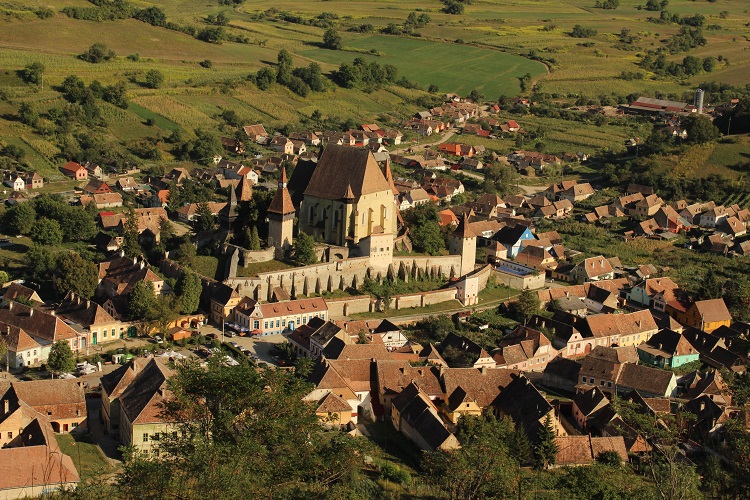
The historic Saxon town of Berethalom / Biertan / Birthälm, with the mediaeval Lutheran fortified church (photo: enjoyromania.net)

Transylvania formed part of the Kingdom of Hungary until the 1920 Trianon Peace Treaty and remains home to an ethnic Hungarian minority of some 1.5 million people. The region also has a place in the heart of Prince Charles, the heir to the British throne, who maintains two estates in Transylvania, including one in the all-Hungarian village of Zalánpatak (Valea Zalanului).

Lonely Planet’s praise of Transylvania comes as the US travel magazine Condé Nast named the Hungarian capital Budapest the world’s second-best city in an online poll.

via hungarytoday.hu / mandiner.hu
photo: Alex Robciuc/boredpanda.com

Reklám
Tas J Nadas, Esq

Annual Gala Dinner Honors J. Joe Adorjan and the Hungarian-Missouri Educational Partnership

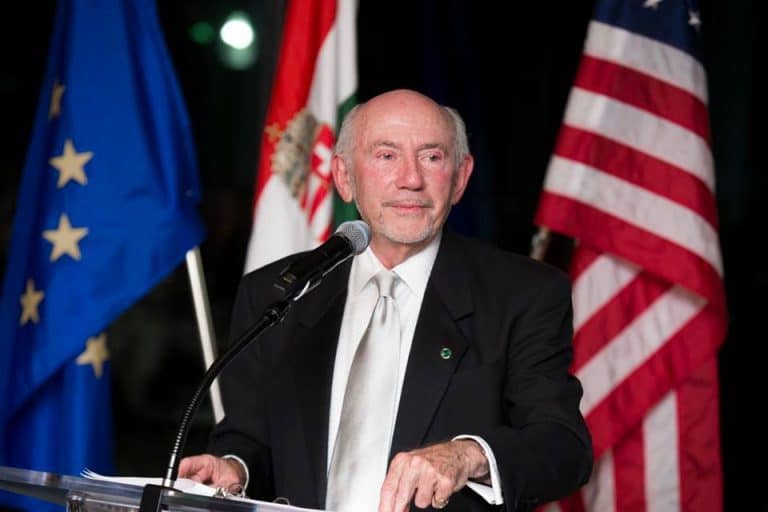
Mr. J. Joe Adorjan, delivers his acceptance remarks. Photo by Mike Olliver

Washington, DC – On September 29, 2015, the Hungarian American Coalition (Coalition) hosted its eleventh annual Gala Dinner at the House of Sweden.  His Excellency János Áder, President of Hungary, was Honorary Chairman of the event.  This year’s honoree was J. Joe Adorjan, Honorary Consul General of Missouri and founder of the Hungarian-Missouri Educational Partnership (HMEP).

Coalition Vice President Andrea Lauer Rice welcomed the distinguished guests, including this year’s honoree Mr. Adorjan, his wife Dianna, their 3 children and extended family; Ambassador George Herbert Walker III, Gala Co-Chair, and Mrs. Carol Walker; Mr. Michael F. Neidorff, Gala Co-Chair, and Mrs. Noemi Neidorff; Ambassador Réka Szemerkényi, Hungary’s Ambassador to the United States and Governor George Pataki, the first-ever Hungarian American candidate for President of the United States.

Mr. J. Joe Adorjan, delivers his acceptance remarks. Photo by Mike Olliver

Other prominent guests included Dr. Tamás Fellegi, President and CEO of the Hungary Initiatives Foundation; Mr. John Lipsky, former First Vice President of the International Monetary Fund and Mrs. Zsuzsanna Kárász Lipsky; Ambassador April Foley, Chairman of the Hungary Initiatives Foundation Board; Ms. Susan Hutchison, Chairwoman of the Republican Party from the state of Washington; Mr. Dávid József Szabó, Program Director at Századvég Foundation; Dr. Ariel Cohen, Founder and Director of the Center for Energy, Natural Resources and Geopolitics and Senior Fellow at the Institute for Analysis of Global Security; Mrs. Edith Lauer, Chair Emerita of the Coalition and Mr. John Lauer; Mr. László Hámos, President of the American Diaspora Council and the Hungarian Human Rights Foundation; Mr. and Mrs. Stefan Fedor, Founders of the American Hungarian Heritage House in Washington D.C.; Mrs. Hajnalka Horváth-Tóth, Prime Minister’s Office and Mr. Peter Tóth; Mr. Marion Smith, Executive Director of the Victims of Communism Memorial Foundation and  Mrs. Anna Smith Lacey; and Mr. Peter Kalotai, Deputy Chief of Mission at the Hungarian Embassy.

Coalition board members in attendance included Zsolt Szekeres, Treasurer; Dr. Agnes Virga, President of the Hungarian Society of Massachusetts; and Mrs. Csilla Grauzer, Honorary Consul President of the Minnesota Hungarians. Many Coalition friends were also present: Enikő Basa Molnár, Executive Director of the American Hungarian Educators Association and the Coalition interns’ “guardian angel”; Colonel Matt Smith and his wife Laura Balser; Krisztina Osvát, Counsellor at the Embassy of Hungary in charge of outreach to the Hungarian American community.

Following Mrs. Lauer Rice’s welcoming remarks, Ambassador Szemerkényi highlighted the challenges of the current migration crisis facing Hungary, emphasizing the global nature of the crisis and the need to strengthen the transatlantic relationship.  She expressed high praise for Mr. Adorjan, the Coalition’s honoree, by saying that he is a “special treasure to both Hungary and the Hungarian American community.”

After Amb. Szemerkényi’s remarks, Mrs. Lauer Rice reviewed the main ongoing Coalition programs, including the Congressional Internship Program, the Dr. Elemér and Éva Kiss Scholarship Fund and The Bognár Family Hungarian Scholarship Fund, as well as the Hungarian Americans Together (HATOG) conference series.  She described the significance of the 2015 Jubilee Scout Camp organized last month in Fillmore, NY, by Coalition founding member, the Hungarian Scout Association in Exteris. The organization celebrated its 70th anniversary this year.

Mrs. Lauer-Rice also introduced The Memory Project, a new initiative undertaken with Coalition member and award-winning documentary filmmaker Réka Pigniczky.  They have filmed interviews with more than 35 Hungarian-Americans who immigrated to the US after the Second World War and after the 1956 Hungarian Revolution.  These interviews, whose subjects include several leaders of the Coalition, not only provide a historic glimpse into the war and revolution in Hungary, but also reveal their personal stories of immigration to the United States and the challenges of remaining Hungarian while settling into a new country.  The video presentation was received with several rounds of applause by the audience.

In his introductory remarks following dinner, Ambassador George H. Walker III, Gala Co-Chair, praised his good friend, Mr. Adorjan by saying that “not only has Joe’s professional career been a tremendous success story, but what he has done in the last ten years to strengthen the ties between the U.S. and Hungary has been truly extraordinary.”

Coalition President Max Teleki then highlighted the milestones of the honoree’s life, stressing Mr. Adorjan’s tireless activities on behalf of the Hungarian-Missouri Educational Partnership. In addition to educational exchange, the program encourages personal ties among future U.S. and Hungarian leaders.

In accepting the award, Mr. J. Joe Adorjan said: “In my belief, by investing in the next generation of young Hungarians, we will make a difference in that country; we will build and strengthen our relationship with the United Stated and on behalf of HMEP I just want to thank you all for this wonderful honor.”

After the award ceremony, Ms. Susan Hutchison and Governor Pataki gave toasts about the importance of the traditional values held by Mr. Adorjan, and the connection felt by many in the room to their Hungarian heritage.

As Mrs. Lauer Rice concluded the evening, she thanked Zsolt Szekeres, Noémi Bánhidi, Program Coordinator, and the four Coalition interns – Noémi Dalma Nagy, László Baksay, Lőrinc Thurnay and Benjámin Babicz for all their efforts that assured the success of the Gala Dinner.

October 1, 2015 | Washington, DC

Source: hacusa.org

Reklám
Tas J Nadas, Esq

Hungarian Cultural Garden at One World Day

The big day is this Sunday!  The 70th annual One World Day in the Cleveland Cultural Gardens will be this Sunday August 23 and the Hungarian Cultural Garden is a big part of it.

Be sure to visit the Hungarian Cultural Garden and The Budapest Cafe featuring:
·        Wiener Schnitzel Sandwiches and Pogacsa
·        Hungarian pastry:  Nut and poppy seed rolls, Linzer cookies and strudel
·        Budapest Ice Coffee

Relax and enjoy the music of Endre Check on the Hungarian Cimbalon.

Also, Ernie Mihaly will be on stage and recognized for his great service to the Hungarian Cultural Garden over the years.  Read about it in the free 80 page collector’s edition book that will be handed out at One World Day.

Still need convincing?  Here are a few other highlights of One World Day:

·        Free admission and free parking.
·        The Parade of Flags with dozens of heritages represented with traditional costumes.  Get dressed and march with fellow Hungarians.
·        Inspiring Naturalization ceremony featuring the Oath of Citizenship for 25 people from  Albania, Azerbaijan, Bhutan, Bosnia-Herzegovina, Canada, Czech Republic, Dominican Republic, India, Macedonia, Nigeria, Philippines, Russia, South Korea, Spain, Togo, Turkey and Ukraine.
·        Free guided Trolley Tours (3 trolleys) to let you visit ALL the Cultural Gardens.
·        3 stages of diverse ethnic entertainment plus more activities in many of the Gardens.  Watch world-renown concert pianist Stanislav Khristenko perform on a 9 foot grand piano in the Russian Garden.  The 3 main stages will also feature Moises Borges and Brazilian Jazz quintet with Grammy award winning trumpeter Kenny Davis, Jasmine Dragon Aerial silk arts and break dancing, Ukrainian
·        Free Passport Program so kids, of all ages, can get a passport and do activities in the gardens.
·        80 page One World Day collector’s edition booklet with history, map and info on the Gardens and more.
·        Great ethnic food in many of the Gardens or enjoy a Slyman’s corned beef sandwich, a Frosted Malt from Weber’s Premium Ice Cream or treats from Rudy’s Strudel and Bakery or Cleveland                  Pickle or on and on.
·        Join Cleveland Mayor Frank Jackson, County Executive Armond Budish, Councilman Kevin Conwell and others along with the Cleveland Cultural Gardens Federation (CCGF) in kicking off the                  Centennial Year of the Gardens.  The first Garden was established in 1916 so the CCGF, City of Cleveland and the community will have a year-long celebration planned.

And much more!  Visit the website at https://clevelandoneworldday.org/ or the Facebook page at https://www.facebook.com/events/402905399892240/

Be sure to visit the ClevelandPeople.Com booth and place a sticker on Hungary on the large maps of the world to represent your heritage.  See you Sunday!

————————————————–
Dan Hanson
ClevelandPeople.Com
2800 Euclid Ave. Suite 325
Cleveland, OH 44115
216-781-1757
dan@clevelandpeople.com

https://www.clevelandpeople.com
https://twitter.com/ClevelandPeople
https://www.facebook.com/cleveland.people

OWD

Reklám
Tas J Nadas, Esq

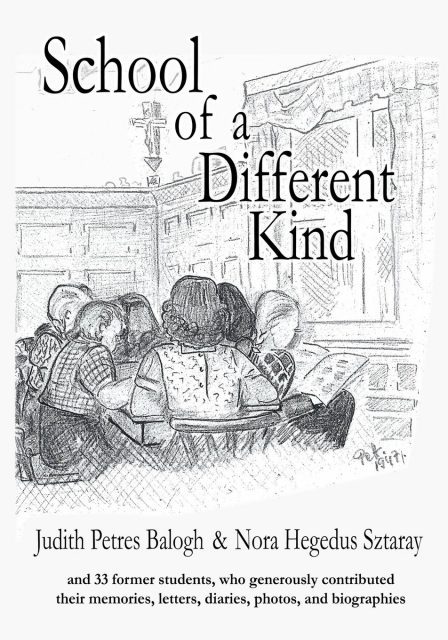
Judith Petres Balogh: SCHOOL OF A DIFFERENT KIND

    SCHOOL OF A DIFFERENT KIND

    SCHOOL OF A DIFFERENT KINDThe following is the text of introduction to the presentation and book signing by Judith Petres Balogh at the Cleveland Hungarian Heritage Museum on the evening of July 14, 2015, hosted by the Museum and in particular by Mr. and Mrs. Steve and Susan Szappanos. Mrs. Szappanos, who is the sister of Judith Petres Balogh and who had also attended the schools featured in the book, had invited Dr. Mártha Pereszlényi-Pintér to give the introduction. The book, SCHOOL OF A DIFFERENT KIND, is available for purchase at the Cleveland Hungarian Heritage Museum, and also from the Amazon.com website as well as that of Barnes and Noble. The book has also been named “Book of the Year” by the Hungarian Association and will be featured at their annual conference in November.

    ***

    About the author:  In 1945, at the tender age of 11 or 12,  Judith Petres leaves Hungary with her mother and younger sister, Zsuzsa, and flees to the West. She is eventually among the first students to arrive in Niederaudorf, Germany, at the Hungarian Gimnázium in 1946. (Later, the school was relocated to Reisach.) Her latest book, School of a Different Kind, which includes  contributions from her schoolmates and teachers, fills in the gaps of her life between 1946 and 1951.

    In 1951 the Petres family immigrated to the United States and settled in Cleveland, Ohio. Judith was first employed in Solon, Ohio. Soon she was married and eventually had three children. In 1968 she enrolled at Kent State University where she earned her BS degree magna cum laude in Education, and subsequently a postgraduate degree in Special Education. She somehow found time to assume responsibility of the only Hungarian picture magazine of the time, the Képes Világhiradó, which she published in Cleveland from 1967 until 1978. [Copies are available for browsing in the library of the Cleveland Hungarian Heritage Museum. They give a remarkable picture of Hungarian society and immigrant life of the time.]

    In 1978 she moved to Germany and taught at the Rhein-Main Air Force Base School for US military personnel as a teacher of gifted and talented children, as well as at Hanau, Babenhausen, and Darmstadt, and in the employment of the US Defense Department. Although living in Europe she also attended Dayton University during a sabbatical in 1983, where she received a Master’s Degree in School Administration, and after earning this second Master’s Degree, she was promoted to school administration in Germany. She is a Kappa Delta Pi member, a Jennings Scholar, and was awarded with a Scroll of Appreciation by the 414th Base Support Battalion for outstanding services as assistant principal at the Hanau (Germany) military base.

    Judith Petres Balogh is the author of eight books in Hungarian and in English: her two books in Hungarian are Keresztút in 1973 and shortly thereafter a Hungarian children’s book, Aranyhomok. Several books in English followed: This Old House by the Lake (2002),  Beyond Conventions (2002-2003), The Countess and Her Daughter (2003),  Julia (2005), and Sunset (2006). This book, School of a Different Kind (2015), is her latest work. [Note: Some works have been republished in later editions or in paperback.]

    Today, Judith Petres Balogh is widowed and lives in Zalaszabar by the enchanting Lake Balaton! She is also traveling, writing and taking active part in the local community’s intellectual and religious life. She has contributed and continues to contribute to several Hungarian newspapers and is a well-known speaker at literary functions.

    ***

    About the book:  School of a Different Kind is about children and adolescents forced to leave their Hungarian homeland, but who survived the aftermath of the Second World War. It vividly describes the cold, the hunger and above all the homelessness. In the words of its numerous contributors, it also describes the later and post-Germany difficult years of again finding a new home, and settling in a strange environment scattered across three continents (North and South America, Australia), where they did not know the language nor had any familiarity with the customs, and where they were viewed with suspicion for being immigrants from a country that was a former ally of Nazi Germany.

    School of a Different Kind  is thus about an unusual school and its young students, those whose lives had been had been radically altered  by WW II  and its aftermath. These children and adolescents found themselves coping with adverse conditions forced upon them by ensuing and difficult circumstances. They were now basically living as innocents but facing a brave new world in which both roof and rug had been torn from above and below them.

    In addition to Judith Petres Balogh and Nóra Hegedűs Sztáray (who wrote the original manuscript upon which the books is based), there are 33 additional contributors who offered their memories, memoirs, letters, diaries, photos, drawings, interviews, eyewitness accounts, and biographies. Of course there were negatives, but amazingly, the narrative focuses on the positive in all aspects of the children’s and adolescents’ education in a world of no libraries, no books, no paper nor pencils, no food, and no basic necessities like soap, wood, warm water, heat, decent clothing, winter coats, or shoes.

    Historical facts are inserted to help the American reader or anyone who is unfamiliar with the period and Hungary’s role in it, along with the personal glimpses of individual lives. It describes a segment of postwar life which is relatively unknown even to history buffs. For us in Cleveland at least, we are pretty familiar with what happened DURING the war from what the adults who lived through it told us, and what happened AFTER the “DP’s” or “Displaced Persons” immigrated to the USA in the 1950s along with the hardships they encountered. But there is a gap – a “sandwich generation” so to speak – as to what happened to the generation of children and adolescents in the post-war to pre-immigration period, to those who were the truly innocent victims of WW II, and to their lives between 1945-46 and 1950-51. This is the generation that was deprived of what they would have had in Hungary – the schools, the dances, the parties, the debutante balls – the common, everyday things that today their sons and daughters and grandchildren and great-grandchildren take for granted.

    Besides no heat, there was never, ever enough food. I was struck by how many times each of the contributors to the book mentioned the lunch or dinner of single small potato with bits of black spots which were actually pieces of blood sausage (= véres hurka, a delicacy not always appreciated by those who have not yet acquired the taste!). They would have gladly eaten more – there was never enough of even that. A book with reminiscences like this makes you think of your own – when I was in my very early days of Cleveland Hungarian scouting, for our typical camping breakfast we ate “zsíros kenyér,” or bread thickly smeared with lard and sprinkled with salt and red paprika – and we not only ate it, we actually liked it – we even went home and made some more – to the horror of our American friends!

    Thus I was particularly struck by the constant references to food – how there was so little or none of it for the students, but how despite constant gnawing hunger, they still managed to survive and learn their lessons well. It again reminded me of an incident in my own life. When I was a little girl, maybe 7 or 8, I dropped a raw egg on the kitchen floor and it splattered. I was nonchalantly going to clean it up and throw it away, but my own post-WW II and DP immigrant mother went ballistic. She made me scoop it up and she cooked it and she made me eat it. Her own traumatic memories of near starvation in the refugee camps of post-WW II Austria were so strong she could not bear wasting food. My father often repeated his own refugee camp story of a little Austrian boy he spied biting into an apple, and which after one bite, the boy threw it away. My father retrieved the apple, cut off the part where the child had bitten into it, cut it into three pieces and shared it with himself, my mother, and his mother-in-law. That was their dinner that night. That was how scarce food was. My cousin, born here in Cleveland, often told me that her own mother, also a post-WW II DP,  would make her and her brother when they were still little children kiss a piece of bread and eat it if it happened to fall onto the floor. Bread was life. It was sacred.

    My mother also told me of seeing a horse back in the refugee camp in Austria, neighing and pawing as it was led to slaughter for food, and how she could not bear to eat any of it later when it was served as a meal for the refugees, even though she herself was starving, knowing where it had come from. She knew she was pregnant with me, when the American soldier supplied ubiquitous peanut butter and its smell made her nauseated. Subsequently in America, I could not stand the smell either since it must have been transmitted in the womb, and I was constantly subjected to teasing by having lunchroom peanut butter and jelly sandwich shoved under my nose by my American grade school classmates.

    I have a question for the audience – How much waste does the average American student carrying a packed lunch produce each school year? Is it:

    1. 67 pounds    B. 54 pounds    C. 38 pounds

    Answer: Sixty-seven pounds of waste per student ads up to a whopping 18,000+ pounds of waste produced by an average-sized elementary school in one year. Compare that to what the students in the post-war refugee schools had, or did not have.

    I read one review of this book on Amazon.com where the commentator stated that while reading this book, she kept thinking of the author Charles Dickens… “It was the best of times, it was the worst of times,” or Dickens’ famous opening sentence which introduces the universal nature of his book, A Tale of Two Cities, and the drama depicted within. And if you saw the film version of Oliver (again based on a Dickens novel, Oliver Twist), the most poignant scene is when the little boy goes to the school master and begs, “Please, Sir, more food!” and then he is severely punished for this transgression. It must have been heartbreaking for the administration of the schools depicted in School of a Different Kind to know that even had the children asked, there was no more food to give them.

    Then one story is often repeated by several different contributors, and it is about one little girl nicknamed Markóczi who became so sick she could not walk or even eat what little there was. Her schoolmates put her in a wooden hand cart which they called their “ambulance” and pulled her to see a doctor who diagnosed this as malnutrition, and which several of the children in passages scattered throughout the book just called “hunger edema” (pp. 58, 156,  201 and others). I immediately knew it was just another way of saying “kwashiorkor,” the third world wasting disease caused by severe malnutrition that you see on horribly poor little African children with swollen bellies but with mere sticks for arms and legs. How could this happen in Europe?  Even in post-war Europe?

    How spoiled we are – sleeping on a Posturepedic® or Temper-Pedic® or pillow-top or memory foam mattress, and all kinds of fancy stuff. The children at this school slept on the same straw mattresses all year long – and some of them described how the straw eventually got all lumpy and smelly – we did that in the early days of Hungarian scout camping in the Americas too, sleeping in tents on straw, but only for a week or so – doing that for a whole year or more seems unimaginable today. What was really impressive though, was how so many of the girls mentioned that they never complained about anything in their letters home to the parents – already at their tender age they were aware of the sacrifices their parents were making to send them to school at all, so they did not want to add to the parents’ heartbreak and burden.

    Having the opportunity of free public education is taken for granted by many in the USA and in other parts of the Western world. Maybe the hardships that these children and adolescents in School of a Different Kind had to endure made them so much stronger and determined though. No matter what kind of time it was, there is no doubt that the children all came away with a superior education. But for us today, imagine having no books, no paper on which to take notes, maybe not even pencils to write with. The children in this story, when they were occasionally able to get paper and pencils, sewed together their own books made up of notes from all contributors, and they all shared this one book.

    The preferred method of learning included memorization of poems, very long ones, but of course anyone of a certain age or who was a Hungarian scout or who attended a Hungarian ethnic school can remember doing that. But irrespective of the teaching methodology, this is a powerful true story of how a highly motivated generation of parents, students and teachers used their determination and creativity, to turn the worst of times, even if not into the best of times, into at least bearable times of love and learning, which resulted in the students often surpassing their peers in German schools of the same period.

    And what was truly amazing was the way the determination to succeed was carried forward to whatever host country was lucky enough to receive them as immigrants – each and every one of the girls and boys was later, in his or her own away, if not an overachiever at least a super-achiever. Very sadly, it was also what we could call today a “brain drain” – I am certain Hungary would be much more prosperous today had this generation been able to contribute their talents had they been able to remain in Hungary – what was Hungary’s loss of course was the new country’s gain.

    On page 46, and I believe it was written by Judith herself – she mentions Hillary Rodham Clinton (– my apologies to the Republicans in the crowd – !).  But it was Hillary’s “It take a village to raise a child” quotation. And not only was the resourcefulness of the teachers, but also the resourcefulness of the parents was truly amazing. I marveled at the story of the mother of a girl named Klára: in 1945-46, the authorities in charge of the refugees would award knitting yarn, but only on the condition that it be made into one single item. So, Klára’s mother made one truly gigantic coat of which the authorities approved, but after which she secretly unraveled the whole thing thread by thread to make sweaters for Klára’s dad, brother, sister and Klára herself (p. 192). Markóczi’s mother was able to barter for materials to turn into skirts and dresses – material from former kitchen curtains, colorful bed sheets, and even a Russian parachute (p. 104)!

    About medical conditions – today we can run to any pharmacy or  doctor or emergency clinic or even just consult the Internet for medical assistance – but I was particularly stuck by the story of a girl named Jutka (actually, Judith herself) who slipped on a wet floor on a bathing day (which only happened once a week by the way, when they actually had warm water instead of cold), and she broke her little toe. The unwritten rule for refugees was no doctor unless it was severe and unstoppable bleeding, a definite heart attack, or a third degree burn, and if you were probably going to die anyway, why bother with a doctor?

    The children in this book had to deal with the problem of evil, that no adult has yet resolved. One paragraph that Judith herself wrote on p. 51 of her book remains with me:

    “We understood that diseases, often horrible ones, natural disasters and death, are part of the human condition. What we found so unacceptable was the monstrosity of what was willfully done to others; such deeds that were not necessary and could have been avoided. The awful realization that we were witnessing not the human condition of predictable and unavoidable events, but the wickedness of Man and his capability to hurt his fellowman in ways worthy of Satan, frightened us. People with smooth, benign faces, perfect social behavior, often with brilliant education, who enjoyed art and felt spiritually uplifted while listening to classical music, could and did sit down at a polished conference table to make decisions about actions one usually associates with totally demented minds. Other individuals – and not just a few, but hundreds and thousands – who were known to be sober, hardworking men at other times and in other conditions, turned bestial  without the slightest thought about decency, morals, feelings.”

    Anne Frank, Helga Weiss, and Nobel Prize winner Imre Kertész wrote about Jewish children and youth living or disappearing in the horror of the Holocaust; Esther Hautzig recounted Jewish children deported to the Soviet Union; Helen Szablya and Tibor Fischer wrote about youth surviving in Communist Hungary just after World War Two. Now this is a story about Hungarian families who were forced to overcome the ordeal of witnessing the collapse of the familiar. The parent generation lost their home, their future, their security. But they never lost their ideals and values and managed to transmit to their children, or to their students, those very values and ideals which were the very foundation of their former life.

    In summary, this return to peer into a mid-20th century world that is unknown to most is truly heartwarming, because it demonstrates what the human mind and an indomitable spirit can achieve when love, devotion and dedication such as that which the children, adolescents, parents and teachers selflessly and nobly displayed toward one another, replace cynicism, despair, and hopelessness.  School of a Different Kind, despite the descriptions of severe hardships during evil times, is uplifting, positive, touching, and in a word: beautiful. The book should be made into a movie. I hope it will be, and very soon.

    Dr. Mártha Pereszlényi-Pintér
    Chairperson, Department of Classical and Modern Languages and Cultures at
    John Carroll University, Cleveland, Ohio USA
    July 14, 2015

    Reklám
    Tas J Nadas, Esq