Home Blog Page 40

Hungarian Cultural Garden at One World Day

The big day is this Sunday!  The 70th annual One World Day in the Cleveland Cultural Gardens will be this Sunday August 23 and the Hungarian Cultural Garden is a big part of it.

Be sure to visit the Hungarian Cultural Garden and The Budapest Cafe featuring:
·        Wiener Schnitzel Sandwiches and Pogacsa
·        Hungarian pastry:  Nut and poppy seed rolls, Linzer cookies and strudel
·        Budapest Ice Coffee

Relax and enjoy the music of Endre Check on the Hungarian Cimbalon.

Also, Ernie Mihaly will be on stage and recognized for his great service to the Hungarian Cultural Garden over the years.  Read about it in the free 80 page collector’s edition book that will be handed out at One World Day.

Still need convincing?  Here are a few other highlights of One World Day:

·        Free admission and free parking.
·        The Parade of Flags with dozens of heritages represented with traditional costumes.  Get dressed and march with fellow Hungarians.
·        Inspiring Naturalization ceremony featuring the Oath of Citizenship for 25 people from  Albania, Azerbaijan, Bhutan, Bosnia-Herzegovina, Canada, Czech Republic, Dominican Republic, India, Macedonia, Nigeria, Philippines, Russia, South Korea, Spain, Togo, Turkey and Ukraine.
·        Free guided Trolley Tours (3 trolleys) to let you visit ALL the Cultural Gardens.
·        3 stages of diverse ethnic entertainment plus more activities in many of the Gardens.  Watch world-renown concert pianist Stanislav Khristenko perform on a 9 foot grand piano in the Russian Garden.  The 3 main stages will also feature Moises Borges and Brazilian Jazz quintet with Grammy award winning trumpeter Kenny Davis, Jasmine Dragon Aerial silk arts and break dancing, Ukrainian
·        Free Passport Program so kids, of all ages, can get a passport and do activities in the gardens.
·        80 page One World Day collector’s edition booklet with history, map and info on the Gardens and more.
·        Great ethnic food in many of the Gardens or enjoy a Slyman’s corned beef sandwich, a Frosted Malt from Weber’s Premium Ice Cream or treats from Rudy’s Strudel and Bakery or Cleveland                  Pickle or on and on.
·        Join Cleveland Mayor Frank Jackson, County Executive Armond Budish, Councilman Kevin Conwell and others along with the Cleveland Cultural Gardens Federation (CCGF) in kicking off the                  Centennial Year of the Gardens.  The first Garden was established in 1916 so the CCGF, City of Cleveland and the community will have a year-long celebration planned.

And much more!  Visit the website at https://clevelandoneworldday.org/ or the Facebook page at https://www.facebook.com/events/402905399892240/

Be sure to visit the ClevelandPeople.Com booth and place a sticker on Hungary on the large maps of the world to represent your heritage.  See you Sunday!

————————————————–
Dan Hanson
ClevelandPeople.Com
2800 Euclid Ave. Suite 325
Cleveland, OH 44115
216-781-1757
dan@clevelandpeople.com

https://www.clevelandpeople.com
https://twitter.com/ClevelandPeople
https://www.facebook.com/cleveland.people

OWD

Reklám
Tas J Nadas, Esq

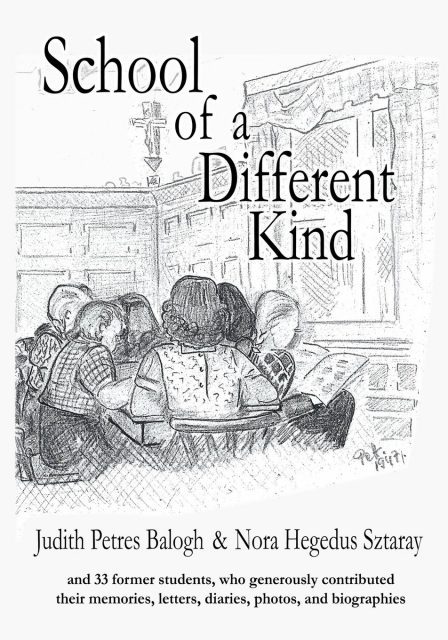
Judith Petres Balogh: SCHOOL OF A DIFFERENT KIND

    SCHOOL OF A DIFFERENT KIND

    SCHOOL OF A DIFFERENT KINDThe following is the text of introduction to the presentation and book signing by Judith Petres Balogh at the Cleveland Hungarian Heritage Museum on the evening of July 14, 2015, hosted by the Museum and in particular by Mr. and Mrs. Steve and Susan Szappanos. Mrs. Szappanos, who is the sister of Judith Petres Balogh and who had also attended the schools featured in the book, had invited Dr. Mártha Pereszlényi-Pintér to give the introduction. The book, SCHOOL OF A DIFFERENT KIND, is available for purchase at the Cleveland Hungarian Heritage Museum, and also from the Amazon.com website as well as that of Barnes and Noble. The book has also been named “Book of the Year” by the Hungarian Association and will be featured at their annual conference in November.

    ***

    About the author:  In 1945, at the tender age of 11 or 12,  Judith Petres leaves Hungary with her mother and younger sister, Zsuzsa, and flees to the West. She is eventually among the first students to arrive in Niederaudorf, Germany, at the Hungarian Gimnázium in 1946. (Later, the school was relocated to Reisach.) Her latest book, School of a Different Kind, which includes  contributions from her schoolmates and teachers, fills in the gaps of her life between 1946 and 1951.

    In 1951 the Petres family immigrated to the United States and settled in Cleveland, Ohio. Judith was first employed in Solon, Ohio. Soon she was married and eventually had three children. In 1968 she enrolled at Kent State University where she earned her BS degree magna cum laude in Education, and subsequently a postgraduate degree in Special Education. She somehow found time to assume responsibility of the only Hungarian picture magazine of the time, the Képes Világhiradó, which she published in Cleveland from 1967 until 1978. [Copies are available for browsing in the library of the Cleveland Hungarian Heritage Museum. They give a remarkable picture of Hungarian society and immigrant life of the time.]

    In 1978 she moved to Germany and taught at the Rhein-Main Air Force Base School for US military personnel as a teacher of gifted and talented children, as well as at Hanau, Babenhausen, and Darmstadt, and in the employment of the US Defense Department. Although living in Europe she also attended Dayton University during a sabbatical in 1983, where she received a Master’s Degree in School Administration, and after earning this second Master’s Degree, she was promoted to school administration in Germany. She is a Kappa Delta Pi member, a Jennings Scholar, and was awarded with a Scroll of Appreciation by the 414th Base Support Battalion for outstanding services as assistant principal at the Hanau (Germany) military base.

    Judith Petres Balogh is the author of eight books in Hungarian and in English: her two books in Hungarian are Keresztút in 1973 and shortly thereafter a Hungarian children’s book, Aranyhomok. Several books in English followed: This Old House by the Lake (2002),  Beyond Conventions (2002-2003), The Countess and Her Daughter (2003),  Julia (2005), and Sunset (2006). This book, School of a Different Kind (2015), is her latest work. [Note: Some works have been republished in later editions or in paperback.]

    Today, Judith Petres Balogh is widowed and lives in Zalaszabar by the enchanting Lake Balaton! She is also traveling, writing and taking active part in the local community’s intellectual and religious life. She has contributed and continues to contribute to several Hungarian newspapers and is a well-known speaker at literary functions.

    ***

    About the book:  School of a Different Kind is about children and adolescents forced to leave their Hungarian homeland, but who survived the aftermath of the Second World War. It vividly describes the cold, the hunger and above all the homelessness. In the words of its numerous contributors, it also describes the later and post-Germany difficult years of again finding a new home, and settling in a strange environment scattered across three continents (North and South America, Australia), where they did not know the language nor had any familiarity with the customs, and where they were viewed with suspicion for being immigrants from a country that was a former ally of Nazi Germany.

    School of a Different Kind  is thus about an unusual school and its young students, those whose lives had been had been radically altered  by WW II  and its aftermath. These children and adolescents found themselves coping with adverse conditions forced upon them by ensuing and difficult circumstances. They were now basically living as innocents but facing a brave new world in which both roof and rug had been torn from above and below them.

    In addition to Judith Petres Balogh and Nóra Hegedűs Sztáray (who wrote the original manuscript upon which the books is based), there are 33 additional contributors who offered their memories, memoirs, letters, diaries, photos, drawings, interviews, eyewitness accounts, and biographies. Of course there were negatives, but amazingly, the narrative focuses on the positive in all aspects of the children’s and adolescents’ education in a world of no libraries, no books, no paper nor pencils, no food, and no basic necessities like soap, wood, warm water, heat, decent clothing, winter coats, or shoes.

    Historical facts are inserted to help the American reader or anyone who is unfamiliar with the period and Hungary’s role in it, along with the personal glimpses of individual lives. It describes a segment of postwar life which is relatively unknown even to history buffs. For us in Cleveland at least, we are pretty familiar with what happened DURING the war from what the adults who lived through it told us, and what happened AFTER the “DP’s” or “Displaced Persons” immigrated to the USA in the 1950s along with the hardships they encountered. But there is a gap – a “sandwich generation” so to speak – as to what happened to the generation of children and adolescents in the post-war to pre-immigration period, to those who were the truly innocent victims of WW II, and to their lives between 1945-46 and 1950-51. This is the generation that was deprived of what they would have had in Hungary – the schools, the dances, the parties, the debutante balls – the common, everyday things that today their sons and daughters and grandchildren and great-grandchildren take for granted.

    Besides no heat, there was never, ever enough food. I was struck by how many times each of the contributors to the book mentioned the lunch or dinner of single small potato with bits of black spots which were actually pieces of blood sausage (= véres hurka, a delicacy not always appreciated by those who have not yet acquired the taste!). They would have gladly eaten more – there was never enough of even that. A book with reminiscences like this makes you think of your own – when I was in my very early days of Cleveland Hungarian scouting, for our typical camping breakfast we ate “zsíros kenyér,” or bread thickly smeared with lard and sprinkled with salt and red paprika – and we not only ate it, we actually liked it – we even went home and made some more – to the horror of our American friends!

    Thus I was particularly struck by the constant references to food – how there was so little or none of it for the students, but how despite constant gnawing hunger, they still managed to survive and learn their lessons well. It again reminded me of an incident in my own life. When I was a little girl, maybe 7 or 8, I dropped a raw egg on the kitchen floor and it splattered. I was nonchalantly going to clean it up and throw it away, but my own post-WW II and DP immigrant mother went ballistic. She made me scoop it up and she cooked it and she made me eat it. Her own traumatic memories of near starvation in the refugee camps of post-WW II Austria were so strong she could not bear wasting food. My father often repeated his own refugee camp story of a little Austrian boy he spied biting into an apple, and which after one bite, the boy threw it away. My father retrieved the apple, cut off the part where the child had bitten into it, cut it into three pieces and shared it with himself, my mother, and his mother-in-law. That was their dinner that night. That was how scarce food was. My cousin, born here in Cleveland, often told me that her own mother, also a post-WW II DP,  would make her and her brother when they were still little children kiss a piece of bread and eat it if it happened to fall onto the floor. Bread was life. It was sacred.

    My mother also told me of seeing a horse back in the refugee camp in Austria, neighing and pawing as it was led to slaughter for food, and how she could not bear to eat any of it later when it was served as a meal for the refugees, even though she herself was starving, knowing where it had come from. She knew she was pregnant with me, when the American soldier supplied ubiquitous peanut butter and its smell made her nauseated. Subsequently in America, I could not stand the smell either since it must have been transmitted in the womb, and I was constantly subjected to teasing by having lunchroom peanut butter and jelly sandwich shoved under my nose by my American grade school classmates.

    I have a question for the audience – How much waste does the average American student carrying a packed lunch produce each school year? Is it:

    1. 67 pounds    B. 54 pounds    C. 38 pounds

    Answer: Sixty-seven pounds of waste per student ads up to a whopping 18,000+ pounds of waste produced by an average-sized elementary school in one year. Compare that to what the students in the post-war refugee schools had, or did not have.

    I read one review of this book on Amazon.com where the commentator stated that while reading this book, she kept thinking of the author Charles Dickens… “It was the best of times, it was the worst of times,” or Dickens’ famous opening sentence which introduces the universal nature of his book, A Tale of Two Cities, and the drama depicted within. And if you saw the film version of Oliver (again based on a Dickens novel, Oliver Twist), the most poignant scene is when the little boy goes to the school master and begs, “Please, Sir, more food!” and then he is severely punished for this transgression. It must have been heartbreaking for the administration of the schools depicted in School of a Different Kind to know that even had the children asked, there was no more food to give them.

    Then one story is often repeated by several different contributors, and it is about one little girl nicknamed Markóczi who became so sick she could not walk or even eat what little there was. Her schoolmates put her in a wooden hand cart which they called their “ambulance” and pulled her to see a doctor who diagnosed this as malnutrition, and which several of the children in passages scattered throughout the book just called “hunger edema” (pp. 58, 156,  201 and others). I immediately knew it was just another way of saying “kwashiorkor,” the third world wasting disease caused by severe malnutrition that you see on horribly poor little African children with swollen bellies but with mere sticks for arms and legs. How could this happen in Europe?  Even in post-war Europe?

    How spoiled we are – sleeping on a Posturepedic® or Temper-Pedic® or pillow-top or memory foam mattress, and all kinds of fancy stuff. The children at this school slept on the same straw mattresses all year long – and some of them described how the straw eventually got all lumpy and smelly – we did that in the early days of Hungarian scout camping in the Americas too, sleeping in tents on straw, but only for a week or so – doing that for a whole year or more seems unimaginable today. What was really impressive though, was how so many of the girls mentioned that they never complained about anything in their letters home to the parents – already at their tender age they were aware of the sacrifices their parents were making to send them to school at all, so they did not want to add to the parents’ heartbreak and burden.

    Having the opportunity of free public education is taken for granted by many in the USA and in other parts of the Western world. Maybe the hardships that these children and adolescents in School of a Different Kind had to endure made them so much stronger and determined though. No matter what kind of time it was, there is no doubt that the children all came away with a superior education. But for us today, imagine having no books, no paper on which to take notes, maybe not even pencils to write with. The children in this story, when they were occasionally able to get paper and pencils, sewed together their own books made up of notes from all contributors, and they all shared this one book.

    The preferred method of learning included memorization of poems, very long ones, but of course anyone of a certain age or who was a Hungarian scout or who attended a Hungarian ethnic school can remember doing that. But irrespective of the teaching methodology, this is a powerful true story of how a highly motivated generation of parents, students and teachers used their determination and creativity, to turn the worst of times, even if not into the best of times, into at least bearable times of love and learning, which resulted in the students often surpassing their peers in German schools of the same period.

    And what was truly amazing was the way the determination to succeed was carried forward to whatever host country was lucky enough to receive them as immigrants – each and every one of the girls and boys was later, in his or her own away, if not an overachiever at least a super-achiever. Very sadly, it was also what we could call today a “brain drain” – I am certain Hungary would be much more prosperous today had this generation been able to contribute their talents had they been able to remain in Hungary – what was Hungary’s loss of course was the new country’s gain.

    On page 46, and I believe it was written by Judith herself – she mentions Hillary Rodham Clinton (– my apologies to the Republicans in the crowd – !).  But it was Hillary’s “It take a village to raise a child” quotation. And not only was the resourcefulness of the teachers, but also the resourcefulness of the parents was truly amazing. I marveled at the story of the mother of a girl named Klára: in 1945-46, the authorities in charge of the refugees would award knitting yarn, but only on the condition that it be made into one single item. So, Klára’s mother made one truly gigantic coat of which the authorities approved, but after which she secretly unraveled the whole thing thread by thread to make sweaters for Klára’s dad, brother, sister and Klára herself (p. 192). Markóczi’s mother was able to barter for materials to turn into skirts and dresses – material from former kitchen curtains, colorful bed sheets, and even a Russian parachute (p. 104)!

    About medical conditions – today we can run to any pharmacy or  doctor or emergency clinic or even just consult the Internet for medical assistance – but I was particularly stuck by the story of a girl named Jutka (actually, Judith herself) who slipped on a wet floor on a bathing day (which only happened once a week by the way, when they actually had warm water instead of cold), and she broke her little toe. The unwritten rule for refugees was no doctor unless it was severe and unstoppable bleeding, a definite heart attack, or a third degree burn, and if you were probably going to die anyway, why bother with a doctor?

    The children in this book had to deal with the problem of evil, that no adult has yet resolved. One paragraph that Judith herself wrote on p. 51 of her book remains with me:

    “We understood that diseases, often horrible ones, natural disasters and death, are part of the human condition. What we found so unacceptable was the monstrosity of what was willfully done to others; such deeds that were not necessary and could have been avoided. The awful realization that we were witnessing not the human condition of predictable and unavoidable events, but the wickedness of Man and his capability to hurt his fellowman in ways worthy of Satan, frightened us. People with smooth, benign faces, perfect social behavior, often with brilliant education, who enjoyed art and felt spiritually uplifted while listening to classical music, could and did sit down at a polished conference table to make decisions about actions one usually associates with totally demented minds. Other individuals – and not just a few, but hundreds and thousands – who were known to be sober, hardworking men at other times and in other conditions, turned bestial  without the slightest thought about decency, morals, feelings.”

    Anne Frank, Helga Weiss, and Nobel Prize winner Imre Kertész wrote about Jewish children and youth living or disappearing in the horror of the Holocaust; Esther Hautzig recounted Jewish children deported to the Soviet Union; Helen Szablya and Tibor Fischer wrote about youth surviving in Communist Hungary just after World War Two. Now this is a story about Hungarian families who were forced to overcome the ordeal of witnessing the collapse of the familiar. The parent generation lost their home, their future, their security. But they never lost their ideals and values and managed to transmit to their children, or to their students, those very values and ideals which were the very foundation of their former life.

    In summary, this return to peer into a mid-20th century world that is unknown to most is truly heartwarming, because it demonstrates what the human mind and an indomitable spirit can achieve when love, devotion and dedication such as that which the children, adolescents, parents and teachers selflessly and nobly displayed toward one another, replace cynicism, despair, and hopelessness.  School of a Different Kind, despite the descriptions of severe hardships during evil times, is uplifting, positive, touching, and in a word: beautiful. The book should be made into a movie. I hope it will be, and very soon.

    Dr. Mártha Pereszlényi-Pintér
    Chairperson, Department of Classical and Modern Languages and Cultures at
    John Carroll University, Cleveland, Ohio USA
    July 14, 2015

    Reklám
    Tas J Nadas, Esq

    Mutual cooperation and the show of unity among the various American Hungarian organizations

    The  Bocskai Radio lauds the fine example of mutual cooperation and  the show of unity among the various American Hungarian organizations in drawing the attention of the House Appropriations Committee to the plight of the Hungarian minority in Romania. Thanks to the efforts by the various leaders of the American Hungarian community,  Representatives Harris and Kaptur of the House Appropriations Committee expressed concern with the status of restitution of church property in Romania that had been seized from Hungarian and other minorities by the communist regime.  The language of the State and Foreign Operations Appropriations bill, Fiscal Year 2016 calls on the Department of State to encourage restitution of church property by the Romanian government and to report to the Committee on the status of such restitution within 90 days of enactment.

    [gview file=”https://www.bocskairadio.org/wp-content/uploads/2015/07/H-A-Community-TY-Letter-Harris-Kaptur-June-22-1015.pdf”]

    kaptur1

    [gview file=”https://www.bocskairadio.org/wp-content/uploads/2015/07/H-A-Community-TY-Letter-Hse-Approp-Com-June-22-1015.pdf”]

    Reklám
    Tas J Nadas, Esq

    CHRIST TRILOGY: US COLLECTOR TO REMOVE “GOLGOTHA” AS PURCHASE TALKS COLLAPSE WITH NATIONAL BANK

    Krisztus_trilgia_5-749x415-749x415

    US-based Hungarian art collector Imre Pákh has decided to have “Golgotha”, the third piece of the famous painter Miháky Munkácsy’s Christ Trilogy in his ownership, removed from the Déri Museum in Debrecen, having been unable to reach an agreement with the National Bank of Hungary on its price.

    The central bank had previously offered him USD 6 million for the monumental painting, which the seller is only prepared to hand over for USD 9 million. Speaking to the Hungarian state news agency MTI on Sunday, Mr. Pákh said that negotiations on the fate of the picture have come to a halt and he will have it removed from the museum on 25 June, however, “if provided that the opinion of the National Bank or its deputy governor Ferenc Gerhardt changes until then or another state body or institutions shows interest towards the picture, I am at their disposal”, he said.

    The collector purchased “Golgotha” over a decade ago to enable the iconic trilogy to remain intact. At the time, he agreed with leading Hungarian politicians to find a swift solution for the artwork to be purchased by the Hungarian state. He has now denied claims by the National Bank’s deputy head that according to estimates, he paid around USD 1 million for the picture. “In reality, I paid several times that sum”, he insisted.

    The picture’s value has been estimated at around USD 10 million by both Chirstie’s and Sotheby’s, the world’s two most reputable auction houses. However, experts commissioned by the National Bank established a price interval which is binding to the central bank’s leadership and implies that the state cannot pay more than USD 6 million for the picture.

    “Christ Before Pilate”, the trilogy’s other piece recently acquired by Hungary from Canada, was purchased for USD 5.7 million, which, according to Mr. Gerhardt, is the realistic price for the picture.

    via index.hu / hungarytoday.hu
    photo: magyarhirlap.hu

    Reklám
    Tas J Nadas, Esq

    President János Áder attends Pentecost pilgrimage in Csíksomlyó

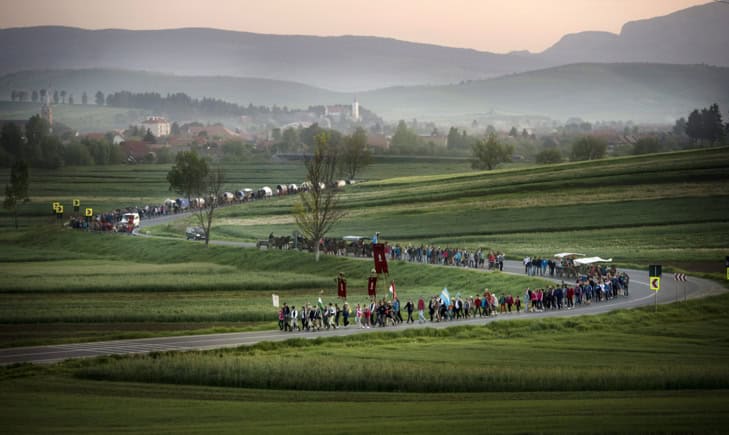
    Similar to previous years, hundreds of thousands of people have taken part in the Pentecost Pilgrimage in Transylvania’s Csíksomlyó (Sumuleu Ciuc).

    Csíksomlyó 2015_7
    Photo: Szilárd Koszticsák/MTI

    The open-air mass was led by the Archbishop of Gyulafehérvár/Alba Iulia György Jakubinyi, who called on pilgrims to remain loyal to their faith, homeland and mother tongue.

    Photo: Szilárd Koszticsák/MTI

    The event was also attended by the President of Hungary János Áder and First Lady Anita Herczegh.

    The President – who was taking part in the pilgrimage for the third time – said that everyone should “pay heed” to the message of loyalty heard at the sermon.

    Photo: Szilárd Koszticsák/MTI

    The President said that “The sermon we heard was a message of loyalty. Loyalty to faith, loyalty to the homeland, the loyalty of being a part of a nation and the loyalty of keeping one’s native language”. “It would be difficult to add anything to this: I think this message is enough for us for today, tomorrow and the day after tomorrow – we should spend Pentecost with these thoughts in mind and should pass them on to our relatives and friends”, he said.

    MTI / NPÁT / nemzetiregiszter.hu


    Reklám
    Tas J Nadas, Esq

    Symbol of a Struggle

    Dsida Jenő
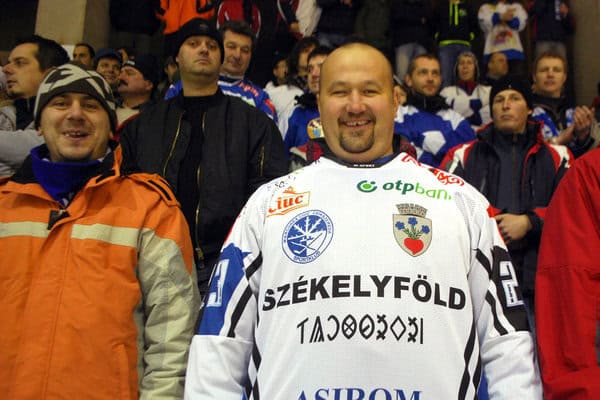
    A fan at the Romanian Cup final. Szekelyfold, the name on the jerseys of the hockey team in Miercurea Ciuc, refers to the Szekely Land, a Hungarian-dominated area of Romania. Credit James Montague for The New York Times
    A fan at the Romanian Cup final. Szekelyfold, the name on the jerseys of the hockey team in Miercurea Ciuc, refers to the Szekely Land, a Hungarian-dominated area of Romania. Credit James Montague for The New York Times

    MIERCUREA CIUC, Romania — A city of 38,000 on a plateau in eastern Transylvania, Miercurea Ciuc is famous for three things: its status as one of Romania’s coldest places; its brewery, where the country’s Ciuc beer is produced; and its ice hockey team, which has won the last six Romanian league championships.

    But the name on the front of the team’s blue-and-white hockey jerseys is not Miercurea Ciuc. It is Szekelyfold, the Hungarian word for the Szekely Land, a former province of the Kingdom of Hungary. Printed on the ice at the Vakar Lajos rink is the Hungarian name of the team: Hoki Sport Club Csikszereda. The fans at the team’s home games chant the Szekely Land anthem in Hungarian.

    The Szekely Land, named for a warrior tribe that dates to the Middle Ages, is a Hungarian-dominated area of Romania, covering three counties in the center of the country. The roughly 1.2 million Hungarians represent Romania’s largest ethnic minority, about 6 percent of the country’s population. The fall of the Austro-Hungarian empire after World War I marooned millions of Hungarians in what is now Romania, Slovakia, Ukraine and Serbia. The Szekely found themselves cut off and subject to a policy of assimilation, including heavy restrictions on the use of their language, under the former communist leader Nicolae Ceausescu.

    Outside the Vakar Lajos rink, where the Hungarian name of the team, Hoki Sport Club Csikszereda, is printed on the ice. CreditJames Montague for The New York Times

    But for the past two decades, the region’s ethnic Hungarians have been campaigning for greater autonomy, with Hoki Sport Club Csikszereda in the vanguard. Romania may be a soccer country, but in Csikszereda, ice hockey is the only game in town.

    The hockey club functions much like the storied Spanish soccer club Barcelona, which kept alive the flame of Catalan nationalism under the repressive rule of General Franco.

    “I can say that this sports club, this ice hockey team, represents the Szekely,” said Papp Elod, the club’s former president, who is now a local politician. “We like to say that ice hockey represents our history as all our ancestors were warriors, and ice hockey needs warriors. There are very few Romanians who play for our club.”

    Standing rinkside, Timo Lahtinen, the team’s 65-year-old Finnish coach, said, “Everyone in this town plays hockey and talks about hockey, this is the hockey center of Romania.”

    Lahtinen paused, then corrected himself, “Actually, Hungary.”

    The success of Csikszereda had caused a problem within Romanian ice hockey. The Romanian national team is almost entirely made up of ethnic Hungarians who play for Csikszereda.

    “The whole national team is only my players, and everyone speaks Hungarian,” Lahtinen said.

    This anomaly reached a critical point during a 2011 game between Romania and Hungary in Miercurea Ciuc. After the game, almost all of Romania’s players joined with their opponents to sing the Hungarian anthem.

    “Some of the paparazzi caught it, and it was a big scandal,” said Attila Goga, Csikszereda’s captain, who has played for the Romanian national team for a decade but holds dual Romanian-Hungarian citizenship. “It’s a little bit strange, but I can see that, too. They don’t understand our situation here.”

    There was only one anthem Goga was going to sing.

    “Everyone here is Hungarian,” he said. “I feel Hungarian. From a little child I spoke Hungarian. We learn Romanian, too, but Hungarian is my mother language.”

    The fall of communism gave some Hungarian minorities the chance to push for greater cultural and political freedoms after years of repression. A move by the Hungarian government in 2010 to grant joint citizenship to its former subjects across Eastern and Central Europe has emboldened old allegiances.

    Laszlo Tokes, a former vice president of the European Parliament and one of Romania’s most prominent Hungarian politicians, is campaigning for full Hungarian autonomy within Romania, centered on the Szekley Land, with sports playing an important part.

    “Our culture was oppressed,” Tokes said. “So it happened in sport. In Csikszereda that is why it is so important, the role of Hungarian sport life. Hockey sport because it is the people of Hungarian identity. Sport sometimes takes this function and role in a minority.”

    Tokes, now a bishop, was a hero of the 1989 revolution that overthrew Ceausescu. When Romania’s secret police attempted to arrest him, his congregation resisted, sparking nationwide protest that brought down the regime.

    Tokes called Romanians “very good friends,” but said they did not accept his people as Hungarian.

    “Sometimes we are called Romanians speaking Hungarian,” he said. “That is not true. We are full Hungarians in the original sense of the word.”

     Csikszereda’s captain, Attila Goga, who has also played for the national team, shaking hands after a loss in the Romanian Cup final. CreditJames Montague for The New York Times
    He added: “Even if we lived on the moon, we would be Hungarian. Even if we are living in Transylvania, Romania, we consider ourselves Hungarians.”

    Hoki Sport Club Csikszereda has attracted local businessmen and politicians promoting the Szekely Land. Although its home rink was built in the 1970s, it is well maintained, with a hotel next door to accommodate traveling teams. Inside, the walls are covered with advertisements from local businesses in Hungarian; Ciuc beer is featured prominently. A trophy cabinet heaves with the club’s many honors.

    But in Bucharest, the Romanian capital, ice hockey has seen better days. The city’s main rink was partly flooded. On a recent day, a young girl practiced figure skating routines around patches of water pooled on the surface. Stray dogs stalked the perimeter. One stray managed to entangle itself in the hockey nets, until it chewed through the ropes to break free.

    “Miercurea Ciuc has a local political and social interest,” said Marius Gliga, the technical director of the Romanian Ice Hockey Federation. “It is a small town. If they want to be seen by the rest of the cities, they have to show something. And they choose sport. The political men in the area use this team to promote themselves.”

    Before the revolution, Bucharest was the power center of Romanian ice hockey. Romania’s golden age was in the 1970s and ’80s, when it qualified for the 1976 and 1980 Olympics. Back then, Steaua Bucharest, the team of the army, was the dominant squad.

    “They used to take from the best players and allowed them to practice rather than have military service, which was good for the players,” said Gliga, who played center for Steaua his entire career. “They had two years of practice, which was very good for them at 18 to 20. That was good for the national team.”

    But the abolition of national service, the supremacy of soccer in Bucharest and the influx of money into Csikszereda from businessmen and politicians eager to further the Szekely Land’s cause switched the balance of power.

    Now Steaua is a shadow of its former self, and Bucharest provided little more than the office for the federation and the officials for most matches, including the Romanian Cup final in late December between Csikszereda and Corona Brasov, a team that also hails from Transylvania but whose fans chant in Romanian.

    Csikszereda went ahead, 2-0, by the end of the second period, and it appeared that another piece of silverware was about to be added to its trophy cabinet.

    The Szekely flag was flying when the third period began, but it did not herald the coronation the home supporters had expected. Brasov stormed back, scoring three times in five minutes. When Csikszereda had a player sent to the penalty box with two minutes left, the match was effectively over. Brasov was crowned champion, the players celebrating wildly in front of their traveling fans.

    This time the Csikszereda fans chanted in Romanian, the language of the officials who had crammed into two cars and driven five hours from Bucharest to get there.

    “Thieves!” they shouted at the referees.

    “Peasants!” they chanted.

    “We’re Hungarian and the referees are always Romanian, so we always feel that Romanian referees aren’t fair when it comes to matches,” said Szikszai Laszlo, a 22-year-old fan of Csikszereda.

    As the Brasov team members passed the cup among themselves on the ice, Lahtinen stood on the sideline wondering how his team had lost the match. He said one of his players was suspended just a few minutes before the start of the match.

    “We were by far the best team and then I guess we got tired as they had more players,” he said.

    Csikszereda had lost the final, but the fans had still had the chance to see the club play for a seventh league championship in a row. The rink, and the team, remain a symbol of something bigger than ice hockey.

    “In the period of communism, local newspapers couldn’t write Csikszereda; you had to write Miercurea Ciuc,” Laszlo said. “Back then this place was a sanctuary. It was the only place where you could speak Hungarian freely. You can still feel that today to a certain level.”

    Reklám
    Tas J Nadas, Esq

    Hungary to Become First Member State to Implement New EU Regulations On GMOS

      mezogazd-749x415“Hungary could be the first to introduce the new European Union regulations allowing countries to ban the cultivation of GMO crops”, a Ministry of Agriculture’s official told Hungarian news agency MTI in Berlin on Friday. In his statement following the “GMO-free Europe” conference, deputy state secretary Dr. András Rácz stressed that in addition to transposing the new regulations into Hungarian law, the Farm Ministry is also working on introducing a new labelling system by the end of the year that would enable foods such as meat, fish, eggs, milk and honey to be labelled as GMO-free if certified as not containing GMOs and livestock receive only GMO-free feed.

      Árpád Rácz pointed out that keeping the country GMO free is even included in Hungary’s constitution and the country has come to a broad consensus on the issue that is irrespective of political affiliations. The Government would also like to contribute to ensuring that as many EU member states as possible become GMO-free zones, and this is why Minister of Agriculture Sándor Fazekas has launched the “Alliance for a GMO-free Europe” initiative. The Hungarian government is convinced that maintaining Hungary’s GMO-free status is the only right choice, because it is the only way to ensure that families have access to safe and sustainably produced food and to preserve natural diversity and the competitiveness of Hungarian agriculture, the deputy state secretary insisted.

      The Berlin Manifesto adopted at the conference, recommends the development and swift application of similar labelling systems throughout the EU. It was developed with the involvement of over 400 participants, including governments, international organisations and the European Commission. The document also calls for the development of a European Protein Strategy to reduce high dependence on genetically manipulated soy imported into Europe in large quantities. As for the so-called Transatlantic Trade and Investment Partnership (TTIP) talks, the Berlin Manifesto stresses that any agreement should not endanger the results achieved so far with relation to keeping countries GMO-free or the rights of member states to decide on the issue.

      via  hungarytoday.hu / kormany.hu and MTI photo: csabaimerleg.hu

      Reklám
      Tas J Nadas, Esq

      Coalition Donates $10,000 to Aid Civilians in War-Torn Ukraine

      Washington DC – The Hungarian American Coalition is providing $10,000 to assist the civilian population in Sub-Carpathia (western Ukraine). The donation, covered by the Coalition’s Kárpátalja Flood Relief Fund, was approved by the Coalition’s Executive Committee on April 17.

      HAC

      Due to the ongoing crisis in Ukraine, the local currency – the hryvnia – has collapsed, leading to severe price increases and desperate poverty. An average pension, for example, amounts to less than $1 a day. Inflation is such that most stores no longer bother to post prices. Yet the Ukrainian government has frozen salaries and pensions until the end of the year, and plans to increase the price of gas and electricity to international levels.

      Ukraine’s ethnic Hungarian minority, numbering approximately 150,000, is concentrated in the region of Sub-Carpathia (Kárpátalja), near the Hungarian border. Given the disastrous economic conditions, ethnic Hungarians and other nationalities in the region are in need of financial support and material goods if they are to have a chance at enduring the crisis in their homeland.

      In neighboring Hungary, aid groups and churches have mobilized to provide funding to the communities in need. (Food assistance is not feasible, due to border controls and the insurmountable red tape involved in getting shipments over the border.)

      The Coalition’s donation will be split between two organizations:

      • the Kárpátalja aid initiative of the Hungarian Maltese Charity Service, spearheaded by its President Imre Kozma and by Hungary’s First Lady Anita Herczegh
      • the Hungarian Scout Association of Sub-Carpathia

      The Coalition encourages its members to consider helping this worthy cause.  We recommend the following organizations:

      Katolikus Karitászt

      Család és Élet civil Szervezetet (Ukrajna)

      Jezsuitákat

      Református Szeretetszolgálat

      Kárpátaljai Ferences Misszió Alapítvány


      Janos Szekeres
      Hungarian American Coalition

      Reklám
      Tas J Nadas, Esq

      Support Hungarian small communities in Sub-Carpathia

      grpcommunity

      Budapest, 31 March 2015 – The Hungarian Scout Association, in collaboration with the Hungarian Scout Association of Subcarpathian-Ukraine and the International Forum of Hungarian Scouting, initiates a five-month-long action in Sub-Carpathia, that seeks to stimulate the operation of small communities to help young people in difficult circumstances.
      As a result of the attempts to escape military conscript, many Sub-Carpathian Scout groups, small communities and schools remain without leaders and teachers, the community life and the operation of youth organizations slowly becomes impossible, and a demographic catastrophe threatens the region due to the migration flow. We consider it important to keep the spirits of people up by means of being actually present and supporting community life, as well as to help those who remained behind to formulate a vision of the future.

      For this reason, the Scout Associations initiates the realisation of a network that goes beyond mere fundraising, as it seeks to develop small communities in the local communities with the collaboration of the local population, with Hungarian financing.

      Within the framework of the action programme, we send young community organizers to the region for a maximum period of 5 months, between May and September, who will assist the rural Scout groups and the small communities, organize the summer camps for the children, and participate in the school as well as the extracurricular programmes for children. The planned number of community organizers: 5 persons. We consider it important to keep the children busy with the programmes and camps organized from the donations, so that they depart from their day-to-day hopeless and troubled reality and receive special attention, care and community experience. By means of this, we could lift a great weight from the shoulders of families.

      Let us come together for the young people of Sub-Carpathia as well as for the survival of Hungarian communities!

      The aim of the fundraising is to finance the on-the-spot and personal expenses of the community organizers, as well as the cost of tools and materials of the communities and their programmes.

      We would like to ask you to support the realisation of the programmes for Sub-Carpathian children and the survival of small communities.

      You shall send you offerings via the bank account number of the Hungarian Scout Association opened especially for this purpose:

      In case of domestic transfer: 10918001-00000071-76940033.

      In case of international transfer:
      Bank name: UniCredit Bank Hungary Zrt.
      Head Office address: 1054 Budapest, Szabadság tér 5-6.
      IBAN: HU08 1091 8001 0000 0071 7694 0033
      SWIFT: BACXHUHB
      Bank code: 109

      From abroad you shall send your donations by check, addressed to the Hungarian Scout
      Association, or via the American bank account of the Hungarian Scout Association with the motto
      Kárpátalja”.

      Necessary data for the sending of international donations by check:
      Hungarian Scouts in Exteris
      c/o Gabor Szorad
      2850 Route 23 North
      Newfoundland, NJ 07435 USA

      Further information on the initiative is available on the website of the Hungarian Scout Association:
      www.cserkesz.hu/karpatalja.

      Thank you for your support!

      Further information:
      Tőrincsi Tímea/Sándor Viktória
      Hungarian Scout Association
      Phone: 30/490-4444; 20/823-1785
      kommunikacio@cserkesz.hu

      [gview file=”https://www.bocskairadio.org/wp-content/uploads/2015/04/Invitation-to-support-Hungarian-communities-in-Sub-Carpathia_EN.pdf”]

      [gview file=”https://www.bocskairadio.org/wp-content/uploads/2015/04/Adománygyűjtő-felhívás-Kárpátalja-megsegítésére.pdf”]

      Reklám
      Tas J Nadas, Esq

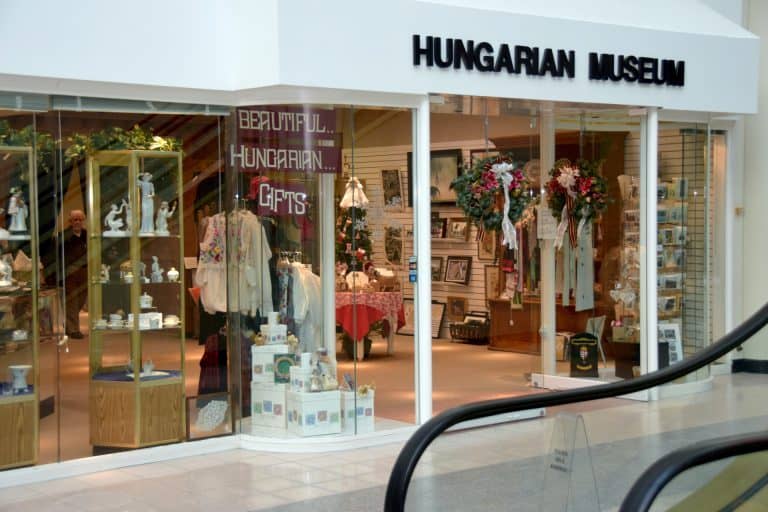
      Hungarian Museum Grand Reopening

      This Saturday April 11, 2015 The Cleveland Hungarian Museum will hold the Grand Opening of its new location on the 1st floor of the Galleria at Erieview in Downtown Cleveland from 3-5 p.m.

      The Ribbon Cutting Ceremony at 3:00 p.m. will be followed by a Champagne Reception and greetings by Dignitaries.

      This also marks the opening of its new Exhibit – The End of the Cold War, Fall of Communism in Hungary and Eastern Europe which will be of interest to many of Greater Cleveland’s ethnic communities.

      The Exhibit includes the period after World War II through the 1989 Peaceful Demonstrations to the Dissolution of the Soviet Union and incorporates the CBS Special on the 1956 Hungarian Revolution as well as segments of the CNN documentary series COLD WAR.

      The event is free and open to the public. Parking is available in the Galleria Garage.

      The Cleveland Hungarian Heritage Society’s mission is to preserve Hungarian culture and the history of Hungarians in Northeast Ohio, so that present and future generations can draw upon its collection for education, inspiration and enrichment. To carry out its mission, the Society sponsors educational and research activities, and operates a museum and library as a repository and exhibition center for Hungarian historical, literary and artistic items.

      The Museum is regularly open Tuesday through Friday from 11-3 and on the Saturdays when programs are scheduled.

      More information at clevelandhungarianmuseum.org


      Dan Hanson
      ClevelandPeople.Com

      cold-war-poster

      Reklám
      Tas J Nadas, Esq

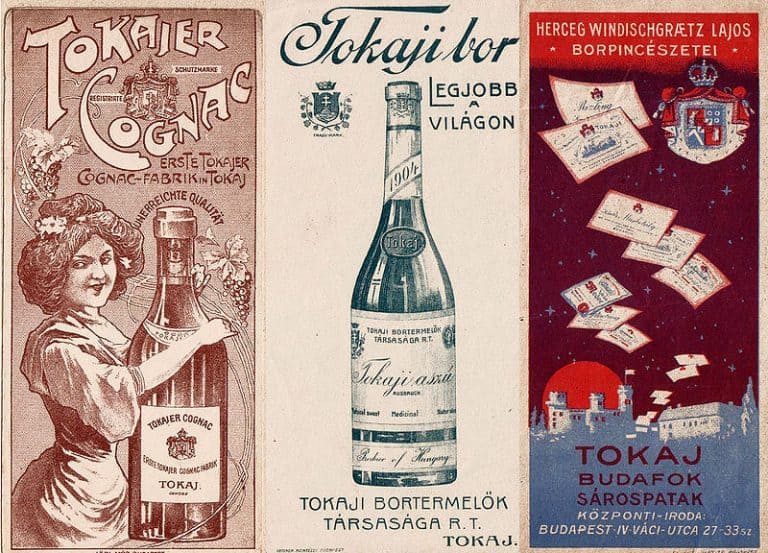
      The king of wines, the wine of kings: Tokaji aszú

        Louis XV is said to have remarked to his mistress, Madame de Pompadour, as he handed her a glass of Tokaji aszu, “This is the king of wines and the wine of kings.” He was not, however, the first to say these original-sounding words. They appear alongside the name of the wine on a court menu dating back to the time of Louis XIV.

        To this day, the Latin version of this saying – Vinum regum, rex vinorum — is allowed to appear on Tokay wines of particular quality.

        800px-Tokaji_Aszú-és-szamorodni-borcímke-a-20.-század-elejéről001-wiki

        Great labyrinths of cellars extend beneath the villages of the region. The layer of earth above them ranges from 16 to 165 feet (5 to 50 meters), according to the variations in ground level at the surface. In places, several cellars lie one above the other, connected by vertical shafts. Most were dug between the 15th and 19th centuries. In the early days, they served as places of refuge in war.

        The cellars have an ideal level of humidity and a constant temperature of 50-54 °F (10-12 °C). The walls are covered in a thick layer of mold called Cladosporium cellare. It feeds on the alcohol evaporating from the casks. This creates the microclimate essential for the production of the unique aroma and flavor of Tokay wines. The wines begin their maturation in fairly small oak casks (either Gönci, with a capacity of 36 gallons or 136.6 liters, or Szerednye, 58 gallons or 200 liters). The wood is penetrated by the air carrying the beneficial mold.

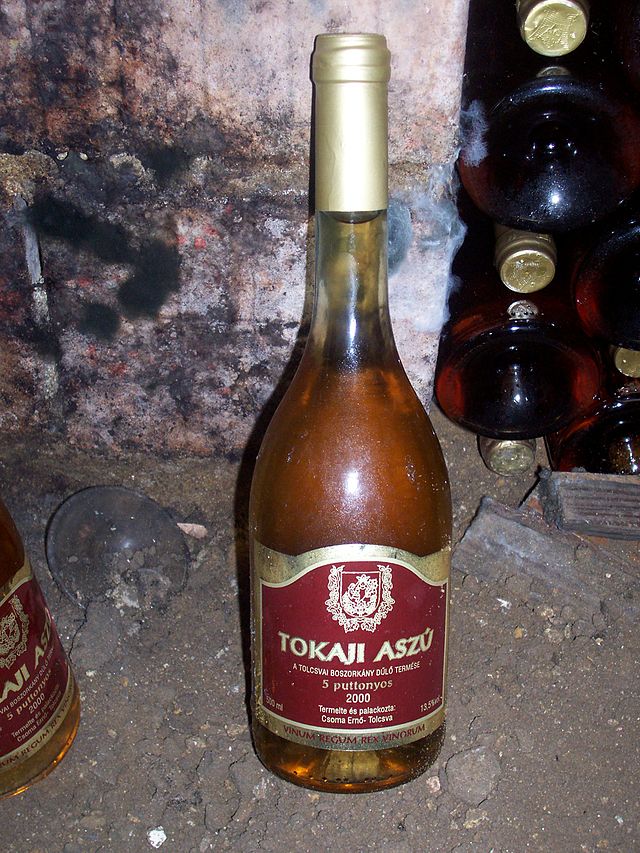
        Tokaji_Aszu_5_puttonyos

        Tokaji aszú

        All the wines of Tokaj-Hegyalja are of excellent quality, but Tokaji aszú is the undisputed king among these aristocrats. According to tradition, the world has Zsuzsanna Lórántffy, wife of Prince György I Rákóczi, to thank for this wine. We are told that once, in the middle of the 17th century, the advance of the Turkish army caused her to postpone the grape harvest on the prince’s estates near Tokaj. By the time the grapes were eventually pressed, they were shriveled and moldy. To everyone’s astonishment, they yielded a quite exceptional wine. Its fame soon spread far beyond the country’s borders. The cause of the shriveling and rotting was the mold we call “noble rot,” Botrytis cinerea, whose spores penetrate the grapeskins. The mold encourages the evaporation of moisture, reducing the acidity of the fruit, and increasing the sugar content, possibly to as much as 70%.

        800px-Tokaji wiki

        The grape harvest starts at the end of October, continuing through the whole of November. Only the shriveled grapes are selected from the bunches harvested. These desiccated grapes are mashed, either by being trodden to a pulp in a vat in the traditional manner, or by being crushed in a special mill.

        (Photos: Wikipédia)

        Source: itshungarian.com

        Reklám
        Tas J Nadas, Esq

        Father Csaba Böjte, Franciscan priest, visited St. Emeric Church

        DSC_5299

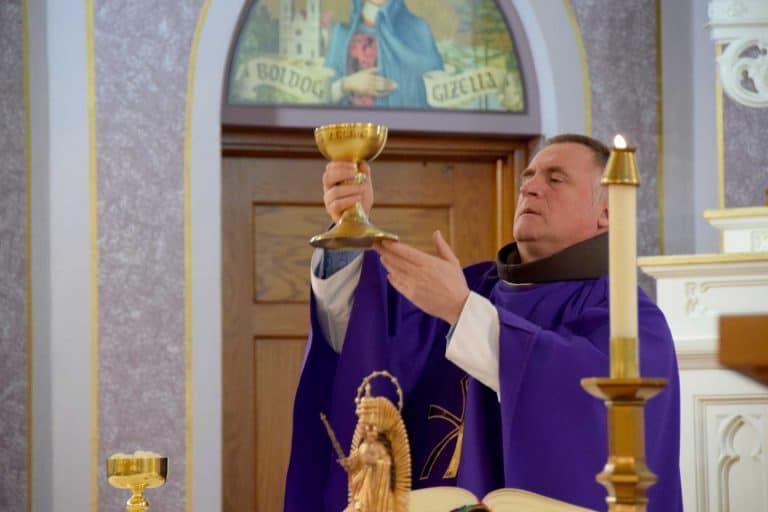
        March 22, 2015, became a memorable day for the Cleveland Hungarian community. Father Csaba Böjte, Franciscan priest well known for his charitable work, accompanied by two representatives from the St. Francis Foundation, Dr. Agnes Madarassy and John Csák visited Cleveland, Ohio during their North American tour. They chose St. Emeric Church as the center for the day’s activities, which began with the celebration of Mass at 11 AM. The church was filled to capacity with parishioners, visitors, and guests from the Cleveland area and also from as far as Columbus, Ohio. The Hungarian Scouts also participated, with some members of the Scout Folk Ensemble dressed in the costume of the Szekely region of Transylvania, where Father hails from. Father Csaba’s inspirational homily presented in his unique style focused on the Franciscan’s motto, also known as the prayer of St. Francis, — “Lord, make me an instrument of your peace…” , emphasizing the power of love as Christ taught us when facing challenges and by working together in harmony and peace for the good of others.

        Following Mass a reception lunch in Hungarian style, of goulash and „lángos” prepared lovingly by the ladies of St. Emeric Parish welcomed the 300 guests in the hall downstairs. As a token symbol of the love and respect of the parishioners, a group of children presented Father with a bouquet of flowers, which Father then asked one of the girls to place on the Blessed Virgin’s altar in the church.

        During the course of the lunch, John Csak, a trustee of the St. Francis Foundation, briefed us on the far reaching charitable work of the Foundation in maintaining the 82 orphanages and children’s homes founded by Father Bojte in the Transylvanian region of Romania and in Hungary over the past 20 years. These homes help the most vulnerable, the poor, the neglected, and the destitute children in society by providing not only basic necessities such as shelter, food, clothing, education, but above all human dignity and hope for their future, and he said that the success rate is outstanding. Father Bojte then proceeded to vividly illustrate with real life stories not only the everyday challenges in the lives of these children, but also the heart-warming successes in the lives of these individuals as having become contributing members of society. It is interesting to note that Fr. Bojte’s visit for us coincides with the season of Lent when all Christians are called to deepen their relationship with God through prayer, penance, and practice of charity. What a terrific teaching example we have of this in the life and work of Fr. Bojte and the St. Francis Foundation.

        This year’s 5th Sunday of Lent and the first Sunday of Spring has become a day we will remember for a long time to come. We thank Fr. Csaba Bojte for visiting us in Cleveland, for celebrating Mass with us and for inspiring us and spiritually enriching our lives. The parishioners of St. Emeric Parish consider it an honor and privilege that they were chosen to host this event. The parishioners, mostly the ladies of the parish, together with the Scouts worked hard, but lovingly to bring about this lunch and for that we thank them. And above all, we thank Our Heavenly Father for his loving providence in allowing us to be part of this spiritually enriching experience.

        By Ildiko Peller.

        Reklám
        Tas J Nadas, Esq

        Grand Opening of the Hungarian Heritage Museum’s new home

        DSC_4354

        We are pleased to announce the Grand Opening of the Hungarian Heritage Museum’s new home On Saturday, April 11th at 3 o’clock, on the 1st Floor of the Galleria at Erieview, Downtown, Cleveland, Ohio!


        This event is open to the public, and after the Ribbon Cutting Ceremony, our guests will have the opportunity to view our Museum exhibits and enjoy a champagne reception.

        We have a special exhibit opening at this time called: The End of the Cold War (Fall of Communism in Hungary and Eastern Europe).

        This event is free and open to the public. As many of you may know, the Hungarian Museum has been a part of the Downtown Cleveland scene for over 13 years. We are looking forward to many more years in our new home, where we are open on Tuesdays through Fridays, 11-3, and on Saturdays when we have programming scheduled.

        Please visit us on our new website at www.clevelandhungarianmuseum.org.


        Parking for this event is available in the Galleria Garage for $3.

        We hope to see you! – A viszontlátásra!

        Andrea Meszaros

        Reklám
        Tas J Nadas, Esq

        Freedom of assembly violated in Romania

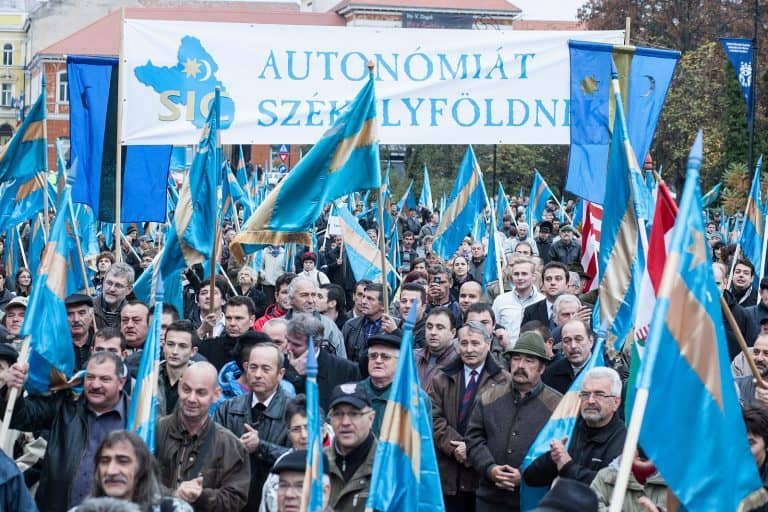
          Szekler Hungarians’ annual Freedom Day march banned.

          news_image_30026_6569

          The European Free Alliance is stunned to receive the news that the annual Szekler Freedom Day demonstration and march which would be held next month in Marosvásárhely/Targu Mures was banned from the Romanian authorities on the grounds of creating “ethnic unrest” within the country.

          This year, the Szekler National Council that organises the event, was planning to protest against the planned administrative reform in Romania, which would incorporate the Szekerland into a region with less of 30% percent Hungarian population. Obviously, this annoyed the authorities and they decided not to allow it.

          It has to be mentioned that each year the Romanian state tried to put obstacles to the organisation of the event. Last year for instance, a road block during the march was refused but the 30.000 participants had to move onto the street as the sidewalks were too narrow to accommodate them. This caused the intervention of the security forces against the peaceful demonstrators.

          EFA considers this decision as a clear breech of one of the most fundamental human rights, the freedom of assembly. Furthermore, firmly believes that it is politically and ethnically motivated and calls upon the Romanian authorities to revoke it immediately. Only a few months after the election of a minority candidate as president of the country, Romania sends a completely wrong message on how it understands the demands of its Hungarian minority for democracy and autonomy.

          In this respect, EFA also sent an official protest letter to both the mayor of Marosvásárhely/Targu Mures and the Romanian President, warning them about the implications of such decisions which undermine peaceful coexistence and bring in mind the darkest periods of the country’s recent history.

          Reklám
          Tas J Nadas, Esq