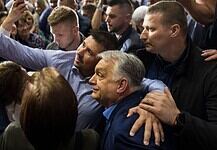
Iain Lindsay will leave his posting in Budapest next week, and will soon retire from his service at the Foreign Office. In his final interview for Magyar Nemzet, the United Kingdom’s Ambassador to Hungary talks about his stance on the current situation of Brexit, his memories of Hungary, how, as a Scotsman, he can identify with Hungarians, and we also got to know about his favourite Hungarian wine region.
Budapest, 2018. december 7.
Orbán Viktor miniszterelnök interjút ad a Jó reggelt, Magyarország! című műsorban a Kossuth Rádió stúdiójában 2018. december 7-én.
MTI/Szigetváry Zsolt
Prime Minister Viktor Orbán revealed plans for a new, two-year growth program in an interview with Kossuth Radio on Friday morning. According to the PM, it is quite plausible that further pandemic restrictions will have to be put in place, especially given that our biggest risk currently is coronavirus being carried in from abroad. Mr. Orbán went on to say: the goal is to reinstate a true classroom environment in schools, digital education cannot be a full replacement. He classified relations with our neighbors as a key point.
In this article, Nicholas Boros, a high school mathematics teacher from Cleveland who studied religious studies as an undergraduate and actively continues his research into the history of diasporic religious communities, details the history of the former St. Stephen’s Hungarian Catholic Church in McKeesport before describing his involvement in an effort to save this church’s cornerstone prior to its recent demolition. Many hurdles appeared along the way, and it seemed like any chance to honor the memory of this parish and its glorious past was lost. Through a series of happy coincidences that came together at the very end of a month-long journey, the cornerstone was rededicated at St. Elizabeth’s Church in Cleveland, an account of which appears at the end of the article.
HISTORY OF ST. STEPHEN CHURCH
The Hungarians of the Monongahela Valley originally worshipped with the Slovaks at St. Elizabeth’s Church, founded in 1895 by Rev. Coloman Gasparik, who eventually purchased a former church at 1520 Penn Avenue in Pittsburgh. Fr. Gasparik certainly appeared to take a strong interest in the Hungarian flock entrusted to his care and even supported Hungarian causes. He had donated to St. Elizabeth’s Church in Cleveland and subscribed to Fr. Charles Boehm’s Magyarországi Szent Erzsébet Amerikai Hírnöke, the first Hungarian Catholic periodical in America, which even printed his November 24, 1898 address to the women’s branch of the Hungarian St. Joseph’s Benefit Society on the occasion of their flag blessing ceremony. Nevertheless, some of the Hungarians became enraged with Fr. Gasparik over an alleged derogatory remark and sought the assistance of Tihamér Kohányi, editor of the Cleveland-based daily Szabadság, to build their own Hungarian church.
Kohányi, an early mover and shaker of the Hungarian-American community, was one of the organizers of a Hungarian Catholic sick benefit society, the Szűz Mária Magyarok Pátronája Római és Görög Katholikus Szövetség. On November 25-26, 1897, he organized a convention for this new association in Cleveland, which brought together representatives from sixteen different Hungarian communities throughout the United States, including ones from Pittsburgh and McKeesport. This convention was likely the occasion where the Hungarian Catholics from these two communities first approached Kohányi to assist them in their endeavor. By some accounts, Kohányi addressed a gathering of the McKeesport faithful and spearheaded their initiative by donating the first $25 toward the building. Kohányi attempted to arrange for a priest from Cleveland, likely the newly arrived Rev. Robert Paulovics, to pastor the fledgling congregation, but the Bishop of Cleveland refused to release him, at which point they resolved to seek a priest from Hungary.
Once $650 had been collected, Kohányi wrote a letter to Bishop Zsigmond Bubics of Kassa (present-day Košice, Slovakia) asking him to send a priest for McKeesport. Even prior to the arrival of a priest, the congregation had plans drawn up for the church, which were very similar to those of the original church building of St. Elizabeth’s in Cleveland. Bishop Bubics agreed to send Fr. Kálmán Kováts, who arrived in Pittsburgh on August 12, 1899 and was immediately given charge of the Hungarian community, which was to worship in the basement of McKeesport’s St. Peter’s School until they could erect their own church. He celebrated his first Mass with the congregation on St. Stephen’s Day, August 20, 1899, and in his homily he said, “Fogadjanak el azért ne cask papjokul, de igaz barátjuk és testvérökül is, hogy igy mától fogva jó szüleim szivét, testvéreim szeretetét s drága magyar hazám anyai jóságát Önökben kereshessem s találjam fel mindig” (Accept me not only as your priest but also as your true friend and brother so that from this day forward I may always seek and forever find in you the heart of my good parents, the love of my siblings, and the maternal goodness of my dear Hungarian homeland).
It is no surprise that such a warm priest would be able to accomplish so much in his nearly 28 year pastorate. With 23 families in McKeesport and 817 adults from the many villages in the valley, the fledgling congregation purchased land on April 3, 1900, and the cornerstone was dedicated on September 9, 1900 by Rev. Conal A. McDermott of St. Peter’s McKeesport in the presence of eight brass bands and nearly 800 members of Hungarian societies from throughout the region. The church was dedicated on August 25, 1901 by Rev. Edward Bush of St. Peter’s Church in Allegheny, Bishop Richard Phelan’s designated representative, with nearly 5,000 people in attendance, including Fr. Michael Biro and ten representatives of the Hungarian Catholic community of South Bend. Fr. Kováts helped to organize several Hungarian Catholic parishes throughout Western Pennsylvania. To reach his widespread flock, Fr. Kováts founded America’s second Hungarian Catholic periodical, Magyarok Csillaga, a weekly that was published from December 21, 1899 until 1905. It was succeeded by Magyar Zaszló (1906-1912) and then by Magyar Katholikus Zaszló (1912-1927), a printing career that spanned Fr. Kováts’s entire American priestly service. His other lasting legacies are an 11-acre cemetery he purchased for the parish in North Versailles in 1911 and the Daughters of the Divine Redeemer, whom he brought to the United States from Sopron, Hungary in 1912. The order played a major role in the education of hundreds of Hungarian Catholic youth by staffing Hungarian parish schools in Northeast Ohio, Western Pennsylvania, and Buffalo, New York. Fr. Kováts and the parish were recognized by Emperor Franz Joseph, who donated a large $10,000 painting of St. Stephen, which was placed above the main altar and was dedicated on June 14, 1914.
1 of 4
After Fr. Kovats’s death on March 27, 1927, Fr. John Rethy was appointed pastor and served until his death in July 1946. Under his pastorate, a parish school was built in 1931. Fr. Raymond Novak assumed responsibility for the parish in December 1946 until he was transferred in June 1962. During his pastorate, many ’56-ers were aided by and joined the parish. The church’s final pastor, Fr. Stephen M. Kato, served the parish for almost 40 years. Within that timeframe, several major events occurred. The parish school closed in 1967, and the parish gained a permanent deacon in the person of Henrik Brabender on June 8, 1974. Later that month, Cardinal Mindszenty visited the parish during his tour of the Diocese of Pittsburgh and instructed the faithful to request permission to establish a Hungarian language school for the children. As part of the Pittsburgh Diocese’s 1993 reorganization efforts, it was announced that St. Stephen’s would be suppressed on September 1, 1994 following the retirement of Fr. Kato. St. Stephen’s was merged with nearby St. Pius V Church, but, at Fr. Kato’s request, Bishop Wuerl granted permission for St. Stephen’s to remain open as long as the dedicated pastor was willing to serve. Fr. Kato died on April 15, 2002, and shortly after Bishop Donald Wuerl celebrated the parish’s final Mass on July 7, 2002 at 10 AM.
Following the parish’s final Mass, the building remained unused for several years until The Follieri Group purchased St. Stephen’s and nine other vacant churches from the Diocese of Pittsburgh in January 2007. Fr. Litavec of St. Pius V stated that the proceeds from the sale would be used to care for the neglected St. Stephen’s Cemetery on Westinghouse Avenue in North Versailles. Real estate broker Grubb and Ellis marketed the property as a development opportunity and listed it for $250,000. Raffaello Follieri was charged with fraud and money laundering the following year, and the resulting neglect of the building caused major damage. It was finally purchased by Jim Miller of Pro Wrestling eXpress in August 2011, by which time the church roof already had holes in it. Miller, who refurnished the former parish school as a wrestling studio, tried to arrange the church’s demolition prior to purchasing the property, but he was unsuccessful. Complaining of “squatters and druggies,” Miller, together with the City of McKeesport, attempted to secure an Allegheny County Community Infrastructure and Tourism Fund grant to demolish the church in 2019. On June 3, 2020, McKeesport City Council awarded a $77,900 contract to Lutterman Excavating of Greensburg to demolish the structure.
St. Stephen’s Catholic Church of McKeeport on July 30, 2020
HISTORY OF THE CORNERSTONE INITIATIVE
Through a long series of coincidences, I became involved in an effort to save the cornerstone of this church, the fifth Hungarian nationality parish to successfully construct its own church building. In the spring, I completed a project that I had begun several years ago, the digitization of America’s oldest Hungarian Catholic periodical, Magyarországi Szent Erzsébet Amerikai Hirnöke. The Hirnök was published in Cleveland by Rev. Charles Boehm, the first Hungarian Roman Catholic priest brought to the United States for the express purpose of ministering to a Hungarian flock. I had found all of the issues of this periodical from its origin in October 1894 until April 1900 in the Archives of St. Elizabeth Church, the first Hungarian Roman Catholic church that Fr. Boehm had founded in America. Since I knew that the Hirnök had been published until 1906, I returned to the archives to see if I could track down the remaining issues. Although I was unable to find those missing issues, I stumbled upon a single copy of the second oldest Hungarian Catholic periodical printed in the United States, Magyarok Csillaga, which was published in McKeesport by Rev. Kálmán Kováts. In order to investigate a controversy in the early history of Hungarian Catholicism in the United States, I was eager to get my hands on additional copies of Magyarok Csillaga. A promising lead appeared in a 1940 article in Western Pennsylvania History, which stated that copies of Magyarok Csillaga were in the possession of the Daughters of the Divine Redeemer, the religious sisters that Fr. Kováts brought to the United States in 1912.
I contacted Sr. Monica Kosztolnyik, archivist for the Daughters of the Divine Redeemer, and although she was unable to locate copies of Magyarok Csillaga, she was able to find copies of one of its two successors, a newspaper called Magyar Zászló. She agreed to allow me to digitize their issues of the paper but told me to wait until the fall due to repairs in the part of the motherhouse in which the archives are stored. As a high school teacher with more free time in the summer, I decided to contact her to see if I could pick them up in early July instead. We both agreed to observe all precautions in the midst of the coronavirus pandemic, so I drove to the motherhouse in Elizabeth, Pennsylvania on July 3 with my mother Violet Boros, who had been taught by the Divine Redeemer Sisters while she attended St. Margaret’s School in Cleveland. While en route, I decided that it might be worthwhile to see the former church building that Fr. Kováts had founded in order to gain a closer connection to the individual whose newspaper I was preparing to digitize. I knew it had been abandoned since 2002 and that it was located in an area that many would deem unsafe. I began to have second thoughts, but a friend from Pittsburgh, Andrew Barnhart, volunteered to come with me, which eased my anxiety and spurred me onward. I took pictures of the cornerstone and the building, and I could not get it out of my mind.
When I returned home, I found an article in McKeesport’s online newspaper, TheTube City Almanac, which stated that the McKeesport City Council had voted on June 3 to award Lutterman Excavating of Greensburg a contract to raze the building. Realizing that time was limited, I began contacting many people and organizations in McKeesport to try to save this cornerstone as a memorial to the pioneer priest Fr. Kováts and the many Hungarian steel worker families of Pennsylvania whose sacrifices helped to build the church. Thanks to the advice of a friend, Jonathan Naser of Pittsburgh, I informed The Tube City Almanac of my initiative and was interviewed by Christopher Baumann for an article. In that article, I learned that the owner of the church property, who had never bothered to return my email, expressed interest in keeping the cornerstone on his property but was unwilling to arrange for its safe removal prior to the start of demolition. While I had intended to bring the cornerstone to St. Elizabeth’s Church in Cleveland due to the McKeesport church’s Cleveland connection, my ultimate goal was to preserve it intact and to save it from the landfill.
With no updates from the city, the demolition company, the owner, or the McKeesport Regional History and Heritage Center, I lost hope that I could save the cornerstone. On July 26, I providentially came into contact with Zsolt Molnár of Bocskai Radio. Zsolt called me to ask for an English translation of a news article for the radio’s website, and when he remarked that there were few newsworthy events in the Hungarian-American community due to the pandemic, I informed him about my initiative. He became very invested in the project, and we traveled to McKeesport on July 30 to conduct an onsite interview, during which time he took drone footage of the church, which, unbeknownst to us, would begin to be demolished the following week. While there, we met with a representative of the only local institution that had provided us with assistance, Maryann Huk of the McKeesport Preservation Society. Ms. Huk had recorded St. Stephen’s final Mass on July 7, 2002, and she agreed to let us use her footage for our news story. While there, we also visited the Daughters of the Divine Redeemer to see the grave of Fr. Kováts, who is buried in the sisters’ cemetery. We had also planned to visit the parish cemetery in North Versailles but learned that it had been closed by the Catholic Cemeteries Association of the Diocese of Pittsburgh sometime in or shortly after 2010. Unfortunately, I first came to know of the start of the church’s demolition on August 6 through a Facebook post. In a last ditch effort, I decided to reach out to the owner of the property on Facebook Messenger, and he actually responded this time. He indicated that he shared my hope that the cornerstone and the crosses on the church’s two steeples would survive, but he continued to maintain a “let’s wait and see if it survives” attitude. When the demolition was complete, the owner tried to remove one of the steeple crosses from the rubble but was informed that he could not do so because he had not retained salvage rights. Luckily, the stone had survived, but the “00” from the 1900 on its one side had fallen off. I contacted the demolition company on August 12, and they seemed to have forgotten about my initiative and were suspicious of my intentions since a few people had contacted them to try to obtain material to sell. Thanks to the help of Dóra Zombori and Zita Mirk of the Embassy of Hungary in Washington D.C., who were able to substantiate our intentions for the cornerstone, Lutterman Excavating contacted me on August 14 and gave us permission to retrieve it. László Strober and Zsolt Molnár went to pick it up on the morning of August 17 and were assisted in lifting it onto their trailer by a Lutterman employee. When the stone arrived in Cleveland later that day, Rodney Johnson and Aaron Hemphill of Miceli Dairy helped to remove it from the trailer with a forklift. On August 18, Mr. Strober built a base for the stone using bricks from St. Stephen’s that were provided by Lutterman Excavating. The moment of truth occurred on August 19 when Aaron Hemphill successfully placed the cornerstone on its new base
CORNERSTONE DEDICATION CEREMONY
The cornerstone’s rededication ceremony on Thursday, August 20, 2020 in the garden of St. Elizabeth of Hungary Church on Buckeye Road was the fruit of one month’s labor. Dr. Endre Szentkirályi, President of the United Hungarian Societies, opened the occasion with an introduction of special guests, who included Consul General Dr. Zita Bencsik and Dr. Erika Virányi-Gyermán from the Hungarian Consulate in Chicago and Joseph Knapick, a lifelong member of St. Stephen’s McKeesport who journeyed to Cleveland for the ceremony after seeing it advertised on the “Hungarian Pittsburgh” page on Facebook. After the singing of the American National Anthem, Dr. Szentkirályi introduced Fr. Richard Bona, pastor of Cleveland’s St. Elizabeth and St. Emeric Parishes, who, together with Joseph Knapick, unveiled the cornerstone by removing the Hungarian flag that had been draped over it.
1 of 4
Nicholas Boros
Fr. Richard Bona
Györky Judit
Dr. Zita Bencsik
Fr. Bona began with a reading from Ephesians 2:20-22, in which St. Paul refers to the Ephesians as members of God’s household, built on the foundation of the apostles and prophets with Christ as the cornerstone. Prior to re-blessing the cornerstone, Fr. Bona explained that the stone represents Christ and the apostles as the foundation of faith upon which the faithful, like the bricks placed over it, depend as the Church. He also expressed his hope that the cornerstone, as a memorial to the faithful of the McKeesport Hungarian Catholic community, would remind those who look at it to keep their faith in Jesus Christ as the foundation of their lives, just as St. Stephen had done in founding the Kingdom of Hungary. He then read the following blessing: “Heavenly Father, Your Son was that stone which the builders had rejected yet which has become our cornerstone. Bless this cornerstone, which will now serve us as a monument. With a foundation on Jesus Christ and through the intercession of St. Stephen, may the work of Hungarian Catholicism continue in the United States, through Christ our Lord.” Following the blessing, Fr. Bona led a recitation of the Our Father.
Dedication ceremony
Dr. Szentkirályi then introduced me, and I presented the history of the parish in Hungarian followed by an English account of how I became involved in the initiative to save the cornerstone. Following my presentation, Judit Györky, Vice President of the Hungarian Societies of Cleveland and member of St. Emeric Church, read a poem “Hymn of St. Stephen” by Sándor Sík, a member of the Piarist Order who is considered one of the most influential Hungarian poets of the 20th century. As the occasion’s guest of honor, Dr. Zita Bencsik, Consul General of Hungary in Chicago since 2016, addressed the crowd and spoke of the significance of the place and time of the ceremony. She mentioned that the event was taking place on St. Stephen’s Day, in the Year of National Unity (Nemzeti Összetartás Éve), in the midst of a global health crisis with attendees in masks at the oldest Hungarian Catholic church established in the United States, St. Elizabeth’s in Cleveland. She also drew attention to the deep symbolism present in the fact that attendees came from both of Cleveland’s Hungarian Roman Catholic churches, which are under the patronage of St. Elizabeth and St. Emeric, who like St. Stephen, were members of the Árpád Dynasty. Furthermore, she explained that the essence of unity for the Hungarian communities at the turn of the century was the Christian faith they had received from St. Stephen, and she noted that that same faith serves as the basis of our common Hungarian identity. She reminded the faithful that only countries, not nations, have borders, before ending by wishing Hungary a happy birthday. The half hour ceremony included approximately 50 attendees and concluded with the signing of the Hungarian National Anthem.
The Hungarian Military Force Development Program is increasingly acknowledged by allies. NATO member states admit that our country is no longer just a „security free rider” onboard the North Atlantic Alliance, but rather a reliable member that fulfills its commitments.
After Fr. András Mezei was called home to Hungary by his bishop, St. Emeric and St. Elizabeth Parishes received a new pastor in the person of Fr. Richard Bona. On July 19, he celebrated the first Mass following his appointment and was grateful to the faithful for their warm welcome. Fr. Bona is no stranger to America or to the life of the local community. He arrived here 23 years ago from Bratislava.
(The interview is in Hungarian language.)
He grew up in a Hungarian family in the former region of Upper Hungary, which is in present-day Slovakia. In the Slovak capital, he grew up in an environment of different ethnicities. While his elementary school education was in Slovak, he attended a Hungarian language high school. His parents found it important that their children experience their Hungarian roots, so they signed them up for the Hungarian Scouts and attended Hungarian Mass at the Franciscan Church. Despite his wide range of interests in school, he knew in the depths of his heart that he was going to be a priest. His sense of a calling strengthened over the years, and by the time he graduated from high school, he knew that he would apply to the Theological College, a decision that he has never regretted.
Regarding the circumstances of his career path, there is an interesting story from his childhood. He made his First Communion in the third grade, after which he immediately joined the group of altar servers. It was customary for only boys to assist at the altar where he grew up, so he once asked his parents on the way home from church if every altar server must become a priest. They jokingly said yes, but from that moment the young Richard agreed that he would become a priest when he grew up. Of course, he came to realize that most servers do not become priests, but the idea of a priestly vocation always remained in the back of his mind and intensified the feeling that God was calling him. There are many important things on Earth, but among those, the most important is the salvation of our souls. For this reason, Fr. Bona believes that it is a priest’s duty and mission to help as many men as possible reach Heaven. He gladly works toward this end and will continue to do so in the future.
He had been a student at the Bratislava Theological College for five years when, through cousins living in America, Fr. Ladislaus Rosko sought him out to come to America, continue his studies, and participate in the ministry to the Hungarian Catholic community in Cleveland. After much thought and prayer and trusting in the will of God, Fr. Bona accepted the new opportunity. During the first year, he concentrated on learning English and then entered Cleveland’s diocesan seminary. His theological experiences from back home were very different. Here, it was not enough to reach the end of the semester; he had to remain active throughout the entire school year. His grade at the end of each year was not determined solely by his exams but also by the work he had done throughout the course of the academic year. In Bratislava, there were 130 students, while in the Diocese of Cleveland, there were only 28 seminarians at that time. He successfully adapted to these differences and integrated himself into his new life.
Following his ordination at St. John’s Cathedral in 2003, his first appointment was at St. Christopher’s Church in Rocky River. After four years of priestly service, he was transferred to St. Albert the Great in North Royalton. During these early years of his ministry, he became even more convinced that he had found his calling. While at St. Albert’s, the Bishop asked him to continue his studies in order to assist at the Diocesan Tribunal. His studies took him to the Catholic University of America in Washington D.C., where he earned a Licentiate and later a Doctorate in Canon Law in 2014 and 2018, respectively. The Church, like any society, has to organize its internal life and is regulated by laws to ensure its smooth operation. Fr. Bona works at the Diocesan Tribunal, where he focuses primarily on cases relating to marriage, but questions involving the liturgy, religious orders, and property rights also appear occasionally.
As the pastor of St. Emeric and St. Elizabeth Parishes, Fr. Bona will seek to lead the flock entrusted to his care to Jesus Christ, to strengthen them, and to have the faith become part of their daily lives. He does not want them to take the presence of God for granted, but rather, he wants them to value it as a treasure, especially now when the world is increasingly abandoning the laws of religion. In addition to nurturing their souls, Fr. Bona desires that the two Hungarian communities remain and pass on the message to later generations that their ancestors kept their faith and language alive even in the diaspora. He knows that the churches are the institutions that bring together the Hungarian community in Cleveland and serve as its spiritual pillar. Fr. Bona promises the faithful his support and would like them to take the following message to heart: “God is the most important thing in our lives, and every decision that we make, every endeavor that we undertake, all of our projects should have the greater glory of God at their center so that we may be recognized as faithful Hungarians.”
Donald Trump amerikai elnök kedden memorandumot írt alá arról, hogy az illegális bevándorlókat nem vehetik nyilvántartásba a választási körzetek kialakításakor.
The collection of signatures for the European Citizens’ Initiative on protecting national regions will continue on Saturday after the EU approved a later deadline for the petition due to the novel coronavirus pandemic. Organizers asked Olympic champion swimmer Katinka Hosszú and renowned football player László Bölöni to promote the drive to an international audience.
The Hungarian government announced Tuesday that parliament has voted to end the extraordinary legal order conferring special powers on government during the coronavirus pandemic.
Belying panicked reports that Hungary was trying to establish a “dictatorship,” the government will end its self-imposed state of emergency peacefully as early as Wednesday at midnight.
LET’S CELEBRATE THE DAY OF NATIONAL TOGETHERNESS WITH IBOLYA FEKETE’A MOM AND OTHER LOONIES IN THE FAMILY!
The Consulate General of Hungary in Chicago in collaboration with the Bocskai Film Clubcordially invite you to celebrate the Day ofNational Togetherness with Ibolya Fekete’s movie: Mom and other Loonies in the family.Given the current corona virus situation we are encouraging you to stay home and watch this highly successful production. It can be viewed free of charge in Hungarian and English subtitled versions with the generous support of the Hungarian National Film Institute (NFI) and the Ministry of Foreign Affairs and Trade, on NFI’s channel between the 3rd and 7th of June 2020.
Please fill out the following form to get the access link and password to watch the movie.
Mom and Other Loonies in the Family (Anyám és más futóbolondok a családból)
(2015, feature, digital, color, 113 minutes) co-produced with:Germany, Bulgaria family film
A zany tale of a family in the 20th century.
Four generations of “fools” with Mom in the focus, who has lived 94 years and moved 27 times in her life. Moving was her only means of dealing with trouble, danger or conflicts.
At the demented age of 94, Mom tells the story to her daughter – a playful, heart-warming and occasionally heartbreaking span of a hundred years.
According to reports, the European Commission on Wednesday proposed that the deadline for the Szekler Council’s petition, aimed at ensuring European Union protection for ethnic regions across the bloc, be pushed back by six months. Hungary Today was quick to ask Balázs Izsák, President of the Szekler National Council, about their plans on how to continue the signature drive to pass the threshold in seven EU countries.
Did it surprise you that the European Commission accepted your plea and proposed to extend the deadline for the signature drive since the novel coronavirus epidemic hindered the collection of signatures?
I choose my words cautiously because we have yet to receive the official statement from the European Commission regarding the extension. But I was very happy to read the news. I hope it is true and we can go on collecting the signatures.
Do you think the Council and the EP will also back the extension?
The novel coronavirus pandemic hindered all the ongoing work to gather signatures. I hope that the EU will save this mechanism of the European Citizen’s Initiative, aimed at increasing direct democracy, because its existence is at stake now. Up until now, there has been a loophole – there was no regulation on special circumstances hindering signature drives. I have trust in them to find a fair solution so we will be granted an extension to collect signatures in a timeframe totaling 12 months. I do not look at the possible extension as a second chance but a resuming of our work, justified by the circumstances caused by the pandemic.
You have already gathered the needed 1 million signatures but you also have to meet another criterion: reaching a certain threshold in 7 EU member states. On which countries will you focus the most?
The signature drive will go on in all the 27 EU countries and will be open to everyone. I do not want to send a message that would imply we do not welcome supporters from certain countries. If only one extra signature arrives from a country, then I want that to arrive as well.
This European Citizens’ Initiative applies to the cohesion policy of the whole European Union which we want to make more fair and harmonic.
It started from Szeklerland but I am convinced that if it is realized it will have a beneficial effect on every country in the European Union.
If the EU grants you the extension, will these extra months be enough to succeed? Will you reach the threshold in at least 7 EU Countries?
I really hope that we will and even in more than seven countries. Moreover, we have a more ambitious aim.
Based on what I experienced in the last week of gathering signatures, I think we should aim at collecting one million more signatures.
Let’s collect 2 million signatures supporting the European Citizens’ Initiative on protecting national regions. That would give extra weight to the initiative, and everyone could feel that the citizens of the EU are eager for a change.
Recent tacit approval by Romania’s chamber of deputies of a draft law on granting territorial autonomy to Szeklerland sparked serious political debate in the country.
The Consulate General of Hungary in Chicago in collaboration with the Bocskai Film Club cordially invite you to celebrate the Day of Hungarian Movie (April 30.) with Attila Szasz’s Demimonde Hungarian drama film.
The film is available to watch for free until May 10 with the offer of FilmPositive Ltd.
Please fill out the following form to get the access link and password to watch the movie.
ATTENTION! Publishing the password publicly and downloading the movie is the infringement of the copyright! You can easily share this unique opportunity by sharing this page link with your friends.
ABOUT THE MOVIE:
Year: 2015 Country: HUNGARY Run Time: 89 minutes
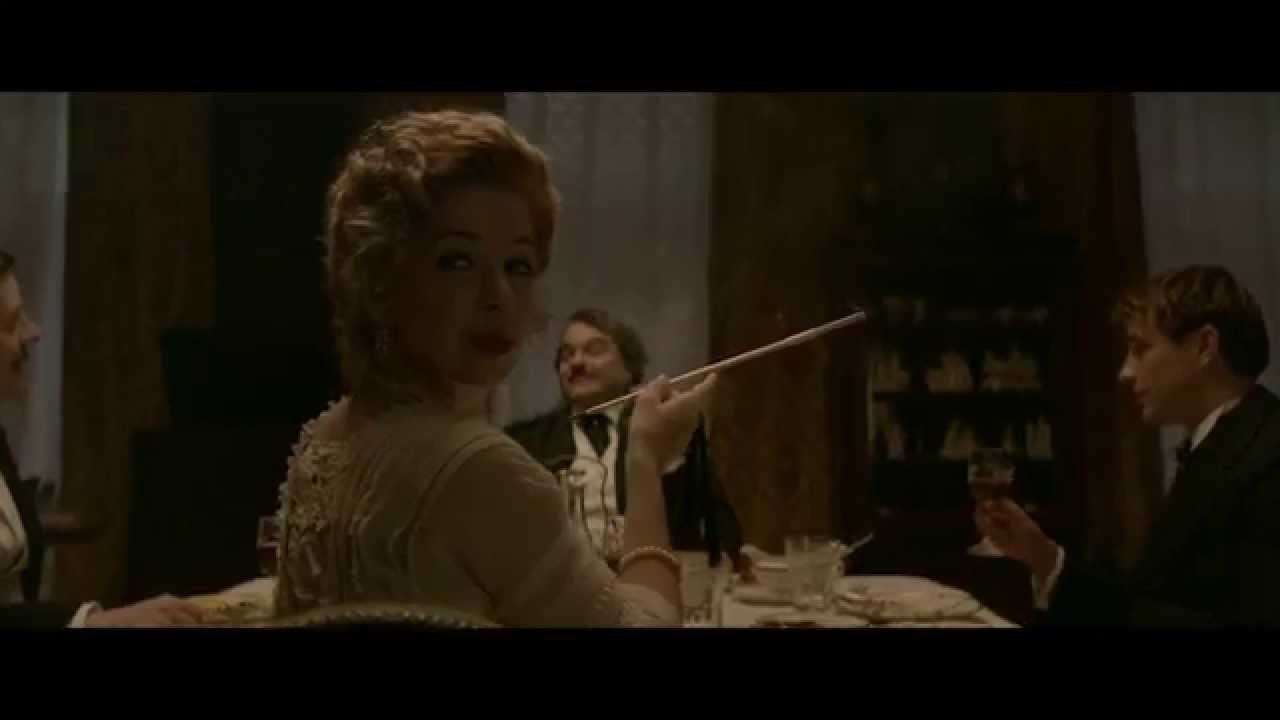
Set in 1910s Budapest, DEMIMONDE tells the scandalous story of Elza Magnas, a wealthy prostitute tangled in a messy web of lust. Her incredibly rich boyfriend, Max, keeps their relationship a secret, unaware that when he’s away, she’s sleeping with a much younger poet named Gregely. Her housekeeper, Rozsi, is also quite fond of Elza, and there’s a past between them that creates a thick layer of tension. When Rozsi hires a naive young maid named Kato (a breakout performance by Laura Dobrosi), things get even more complicated. Rozsi becomes obsessive and jealous when Elza and Kato develop a close relationship. At the same time, Max discovers Elza’s affair, and Gregely has fallen deeply in love with her, growing anxious that she’ll never leave Max. All the madness swells into pure chaos; someone is going to snap. But who? The neverending twists and turns will leave you guessing. Jam-packed with sex, drama, and betrayal, this film is a suspenseful blend of forbidden romance and passionate crime. DEMIMONDE remains sexy, while exploring love in its darkest, most fatal form. (In Hungarian with subtitles) – E.F.
The Consulate General of Hungary in Chicago in collaboration with the Bocskai Film Club invite you to celebrate the Day of Hungarian Movie (April 30.) with Attila Szasz’s Emmy-winner Eternal Winter! Given the current corona virus situation and encouraging to stay home, the highly successful production can be viewed free of charge in Hungarian and English subtitled versions on the distributor’s Vimeo channel until 30 April. Please fill out the following form to get the access link and password to watch the movie.
ATTENTION! Publishing the password publicly and downloading the movie is the infringement of the copyright! You can easily share this unique opportunity by sharing this page link with your friends.
ABOUT THE MOVIE:
Eternal Winter (2018) 110 min Drama, History, Romance Directed by Attila Szász With Marina Gera, Sándor Csányi, Laura Döbrösi, Diána Magdolna Kiss Christmas 1944. Soviet soldiers invade Hungary and drag every young woman with German origins away from a small village and transport them to a Soviet labor camp where they are forced to work in the coal mines under inhuman conditions. This is where Irén, one of the Hungarian women, meets Rajmund, who decides to teach her how to survive. While she is determined to return home to her little daughter and family, history and fate have a different plan: Irén and Rajmund fall in love. This first Hungarian Emmy award winner in the TV movie and best actress (Marina Gera) category is a true story of an unlikely romance in a Soviet labor camp that is based on 250,000 true stories. https://www.imdb.com/title/tt6605812/
In the management of the coronavirus epidemic, the old wisdom prevails: ‘Hope for the best, and prepare for the worst’, Prime Minister Viktor Orbán said on Kossuth Radio’s programme ‘Good morning, Hungary’ on Friday.