Home Blog Page 14

PM Orbán: Together we will succeed again

The following text is the official, English-language transcript of Prime Minister Orbán’s article in conservative daily Magyar Nemzet.

Prelude to the autumn political season

There is no Tusnádfürdő [summer university]. There is no Kötcse [party congress]. There is no Tranzit [conference]. There is a pandemic. The virus has also decimated the summer gatherings of the workshops of political thought. Yet there would be plenty to ponder and debate: matters that would be difficult to discuss amidst the usual parliamentary hurly-burly, and within the confines of modern-day soundbite-driven communication. So instead of speech we have text; instead of an address an essay.

Illiberal, Christian democratic, conservative, liberal

The struggle for spiritual sovereignty and intellectual freedom that we launched years ago in Tusnádfürdő is gradually bearing fruit. Rebellion against political correctness, against the dictates of loopy liberal doctrine, modes of expression and style is flowing in an ever broader channel. Ever more people are showing increasing courage in freeing themselves from the shackles of the suffocatingly restrictive, single approved mode of speech, the only approved concept of democracy, and the only approved interpretation of Europe and the West. The escape attempt itself is not simple, and the risk of punishment is high: expulsion from academic life, loss of employment, stigmatisation, running the gauntlet at universities. Examples of this are becoming almost daily occurrences. But even if we manage to escape the systematic patrols of well-paid loopy liberal border guards, we must still struggle against the deeply embedded reflexes of ever so well-meaning public opinion. Sophisticated arguments get one nowhere: if one praises nationalism, Germans will suffer stomach cramps – a reaction similar to that produced in them by the writings of Professor Hazony from Jerusalem. And however silkily we speak about illiberal democracy, the term is appallingly harsh to German and Anglo-Saxon ears. This is still the case today.

The rebellion against liberal intellectual oppression is not only widening, but also deepening. There is an increasing number of persuasive essays, thorough studies and indispensable monographs. We can already see that the Emperor has no clothes – despite the refusal to admit this in the Brussels bubble. The doctrine that “democracy can only be liberal” – that golden calf, that monumental fetish – has been toppled. Now we only need to wait for the dust to settle and we will not only know it, but also see it. It seems that conservative and Christian democratic parties and political movements can finally escape from the deadly embrace of the liberals. From whatever heights they are declared, statements such as “there is no such thing as illiberal democracy” are now being recorded in the book of political stupidity. Conservative political thinkers have finally summoned up courage, and are using a clarity of thought which even surpasses the elegance of mathematical reasoning to prove that liberalism and conservatism represent two irreconcilable positions in political theory. They have shown the flaws in the arguments of those who want to drag conservatism into the big tent of liberalism. To put it kindly, errors are committed by those who claim that the separation of the branches of power, civil and political freedoms, the protection of private property and governance within boundaries – meaning the rule of law – can only be conceived within the intellectual confines of liberalism, and can only be implemented through liberal democracy. Of course we also know Hungarians who have solved this puzzle, but have realised how much more pleasant it is to gather pats on the back in Brussels and friendly smiles of acknowledgement in lukewarm liberal salons than to huddle like black sheep at home in Budapest. A slightly sickening sensation in one’s stomach does not seem such a high price to pay. But today the climate control and furnishings in Central European salons and the elegance of their guests – not to mention their cuisine – increasingly rival those in the West. The slinking back will start soon – just as it once did from Moscow.

The modern-day conflation of conservatism and liberalism can be traced back to conservatives and liberals putting aside their fundamental – and then still obvious – differences in their great battle against totalitarianism. They put them aside and forged an alliance against a common enemy: an alliance against Nazism and communism, against the Nazis and the communists. This was a long struggle over a hundred years. The extent to which the thoughts, arguments and basic principles of the allies had become entangled only emerged when their alliance lost its meaning with the fall of the Berlin Wall in the West and the withdrawal of Soviet troops in the East.

Politicians, journalists and even scholars are cavalier in their interchangeable use of conservative and liberal notions and concepts. For too long – for far too long, for around two decades – it seemed that there was nothing wrong with being intellectually inaccurate, and even sloppy; it seemed that no serious harm could come from it. This was the attitude of Anglo-Saxon conservatives and European Christian democrats alike. Now, however, the situation has changed, and matters have taken a serious turn. What earlier seemed like a minor intellectual error, a bad position, a tolerable deformity, now prevents clarity of vision on important issues. It conceals the fact that today liberalism and liberals once more pose the greatest challenge and opposition to conservatives and Christian democrats. The basic tenets of Christian democratic and liberal thinking are diametrically opposed to each other. In their attacks liberals take aim at the very things that are most important to us, the cornerstones of the political order we wish for, the values at the core of conservative-Christian democratic heritage – such as the nation, the family and religious tradition.

There is a recognition that if things continue like this then Christian-conservative forces will be assisting in the weakening of nations, the elimination of religious traditions, and the debasement and mockery of the family. Here in Central Europe this recognition has risen to the level of public and state policy. Here the red warning light has lit up, we have activated the emergency brake, and – primarily in Poland and Hungary – we have rung the alarm bells. Here there has been enough strength to pull the European People’s Party (EPP) – the European political home of Christian democrats and conservatives – back from the edge of the abyss. Here there has been a survival instinct strong enough and a voice loud enough to declare that we must not put the future of European Christian democracy at risk – not even for the sake of such an understandable German demand for the Brussels coalition party structure to conform to that in Berlin, because that would be the easiest way to harmonise the two centres of power.

According to this line of argument, if in Berlin Christian democrats enter into a coalition with the Left, then the EPP should follow suit in the European Parliament. If we adopt this approach, following the German election we will be able to appreciate the beauty of a coalition between the EPP and the Greens – one which is currently being sampled in the laboratory of Vienna.

In Central Europe, however, there is rebellion against the idea of such perversion – not only on grounds of good taste, but also of common sense. The differences between liberal and Christian democratic political theory are important not only in the realm of academia. They also have serious practical political consequences.

Without detailing philosophical arguments stretching back to Kant, here we can say that liberals believe that every country – including those which are not currently being governed as liberal democracies – must be forced to accept that form of governance. By contrast, Christian democrats reject that form of foreign policy, because in their view societies are held together and maintain peace in a variety of ways; and, as has recently been proved by the Arab Spring, liberal democracy can bring chaos and collapse, and do more harm than good. This is one reason we are rooting for another victory for Donald Trump, because we are very familiar with the foreign policy of US Democratic administrations, built as it is on moral imperialism. We have tasted it – albeit under duress. We didn’t like it, and we don’t want a second helping.

Our policies also diverge on the issue that in Brussels is elegantly referred to as subsidiarity. According to the liberals, it is best to cede our national governments’ powers to international organisations – and as many of those powers as possible. In this they see universal ideals, European values and universal human rights being given further encouragement and recognition. This is why, whenever any international organisation is given new powers and remits, and of course resources and retributive capabilities, they politely applaud, their eyes glaze and their hearts beat faster.

Enthusiasm for this among Christian democrats, however, is limited: they can see that such organisations are inevitably prone to a despotism which they tend to call “the rule of law” but which is simply “the rule of blackmail”; they are vulnerable to infiltration by Soros-style networks, and if they are forced to choose between the citizens of individual national communities and the big guns of global capital, in the end they will always opt for the latter. The citizens of European nations soon realised that today’s European institutions do not serve them, but the interests of George Soros and his ilk. They are not prepared to swallow the Brussels fabrication that the reason a financial speculator enriching himself through the ruin of others is roaming the corridors of Brussels is that he is selflessly offering help to Europe.

Liberal and conservative politics also clash – and even engage in a life-or-death struggle – on the issue of migration. According to loopy liberals, there is no reason to fear mass immigration, or even a flood of immigration; and there is no reason to fear it even if the national and religious traditions of the uninvited guests are starkly different from ours – or indeed opposed to ours. We are told that terrorism, crime, anti-Semitism and the emergence of parallel societies are only temporary irregularities, or perhaps the birth pangs of a radiant new world about to come into being. But the conservative-Christian democratic camp rejects such an unpredictable experiment on societies and individuals, because they believe that the risks of chronic intercultural tensions and violence are unacceptably high. Unless we ignore the laws of mathematics, it is not difficult to see the reality of sure, slow, but accelerating population replacement.

There are also irreconcilable differences in education policy. According to conservatives we must focus on characteristic national traditions, and the purpose of education is for our children to be capable of becoming patriots who can carry forward our tried and tested traditions. At the same time, Christian democrats also expect schools to reinforce the sex identity that the Creator has conferred on each child at birth: to help girls become fine and admirable women; and to help boys become men who are able to provide security and support for their families. Schools should protect the ideal and values of the family, and should keep minors away from gender ideology and rainbow propaganda. Liberals see this as medieval backwardness at best, and as clerical fascism at worst. In their view the purpose of school education can only be to lead children towards their inner selves, making them capable of self-realisation, introducing them to the beauties of the universal political order, and therefore peeling away from them the enveloping layers of tradition inherited from the lives of their great-grandparents, grandparents and parents.

Liberals also believe – and for some mysterious reason this is what they defend most ardently – that the sufficient condition for just and morally grounded governance is general, universal reason, and there is no need whatsoever for absolute values revealed by God, and the religious and biblical traditions that have grown out of these. In fact, they say, a dividing wall must be built between church and government, and the influence of religion must be banished from the public sphere. Hungarian readers know little of the breadth, depth and bitter struggles of this debate which extends across the whole of Western civilisation. They believe that this is merely the sedimentary deposit of our Hungarian existence, or perhaps our existence as a “miserable small Central European state”. Therefore they cannot see – and perhaps cannot even appreciate – the unyielding and insightful basic principle in our national-Christian Constitution, according to which the state and church function on distinct parallel paths. Whilst preserving the autonomy of church and state, this seeks to replace separation with the integration of religion into the life of society, maintaining a spirit of tolerance for religious views. Indeed Christian democrats also believe that, in order to strengthen justice, public morals and the common good, the need for religion, biblical traditions and our churches is greater today than it has been for centuries.

The political strategy of liberals is based on dividing the world of politics into two parts. On one side are liberals, who are honest, good people and who accept that all honest, good people must come to the same political beliefs and conclusions on the basis of the rules of reason; and on the other side are those who have strayed from the field of liberalism because their ignorance or primordial instinctive hatred prevents them from moving forward with the times and with history – the self-evident goal of which is to lead us to the happiness provided by liberal world values, world peace and world governance. Therefore, from the viewpoint of loopy liberals, a single group is formed by the following: Trump and Johnson; Christians standing on the foundations of the New Testament and Jews standing on the foundations of the Old Testament; all kinds of ayatollahs; dictators of every rank and order, communists and Nazis; and, without any doubt, we Central European Christian democrats. This is parroted by 90 per cent of the Western media.

We Christian democrats, however, use our own intellectual system to describe the universe of politics. With due modesty one can say that this is more intelligent than the currently dominant but narrow-minded liberal depiction of the world which governs international organisations.

The only chance for Christian democracy is if it engages in an open intellectual and political fight. If it stops prevaricating, and stops acting like a numbskull who fails to see or understand what is going on. If it stands up for itself and articulates the four statements that can change the whole of European politics: our basic national and Christian principles are not liberal; they came into being before liberalism; they stand in opposition to liberalism; today liberalism is destroying them.

Europe and its place in the world

In the middle of the first decade of the new millennium, 81 per cent of all investment in the world economy came from the West and 18 per cent from the East. Today, just over a decade later, 58 per cent of all investment comes from the East and 40 per cent from the West. The pace of technological development is hard to grasp. Europe, which envisages technological competition based in the economy of the civilian sphere, is so far behind that it has lost sight of the United States and China, which are competing on the basis of the economy of the military sphere. And since all epoch-making technology and innovation has arrived in civilian economic systems from research for armed forces, Europe cannot even enter this competition until it has an army of a size which can be taken seriously – in other words, a common army.

Barely twenty years ago the European Union announced that within ten years the euro would be competing with the dollar in the world economy, we would create a single market from Lisbon to Vladivostok, and Europe would storm to the forefront in the global race that is technological progress. These were the goals. What has happened has happened: the dollar has knocked out the euro; we are using sanctions to cut ourselves off from the Russian market; and we are buying important technologies from our competitors.

The EU sensed that things were not moving in the manner and direction it had envisioned. In 2012 the European Commission’s Directorate-General for Research and Innovation noted that in 2010 the EU had contributed 29 per cent to total world production, and predicted that by 2050 this would fall to 15-17 per cent. Today in 2020 this has already happened – so thirty years earlier than predicted. This fine Directorate-General also predicted that demographic problems would lead the European Union to support increased migration, particularly from North Africa and the Middle East. All this was written in 2012!

Another estimate was that by 2050, 20 per cent of the population of Europe – excluding Russia – would be Muslim. Today it seems likely that by 2050 we can expect majority Muslim populations in major Western cities.

It is not surprising that Central European countries have chosen a different future, free of immigration and migration. Nor is it surprising that the focus of V4 policy is on improving competitiveness, even if Brussels wants to move in precisely the opposite direction: climate goals pursued to the point of absurdity, a social Europe, a common tax system, a multicultural society.

It is no surprise that what was foreseeable with a little common sense has indeed happened. The West has lost its attractiveness in the eyes of Central Europe, and the way we arrange our lives does not seem very desirable to the West. In the coming years we need to keep Europe together whilst acknowledging that there seems to be no chance of a change in this historical trend. They cannot force their will upon us, and we are unable to shift them from their current intellectual and political track. Even in this impasse we need to find a way to cooperate, until Europe’s future is decided in Italy: to the right or the left. The withdrawal of the United Kingdom may represent a decline in the power of those who support national sovereignty, oppose migration and believe in economies based on competition. But these forces have succeeded in preventing Brussels intervening to push the Polish Christian democrats out of power, for years they have been stabilising their positions in Croatia and Serbia, the Slovenians are also on the right track towards achieving this, and the survival chances of the Bulgarian governing party and Prime Minister – who are under all-out attack – are not bad either. Babiš and Fidesz are holding up, and the new Slovakian government has not left the V4 camp. The rule of blackmail system known as the rule of law system has not been introduced. Although the Netherlands is conspicuously distancing itself from the European Union, and its position is increasingly reminiscent of the United Kingdom pre-Brexit, we have succeeded in keeping them in for the time being. We have also succeeded in sustaining the survival chances of the eurozone, in preventing the collapse of stricken southern states, and in preserving Central European economic dynamism. And we have not yet been trapped between the grindstones of the global struggle between China and the United States.

We must remain on the path of agreements and compromises, and – no matter what the European Parliament says – we must implement the sweeping financial and budgetary plans that we successfully finalised during the summer. This is possible, providing that the Germans succeed in managing the process for installing Chancellor Merkel’s successor without exceeding Level 4 on the Richter scale.

The virus, protection and prospects

The second wave of the virus is here. We’re already experiencing it. It has arrived – as could be expected, and as we did expect. Just like the first wave, it has come from abroad. It was brought into Hungary from abroad. This is a global pandemic and we live in a globalised world, in which everyone receives their share of not only the benefits, but also major challenges such as the virus. Hungary defended itself well in the spring. We were among the world’s 25 most successful countries. Others were unable to suppress the spread of the virus as effectively as we were, and thereby gave the virus the chance to flare up.

We need to defend ourselves again. There will be critical situations, but everyone who needs the appropriate care will receive it. We can and will protect people’s lives and health. We consulted the people of Hungary in a timely manner: in the National Consultation everyone had the opportunity to express their opinion. Almost two million people did so, and thus decided how we should defend ourselves during the autumn. The will of the people was unanimous: Hungary must continue to function! We cannot allow the virus to again paralyse the country, the economy, schools and everyday life. Accordingly we must defend ourselves against the virus, while simultaneously protecting the lives of endangered elderly people, maintaining the functioning of our schools and kindergartens, and preserving jobs.

This tactic is different from the one we used during the first wave. The situation is different from that in the spring. Back then we had to close down completely, because we were facing an unknown enemy. We had to gain time, so we could prepare the healthcare system. And we succeeded in doing that. We won the first battle. In the spring we flattened the curve of the pandemic, and in doing so were able to prepare the country. Today we no longer have to worry about anyone not receiving appropriate care, as the Hungarian healthcare system is now also prepared to deal with mass infections. Now everything we need to protect ourselves is available: we are producing the required equipment ourselves, as much of everything as is necessary. Hospitals are in a state of preparedness for disease control. We know which hospitals are receiving COVID patients and when, and we can also send doctors and nurses to where they are required. Thousands of qualified professionals are looking after Hungarians’ lives. Anyone who falls ill will be in good hands in hospital.

The new wave of the pandemic will demand greater responsibility from all of us. The success of the defence operation will depend on whether or not we all follow the rules. We must take special care of our elderly parents and relatives. The family is not complete without them: they are irreplaceable.

It is now time for our experts. They are the ones who can once again tell us how to protect ourselves well and successfully. A well prepared healthcare system, conscientious professionals, broad cooperation. We already succeeded once in the spring; we will succeed again together in the autumn.

An old joke from communist times: “We know what’ll happen, but what’ll happen to us until then?” We know that there will be elections in the spring of 2022. Until then, there will be the defence operation. According to the more optimistic virologists, a vaccine that can be deployed against the coronavirus could be developed by the spring of 2021. Because of the secrecy of pharmaceutical companies protecting their commercial interests and a race between the great powers, a sea of fake news is confusing hopeful people, and encouraging tens or hundreds of thousands of would-be virologists to engage in speculation. Our scientists involved in the work of the Operational Group also hope that good news could arrive at some point next year. And when the vaccine is ready, we still need to acquire a few million doses, following which we can begin the planned vaccination of those who apply to receive it. In the meantime we must continuously strengthen our state of preparedness and our healthcare system which will bear the main burden, upgrade the management system, accelerate digitalisation, rationalise administrative burdens, and bring order to the tangled legal situation. In addition to the already ongoing 70 per cent pay increase for nurses, we need to provide a breakthrough pay deal for doctors. And we must do all this while defending the country and continuing the various forms of restructuring that we began in the spring.

Similarly we are expecting the Economic Operational Group to devise economic measures that are capable of protecting jobs, the standard of living of families, and the security of pensions. And in fact we are expecting even more from them. They are the ones who must swing the country from defence mode to attack mode. We do not simply want to protect the level and standard that Hungary has achieved over the past ten years, but to also ensure that, even after the pandemic, everyone is able to take one step forward every year. Between 2015 and 2019, per capita gross domestic product (GDP) increased by 39.65 per cent, while that of Germany increased by 13.3 per cent and that of France by 10.1 per cent. Following such success, we cannot be satisfied with less; we have proven that we are capable of it, and that we have the required talent, strength, knowledge and willpower. Hungary must not withdraw into its shell like a snail, but must continue to move forward, flow, increase and rise – like a Liszt rhapsody, or sparkling wine. This is a huge task, and this is why [Minister of Finance] Mihály Varga will be Hungary’s least envied person in 2021.

It is my hope that we can arrive at the 2022 elections having successfully defended ourselves against the virus, and with a strengthened healthcare system, economic growth that has been driven to unprecedented heights, full employment, a home creation boom that eclipses even the previous one, and the thirteenth month’s pension, which is in the process of being reintroduced.

Meanwhile we will have no peace from the Left, on whom we cannot depend – even now, amidst the greatest difficulties and in a global pandemic. All we can count on from them is backstabbing and backbiting, the undermining of national strength and solidarity, sniping at political leaders and experts leading the country’s defence operation, snitching and betrayal in Brussels, sabotage and trickery. This is the Left we have ended up with. What’s more, they are now mixed in with Jobbik. Together this concoction is fermenting in a sealed jar. One doesn’t know whether to laugh or cry.

And although it may be an entertaining sight, the stakes are huge, as is usually the case here in the Carpathian Basin. Again in 2022 the issue will be our freedom.

The usual suspects

Freedom is the ability to decide for oneself. The central issue throughout more than 1,100 years of history in the Carpathian Basin has always been the preservation or restoration of a free and independent Hungary. Every day we had to fight to acquire or retain the right to decide matters for ourselves. This thought permeates Hungarian history; it is this community of freedom that unites the people who live in the Carpathian Basin.

The greatest threat to national self-determination today is the network that promotes a global open society, and seeks to abolish national frameworks. The goals of a George Soros-style network, which has unlimited financial and human resources, are clear: to create open societies of mixed ethnicity through the acceleration of migration, to dismantle national decision-making and hand it over to the global elite.

Against this, in order to strengthen the national framework, Europe in the early 2010s saw the development of a national resistance movement, in which Hungary has been a considerable force from the very beginning. The 2010 change of government in Hungary and constitutional revolution offered the opportunity to dismantle the frameworks and structures that serve the interests of the liberal and colonising global elite. To this end, a new Fundamental Law [Constitution] was adopted, and a raft of new legislation and unorthodox measures were enacted. National politics has broken away from narrow elitist ideologically-driven governance, and has constructed the new political order through actions in line with the desires of society. The foundation of this is freedom, or the capacity for independent decision-making.

The battle between the global elite and the national resistance is not over. It is clear that the global elite is not resigning itself to allowing politics that goes against its interests to take root in Central Europe.

We saw what happened in the Polish presidential election. In the spring it seemed that the Polish left was still in ruins, and that their eternal infighting would give their candidate no chance of winning. But this isn’t what happened. In just a few weeks, the candidate of the Left – with the Soros network, the Brussels elite and the international media standing behind him – forced the national side into making a major effort. In the end Andrzej Duda was only just able to overcome his left-wing rival in a very close fight.

We should not deceive ourselves: the global elite will apply the same strategy in Hungary in the 2022 election campaign.

Their instrument is the Left, which has already failed several times. The leader of this is Ferenc Gyurcsány, its youth organisation is Momentum, and its billionaire sponsor is George Soros. They are the forces from the past, who have already ruined the country once.

Although various party logos still exist on the opposition side, and we can sometimes hear the sounds of quarrelling from within their ranks, there are in fact no longer any parties with their own free will. The work is complete: everyone from Jobbik to the LMP has been ground down and stuffed into the sausage skin. Communities that once had independent identities have been replaced by a left-wing people’s front that serves the Soros network.

They are preparing for a decisive battle in 2022. Behind them they will have the international media, the Brussels bureaucrats and the NGOs in the guise of civil society organisations. We can have no doubt that they will do everything possible for power and money. The time has come for us, too, to marshal our forces. After difficult years of governance, we must now return to the election battlefield. It is time to gather up our equipment, so that when the time comes we can ride out to battle. A great battle awaits us in 2022. Prepare for it.

(About Hungary / Magyar Nemzet)

Reklám
Tas J Nadas, Esq

The Initiation of the Budapest Fellowship Program by the HIF and MCC

Four American professionals began a ten-month intensive training in Hungary. The Hungarian Initiatives Foundation’s new scholarship program would like to help form lasting positive relations between the U.S. and Hungary. The program also considers it important to create a sound and level image of Hungarians and Hungary in America. Bocskai Radio was present at the opening in Budapest. We asked HIF Director Anna Lacey, about the background, past, and future visions for the program. 

The Budapest Fellowship Program is part of the Liberty Bridge Program launched by the Hungary Initiatives Foundation (HIF) in 2020, which aims to revitalize U.S.-Hungary relations through person-to-person dialogue. HIF will support scholars who will serve as bridge builders between the two countries. Anna Smith Lacey, Director of the HIF, told Bocskai Radio that they had turned to fellowship-type programs in the last four years. Their mission is to provide talented Hungarian youth with scholarships and to strengthen American-Hungarian relations for the long term. 

The co-organizer of the Budapest Fellowship Program is Mathias Corvinus Collegium (MCC). The MCC brings twenty years of experience in talent management. Their international reputation and network of contacts allows them to provide quality public, educational, and scientific training to those from primary school through doctoral programs. The fruit of the joint approach and work of the two aforementioned organizations is the Budapest Fellowship Program. The latter could be defined as a transatlantic scholarship opportunity in Budapest for young American professionals. The organizers decided to have the majority of the event take place at the Budapest-based MCC. 

Over the past three years, HIF has consciously expanded scholarship opportunities from Hungary to America. For these opportunities, Hungarian students and researchers were selected for periods ranging from two months to one year. Applications ranged from undergraduates to PhD candidates. The Andrássy Fellowship Program sent Hungarian colleagues to the United States. This framework program helped them understand the American political system, the political and philosophical fundamentals that made it easier for them to navigate the world of Washington. Zeöld Zsombor, the director of the Budapest Fellowship Program, was among the researchers in America last year for a year. He is currently not only the director of the Budapest Fellowship program, but also an alumnus of MCC. 

Applicants had to meet certain requirements: American citizenship and active research activity. Additionally, it was extremely important that they be interested in Central-Eastern Europe and Hungary, regardless of their scientific or personal motivation. They presented their interest in a professional work plan. Although the entrance requirements did not mandate that a participant have Hungarian ancestry or connections, the program still managed to select such an individual. 

There were 32  applicants for the four places, which were eventually filled by three men and one woman (one junior and three senior fellows). Their youngest specialist, Stephen, is at the end of his master’s course; the oldest, Ryan, already has a family, who accompanied him to Hungary. The organizers created the possibility for any applicant to move to Budapest with their spouse and children so that they too could acquaint themselves with the culture and make it a part of their daily life. Below we briefly present each of the fellows.

Ryan Brockhaus, senior researcher at the National Civil Service University, will research American-Hungarian military relations and themes in common defense strategy. He graduated from Arizona State University and is currently working on his master’s degree in global security. Stephen Sholl will be investigating the confiscations of the Rákosi regime at the Committee of National Remembrance. He earned his first degree in international conflict and security studies. His research is primarily focused on historical background as an explanatory factor in current events and conflicts. He is currently pursuing a master’s degree. Dr. George Bagden holds a Ph.D. in law from the New York University School of Law. At the Danube Institute, his host organization in Budapest, he will investigate the issue of pandemic management. George is currently the Editor-in-Chief of the Journal of Law and Liberty. Nicole Nemeth, who has been stationed at the National Policy Research Institute, is interested in minority rights, especially those of Hungarians in Transylvania. She would mostly like to deal with legal issues concerning Hungarians living in neighboring European countries and in the wider diaspora. The California lawyer studied at the University of San Diego’s Law School, where she specialized in civil litigation.

The tight year ahead of the fellows will be focused on research, teaching, learning and networking. The aforementioned topics of interest will be investigated with the help of mentors. Mentors can connect them to key individuals in their chosen field so that they can establish professional relations with the Hungarian academic elite. However, they can also teach as part of MCC’s specialized programs. They can act as lecturers on leadership development occasions by sharing their knowledge and contributing to MCC’s post-graduate courses. In terms of learning, an intensive history seminar awaits the scholarship recipients. Lacey Smith said that historical and linguistic knowledge are foundational to acquiring a true knowledge of Hungary. The program, therefore, places special emphasis on learning the Hungarian language, which is not only a footnote but an integral part of the program. From the conquest to the present day, the participants will get to know different chapters of Hungarian history through a series of seminars with pre-eminent historians.

The cultural focus of the Budapest Fellowship Program will not be neglected either. The purpose of the monthly trips is to allow participants to personally experience the minority issue. Wandering in the Carpathian Basin, they can feel the specifics of being in Transylvania and Transcarpathia and see the nature and difference of Hungarians on both sides of the border. The same emphasis will be placed on domestic travel and visits to Hungary’s closest geographical partners, the Visegrad countries. A basic Hungarian language course is intended to support easier integration and cultural deepening processes. The scholarship provides, among other things, the cost of living, accommodation, book and research support, and excursions for each of the four.

The opening event and orientation day served to introduce the HIF, establish the atmosphere of the program, and enable management to outline its plans. Participants were able to get to know each other and their partners with the motivation they set for this expected great period. During the roundtable discussions and the presentation of Balázs Orbán, Parliamentary and Strategic State Secretary of the Prime Minister’s Office, public policy, political philosophy, EU affairs, the placement of minorities and human rights, as well as history, were discussed.

 “An important goal is to find out what is thought of us in the most important civilian hubs of the world, to bring in knowledge from outside. We are regaining our ability to explain to foreigners who we are and how we think.” At a press conference on the opening day, Balázs Orbán, who, in addition to his aforementioned role, is also the chairman of the board of trustees of the Mathias Corvinus Collegium, expressed these thoughts. According to him, the Budapest Fellowship Program is of strategic importance not only to the MCC, but also to the cultural-diplomatic life of Hungary.

Upon completion of the program, participants will be integrated into the activities of HIF alumni in Washington and Budapest and will be recalled to Hungary to participate in events organized by the MCC. “I want all fellows to feel that with the professional knowledge and relationships they have gained through this experience, they have forever become part of this network.” With the completion of the Budapest Fellowship Program, in addition to the development of political, economic, and scientific relations between the two countries, the spiritual and emotional ties of the diaspora and the Motherland may also be strengthened. The programs of the Hungary Initiatives Foundation will not adopt the character of common education in the future but will continue to focus on the talent and interest of the individual.

By Zsófia Dorgay

Translated by Miklós Boros

Reklám
Tas J Nadas, Esq

No other country has been as honourable as Hungary

Iain Lindsay will leave his posting in Budapest next week, and will soon retire from his service at the Foreign Office. In his final interview for Magyar Nemzet, the United Kingdom’s Ambassador to Hungary talks about his stance on the current situation of Brexit, his memories of Hungary, how, as a Scotsman, he can identify with Hungarians, and we also got to know about his favourite Hungarian wine region.
Reklám
Tas J Nadas, Esq

Viktor Orbán: Possible need for pandemic restrictions again

Budapest, 2018. december 7. Orbán Viktor miniszterelnök interjút ad a Jó reggelt, Magyarország! című műsorban a Kossuth Rádió stúdiójában 2018. december 7-én. MTI/Szigetváry Zsolt
Prime Minister Viktor Orbán revealed plans for a new, two-year growth program in an interview with Kossuth Radio on Friday morning. According to the PM, it is quite plausible that further pandemic restrictions will have to be put in place, especially given that our biggest risk currently is coronavirus being carried in from abroad. Mr. Orbán went on to say: the goal is to reinstate a true classroom environment in schools, digital education cannot be a full replacement. He classified relations with our neighbors as a key point.
Reklám
Tas J Nadas, Esq

Providence and Persistence: The Unlikely Journey of a Piece of McKeesport History to Cleveland

In this article, Nicholas Boros, a high school mathematics teacher from Cleveland who studied religious studies as an undergraduate and actively continues his research into the history of diasporic religious communities, details the history of the former St. Stephen’s Hungarian Catholic Church in McKeesport before describing his involvement in an effort to save this church’s cornerstone prior to its recent demolition. Many hurdles appeared along the way, and it seemed like any chance to honor the memory of this parish and its glorious past was lost. Through a series of happy coincidences that came together at the very end of a month-long journey, the cornerstone was rededicated at St. Elizabeth’s Church in Cleveland, an account of which appears at the end of the article.

HISTORY OF ST. STEPHEN CHURCH

The Hungarians of the Monongahela Valley originally worshipped with the Slovaks at St. Elizabeth’s Church, founded in 1895 by Rev. Coloman Gasparik, who eventually purchased a former church at 1520 Penn Avenue in Pittsburgh. Fr. Gasparik certainly appeared to take a strong interest in the Hungarian flock entrusted to his care and even supported Hungarian causes. He had donated to St. Elizabeth’s Church in Cleveland and subscribed to Fr. Charles Boehm’s Magyarországi Szent Erzsébet Amerikai Hírnöke, the first Hungarian Catholic periodical in America, which even printed his November 24, 1898 address to the women’s branch of the Hungarian St. Joseph’s Benefit Society on the occasion of their flag blessing ceremony. Nevertheless, some of the Hungarians became enraged with Fr. Gasparik over an alleged derogatory remark and sought the assistance of Tihamér Kohányi, editor of the Cleveland-based daily Szabadság, to build their own Hungarian church.

Kohányi, an early mover and shaker of the Hungarian-American community, was one of the organizers of a Hungarian Catholic sick benefit society, the Szűz Mária Magyarok Pátronája Római és Görög Katholikus Szövetség. On November 25-26, 1897, he organized a convention for this new association in Cleveland, which brought together representatives from sixteen different Hungarian communities throughout the United States, including ones from Pittsburgh and McKeesport. This convention was likely the occasion where the Hungarian Catholics from these two communities first approached Kohányi to assist them in their endeavor. By some accounts, Kohányi addressed a gathering of the McKeesport faithful and spearheaded their initiative by donating the first $25 toward the building. Kohányi attempted to arrange for a priest from Cleveland, likely the newly arrived Rev. Robert Paulovics, to pastor the fledgling congregation, but the Bishop of Cleveland refused to release him, at which point they resolved to seek a priest from Hungary.

Once $650 had been collected, Kohányi wrote a letter to Bishop Zsigmond Bubics of Kassa (present-day Košice, Slovakia) asking him to send a priest for McKeesport. Even prior to the arrival of a priest, the congregation had plans drawn up for the church, which were very similar to those of the original church building of St. Elizabeth’s in Cleveland. Bishop Bubics agreed to send Fr. Kálmán Kováts, who arrived in Pittsburgh on August 12, 1899 and was immediately given charge of the Hungarian community, which was to worship in the basement of McKeesport’s St. Peter’s School until they could erect their own church. He celebrated his first Mass with the congregation on St. Stephen’s Day, August 20, 1899, and in his homily he said, “Fogadjanak el azért ne cask papjokul, de igaz barátjuk és testvérökül is, hogy igy mától fogva jó szüleim szivét, testvéreim szeretetét s drága magyar hazám anyai jóságát Önökben kereshessem s találjam fel mindig” (Accept me not only as your priest but also as your true friend and brother so that from this day forward I may always seek and forever find in you the heart of my good parents, the love of my siblings, and the maternal goodness of my dear Hungarian homeland).

It is no surprise that such a warm priest would be able to accomplish so much in his nearly 28 year pastorate. With 23 families in McKeesport and 817 adults from the many villages in the valley, the fledgling congregation purchased land on April 3, 1900, and the cornerstone was dedicated on September 9, 1900 by Rev. Conal A. McDermott of St. Peter’s McKeesport in the presence of eight brass bands and nearly 800 members of Hungarian societies from throughout the region. The church was dedicated on August 25, 1901 by Rev. Edward Bush of St. Peter’s Church in Allegheny, Bishop Richard Phelan’s designated representative, with nearly 5,000 people in attendance, including Fr. Michael Biro and ten representatives of the Hungarian Catholic community of South Bend. Fr. Kováts helped to organize several Hungarian Catholic parishes throughout Western Pennsylvania. To reach his widespread flock, Fr. Kováts founded America’s second Hungarian Catholic periodical, Magyarok Csillaga, a weekly that was published from December 21, 1899 until 1905. It was succeeded by Magyar Zaszló (1906-1912) and then by Magyar Katholikus Zaszló (1912-1927), a printing career that spanned Fr. Kováts’s entire American priestly service. His other lasting legacies are an 11-acre cemetery he purchased for the parish in North Versailles in 1911 and the Daughters of the Divine Redeemer, whom he brought to the United States from Sopron, Hungary in 1912. The order played a major role in the education of hundreds of Hungarian Catholic youth by staffing Hungarian parish schools in Northeast Ohio, Western Pennsylvania, and Buffalo, New York. Fr. Kováts and the parish were recognized by Emperor Franz Joseph, who donated a large $10,000 painting of St. Stephen, which was placed above the main altar and was dedicated on June 14, 1914.

After Fr. Kovats’s death on March 27, 1927, Fr. John Rethy was appointed pastor and served until his death in July 1946. Under his pastorate, a parish school was built in 1931. Fr. Raymond Novak assumed responsibility for the parish in December 1946 until he was transferred in June 1962. During his pastorate, many ’56-ers were aided by and joined the parish. The church’s final pastor, Fr. Stephen M. Kato, served the parish for almost 40 years. Within that timeframe, several major events occurred. The parish school closed in 1967, and the parish gained a permanent deacon in the person of Henrik Brabender on June 8, 1974. Later that month, Cardinal Mindszenty visited the parish during his tour of the Diocese of Pittsburgh and instructed the faithful to request permission to establish a Hungarian language school for the children. As part of the Pittsburgh Diocese’s 1993 reorganization efforts, it was announced that St. Stephen’s would be suppressed on September 1, 1994 following the retirement of Fr. Kato. St. Stephen’s was merged with nearby St. Pius V Church, but, at Fr. Kato’s request, Bishop Wuerl granted permission for St. Stephen’s to remain open as long as the dedicated pastor was willing to serve. Fr. Kato died on April 15, 2002, and shortly after Bishop Donald Wuerl celebrated the parish’s final Mass on July 7, 2002 at 10 AM.

Following the parish’s final Mass, the building remained unused for several years until The Follieri Group purchased St. Stephen’s and nine other vacant churches from the Diocese of Pittsburgh in January 2007. Fr. Litavec of St. Pius V stated that the proceeds from the sale would be used to care for the neglected St. Stephen’s Cemetery on Westinghouse Avenue in North Versailles. Real estate broker Grubb and Ellis marketed the property as a development opportunity and listed it for $250,000. Raffaello Follieri was charged with fraud and money laundering the following year, and the resulting neglect of the building caused major damage. It was finally purchased by Jim Miller of Pro Wrestling eXpress in August 2011, by which time the church roof already had holes in it. Miller, who refurnished the former parish school as a wrestling studio, tried to arrange the church’s demolition prior to purchasing the property, but he was unsuccessful. Complaining of “squatters and druggies,” Miller, together with the City of McKeesport, attempted to secure an Allegheny County Community Infrastructure and Tourism Fund grant to demolish the church in 2019. On June 3, 2020, McKeesport City Council awarded a $77,900 contract to Lutterman Excavating of Greensburg to demolish the structure.

St. Stephen’s Catholic Church of McKeeport on July 30, 2020

HISTORY OF THE CORNERSTONE INITIATIVE

Through a long series of coincidences, I became involved in an effort to save the cornerstone of this church, the fifth Hungarian nationality parish to successfully construct its own church building. In the spring, I completed a project that I had begun several years ago, the digitization of America’s oldest Hungarian Catholic periodical, Magyarországi Szent Erzsébet Amerikai Hirnöke. The Hirnök was published in Cleveland by Rev. Charles Boehm, the first Hungarian Roman Catholic priest brought to the United States for the express purpose of ministering to a Hungarian flock. I had found all of the issues of this periodical from its origin in October 1894 until April 1900 in the Archives of St. Elizabeth Church, the first Hungarian Roman Catholic church that Fr. Boehm had founded in America. Since I knew that the Hirnök had been published until 1906, I returned to the archives to see if I could track down the remaining issues. Although I was unable to find those missing issues, I stumbled upon a single copy of the second oldest Hungarian Catholic periodical printed in the United States, Magyarok Csillaga, which was published in McKeesport by Rev. Kálmán Kováts. In order to investigate a controversy in the early history of Hungarian Catholicism in the United States, I was eager to get my hands on additional copies of Magyarok Csillaga. A promising lead appeared in a 1940 article in Western Pennsylvania History, which stated that copies of Magyarok Csillaga were in the possession of the Daughters of the Divine Redeemer, the religious sisters that Fr. Kováts brought to the United States in 1912.

I contacted Sr. Monica Kosztolnyik, archivist for the Daughters of the Divine Redeemer, and although she was unable to locate copies of Magyarok Csillaga, she was able to find copies of one of its two successors, a newspaper called Magyar Zászló. She agreed to allow me to digitize their issues of the paper but told me to wait until the fall due to repairs in the part of the motherhouse in which the archives are stored. As a high school teacher with more free time in the summer, I decided to contact her to see if I could pick them up in early July instead. We both agreed to observe all precautions in the midst of the coronavirus pandemic, so I drove to the motherhouse in Elizabeth, Pennsylvania on July 3 with my mother Violet Boros, who had been taught by the Divine Redeemer Sisters while she attended St. Margaret’s School in Cleveland. While en route, I decided that it might be worthwhile to see the former church building that Fr. Kováts had founded in order to gain a closer connection to the individual whose newspaper I was preparing to digitize. I knew it had been abandoned since 2002 and that it was located in an area that many would deem unsafe. I began to have second thoughts, but a friend from Pittsburgh, Andrew Barnhart, volunteered to come with me, which eased my anxiety and spurred me onward. I took pictures of the cornerstone and the building, and I could not get it out of my mind.

When I returned home, I found an article in McKeesport’s online newspaper, The Tube City Almanac, which stated that the McKeesport City Council had voted on June 3 to award Lutterman Excavating of Greensburg a contract to raze the building. Realizing that time was limited, I began contacting many people and organizations in McKeesport to try to save this cornerstone as a memorial to the pioneer priest Fr. Kováts and the many Hungarian steel worker families of Pennsylvania whose sacrifices helped to build the church. Thanks to the advice of a friend, Jonathan Naser of Pittsburgh, I informed The Tube City Almanac of my initiative and was interviewed by Christopher Baumann for an article. In that article, I learned that the owner of the church property, who had never bothered to return my email, expressed interest in keeping the cornerstone on his property but was unwilling to arrange for its safe removal prior to the start of demolition. While I had intended to bring the cornerstone to St. Elizabeth’s Church in Cleveland due to the McKeesport church’s Cleveland connection, my ultimate goal was to preserve it intact and to save it from the landfill.

With no updates from the city, the demolition company, the owner, or the McKeesport Regional History and Heritage Center, I lost hope that I could save the cornerstone. On July 26, I providentially came into contact with Zsolt Molnár of Bocskai Radio. Zsolt called me to ask for an English translation of a news article for the radio’s website, and when he remarked that there were few newsworthy events in the Hungarian-American community due to the pandemic, I informed him about my initiative. He became very invested in the project, and we traveled to McKeesport on July 30 to conduct an onsite interview, during which time he took drone footage of the church, which, unbeknownst to us, would begin to be demolished the following week. While there, we met with a representative of the only local institution that had provided us with assistance, Maryann Huk of the McKeesport Preservation Society. Ms. Huk had recorded St. Stephen’s final Mass on July 7, 2002, and she agreed to let us use her footage for our news story. While there, we also visited the Daughters of the Divine Redeemer to see the grave of Fr. Kováts, who is buried in the sisters’ cemetery. We had also planned to visit the parish cemetery in North Versailles but learned that it had been closed by the Catholic Cemeteries Association of the Diocese of Pittsburgh sometime in or shortly after 2010.
Unfortunately, I first came to know of the start of the church’s demolition on August 6 through a Facebook post. In a last ditch effort, I decided to reach out to the owner of the property on Facebook Messenger, and he actually responded this time. He indicated that he shared my hope that the cornerstone and the crosses on the church’s two steeples would survive, but he continued to maintain a “let’s wait and see if it survives” attitude. When the demolition was complete, the owner tried to remove one of the steeple crosses from the rubble but was informed that he could not do so because he had not retained salvage rights. Luckily, the stone had survived, but the “00” from the 1900 on its one side had fallen off. I contacted the demolition company on August 12, and they seemed to have forgotten about my initiative and were suspicious of my intentions since a few people had contacted them to try to obtain material to sell. Thanks to the help of Dóra Zombori and Zita Mirk of the Embassy of Hungary in Washington D.C., who were able to substantiate our intentions for the cornerstone, Lutterman Excavating contacted me on August 14 and gave us permission to retrieve it.  László Strober and Zsolt Molnár went to pick it up on the morning of August 17 and were assisted in lifting it onto their trailer by a Lutterman employee. When the stone arrived in Cleveland later that day, Rodney Johnson and Aaron Hemphill of Miceli Dairy helped to remove it from the trailer with a forklift. On August 18, Mr. Strober built a base for the stone using bricks from St. Stephen’s that were provided by Lutterman Excavating. The moment of truth occurred on August 19 when Aaron Hemphill successfully placed the cornerstone on its new base

CORNERSTONE DEDICATION CEREMONY

The cornerstone’s rededication ceremony on Thursday, August 20, 2020 in the garden of St. Elizabeth of Hungary Church on Buckeye Road was the fruit of one month’s labor. Dr. Endre Szentkirályi, President of the United Hungarian Societies, opened the occasion with an introduction of special guests, who included Consul General Dr. Zita Bencsik and Dr. Erika Virányi-Gyermán from the Hungarian Consulate in Chicago and Joseph Knapick, a lifelong member of St. Stephen’s McKeesport who journeyed to Cleveland for the ceremony after seeing it advertised on the “Hungarian Pittsburgh” page on Facebook. After the singing of the American National Anthem, Dr. Szentkirályi introduced Fr. Richard Bona, pastor of Cleveland’s St. Elizabeth and St. Emeric Parishes, who, together with Joseph Knapick, unveiled the cornerstone by removing the Hungarian flag that had been draped over it.

Fr. Bona began with a reading from Ephesians 2:20-22, in which St. Paul refers to the Ephesians as members of God’s household, built on the foundation of the apostles and prophets with Christ as the cornerstone. Prior to re-blessing the cornerstone, Fr. Bona explained that the stone represents Christ and the apostles as the foundation of faith upon which the faithful, like the bricks placed over it, depend as the Church. He also expressed his hope that the cornerstone, as a memorial to the faithful of the McKeesport Hungarian Catholic community, would remind those who look at it to keep their faith in Jesus Christ as the foundation of their lives, just as St. Stephen had done in founding the Kingdom of Hungary. He then read the following blessing: “Heavenly Father, Your Son was that stone which the builders had rejected yet which has become our cornerstone. Bless this cornerstone, which will now serve us as a monument. With a foundation on Jesus Christ and through the intercession of St. Stephen, may the work of Hungarian Catholicism continue in the United States, through Christ our Lord.” Following the blessing, Fr. Bona led a recitation of the Our Father.

Dedication ceremony

Dr. Szentkirályi then introduced me, and I presented the history of the parish in Hungarian followed by an English account of how I became involved in the initiative to save the cornerstone. Following my presentation, Judit Györky, Vice President of the Hungarian Societies of Cleveland and member of St. Emeric Church, read a poem “Hymn of St. Stephen” by Sándor Sík, a member of the Piarist Order who is considered one of the most influential Hungarian poets of the 20th century. As the occasion’s guest of honor, Dr. Zita Bencsik, Consul General of Hungary in Chicago since 2016, addressed the crowd and spoke of the significance of the place and time of the ceremony. She mentioned that the event was taking place on St. Stephen’s Day, in the Year of National Unity (Nemzeti Összetartás Éve), in the midst of a global health crisis with attendees in masks at the oldest Hungarian Catholic church established in the United States, St. Elizabeth’s in Cleveland. She also drew attention to the deep symbolism present in the fact that attendees came from both of Cleveland’s Hungarian Roman Catholic churches, which are under the patronage of St. Elizabeth and St. Emeric, who like St. Stephen, were members of the Árpád Dynasty. Furthermore, she explained that the essence of unity for the Hungarian communities at the turn of the century was the Christian faith they had received from St. Stephen, and she noted that that same faith serves as the basis of our common Hungarian identity. She reminded the faithful that only countries, not nations, have borders, before ending by wishing Hungary a happy birthday.  The half hour ceremony included approximately 50 attendees and concluded with the signing of the Hungarian National Anthem.

By Nicholas Boros
Cleveland – August 23, 2020

Nicholas Boros and Zsolt Molnar
Reklám
Tas J Nadas, Esq

Acknowledgement from NATO

The Hungarian Military Force Development Program is increasingly acknowledged by allies. NATO member states admit that our country is no longer just a „security free rider” onboard the North Atlantic Alliance, but rather a reliable member that fulfills its commitments.

Reklám
Tas J Nadas, Esq

“We May be Recognized as Faithful Hungarians” – Fr. Richard Bona the New Pastor of the Hungarian Catholics of Cleveland

After Fr. András Mezei was called home to Hungary by his bishop, St. Emeric and St. Elizabeth Parishes received a new pastor in the person of Fr. Richard Bona. On July 19, he celebrated the first Mass following his appointment and was grateful to the faithful for their warm welcome. Fr. Bona is no stranger to America or to the life of the local community. He arrived here 23 years ago from Bratislava.

(The interview is in Hungarian language.)

He grew up in a Hungarian family in the former region of Upper Hungary, which is in present-day Slovakia. In the Slovak capital, he grew up in an environment of different ethnicities. While his elementary school education was in Slovak, he attended a Hungarian language high school. His parents found it important that their children experience their Hungarian roots, so they signed them up for the Hungarian Scouts and attended Hungarian Mass at the Franciscan Church. Despite his wide range of interests in school, he knew in the depths of his heart that he was going to be a priest. His sense of a calling strengthened over the years, and by the time he graduated from high school, he knew that he would apply to the Theological College, a decision that he has never regretted.

Regarding the circumstances of his career path, there is an interesting story from his childhood. He made his First Communion in the third grade, after which he immediately joined the group of altar servers. It was customary for only boys to assist at the altar where he grew up, so he once asked his parents on the way home from church if every altar server must become a priest. They jokingly said yes, but from that moment the young Richard agreed that he would become a priest when he grew up. Of course, he came to realize that most servers do not become priests, but the idea of a priestly vocation always remained in the back of his mind and intensified the feeling that God was calling him. There are many important things on Earth, but among those, the most important is the salvation of our souls. For this reason, Fr. Bona believes that it is a priest’s duty and mission to help as many men as possible reach Heaven. He gladly works toward this end and will continue to do so in the future.

He had been a student at the Bratislava Theological College for five years when, through cousins living in America, Fr. Ladislaus Rosko sought him out to come to America, continue his studies, and participate in the ministry to the Hungarian Catholic community in Cleveland. After much thought and prayer and trusting in the will of God, Fr. Bona accepted the new opportunity. During the first year, he concentrated on learning English and then entered Cleveland’s diocesan seminary. His theological experiences from back home were very different. Here, it was not enough to reach the end of the semester; he had to remain active throughout the entire school year. His grade at the end of each year was not determined solely by his exams but also by the work he had done throughout the course of the academic year. In Bratislava, there were 130 students, while in the Diocese of Cleveland, there were only 28 seminarians at that time. He successfully adapted to these differences and integrated himself into his new life.

Following his ordination at St. John’s Cathedral in 2003, his first appointment was at St. Christopher’s Church in Rocky River. After four years of priestly service, he was transferred to St. Albert the Great in North Royalton. During these early years of his ministry, he became even more convinced that he had found his calling. While at St. Albert’s, the Bishop asked him to continue his studies in order to assist at the Diocesan Tribunal. His studies took him to the Catholic University of America in Washington D.C., where he earned a Licentiate and later a Doctorate in Canon Law in 2014 and 2018, respectively. The Church, like any society, has to organize its internal life and is regulated by laws to ensure its smooth operation. Fr. Bona works at the Diocesan Tribunal, where he focuses primarily on cases relating to marriage, but questions involving the liturgy, religious orders, and property rights also appear occasionally.

As the pastor of St. Emeric and St. Elizabeth Parishes, Fr. Bona will seek to lead the flock entrusted to his care to Jesus Christ, to strengthen them, and to have the faith become part of their daily lives. He does not want them to take the presence of God for granted, but rather, he wants them to value it as a treasure, especially now when the world is increasingly abandoning the laws of religion. In addition to nurturing their souls, Fr. Bona desires that the two Hungarian communities remain and pass on the message to later generations that their ancestors kept their faith and language alive even in the diaspora. He knows that the churches are the institutions that bring together the Hungarian community in Cleveland and serve as its spiritual pillar. Fr. Bona promises the faithful his support and would like them to take the following message to heart: “God is the most important thing in our lives, and every decision that we make, every endeavor that we undertake, all of our projects should have the greater glory of God at their center so that we may be recognized as faithful Hungarians.”

By Zsófia Dorgay
Translated by Nicholas Boros

Reklám
Tas J Nadas, Esq

Választások: Az illegális bevándorlókat nem vehetik nyilvántartásba

Donald Trump amerikai elnök kedden memorandumot írt alá arról, hogy az illegális bevándorlókat nem vehetik nyilvántartásba a választási körzetek kialakításakor.
Reklám
Tas J Nadas, Esq

Olympic Champion Katinka Hosszú to Be the Face of Signature Drive for National Regions

The collection of signatures for the European Citizens’ Initiative on protecting national regions will continue on Saturday after the EU approved a later deadline for the petition due to the novel coronavirus pandemic. Organizers asked Olympic champion swimmer Katinka Hosszú and renowned football player László Bölöni to promote the drive to an international audience.

Reklám
Tas J Nadas, Esq

Hungarian Government Lifts State of Emergency over Virus Pandemic

The Hungarian government announced Tuesday that parliament has voted to end the extraordinary legal order conferring special powers on government during the coronavirus pandemic.

Belying panicked reports that Hungary was trying to establish a “dictatorship,” the government will end its self-imposed state of emergency peacefully as early as Wednesday at midnight.

Reklám
Tas J Nadas, Esq

Let’s Celebrate the Day of National Togetherness with Ibolya Fekete’s movie: Mom And Other Loonies In The Family!


LET’S CELEBRATE THE DAY OF NATIONAL TOGETHERNESS WITH IBOLYA FEKETE’A MOM AND OTHER LOONIES IN THE FAMILY!

The Consulate General of Hungary in Chicago in collaboration with the Bocskai Film Club cordially invite you to celebrate the Day of National Togetherness with Ibolya Fekete’s movie: Mom and other Loonies in the family. Given the current corona virus situation we are encouraging you to stay home and watch this highly successful production. It can be viewed free of charge in Hungarian and English subtitled versions with the generous support of the Hungarian National Film Institute (NFI) and the Ministry of Foreign Affairs and Trade, on NFI’s channel between the 3rd and 7th of June 2020.

Please fill out the following form to get the access link and password to watch the movie.

Mom and Other Loonies in the Family (Anyám és más futóbolondok a családból)

(2015, feature, digital, color, 113 minutes)
co-produced with:Germany, Bulgaria
family film

A zany tale of a family in the 20th century.

Four generations of “fools” with Mom in the focus, who has lived 94 years and moved 27 times in her life. Moving was her only means of dealing with trouble, danger or conflicts.

At the demented age of 94, Mom tells the story to her daughter – a playful, heart-warming and occasionally heartbreaking span of a hundred years.

SALES : HNFF World Sales

Reklám
Tas J Nadas, Esq

Initiatiors of Protecting EU Ethnic Regions Aim Even Higher

According to reports, the European Commission on Wednesday proposed that the deadline for the Szekler Council’s petition, aimed at ensuring European Union protection for ethnic regions across the bloc, be pushed back by six months. Hungary Today was quick to ask Balázs Izsák, President of the Szekler National Council, about their plans on how to continue the signature drive to pass the threshold in seven EU countries.

Did it surprise you that the European Commission accepted your plea and proposed to extend the deadline for the signature drive since the novel coronavirus epidemic hindered the collection of signatures?

I choose my words cautiously because we have yet to receive the official statement from the European Commission regarding the extension. But I was very happy to read the news. I hope it is true and we can go on collecting the signatures.

Do you think the Council and the EP will also back the extension?

The novel coronavirus pandemic hindered all the ongoing work to gather signatures. I hope that the EU will save this mechanism of the European Citizen’s Initiative, aimed at increasing direct democracy, because its existence is at stake now. Up until now, there has been a loophole – there was no regulation on special circumstances hindering signature drives. I have trust in them to find a fair solution so we will be granted an extension to collect signatures in a timeframe totaling 12 months. I do not look at the possible extension as a second chance but a resuming of our work, justified by the circumstances caused by the pandemic.

You have already gathered the needed 1 million signatures but you also have to meet another criterion: reaching a certain threshold in 7 EU member states. On which countries will you focus the most?

The signature drive will go on in all the 27 EU countries and will be open to everyone. I do not want to send a message that would imply we do not welcome supporters from certain countries. If only one extra signature arrives from a country, then I want that to arrive as well.

This European Citizens’ Initiative applies to the cohesion policy of the whole European Union which we want to make more fair and harmonic.

It started from Szeklerland but I am convinced that if it is realized it will have a beneficial effect on every country in the European Union.

If the EU grants you the extension, will these extra months be enough to succeed? Will you reach the threshold in at least 7 EU Countries?

I really hope that we will and even in more than seven countries. Moreover, we have a more ambitious aim.

Based on what I experienced in the last week of gathering signatures, I think we should aim at collecting one million more signatures.

Let’s collect 2 million signatures supporting the European Citizens’ Initiative on protecting national regions. That would give extra weight to the initiative, and everyone could feel that the citizens of the EU are eager for a change.

Featured photo by Ildikó Baranyi/MTI

(Hungary Today)

Reklám
Tas J Nadas, Esq

Romania President Iohannis Harshly Attacks Szeklerland Autonomy Plans Causing Diplomatic Tension

Recent tacit approval by Romania’s chamber of deputies of a draft law on granting territorial autonomy to Szeklerland sparked serious political debate in the country.

Reklám
Tas J Nadas, Esq

The Demimonde Available to Watch for Free Until May 10!

(A magyar oldal itt érhető el)

The Consulate General of Hungary in Chicago in collaboration with the Bocskai Film Club cordially invite you to celebrate the Day of Hungarian Movie (April 30.) with Attila Szasz’s Demimonde Hungarian drama film.

The film is available to watch for free until May 10 with the offer of FilmPositive Ltd.

Please fill out the following form to get the access link and password to watch the movie.

ATTENTION! Publishing the password publicly and downloading the movie is the infringement of the copyright! You can easily share this unique opportunity by sharing this page link with your friends.

YouTube player

ABOUT THE MOVIE:

Year: 2015
Country: HUNGARY
Run Time: 89 minutes

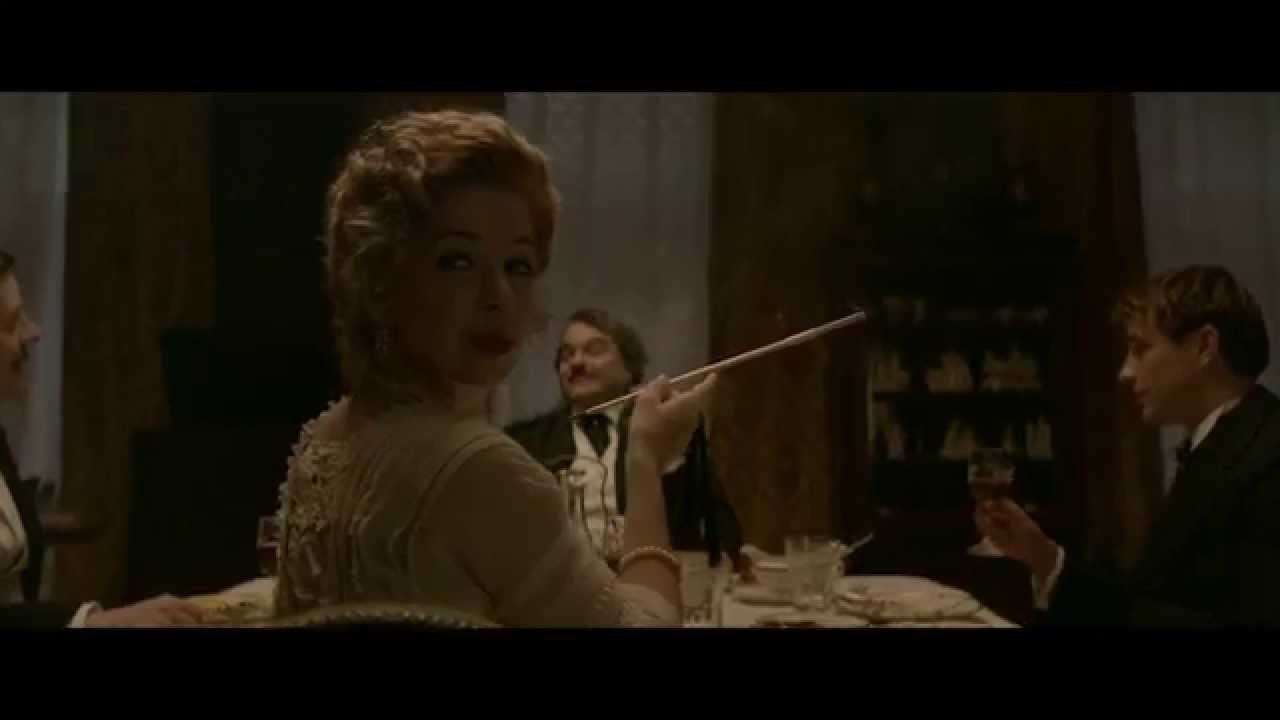
Set in 1910s Budapest, DEMIMONDE tells the scandalous story of Elza Magnas, a wealthy prostitute tangled in a messy web of lust. Her incredibly rich boyfriend, Max, keeps their relationship a secret, unaware that when he’s away, she’s sleeping with a much younger poet named Gregely. Her housekeeper, Rozsi, is also quite fond of Elza, and there’s a past between them that creates a thick layer of tension. When Rozsi hires a naive young maid named Kato (a breakout performance by Laura Dobrosi), things get even more complicated. Rozsi becomes obsessive and jealous when Elza and Kato develop a close relationship. At the same time, Max discovers Elza’s affair, and Gregely has fallen deeply in love with her, growing anxious that she’ll never leave Max. All the madness swells into pure chaos; someone is going to snap. But who? The neverending twists and turns will leave you guessing. Jam-packed with sex, drama, and betrayal, this film is a suspenseful blend of forbidden romance and passionate crime. DEMIMONDE remains sexy, while exploring love in its darkest, most fatal form. (In Hungarian with subtitles) – E.F.

Reklám
Tas J Nadas, Esq