A Hungarian-themed restaurant focusing on the Lángos-like ‘Smokebread‘ has opened in downtown San Francisco. The owners have long been influenced by the Central European cuisine.
Nick Balla, who reportedly has Hungarian roots, and Cortney Burns have long been experimenting with different cuisines of the world, working specifically with Asian and Central-European influences while using local ingredients. They utilized this technique in their previous restaurants ‘Motze’ and ‘Duna’ (Danube in Hungarian). It’s hard to compare the restaurant’s specialty with any Hungarian dish, including Lángos (fried dough). As you can see below, it’s a mixture of everything. While the dough is fried, it is potato-based and serves as a dipper for so-called spoon salads.
Balla says Smokebread will launch with a short menu of salads – called “spoon salads” – including “Duna salad” which is consists of red wine vinaigrette with salami and a salad dubbed ‘Sofia’ with add-ons like flatbread. Also, the sausage and lentil stew potentially have some Hungarian roots as well.
Budapest, 2018. július 6.
Szijjártó Péter külgazdasági és külügyminiszter (j) a Magyar Érdemrend középkeresztje kitüntetést adja át Éric Fournier francia nagykövetnek a Külgazdasági és Külügyminisztériumban 2018. július 6-án.
MTI Fotó: Soós Lajos
Outgoing French ambassador Eric Fournier has received Hungary’s Order of Merit, Commander Cross.
Foreign Minister Péter Szijjártó, who handed over the award, said at the ceremony that Fournier served in an era which had been perhaps the most intensive in world politics over the past few decades. Old alliances have been broken and new ones forged, so it is realistic to expect similarly intense trends to continue in the next few years, he added. “Allies and friends are much in need in the midst of current disputes, and Fournier has been such friend for Hungary,” he added.
Fournier said he tried to explain to his government what Hungarians are like and what the Hungarian reality is.
As we reported earlier, in a leaked confidential note, Éric Fournier made comments praising Hungarian PM Viktor Orbán’s migration policy. At first, many suspected this could be a major factor in his replacement by French president Emmanuel Macron. However, French news site Le courrier d’Europe Central claimed Fournier’s term would have expired anyway. When asked by the same outlet, the French Foreign Ministry denied the replacement had anything to do with the ambassador’s comments and confirmed that the nomination of Pascale Andréani, Fournier’s successor, had been planned for weeks.
Berlin, 2018. július 5.
Orbán Viktor miniszterelnök és Angela Merkel német kancellár sajtótájékoztatót tart találkozójukat követõen Berlinben 2018. július 5-én.
MTI Fotó: Koszticsák Szilárd
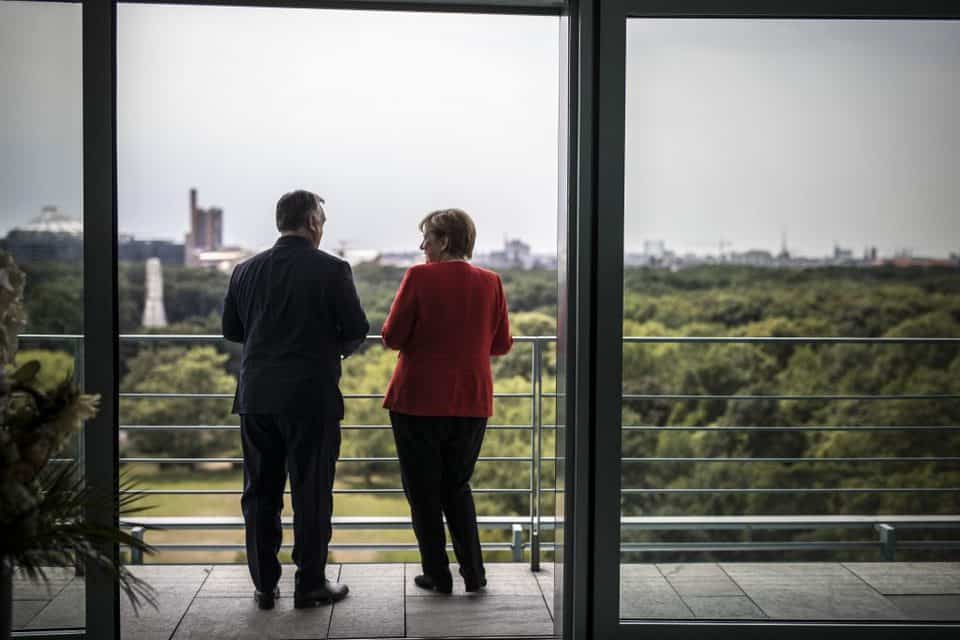
Hungary is taking a big burden off Germany’s shoulders by preventing anyone who enters Hungary from sidestepping the law, Prime Minister Viktor Orbán told a press conference held jointly with German Chancellor Angela Merkel after talks in Berlin on Thursday.
Orbán said Hungary had built a fence along its southern border to “regain control over its own territory”. He said a legal dispute was emerging around claims that the first point of entry for migrants to the EU was not Hungary but Greece, adding Hungary’s standpoint is that Germany should send migrants back to Greece. “We’re ready for that long-term dispute,” he said.
He said Hungary felt wronged to be accused of lacking a sense of solidarity when it went to great lengths to protect the EU’s southern border. Fully 8,000 armed people protect the southern border 24 hours a day. Migrants would immediately make their way to Germany otherwise, he added. Every day, 4,000-5,000 migrants would arrive in Germany were there no effective border controls, Orbán said, adding that this amounted to Hungarian solidarity.
“Our borders will remain protected in the future, too.”
He added that it was a strategic goal for Hungary to “protect Europe so that its internal markets continue to operate smoothly”.
Orbán said Hungary “sees the world differently” from Germany. Hungary’s view is that giving aid to migrants makes them conclude they are welcome to come over, he said. So help must be given at the point that it is needed, he said.
“We don’t want to import problems.”
“This is a difference in approach”, he said, adding, however, that this difference would not hinder cooperation.
As regards bilateral economic relations, Orbán said Hungary was building a labour-based economy with a view to reaching full employment. Hungary’s cooperation with Germany is especially helpful towards achieving this goal, he added. Bilateral investment and trade figures are “fantastic”, he said, adding that he and Merkel had discussed how to keep up this level of cooperation. Hungary and Germany will set up a working group with a view to intensifying bilateral cooperation in the area of innovation and technology, he said.
Trade turnover between the Visegrad Group (V4) countries and Germany is 50 percent more than Germany’s trade volume with France, Orbán said. “There’s a new reality unfolding before our eyes,” he said, arguing that the future of Europe’s economic growth lay in German-V4 cooperation. He said the two countries were in full agreement that both were interested in imposing the lowest possible tariffs.
Image: PM’s Press Office / Szecsõdi Balázs via MTI
On the topic of defence policy, Orbán noted that Hungary was among the first member states to recommend the implementation of a joint European defence policy and the creation of a joint EU defence force. Hungary wants to modernise its military “on a European basis”, and is ready to cooperate with Germany in this respect, he added.
In response to a question, the prime minister said a central European NATO command headquarters would be set up with German help, adding that Hungary was also in talks with other member states about its establishment. Hungary has signed framework agreements with German companies in connection with the modernisation of its defence forces. Cooperation between the two countries will be continuous, Orbán said.
On another subject, the prime minister noted that Hungary is the only non-German-speaking country which provides German-language education from kindergarten all the way to university. Hungary has a number of ethnic German kindergartens and schools, as well as German-language universities, he noted. The influence of these universities should grow and their activities should be expanded, Orbán added. The prime minister thanked Germany for its cooperation and its decades-old friendship.
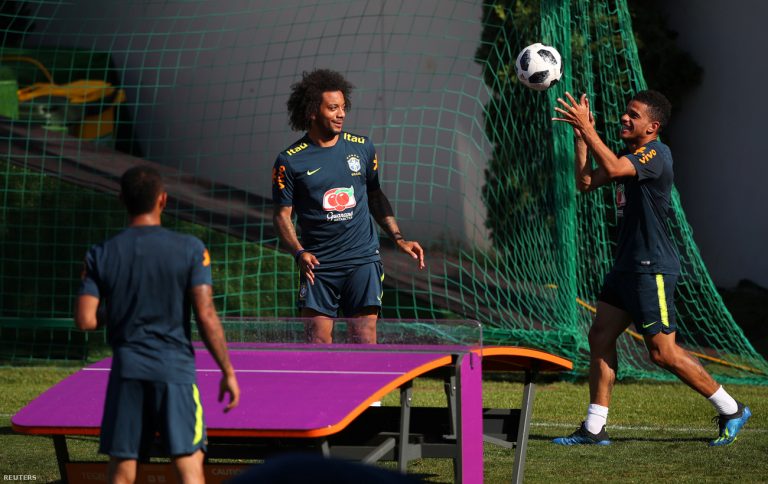
Teqball, a new football-based sport invented by Hungarians, has made it to the Football World Cup in Russia, as the Brazilian team, who are using the game as part of their training regime, have brought it to the tournament with them.
This is not the first time the Hungarian invention, developed by two Hungarian football fanatics, former professional player Gábor Borsányi and computer scientist Viktor Huszár, has received international recognition. Last week, Prince Albert II of Monaco tried the game in his palace: together with Teqball ambassador William Gallas, who plays for both the French national team and Chelsea, the His Serene Highness played against the Hungarian inventors.
Nor was he the only famous individual connect with the new game: in 2016, Brazilian superstar footballer (and former Teqball ambassador) Ronaldo de Assis Moreira, better known as Ronaldinho, arrived in Hungary to popularize the sport and film a commercial for the Hungarian company.
Below, you can watch a previous “All-Star” event in Monaco, where brand ambassadors Luís Figo and Simão Sabrosa played against William Gallas and Christian Karembeu:
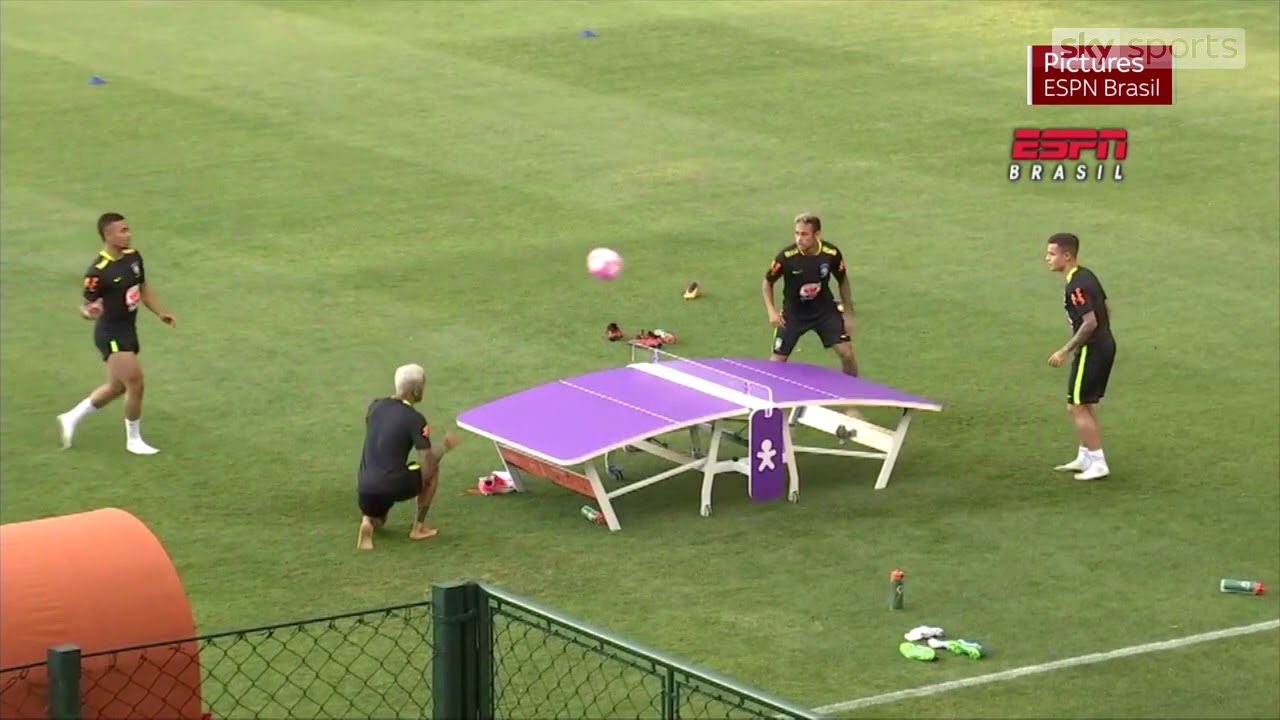
Teqball, the name for both the multifunctional sport equipment and the new, football-based sport played on it, looks like a curved ping-pong table at first sight; however, it can be used in much more ways than one may think. According to the game’s official website, it is a training tool for both professionals and amateurs to develop their technical, concentration skills, and stamina. For this reason, several professional clubs have already incorporated the use of teqball into their workout regimes, as well as three national football federations: the Brazilian, Croatian and of course the Hungarian.
Below, you can watch Neymar, Dani Alves, Philippe Coutinho and Gabriel Jesus take time out of Brazil national team training with a game of Teqball:
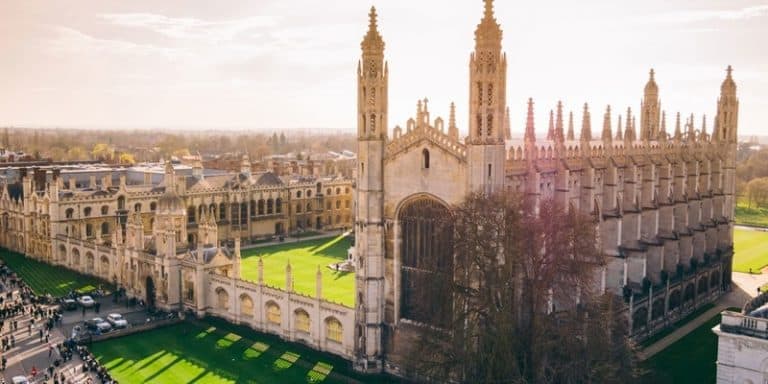
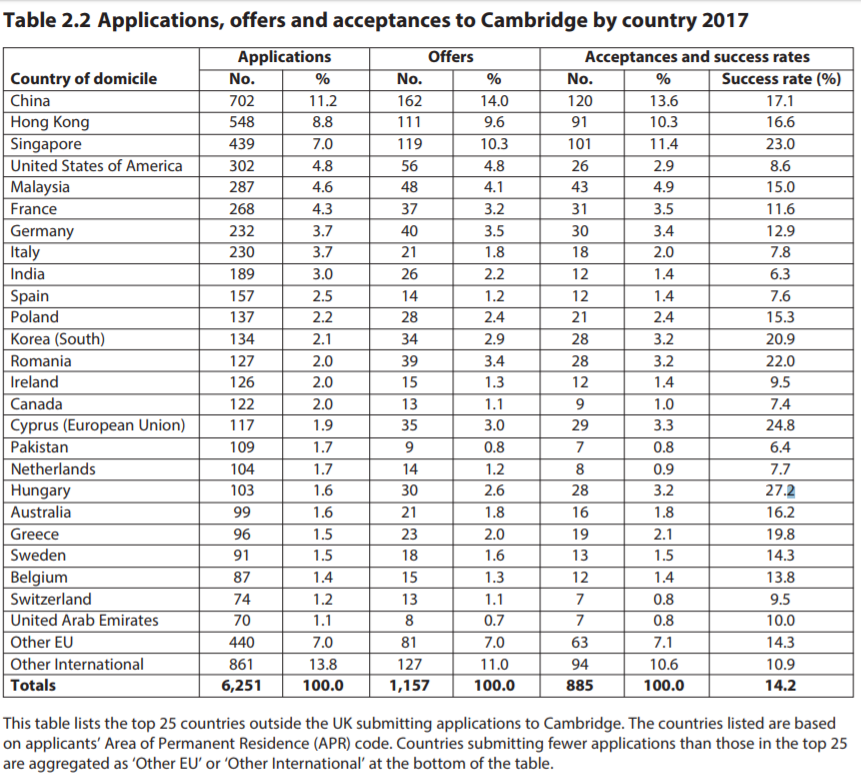
University of Cambridge is one of world’s top universities. After Oxford , it is the second-oldest university in the English-speaking world and the world’s fourth-oldest surviving university. Every year the institution publishes the data of its undergraduate admissions statistics by nationality and success rate. This year’s report shows that Hungarian students have been among the most successful undergraduate applicants in recent years.
In 2015 and 2016, Hungarian students had the second-highest acceptance rate,while this year they were first in this regard, with a success rate of 27.2%.
According to the paper, 28 of 103 Hungarian applicants have been accepted to the university. They are followed by Cyprus with 24.8 percent, and Singapore with 23.
Interestingly, Hungarian students even performed better than their British peers, 20.3% of applicants of whom were accepted to Cambridge. Only Northern Irish students exceeded the Hungarians, as their acceptance rate stood at 29.2 percent.
Hungary takes fourth place in the world’s obesity ranking, daily Népszava said on Saturday, on the occasion of European Obesity Day.
Citing data from the World Health Organization (WHO), the paper said Hungary’s obesity rate is strikingly high, at 28-31% among the adult population. The world ranking is led by the United States, followed by Mexico and New Zealand.
Being overweight is related to cardiovascular diseases such as hypertension, heart attack and stroke, Type 2 diabetes, several types of cancer and arthritic conditions, while it can also cause sleep apnea and respiratory problems, gallstones and depression, the paper notes.
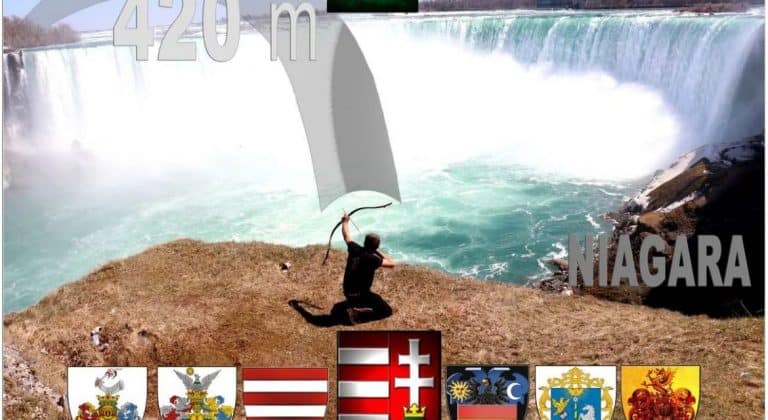
According to hungarianambience.com, after shooting across the Verecke Pass, Archer József Mónus this time tackled the Niagara Falls. “During the performance a beautiful rainbow has been formed above the waterfall, which pointed the way to my arrow. I’ve never seen such a beautiful natural phenomenon like that before” writes Mónus.
Mónus and his team visited the United States and Canada to take part in a cash prize event offered by the Hungarian Archery Association. “My son, László, in the extreme category broke my earlier world record! Now, the new world record in this category is 793 meters.”
“Overall, my two students’ – Kiara Prokaj, and László Mónus – world records in the 35 pounds category are unbreakable for at least 30 years. This is because we developed a style where the bow and the arrow are in perfect harmony with the shooter, which will be difficult to re-create on the world-class level by anyone.
We won’t use this technique often in the future because I wouldn’t like anyone to copy the style as we have developed it by putting tremendous amount of work into this new technique” writes Mónus.
Featured image: www.facebook.com/MónusJózsefLászló
Rev. Béla Bernhardt of Lakewood, OH, died on Thursday, May 3, 2018. He was 92. He was born on February 2, 1926, in Budapest, Hungary. In 1949 he married Róza Potsubay and together they had one son, Béla András. He enjoyed scouting his entire life, beginning in Hungary, in 1934, and continuing in Germany, Australia, and the United States. In 1951, in Sydney, Australia, he was the founder of Scout Troop 30 (Alexander Korosi Csoma) of the Hungarian Scout Association in Exteris, which is still active today. Rev. Bernhardt was ordained as a Lutheran pastor in 1955, in Adelaide, Australia. He faithfully served numerous congregations in Australia, Canada, and the United States, preaching the gospel in Hungarian, German, and English. The last two congregations he served were Saint Thomas and Gloria Dei in Cleveland, OH. Rev. Bernhardt is survived by his wife of 68 years, Róza, his son, Béla (Lois), his grandchildren, Éva and Marisa and Eli, Owen and Abigail DeTemple, his nephews, John, Paul (Iris) and Theodore Barath, and his sister in law, Éva Potsubay. He was predeceased by his parents, Tivador and Maria (Kerestes) Bernhardt, his sister and brother in law, Janka and John Barath, his niece, Esther, and his brothers in law, Viktor and Adam Potsubay. A funeral service will be held at the Hungarian Reformed Church West Side, at 15300 Puritas Avenue, Cleveland OH, at 11:00am on Friday, May 18, 2018. The family will receive family and friends beginning at 10:00am. A private interment will occur at a later date. Memorial donations may be made in his name to the American Hungarian Evangelical Conference (18493 High Parkway, Rocky River, OH 44116) to support the continued distribution of his Hungarian Lutheran publication “Eros Var” (“A Mighty Fortress”).
In his talk on European identity and migration at the conservative think-tank, Szabó said Hungary’s constitution expresses the will of Hungarians and their conviction that Hungary is a Christian state that has been around for a thousand years.
“That matters.”
The wording of the constitution concerning its Christian foundations “is not exclusionary; it is not directed against anyone. Rather, it is the expression of self-determination.”
Judith Sargentini, the Green Party’s rapporteur, said the European Parliament’s Committee on Civil Liberties, Justice and Home Affairs had examined not only how EU legislation is implemented in Hungary but also how the fundamental rights of Hungarians are enforced and how the state treats its citizens.
István Újhelyi, an MEP for the opposition Socialists, called it regrettable that “the Fidesz government representing Hungary has to give an explanation over and over again for its policies that dismantle democracy and the rule of law and go against common European undertakings.” He called it “pathetic” that officials of the Hungarian government and its MEPs had only managed to come up “with empty propaganda sound bites instead of sound reasoning” in the debate while “holding up the entire Hungarian nation as a shield” to protect themselves. “Shadow rapporteur” Roberta Metsola of the EPP addressed the issue of Hungary’s law on foreign-supported NGOs, saying it had had a huge impact on their operations and violated EU values.
Social Democrat Josef Weidenholzer said the issue of the rule of law in Hungary had long been on the agenda and now was the time to act. He said liberal democracy was in grave danger, adding that without liberal principles, democracy was an empty vessel. Marek Jurek, a representative of the European Conservatives and Reformists, said Hungary’s government was pillorised for issues which other EU member states had escaped censure. He cited minority rights, saying that Hungary had done more to improve the situation of the Roma than many other European countries.
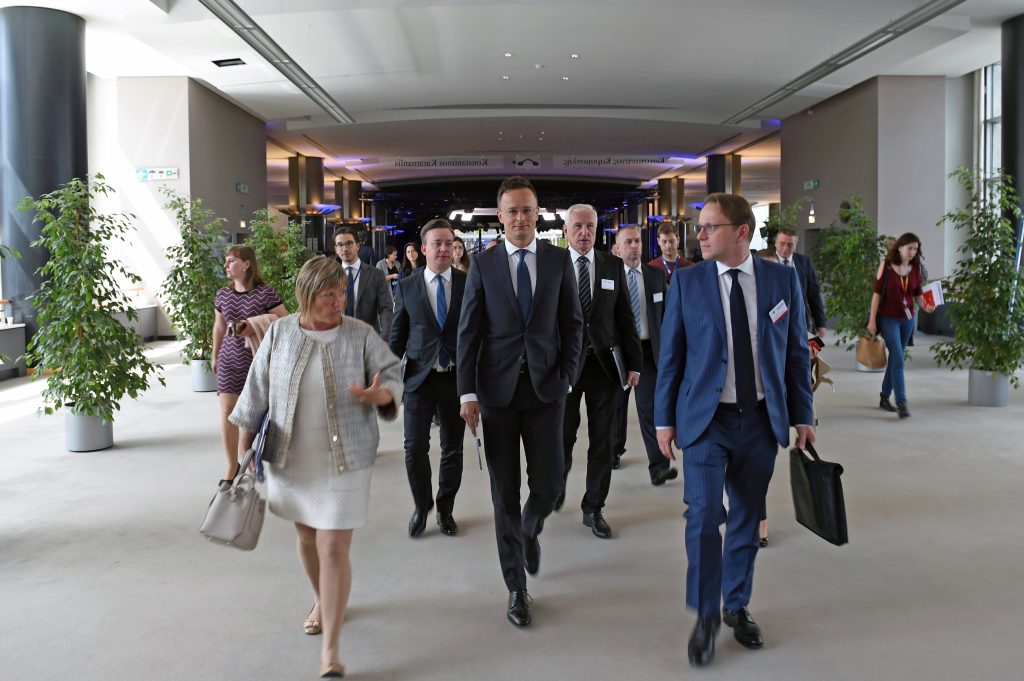
FM Szijjártó and the Hungarian delegation after the LIBE hearing in Brussels. Image: KKM.
MEPs may submit amendments to the draft by mid-May, and the EP committees on constitutional affairs, culture and education, budget control and women’s rights will attach their opinion. The report is expected to be put to the vote in June and will go before an EP plenary in the autumn. It is at this point that Article 7 may be launched against Hungary for violating the rule of law.
Iverna McGowan, AI’s Head of European Institutions Office and Advocacy Director, stated concern over Hungary’s “Stop Soros” bill, which she said would lead to the closure of NGOs like AI and the Hungarian Helsinki Committee “that protect human rights and people’s freedom”. She stated solidarity with Hungarian people, particularly with those “who address the causes of freedom, justice and the rights of marginalised groups”.
Hungarian Foreign Minister Péter Szijjártó in response told MTI that AI “is a political player that openly participated in Hungary’s election campaign, openly calling for a vote against the incumbent government and siding with the opposition before finally suffering an ugly defeat.”
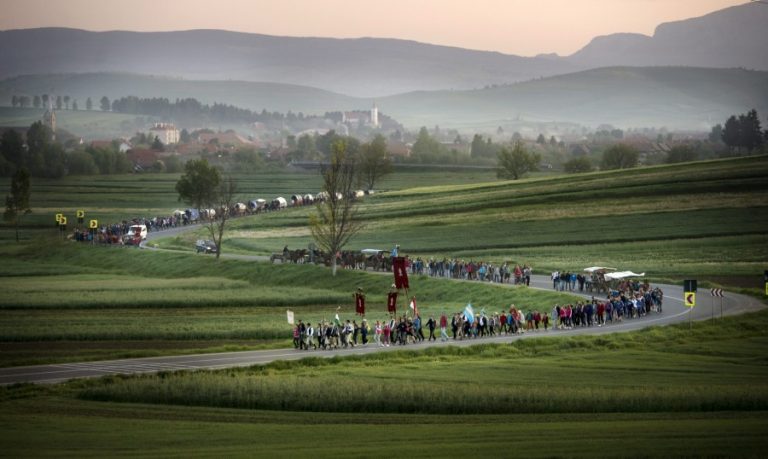
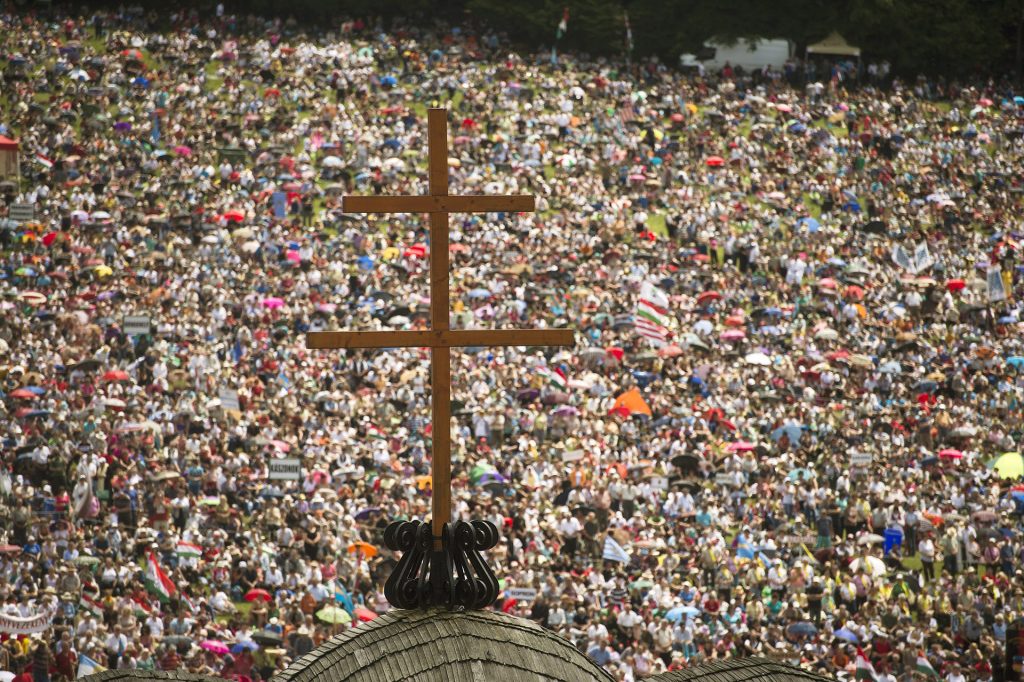
Pilgrims on their way to Csíksomlyó (Şumuleu Ciuc). Photo: Koszticsák Szilárd/ MTI.
Each year during Pentecost, tens of thousands of pilgrims flood the center of the Csík-basin– and the roads that lead to Csíkszereda and Csíksomlyó within it- who come in the most diverse ways to the district’s Franciscan church to honour the miraculous Virgin Mary statue: by car, by bus, by train, and last but not least, they come by wagon and foot to gather at the Somlyó mountain. Travelers can experience a unique meeting of religious tourism and pilgrimage in the Csík Basin to celebrate the coming of the Holy Spirit.
The Csík Basin (Csíki-medence) is an inter-mountain basin of the Eastern Carpathians situated in the heart of Transylvania (modern-day Romania), and boasts an altitude of approximately 700 meters. Found in Harghita county, Csíksomlyó is the site of the famous Maria Shrine of the Catholic Szeklers, a centuries-old center of spiritual life and a place of pilgrimage. The enchanting natural surroundings of the town, between the Harghita Mountains and the Csík alps, await the crowds of pilgrims every year.
The earliest mention of the settlement was in 1335, as Sumlov. The gothic church located there was built by Franciscans in the 1440s, and was consecrated in honour of Our Lady of the Visitation in 1448. Throughout the turbulent years of history, the church has undergone many changes; it gained its modern appearance at the beginning of the 19th century, and the town and the Franciscan community have remained spiritual centers throughout the years. Here is where they keep the statue of the Virgin Mary, Csíksomlyó’s most valuable treasure, which some claim is the world’s largest shrine, with its height of 2.27 meters.
Pilgrims on their way to Csíksomlyó (Şumuleu Ciuc). Photo: Koszticsák Szilárd/ MTI.
No written records exist of the statue’s construction and history, but judging by its style it is a Central-European Renaissance work, carved of linden wood, coated with plaster and paint, that has been restored several times over the centuries. The statue depicts a woman clothed with the sun, with the moon under her feet, her head surrounded by a wreath of twelve stars, with her right hand holding a scepter, and her left holding baby Jesus. According to believers, the Virgin Mary has performed many miracles for them over the centuries.
In addition, it is a widespread faith and tradition, that touching or caressing the miraculous statue will bestow grace and allow the Virgin Mary to hear the prayers of the faithful. This is also common practice in many other places of pilgrimage in the world, such as Lourdes, where the cave statue of the Blessed Mother had to be placed higher due to constant caressing and kissing by visitors; now France allows believers to access only the rock beneath the statue. Another custom in Csíksomlyó that has been around for centuries is the dressing up of the statue. The locals sew decorative clothes for Mary and her child annually, and dress them according to the liturgical period.
Centuries of History
The Csíksomlyó pilgrimage and the local sacred rites look back onto a history that goes back hundreds of years. The first written records are sacred in nature, related to the special worship of the sun on Somlyó mountain. Only the faintest traces of the memories and traditions of the period prior to the “pilgrimage history” remain at the site: one of the most interesting of these “time capsules” is the Moldavian Pentecostal tradition of looking into the sun at dawn.
During the ritual, the Csángó usually go out to the Salvator chapel before sunrise, where they stay until dawn praying and talking. About an hour before the emergence of the sun they line up along the eastern slopes of the mountain, where they sing loudly while awaiting the celestial body. Following this, they stare rigidly into the blinding light through smoked glass, handkerchiefs, the tip of a headscarf, or sunglasses, for several minutes. Whoever, among the gathered, sees anything, will share their “vision” out loud, which is interpreted by the others, and expanded on with their own associations. According to the belief of the Moldavian Csángós, on Pentecost morn, the Holy Spirit can be seen in the form of a flying dove, and the figures of Jesus and the Virgin Mary – as well as other holy apparitions- can be seen in the sun rising over the eastern slope of the Kis-Somlyó mountain.
The Immaculate Virgin shrine holding the infant Jesus Christ. Image: jobbikit.hu
Regardless of this, the pilgrim-tsunami does not purely amass to worship the sun during the Csíksomlyó ‘Indulgence’ (the direct translation of the Hungarian word “Búcsú”), because after all, an indulgence cannot occur without a church; when members of the Franciscan Order settled in Csíksomlyó in the 1440s, their first task was to build a monastery and a church. Likewise, respect for the Blessed Virgin Mary also became rooted in the people of Csíksomlyó with the Franciscan settlement. It was custom to pay respects during the interim Marian feast days, and even members of the faith from neighboring towns would come to greet and worship the Blessed Mother. In 1444, Pope Eugenius IV encouraged members of the faith to continue to practice the ritual, and to offer indulgences to those who helped build the town church. Marian devotions became even more commonplace when the Gothic church gained the statue of Mary in the early 1500s. Thus, the congregation felt that the Blessed Mother is truly with them and living among them.
The culmination of the Pilgrimage occurred in 1567; many consider it the “start” of the Csíksomlyó Pilgrimage. It was then that János Zsigmond, Prince of Transylvania, wanted to impose the acceptance and practice of the Unitarian faith upon the Catholic Szekler population with force. Unwilling to accept this, the people of Gyergyó, Csík and Kászon 1567 gathered in Csíksomlyó on Pentecost Saturday, and they prayed to the Virgin Mary for intercession and protection of their faith before departing for battle . The battle ended with a victory for the oppressed, and after their return, they gave thanks to God and the Virgin Mary for help in Csíksomlyó. The Szeklers then vowed, that in honour of the event, they will make a pilgrimage to this holy place to pay their respects on Pentecost Saturday every year. The great pilgrimage faithfully continues to this day, and has for 451 years.
A symbol of the Hungarian solidarity
Today, the statue attracts such large crowds on Pentecost, that they cannot all fit in the church or even the square in front of it. The number of visitors has been estimated at 200-250,00 in recent years, and the ‘Indulgence’ pilgrimage has become a symbol of Hungarian solidarity over the past decades.
Pentecost Sunday celebratory Mass in the ‘saddle’ between the small and large-Csík mountains. Photo: Koszticsák Szilárd/ MTI.
According to the Búcsú schedule, the main ceremony will begin on Pentecost Saturday, the main event being the afternoon celebratory Mass at the Hármashalom altar, located between the Small and Large-Csík mountains in the ‘saddle’ (a valley named for the object it resembles) . The majority of pilgrims will have already arrived at Csíkszereda the previous day, while the locals join in on the morning procession to the “Jesus-hill” peak. The journey consists of several kilometers of marching. Bouts of song are wont to ring out, including the “Blessed Virgin Mother … forget not the poor Hungarians” and the Szekler anthem, with the well-known closing line, “Don’t let Transylvania be lost, Our God!“.
Following this, they proceed with an irregular mass schedule until Sunday , during which the shrine church and chapels can be visited any time, and night vigils and community prayers are held, as well as a ‘dance house’ (táncház) in Csíkszereda, where the pilgrimage visitors can be together and get to know each other.
This year, Pentecost falls on Sunday, May 20th. Upon the Csíksomlyó Jesus-hill, Christian Hungarians will bear witness to the symbolism of the Búcsú, confess their faith, and express their unity.
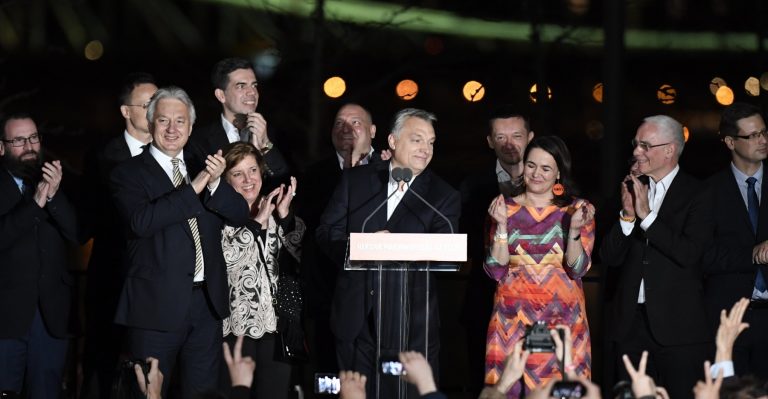
Following months of brutal political campaigning, Prime Minister Viktor Orbán’s ruling Fidesz-KDNP coalition has emerged as the clear winner of Hungary’s 2018 parliamentary elections.
Voting began at 7 o’clock this morning, and continued over the course of the day until polls closed at 7pm CET. With 98.5% of votes counted, Fidesz-KDNP is on track to win 133 seats in Hungary’s 199-member parliament, in what has amounted to a crushing blow to the country’s numerous opposition parties.
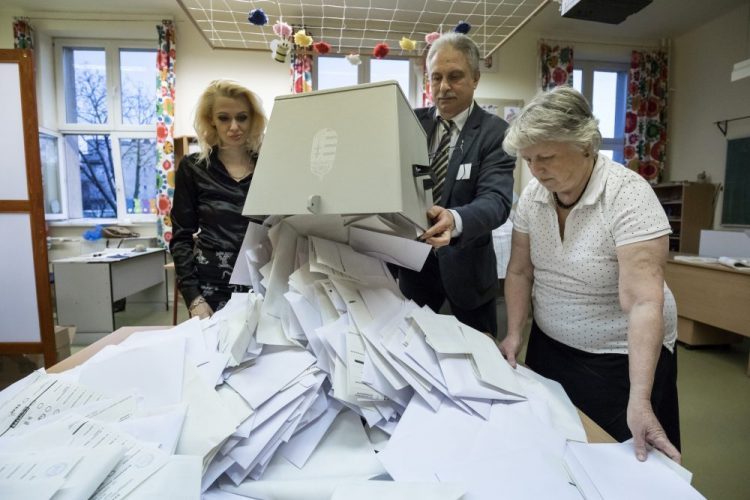
Election officials emptying voting urns (Photo: MTI – Balázs Mohai)
Trailing behind are the formerly far-right Jobbik, with 26 projected seats, MSZP-Párbeszéd, with 20, former PM Ferenc Gyurcsány’s Democratic Coalition (DK) with 9, and the green party LMP (Politics Can Be Different) with 8. Three remaining parliamentary seats are set to be filled by a member of Együtt (Together), an independent candidate, and the National Self-Government of Germans in Hungary respectively.
Fidesz won 48.51% of the country’s national list votes, garnering it 42 seats, and in addition won an astounding 91 of 106 individual districts as well.
Speaking to his supporters from a watch party held in Budapest’s Bálna event center, Orbán claimed that his win was the conclusion of a “great battle” for Hungary’s future, and that he and his supporters had “defended” the country.
Hungary’s opposition parties have reacted with obvious disappointment and dismay at the day’s election results, with several party leaders and prime ministerial candidates announcing their resignations in response to the day’s disappointment.
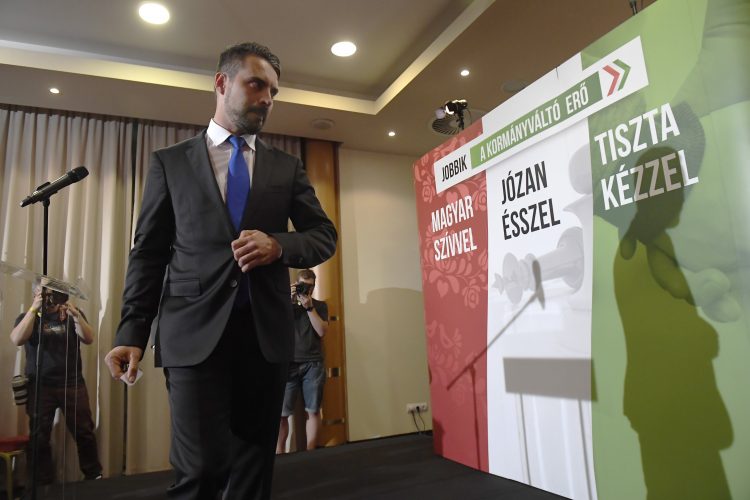
Despite the fact that his party had won the second-highest number of parliamentary seats, Jobbik PM candidate Gábor Vona expressed his disappointment with the day’s results, and announced his resignation as party leader.
Jobbik leader Gábor Vona at a press conference where he announced his resignation as party leader (Photo: MTI – Tamás Kovács)
Thanking supporters, Gergely Karácsony, PM candidate of the left-wing MSZP-Párbeszéd alliance, also expressed his dismay at the election’s outcome. Analyzing the situation, the liberal politician argued that the Hungarian left “must be rebuilt from the ground up”.
In addition, MSZP’s national board has tendered its resignation in light of the result of Hungary’s general election, Gyula Molnar, the party’s leader, announced. Molnar said the party acknowledged the will of the voters and considered themselves responsible for the outcome of the election.
MSZP-Párbeszéd PM candidate Gergely Karácsony (left) with MSZP leader Gyula Molnár (Photo: MTI – Zoltán Balogh)
While acknowledging Fidesz’s victory at a press conference, LMP leader Bernadett Szél emphasized that “this does not mean that we will give up the fight.”
Szél, who is also the party’s co-leader, insisted that it was not the party’s programme that should be changed in light of the result that handed Fidesz a resounding victory, “but rather the way it is communicated to voters”.
LMP leader Bernadett Szél (center) at her party’s Budapest press conference on Sunday (Photo: MTI – Zsolt Szigetváry)
“We have achieved a better result than four years ago,” she said, vowing to fight “twice as hard for Hungary”.
In addition, Akos Hadhazy announced his resignation as the party’s co-leader.
Ferenc Gyurcsany, leader of the Democratic Coalition (DK), said after Fidesz’s resounding victory that the election had brought about a defeat for a “European, open Hungary”. He said he had been “more optimistic” early in the evening but now “the only open question is whether Fidesz will secure a two-thirds majority” after all votes have been counted.
DK leader Ferenc Gyurcsány (right) (Photo: MTI – Tibor Illyés)
An “unbridled” Fidesz with a two-thirds majority would continue to pursue a policy of “unbounded aggression and inhumanity”, he said, adding, however, that he was pleased DK had managed to secure an independent group in parliament for the first time and that it had doubled the number of its seats.
One of the most important factors in today’s vote was a record-breaking voter turnout. Approximately 69% of voters participated in the elections, nearly eight percentage-points higher than the last parliamentary elections of four years ago, and the highest since 2002, when the first Orbán government was defeated by MSZP.
Today’s election marks the end of a long, extremely negative campaign season. Over the course of the few years (and particularly in the months leading up to the election), Orbán and his Fidesz allies grew increasingly strident in their political campaigns attacking migrants, Muslims, the European Union, the United Nations, and, of course, Hungarian-American billionaire George Soros.
This election season has also seen Orbán’s ruling party hounded by a series of corruption scandals, These included a controversial hunting expedition undertaken by Deputy PM Zsolt Semjén, a strange 4.35 billion euro bond deal involving Fidesz minister Lajos Kósa, and, perhaps most notably, extended allegations of corruption surrounding EU lighting contracts awarded to a company partially owned by István Tiborcz, Prime Minister Viktor Orbán’s son-in-law.
Reporting by Tom Szigeti
Additional information via MTI, Magyar Nemzet, index.hu, 444.hu, mandiner.hu, and the Associated Press
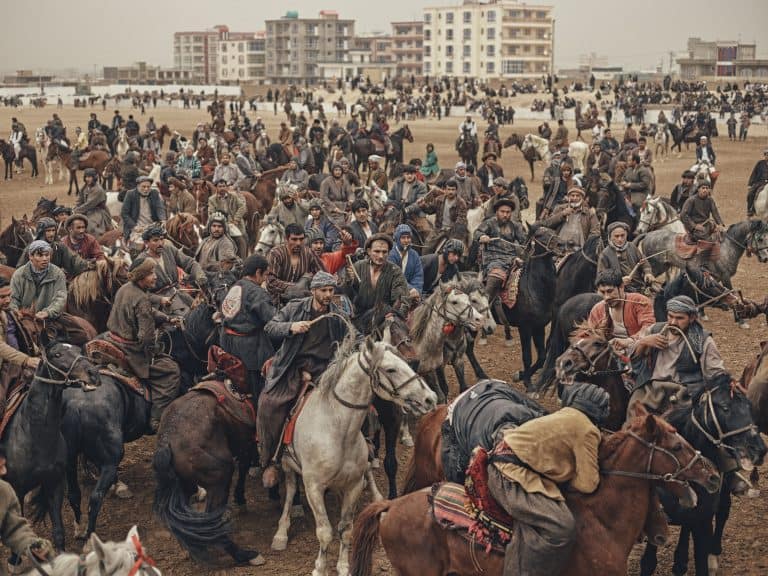
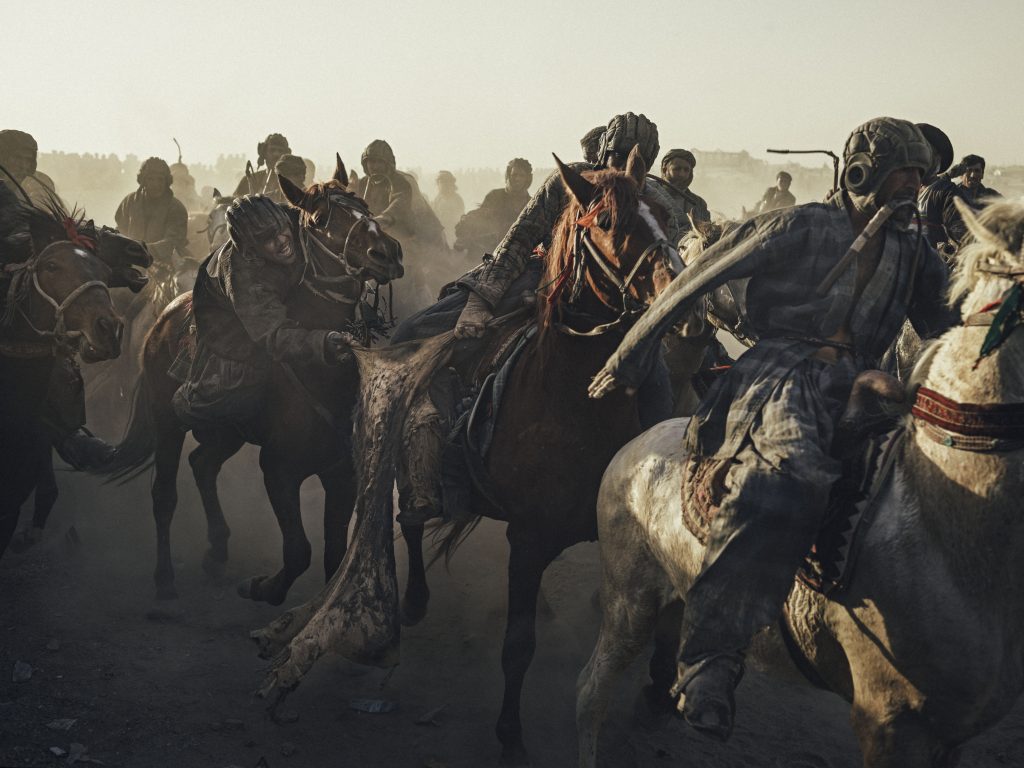
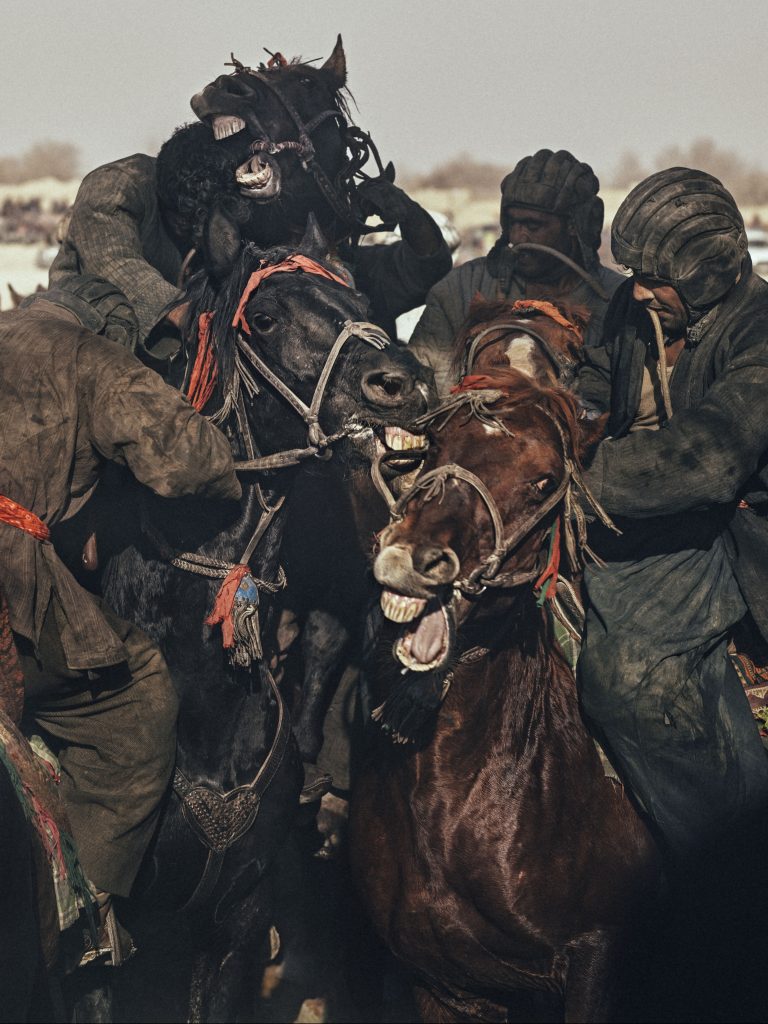
Horsemen fight for a headless calf carcass during a buzkashi match on the day of Nawroz, or Persian New Year, in Mazar-e Sharif, Afghanistan on March 21, 2017.
Horsemen fight for a headless calf carcass during a buzkashi match on the day of Nawroz, or Persian New Year, in Mazar-e Sharif, Afghanistan on March 21, 2017.
Each year, the Professional competition of the Sony World Photography Awards draws a huge variety of inspiring, engaging and emotional photography from around the world. This year, for the eleventh photo contest, 320,000 photographers sent in their materials from 200 countries around the world.
Three Hungarian photographer’s works were shortlisted and Balázs Gárdi, who started his photography career at the closed left-wing daily Népszabadság, has won one of the 10 professional categories, the Sports category, with his photo series titled ‘Buzkashi.’
Buzkashi is Afghanistan’s violent and ancient national sport, in which riders battle for control of an animal corpse that they carry toward a goal. Sixteen years after the U.S.-led invasion that ousted the Taliban, the sport is dominated by rival warlords who will do anything to maintain power in a turbulent country that once again is up for grabs.
Gárdi, who is currently live in the US, has appeared online and in print around the world, including Google, Harper’s, National Geographic Magazine, WIRED, Newsweek and The New York Times.
Gárdi devoted over a decade to capturing the landscape of the war in Afghanistan, as well as the far-reaching consequences of the global water crisis. His dispatches from the Afghan front-line earned him the Bayeux-Calvados Award for War Correspondents, while his stories from the “water front” also received numerous honors, such as the Global Vision Award from Pictures of the Year International.
Budapest, 2018. április 19.
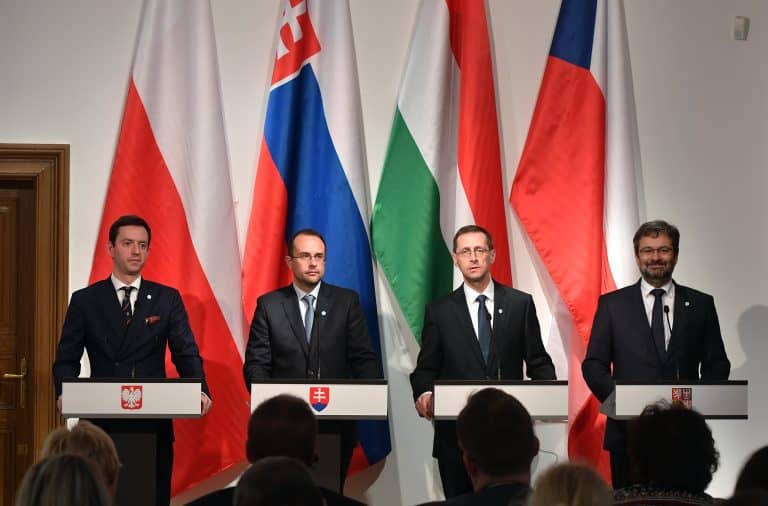
Marcin Ociepa lengyel vállalkozási és technológiai miniszterhelyettes, Rastislav Chovanec szlovák gazdasági miniszterhelyettes, Varga Mihály nemzetgazdasági miniszter és Vladimír Bärtl cseh ipari és kereskedelmi miniszterhelyettes (b-j) a V4-ek gazdasági minisztereinek találkozója utáni sajtótájékoztatón Budapesten a Várkert Bazárban 2018. április 19-én.
MTI Fotó: Máthé Zoltán
MTI Fotó: Máthé Zoltán
Economy ministers of the Visegrad Group (a grouping which comprises the Czech Rep., Hungary, Poland and Slovakia) signed a memorandum of understanding on cooperating in the area of industrial policy in Budapest.
The MoU was signed by Economy Minister Mihály Varga, Czech Deputy Minister of Industry and Trade Vladimir Bärtl, Poland’s Deputy Minister of Entrepreneurship and Technology Marcin Ociepa, and Slovak State Secretary of the Ministry of Economy Rastislav Chovanec.
“It is our goal for the region to become a flagship for the development of robotic and artificial intelligence in the coming decade,”
Varga said at the signing ceremony. He said the MoU was about raising V4 industrial policy cooperation to a new level, creating a common platform for managing manufacturing-commerce links, as well as harnessing advances in digital technologies, Industry 4.0 and the spread of robotics, which, he added, require continuous flexibility at European and global level.
Varga said one aim was to increasingly merge V4 industrial policies via the spheres of automotive and mechanical engineering. Many types of cooperation in specialist areas particular to the region’s strengths remain untapped, and production segments in the automotive industry can be shared, he added.
Minister for National Economy Mihály Varga with Polish counterpart Marcin Ociepa (l3), Czech Vladimír Bärtl (l4) and Slovakian Rastislav Chovanec (l5) in Budapest. Photo: Máthé Zoltán/ MTI.
In recent years, the average growth rate in the Visegrad countries has surpassed that of the EU, Varga said, noting EU growth of 2.4% last year as against the V4’s 4.3%. The region’s economies are catching up with the EU and gaining economic weight in the process, he said. “It is the joint task of the Visegrad governments to support access to regional and global markets for promising SMEs operating in the region,” he added. The European Competitiveness Council (COMPET) aims to boost industry’s contribution to economic output to 20% of the total, an initiative the V4 countries back and aim to build on, Varga said. The minister said Hungary backs the initiative to connect the V4 capital cities, Warsaw, Prague, Bratislava and Budapest with high-speed rail.
The heads of the V4 countries’ statistical offices also signed a cooperation agreement at the meeting in Budapest on Thursday.