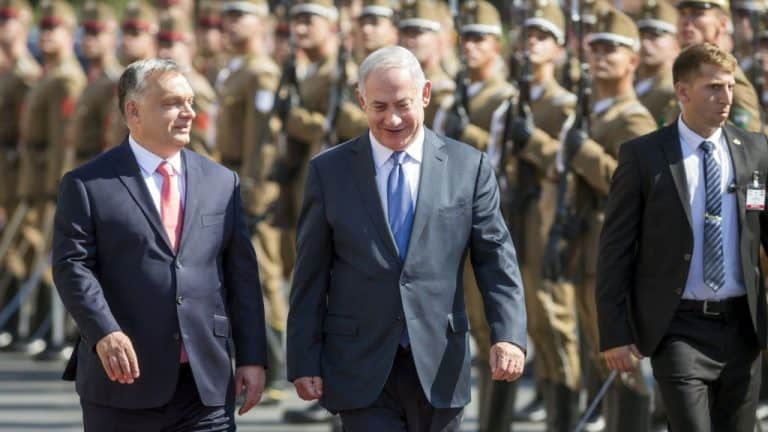
Prime Minister Viktor Orbán greeted Benjamin Netanyahu, his Israeli counterpart, in a letter on the occasion of Israel’s Independence Day, Orbán’s press office reported.
In his letter, Orbán referred to the “broad and successful” cooperation between Hungary and Israel, and said that Netanyahu’s Budapest visit “of historic importance” last year was a highlight of that partnership. Orbán spoke highly of progress in bilateral and Visegrad Four-Israel projects, and assured the Israeli PM of Hungary’s commitment to further strengthen political, economic and cultural relations.
Hungary is proud of its Jewish community as well as Hungarians living in Israel, as “the strongest pillars” in bilateral cooperation, Orbán wrote in his letter.
HOLLYWOOD—24 March 2018. Hollywood International Independent Documentary Awards (HIIDA) has granted Awards of Recognition in two categories: Feature and Director for the Hungarian documentary DAUGHTER OF THE REVOLUTION and its director Tünde Tálas (July, 2017). The winning documentary is the story of a child survivor of the tragic 1956 Hungarian Revolution. The child becomes a refugee in America and ultimately an award-winning translator. Peter Hargitai, winner of the Landon Translation Prize from the Academy of American Poets, travels back to Hungary with his adult son 60 years later to recover his past. He reflects what it was like to be a child witness to man’s inhumanity to man, how seeing violence and death affected his life, and how, as a refugee, he had to learn to build bridges between languages, peoples and cultures. And how he had to write DAUGHTER OF THE REVOLUTION not only to rid himself of his demons but to regain his faith in humanity, and at the same time pay tribute to the brave women, some as young as 14, who had taken their fight for freedom to the streets of Budapest. He recalls the mass demonstrations, the massacres, and what it was like to be an innocent bystander caught in a crossfire: a metaphor for all child victims caught in the crosscurrents of violence and political strife. But his is also a story of a refugee who finds humanity beyond borders and nationality. Under the artful direction of Tünde Tálas scenes from the author’s book are animated and weaved into the narrative to bring history to life. Her film is structurally innovative, enriched by original scores and informed by historical and personal motifs that resonate with young people today who are starting their own revolution against violence. The lessons from the students of Budapest are both timely and timeless. This is the first time Hollywood has awarded a documentary about the Hungarian Revolution against Russian aggression.
Peter Hargitai First Poet Laureate of Gulfport Senior Lecturer, Retired Department of English Florida International University
It was a cloudy day and the sky was gray and dismal. Heavy rain seemed imminent. Cold breezes whispered between the branches of largely bare trees, save for a few valiant early leaves.
The village was quiet. Aside from a few birds fluttering along the rooftops of the cottages, there was little movement in the community. Even the animals, mostly situated in small pens and barns behind the cottages, seemed hushed.
It was early afternoon, at a time when people usually would be out and about, going about their typical Friday business. Today, however, was special. Folks remained in their homes and, unless completely necessary, didn’t associate with one another for a good portion of the afternoon. Grandmothers stayed to themselves in the corners of the cottages, praying fervently under their breaths. Mothers busied themselves in the kitchens, preparing for the days ahead while gently shushing their excited children. Fathers were mostly out back alone, hidden from street view, eying their animals warily in the unusual midday quiet.
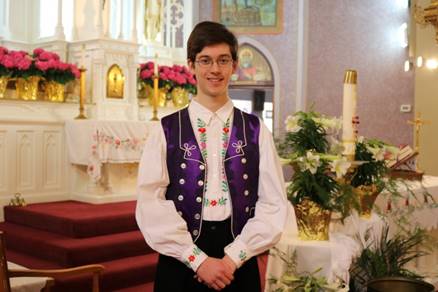
George was fifteen — a budding young man and a source of pride for his family. He was tall and somewhat lanky, with messy brown hair and a determined composure. His daily attire was ordinary and fitting for a peasant boy like him: a white shirt with wide, puffy sleeves and quarter-length buttons, and a pair of slightly dirty, light woolen drawers. Hugging his drawers were a pair of muddy black boots, George’s Sunday best, that he really shouldn’t have been wearing on just any Friday. On this particularly chilly day, George also wore a light brown sheepskin coat over his shirt to keep him warm, and a flat-topped, gray woolen cap pulled over his ears.
George was one of the few shepherd boys of the village. On his regular work days, he would wake up early and guide the sheep of the neighborhood out into the surrounding fields for grazing, where he would spend his time sitting on the grass of the valleys and the hills, playing tunes on his wooden flute and admiring nature’s work.
Nobody really wanted their sheep taken out today. After all, it was Good Friday. For at least the time between 12:00 and 3:00 pm, silence was required and work was to be kept at a bare minimum level.
In fact, George was supposed to be in his cottage with his mother, father, and sister, but through some careful convincing talk and with support from his father, George had gotten his mother to let him go out to roam the village. Even George could not deny that his heart was in the outdoors. His upbringing and occupation already had that lasting impact on him.
Now, George crunched and squelched through the muddy pebbles of the main village road, trudging past old wooden carts and his neighbors’ homes. Though the weather was unpleasant, George felt content. He consciously drew in a few deep breaths of clean rural air as he walked, savoring the moment.
While passing the village church, George saw Father Stephen crossing from the priest’s house over toward the church. The young reverend was dressed in a long black robe and had a wooden cross around his neck. Recently Father Stephen had shaved his growing beard. George rather liked the new look.
Father Stephen noticed George. Without saying a word, the priest waved kindly in the boy’s direction. George smiled and waved back. Father Stephen wasn’t too old of a priest, and George, as a child, had grown to know him quite well. Now, Father Stephen was as much of a brother to George as it was possible for a priest to be.
As Father Stephen entered the church, George realized he had no destination in mind. Without thinking about it, the wooden cross on the hill overlooking the village in one direction and the Carpathian Mountains in the other came to mind. George focused on the thought intently as he walked. It was Good Friday… he might do well to pay his respects to the Lord.
The walk to the wooden cross proved longer than George remembered it should. Once George passed the final cottage at the end of the village, he had to rely on his own sense of direction and the small dot on the hill in the distance that he knew to be the cross. The previous days’ rain had made the ground soft and under his boots it shifted to the sides as he walked… it wasn’t long before George’s boots had turned from shiny black to scuffed and dirty brown. It was one of his greatest faults, his mother said, not taking care of his boots. Nevertheless, George kept walking, his shepherd’s soul enjoying the world around him.
After what seemed too long, George felt the ground under his feet begin to tilt upward. He had reached the hill. At the top, George could now clearly make out two crossed wooden beams.
As he climbed, George realized that he wasn’t sure if he had his flute, which he always carried with him. Fumbling in his coat pockets, George was relieved to feel the small, smooth wooden pipe.
Not long after, George reached the top of the hill. He walked slowly towards the wooden cross, which he had visited before during his shepherd rounds yet never seriously examined.
The cross and its structure was about eight feet tall. It featured two wooden beams with an upward curving arc positioned over them, sort of like a rooftop. On the beams was a wooden, painted, crucified Jesus, with his head bowed and his eyes closed. Above Jesus’ head was the traditional INRI sign, and below his feet, at the base of the cross, a very small gate and an iron fence around the pedestal on which the cross stood.
The base of the cross and the pedestal itself featured several words carved into the old wood: “Our Savior at Calvary, watching over our village, March 1900. Father Daniel, who rebuilt our village church, is buried here.”
George had never noticed the date written on the base of the cross before. He was amazed that the cross was in such good condition after twenty-four years in the elements.
George gazed up at the painted face of Jesus. It was artfully done. Jesus seemed to radiate emotion. George tried to grasp the feelings of Jesus at that moment, unsuccessfully. There was a strange mixture of pain, completeness, determination, and despair. The most prominent emotion that emanated forth, however, was love.
Pure love.
George could feel Jesus’ love in him. Wide-eyed and amazed, the boy slowly came to his knees. Without thinking, he pulled his flute from his pocket. It was decorated with a few folk motifs and made of a deep-colored wood. George put the flute to his mouth. He would play a tune for the suffering Lord.
Solemnly, George blew into the pipe, playing one of the age-old folk songs of his village. The tune was slow and melancholy, but George felt that he was doing the right thing. He played flawlessly and sweetly…
…until his vision went black and the high-pitched tune became low, foreign, and monotone.
Dazed, George slowly regained his vision. Replacing the gray and green coloration of the Carpathian hill was a sandy, rocky beige and brown. George could hear cries, jeering, and sobs around him, complemented by the sound of an ancient horn being blown in the distance. Looking up, he was unexpectedly stunned by the light of the sun.
When he recovered, he was stunned yet again, and even more.
George was looking at a man — a crucified man — hanging limply on a large, bloody wooden cross. The man was pierced with nails through his feet and hands. His body was ravaged from flogging. He had a crown of thorns on his head. Above him, an INRI sign hung — spelled out.
Jesus, gasping for air, trembled in pain. Then, hanging limply once more, he looked at George. George was speechless.
The boy felt that pure love.
Jesus smiled faintly, clearly suffering. From his right eye, a single tear fell, hitting the dry ground before George silently. George stared up at the Lord, frozen in time, paralyzed, but feeling safe. Then, as quickly as he had come, he departed. His vision faded, and he returned to the Carpathian hill.
George was huddled up in a kneeling position on the ground. His flute lay in front of him in the grass, abandoned. The wooden cross was before him, still radiating the same love as before.
George looked up at the painted Jesus. He was amazed to see a droplet of water beneath the crucified Jesus’ eye. It fell in seemingly slow motion, hitting the base of the cross in front of George.
Suddenly, George felt a hand on his shoulder. He looked up to see Father Stephen smiling sympathetically down at him. George opened his mouth to tell Stephen what he had experienced, but the priest simply put out his hand, signaling to George that there was no need to speak.
“Come, George. You’re needed at the house.”
“W-why?” George stuttered quietly.
“Your mother would like to prepare the Easter eggs with you – in the traditional red of Jesus’ blood, of course,” Father Stephen answered.
George nodded slowly, getting to his feet with Father Stephen’s help. The boy picked up his flute and looked at it in his hands for a few moments. Then, putting it back into his pocket, he took one more look at the wooden cross. Jesus’ love would always be there for him.
Turning, George and Father Stephen began their journey back to the village. They walked side-by-side silently, sharing a secret and eternal understanding.
INTENSIVE SUMMER HUNGARIAN EXPLORE A WORLD OF LANGUAGE
The Workshop’s intensive, proficiency-based Hungarian curriculum features 20 contact hours weekly and a rich co-curricular program, including language tables, films, clubs, cooking demonstrations, and lectures with area studies specialists. Participants study in small, student-focused classes with highly qualified instructors from around the globe, while preparing for study abroad or foreign service by working with authentic materials and gaining cultural proficiency.
Classes are held on the Indiana University campus in Bloomington, IN, with morning sessions Monday–Friday and extracurricular activities in the afternoons. Program participants earn transferable IU credit and have access to university libraries, recreational facilities, and public transit. On-campus housing is available, but not required. Graduate students, undergraduates, and professionals from the United States and abroad are welcome to participate. No prior language experience required.
Application & Deadline: Workshop applications will be accepted on a rolling basis until May 1, 2018. All courses are contingent upon funding and enrollment.
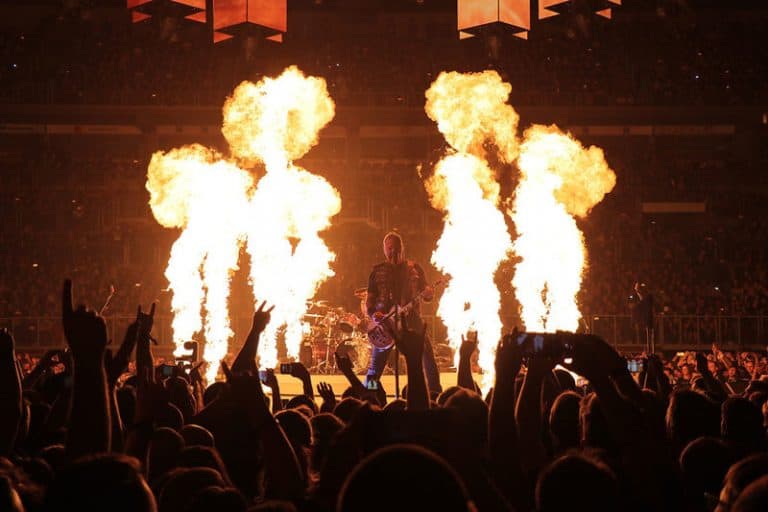
Last night legendary American heavy metal band Metallica hit the stage for the sixth time in Budapest at the Arena and surprised their fans with a Hungarian song: Robert Trujillo bass guitarist and Kirk Hammett guitarist performed Hungarian rock band Tankcsapda’s song,A legjobb méreg. In Hungarian.
The audience has expected that the band will play an iconic Hungarian song at the concert as they have played local songs at their previous concerts as well, for example in Vienna, they performed Falco’s Rock Me Amadeus, but not even Tankcsapda members knew that they chose this particular song as their Hungarian concert’s surprise.
Tamás Fejes, drummer of Tankcsapda told Hungarian news portal Indextoday that they have heard rumors about Trujillo thinking about a Tankcsapda song as a surprise, but it wasn’t officially confirmed before the concert. He added that the band chose the song based on the views on YouTube and A legjobb méreg is really popular on the video sharing site.
We did not want to comment on the rumors, because we weren’t sure about the song, there was a concert where they haven’t played any local songs. We went to the party, hoping they will play something Hungarian, but we were sure if they’ll do, it will be a Tankcsapda song.
According to Fejes, lead-singer and bassist of Tankcsapda Laci Lukács, who celebrates his 50th birthday this year was in tears when Trujillo started to play the song.
Metallica also supported the Gyermekétkeztetési Alapítvány, a Hugarian foundation, which supports children’s dining with a large donation. According to the foundation’s Facebook page, members of the band provided them with HUF 4,25 million (~13,000 EUR).
Metallica started their world tour last September with their latest album, Hardwired… To Self-Destruct with the Norwegian band Kvelertak. The Hungarian concert was sold out in minutes. Each ticket came with the album in digital or CD format.
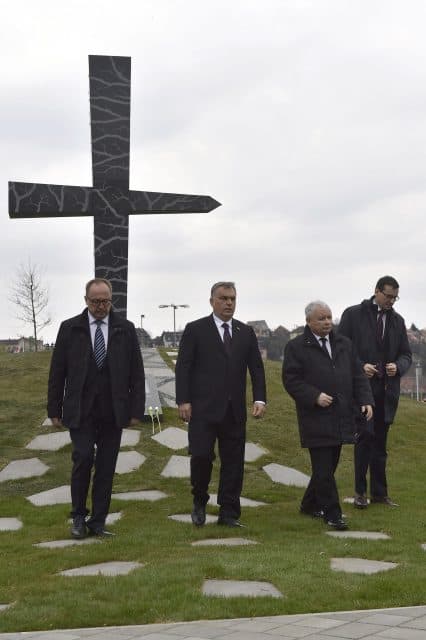
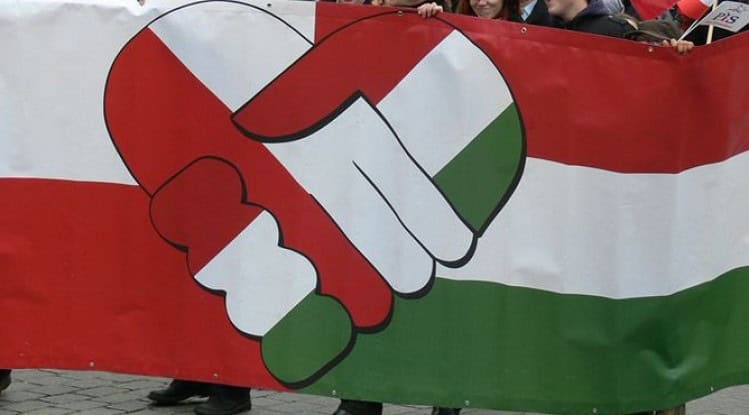
Hungarians and Poles follow a common path and fight together, aiming to protect their homes and preserve their respective nations and Christianity in Europe, Prime Minister Viktor Orbán said on Friday at the inauguration of a memorial dedicated to the victims of the 2010 tragedy of Smolensk, attended by the governing Law and Justice (PiS) leader Jaroslaw Kaczynski and Polish PM Mateusz Morawiecki.
Referring to the post first world war Trianon Treaty, Orbán said:
“We want a central Europe … where nations stand up for each other and don’t allow others to make decisions for them, intimidate or lecture them, and where it is clear that we decide who enters our territory according to our own laws.”
“We trust in the power of joining forces,” he said, adding that the message of the newly inaugurated memorial was that “we will preserve the memory of Katyn and Smolensk, and we will build and preserve a central Europe that the victims of these tragedies dreamt about.”
PM Orbán speaking at the memorial.
“More respect for Poland, more respect for Hungary!” Orbán said in front of the memorial in Budapest’s Budafok district. Just as in the past, Poland can continue to count on Hungary in the future, too, he claimed. Poland is central Europe’s leading country, Orbán said. “This central Europe is the future of the Hungarian people, too, and whenever Poland is attacked, so is central Europe and so are we,” he added. “When we stand up for Poland, we do it for Hungarian-Polish friendship and because we’re also standing up for ourselves,” he said.
Orbán said that 27 years ago, he, too, had thought that “Europe is our future”, but now “it seems that we are Europe’s future”. “There are mysterious things in life, among them friendship and friendship between nations,” Orbán said. “We don’t have to understand it, we just have to let the deep-seated Hungarian-Polish friendship surround us and take us towards the future.”
Speaking about former Polish President Lech Kaczynski, who was killed in the air crash, Orbán noted that he had met the late president in 2008 in the presidential residence near Warsaw, where they had discussed the future of Hungarian-Polish friendship. He described Kaczynski as an “excellent legal historian”, a “committed fighter” of the Polish Solidarity trade union and a president who had stuck to his principles. Orbán said Hungarians had considered Kaczynski a true friend and looked to him with gratitude. He said “centuries of adversity” had “evolved Hungarian-Polish friendship into a brotherhood”. Throughout the various turning points in history, the two countries found each other again and again, and their brotherhood “stems from their shared passion for freedom and their shared fight for it”, the prime minister added.
“We want a central Europe to which the atrocities experienced throughout the 20th century can never return,”
Orbán said.
PM Orbán with Polish PM Mateusz Morawieczki.
Morawiecki said that current Polish history cannot be understood without comprehending the tragedy of Smolensk, and by erecting a monument dedicated to Lech Kaczynski, Hungarians have “built a bridge to understanding”, he said. Morawiecki said he recalled the historic speech delivered by Hungarian Prime Minister Viktor Orbán at the reburial of martyred Prime Minister Imre Nagy in 1989. Then, he said, he sensed the “scent of freedom similar to today’s event”. He added that a common future of the two nations as now taking shape, and it was certain that Hungary would form the basis of this common future.
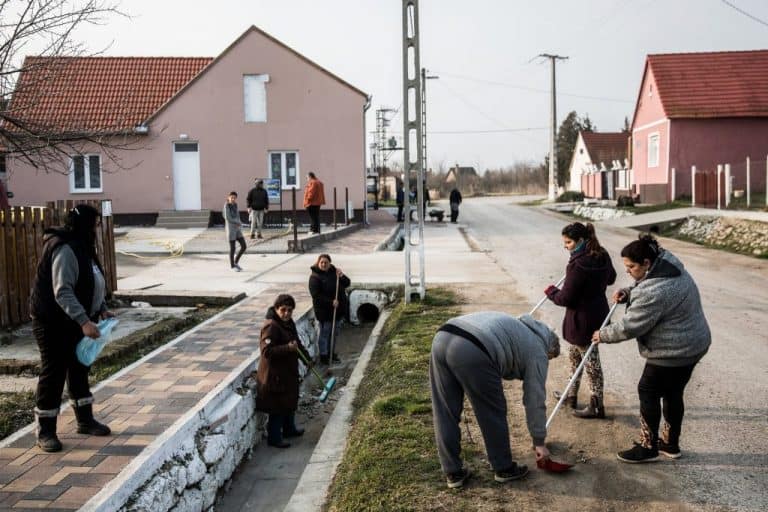
In a lengthy article, New York Times analyzes Hungary’s economy through the Orbán government’s national workfare program (a.k.a. fostered work scheme) bringing up a small village as an example. Of the 472 residents of Siklósnagyfalu, a municipality near the southern border of Hungary, 73 participate in the program, which reportedly allows them a better quality of life even though the government’s economy policies are -in many aspects, apparently rightfully- criticised.
One of Orbán’s government most significant and symbolic measures was the implementation of the national workfare program through which menial tasks have been given to hundreds of thousands of job seekers across the country. As a result, the national unemployment rate has fallen to 3.8 percent from 11.4 percent, while in this village, there are roughly half as many jobseekers as there were before Viktor Orbán took office in 2010. Participants earn $175 which is less than half the minimum wage, but roughly double what was paid out in unemployment benefits.
Orbán and his government transformed political system, institutions and society as a whole often amid criticism of democracy advocates; according to Fidesz’ allies life has definitely improved when considering the economy. Indeed, economy indicators have ameliorated since 2010: Government debt has fallen, the country’s credit ratings have improved, the budget deficit has been roughly halved and growth has almost quadrupled. Moreover, wages have risen by more than 10 percent and though still high, deprivation has significantly fallen as well.
Photo: Ákos Stiller for NY Times.
Critics argue however, that in reality the situation is far from being that ‘rosy’. For instance, Hungary has slipped to 29th place from 20th on the Euro Health Consumer Index, a comparison of European health systems and student performance in reading, math and science has worsened according to the PISA tests. In addition, according to World Bank, Hungary has become significantly more corrupt under Orbán.
Furthermore, authors note that some of Orbán and his government’s successes were due to factors beyond their control: EU’s funding Between 2009 and 2016 constituted nearly 4 percent of Hungarian GDP, one of the highest ratios in the bloc. On top of that, Europe functions as a pressure valve for the Hungarian labor market as roughly 350,000 Hungarians have found work elsewhere in the European Union. Likewise, according to István Madár, a senior analyst at a Hungarian financial journal, Portfolio,
“they had some special methods, some unorthodox measures, but the overall Hungarian government economic performance was no better than any other regional government.”
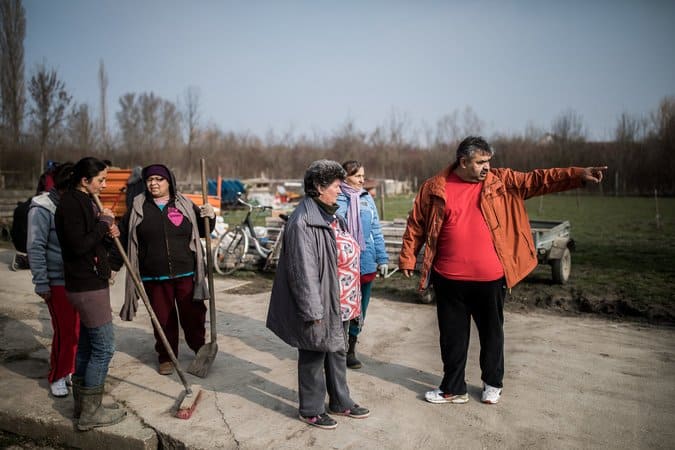
József Kosztics, right, the mayor of Siklósnagyfalu, is certain that the workfare program has improved lives. According to critics, however, the scheme makes participants more dependent on both their local mayor and on Fidesz. Photo: Ákos Stiller for NY Times.
Authors insist that the Orbán government’s success in suppressing unemployment “fades under scrutiny” as well. Most people, who are considered employed, are doing work that did not really need to be done, or are overstaffed for the job. In addition, the program makes them dependent on their local mayor, who assigns jobs and on Fidesz, who introduced the scheme.
Nevertheless, the wage participants earn ($175), reportedy allows them a better quality of life than earlier. “This little bit of money goes a long way in this village.”: fostered workers spruce up the village, renovate buildings and everyone can afford heating during winter, as the mayor puts it,
“You can say a lot of things about the workfare program, but one thing is certain, for municipalities like this one, it means survival.”
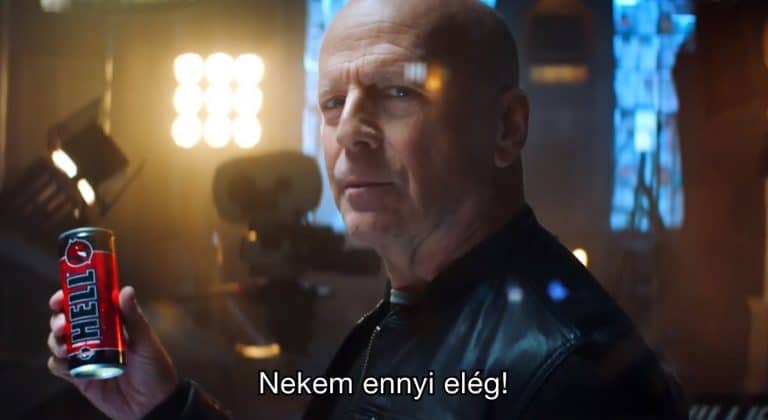
Hungarian-owned energy drink manufacturer Hell Energy advertise their energy drink with the famous American actor, Bruce Willis for a new global campaign running across several countries.
The 63-year old action star of Hollywood blockbusters such as Die Hard, which latest installment was shot in Hungary a couple of years ago, has now became the face of the Hungarian brand. The energy drink advertisement was shot in the United States and the first, half-minute TV spot debuted on Hell’s website and in television yesterday.
Earlier this year, when rumors started to spread about the possible involvement of a Hollywood star in Hell’s new campaign, spokespersons of Hell said:
The Hell Energy company has reached a milestone in the history of its operation that is why we are planning a global campaign. The preparations of the project have been in progress for some time and we are certainly going to inform the public about our activity and the person or people involved in it. We are asking your patience and understanding concerning the matter. Very soon, more details will be announced to the public.
Bruce Willis is the third famous star to advertise a Hungarian brand. Ten years ago, the Portugal footballer Louis Figo became the face of Szentkirályi mineral water, while Norbert Shobert’s ‘Norbi Update’ brand worked with André Agassi tennis player for a short period.
Willis has previously appeared in several other commercials over the decades, for example in the 80s he starred in the first series of Levi’s 501 Blues commercials and later a print ad for Police sunglasses, as well as a TV commercial for VISA credit card.
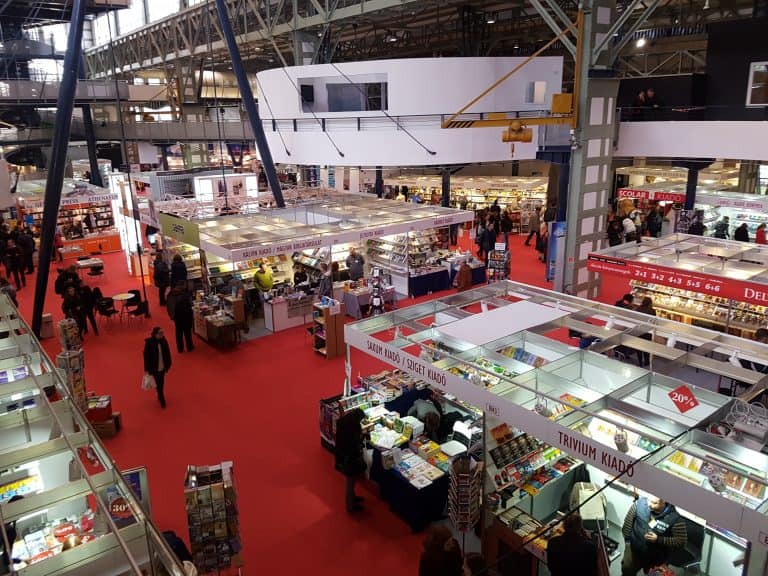
Over 170 events including book presentations, dedications and roundtables will be held, organisers said on Wednesday. The festival has two guests of honour every year, a country and a writer. This year, these will be Serbia and German writer Daniel Kehlmann. The First Novelists’ Forum will include discussions and book presentations with participants from 18 countries. The Independent Booksellers’ Night on April 22 closes the festival, with 29 venues in nine cities offering various programmes.
Minority SafePack, an initiative seeking EU protection for the indigenous minorities in the bloc, has surpassed 1 million signatures, the amount necessary for the European Commission to put the scheme on its agenda.
The initiative was launched by the Federal Union of European Nationalities (FUEN), which made the announcement in Cluj-Napoca (Kolozsvár) on Thursday. Minority SafePack calls on the European Union to “undertake legal action” to better protect ethnic minorities within the EU and support a multilingual, multicultural Europe, FUEN said. Although the one million signatures are in place, further ones will be collected until the April 3 midnight deadline to offset potentially invalid signatures, the union said. You can sign it offline in post offices or online here.
Telki, 2018. március 26.
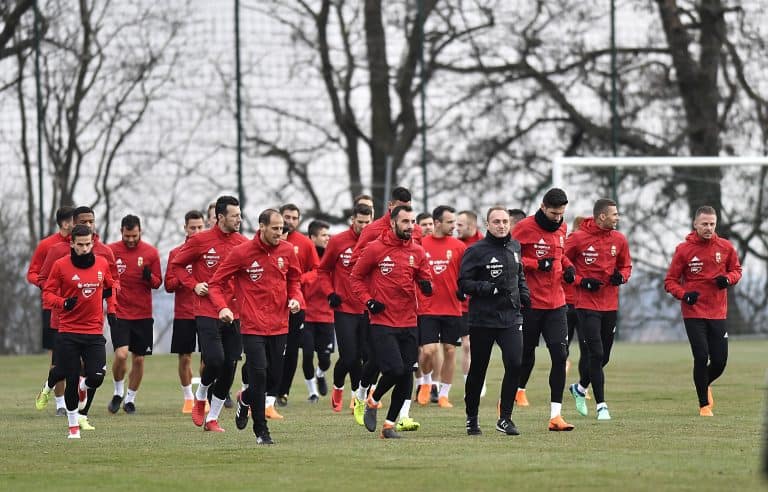
A magyar labdarúgó-válogatott a Skócia elleni barátságos mérkõzés elõtt tartott edzésen Telkiben 2018. március 26-án.
MTI Fotó: Illyés Tibor
Telki, 2018. március 26. A magyar labdarúgó-válogatott a Skócia elleni barátságos mérkõzés elõtt tartott edzésen Telkiben 2018. március 26-án. MTI Fotó: Illyés Tibor
On the heels of an embarrassing defeat against Kazakhstan on Friday, the members of Hungary’s National Football Team claim that tonight’s match against Scotland, although friendly, will be one of great importance.
This will be the second match of the season and the second game with the new national coach, the Belgian Georges Leekens, who was appointed to the position last year. Although Scotland’s FIFA ranking (36th) is a lot better than that of Kazakhstan (136th), bookmakers still think that Hungary might have the upper hand. Scotland was beaten as well on Friday by World Cup participant Costa Rica (0-1).
Player Szilveszter Hangya told a press conference on Monday that the contest would be more than just a friendly game, and that this would be the last chance to gain fans’ sympathy. Likewise, back on Friday captain Balázs Dzsudzsák said that he’s had to “constantly apologize” for his team’s recent performance, and that tonight’s match would be “the last straw.”
The Hungary-Scotland international friendly will be held in Budapest’s Groupama Arena at 8pm tonight, and due to the Friday defeat, there are still tickets available for home fans, while the sections allocated for visiting fans are sold out.
As elections are approaching, Hungary Today is publishing a weekly party roundup on each Monday. With less than three weeks to go, commemorations of the 1848 revolution on March 15 saw a number of keynote speeches focusing on the upcoming elections. Fidesz-KDNP’s lead seems to have slightly shrunk, while their campaign is becoming more and more concentrated on negative messages. Meanwhile, the opposition is still fragmented and divided, and will probably remain so.
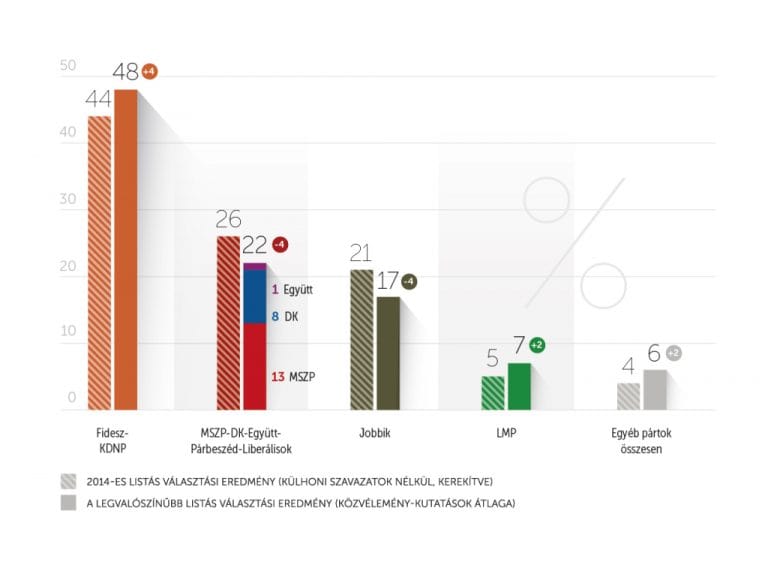
Kozvelemenykutatok.hu has put together recent relevant polls and compared the aggregated results to the outcome of the 2014 elections into a graph that you can view below. It is important to note that the graph shows only the national list results and predictions. Reminder: national list votes allocate 93 parliamentary seats out of 199 in total.
For each party, alliance or conglomerate the first column shows the national list result of the 2014 elections, while the second column shows the predictions made by putting together the results of the relevant polls. Graph: kozvelemenykutatok.hu
In the single member constituencies 106 seats will be up for grabs, and according to the relevant experts and surveys, a change of government or at least opposition majority in the National Assembly after April 8 is only possible if opposition parties cooperate and mutually withdraw candidates, thus making it possible to beat Fidesz-KDNP’s candidates.
Regarding the attitude of those on the opposition towards each other, Jobbik insists on running alone, while claiming that after the elections however they are willing to cooperate or even to build a coalition with LMP. Coordination with the older leftist parties (DK and MSZP), however, is out of question, as the formerly far-right political group claims that these parties are “liable for destruction over the past 28 years”. LMP is willing to cooperate with any parties, but view DK and MSZP with distrust, likely for similar reasons. MSZP-PM and DK have already begun coordinating with each other and withdrawn candidates accordingly.
On Sunday, former Prime Minister Ferenc Gyurcsány, leader of DK, invited opposition parties Jobbik, MSZP-PM and LMP to coordinate in individual constituencies. Although invited, Jobbik didn’t show up. Instead of reaching a compromise, the outcome of the meeting was rather ridiculous. Following the talks, LMP politician Gábor Vágó argued that, contrary to his previous statements, Ferenc Gyurcsány is not willing to coordinate with Jobbik; on top of this, Vágó claimed that the former Socialist Prime Minister was visibly intoxicated. In response, Gyurcsány said that his party will sue the green party for defamation over Vágó’s claim.
Hungary’s National Election Committee (NVB) granted official approval to the lists of all the country’s 13 ethnic minorities. Voters who have registered for the April 8 parliamentary election as members of the Armenian, Croatian, Bulgarian, German, Greek, Polish, Roma, Romanian, Ruthenian, Serbian, Slovak, Slovenian or Ukrainian communities will have an opportunity to vote for their own national list and for an individual candidate. To send deputies with voting rights to the National Assembly, minority-lists need 5% of all the minority votes, while those minorities who will not reach the 5% threshold out of all minority-list votes, will be able to send a minority spokesperson (representative), who has the right to speak in parliament, but not to vote.
Fidesz-KDNP
The so-called “Peace March,” a rally organized by pro-government organizations, attracted an immense crowd once again. The rally ended in front of the Parliament, where the official commemoration of the revolution and war of independence was held and PM Viktor Orbán delivered his speech. He focused on migration and the “dangers” that the opposition, migrants, UN and EU supposedly posed to Hungary and Hungarians. He argued that national and democratic forces are on one side and supranational and anti-democratic forces on the other, claiming that “they want to take our country away”. Europe and Hungary are in the middle of a “civilisational struggle”, he added. Referring to the upcoming elections he said that “In a little over three weeks’ time, we will once again decide on the future of Hungary. And in this election, it will not just be four years at stake.” Turning to his usual attacks on the Hungarian-American businessman, Orbán claimed that “We have to ready ourselves to face “Soros’s candidate”. Speaking of the opposition he said that “it’s not the anemic little opposition parties we have to fight, but rather an international network that has been organised into an empire.” The opponents of the ruling Fidesz party “can only break up our camp” if they succeed in forming a bloc, he added.
In his March 15th speech, the Prime Minister at one point said that
We will take moral, legal and political revenge after the elections
against opponents, a statement which has been interpreted by many as a threat, and which has garnered international criticism as well. Gergely Karácsony argued that Viktor Orbán “crossed another line” by “threatening the advocates of change” with political and legal sanctions. Jobbik leader Gábor Vona said that PM Orbán has become
unworthy of leading Hungary.
Lat week, two scandals revealed by Magyar Nemzet have stirred up criticism towards the governing alliance. The first concerns Fidesz MP and minister Lajos Kósa, who according to a document was entrusted by someone with 4.35 billion euros, allegedly for the purpose of investing this amount in Hungarian state bonds. Mr. Kósa, however, claims that he never actually received the amount, and that he may have been duped. According to critics, the case is proof of either money laundering or Kósa’s incompetency. The second scandal deals with the luxurious hunting trips of Zsolt Semjén, deputy PM and leader of the Christian Democrats (KDNP). These trips, held in total secrecy in Sweden, were financed by a government-linked businessman who has been the recipient of multiple EU grants. On one occasion, for example, organizers rented out a full 40-bed hotel for Semjén and his friends.
On Sunday, Fidesz co-founder and MEP Tamás Deutsch posted a controversial video to his Facebook channel. The recording is similar to the one that PMO chief János Lázár made in Vienna. While walking in the Molenbeek district of Brussels, he claimed that, as a result of the policies of a socialist mayor the district saw a large influx of mostly north-African immigrants, which made the neighbourhood dangerous and a center of European Jihadism. Unemployment and cases of harassing those women who don’t wear hijab are also frequent, he claimed.
Jobbik
Gábor Vona, leader and PM candidate of radical nationalist Jobbik, outlined the government structure the party would introduce if elected into power in the April 8 general election. Vona said the structure would encompass a prime minister’s office and eleven ministries, and that there would be two deputy prime ministers in charge of general and EU affairs, respectively. The ministry of national strategy would be in charge of ethnic Hungarians abroad and Hungarian emigrants, Vona said. Hungary would also have a ministry of the interior, a ministry of public administration and justice, a ministry of education, culture and sports, a health ministry, a ministry of social policy, a ministry of economy, development and information technology, a finance ministry, a defence ministry and a foreign ministry, he added. Once in power, Jobbik would introduce e-referendum and e-consultations as a means for soliciting social feedback, he said.
Speaking at an election rally, Vona claimed his formerly far-right party would stop corruption, sort out health care and create a fair pension system. He underlined Jobbik’s pledge to keep the fence on the southern border and refuse entry to migrants “whether or not they have [bought a residency] bond”. Vona also said Hungary’s biggest problem was not immigration but emigration, adding that the government did not care about the latter. He has also told supporters that if turnout is high enough in the April 8 general election, then there would be a chance of unseating the incumbent Fidesz-led alliance.
Jobbik vowed to set up an independent environment portfolio and strengthen authorities dealing with environmental protection if elected in April. Outlining his party’s environmental policy plans, Jobbik lawmaker Lajos Kepli said that a Jobbik government would establish a ministry of natural resources which would consolidate all environment-related competencies under one roof. The ministry would also deal with ground, water and air protection and their sustainable usage, he added. The government, he said, had been watering down environmental protection since 2010. Spending on the pollution measures has been reduced, and the list of regulated areas is getting shorter, he claimed.
MSZP-PM (Hungarian Socialist Party- Dialogue for Hungary)
Successive governments have made various attempts since the democratic transition 28 years ago to shrink the autonomy of local governments, the leader of the opposition Socialists told a conference. Since coming to power eight years ago, the incumbent government has been centralising their powers and resources, Gyula Molnár said. The task now is to establish a local government system that applies the principle laid down during the democratic transition, namely that local councils should have the power to take decisions on matters affecting their local communities at their own level, he added.
Promising the creation of a “free, independent and strong Budapest”, the Socialist-Párbeszéd alliance presented its election programme for the capital. Gergely Karácsony, PM candidate of the two parties, urged a “new partnership-based treaty” between Budapest and rural Hungary so that the capital can become the country’s engine of growth. He said it was in Budapest’s interest that public services that can be carried out by local councils are carried out by them.
Gergely Karácsony discussed plans to set up an anti-corruption prosecutor’s office made up of members of his shadow cabinet and other experts in Budapest. The alliance would set up an anti-fraud office, support Hungary’s accession to the European Public Prosecutor’s Office and press for rules that would wipe out corruption once and for all, Karácsony said.
LMP (Politics can be different)
“We’re not asking for a community of values with anyone, but we see that we have a common fate,” Szél said. She asked the other opposition parties to follow LMP’s example and “get out of their comfort zones”, because they can only unseat the government if they cooperate in some capacity.
LMP wants a stronger representation of women lawmakers in parliament and has therefore fielded eight female candidates among the top 20 on its national list for the April 8 general election, party MP Erzsébet Schmuck said. Women still account for just 10% of Hungarian MPs today, a proportion unchanged since the democratic transition of 28 years ago, she said, adding that the government includes no female members at all.
Democratic Coalition (DK)
Speaking at the aforementioned commemoration of the 1848 revolution organised by the leftist opposition parties, Gyurcsány said it was necessary to talk to Jobbik “not about election cooperation or about a joint government but about a cooperative way to pull down Viktor Orbán’s evil system in the next parliament”. “There is no point in applying tactics or being polite; we must negotiate and come to an agreement,” Gyurcsány said.
He announced that his party would unilaterally withdraw its prime ministerial candidate in favour of Bernadett Szél, the green opposition LMP’s candidate. Democratic parties should agree to field just one candidate, the one with the highest chance of winning in each constituency, he said.
Two-tailed Dog Party (MKKP)
The satirical party held its own peace march on March 15. The event’s goal was to mock the original pro-Fidesz march. Demonstrators thus showed up with signs containing funny messages such as: “Let the UN dictate in its own country” while often chanting “Viktor the King”.
Együtt (Together)
Speaking at a meeting meant to agree on a joint opposition candidate in his constituency (Budapest’s 1st), Együtt leader Péter Juhász claimed that if an agreement can not be reached through compromise, he is even ready to flip a coin to decide.
A 2-day long memorial event, to be held from March 23rd-24th, is being organized to honor the legacy of Béla Hamvas, one of the most prolific Hungarian conceptual thinkers and philosophers of the 20th century. Balatonfüred was selected as the location for this event, a town which is a great host for all kinds of literary and artistic events. Hamvas died 50 years ago this coming November.
Most people don’t know that, despite Hamvas’ extraordinary and fantastic mind, he worked as a physical laborer for a period of 20 years. He was silenced by the socialist dictatorship of Rákosi and Kádár from 1948 on, and his writings were published only after his passing, from the mid-1980s on, when the socialist regime was already weakened and democracy was on the horizon.
There is a pilgrimage to the Linden Tree as part of this memorial event that bears the name of Hamvas in Koloska valley. This magnificent valley appears to have a sacred impact on visitors who wander through it in complete stupefaction and awe. We walked up there once with a friend on a rainy day and it had such a calming influence on me that I had a smile on my face for days.
Writer and philosopher Béla Hamvas was born in 1897 in Eperjes (today Presov) in Upper Hungary (today part of Slovakia) below the Tátra mountains. His first literary works were published in 1919. After acquiring his social science degree, he was employed as a contributor at Budapest Hírlap and Szózat, two prominent publications of the time. From 1927 he worked as a librarian at the capital city library (Fővárosi Könytár) until 1948. This was the most productive period of his career as a writer. In 1948, he was suspended from his job by the communist regime and had to work as a physical laborer until his official retirement in 1964. He died four years later. His literary and philosophical works were silenced and banned by the regime up until 1983. He received a posthumous Kossuth prize in 1990.
Poet and former state secretary of state for culture Géza Szőcs is scheduled to honor the legacy of Hamvas at the ceremonies in Balatonfüred. Antal Dúl, a theologian who passed away this February, and who established a book publishing company to specifically focus on exposing the works of Hamvas to a wider audience, will also be honored.
One of the best-known works of Hamvas is “The Philosophy of Wine.” It is my personal favorite as it is a marvelous expression of adoration of life and the sanctity of wine, a sort of Mediterranean intoxication and admiration for God in the age of atheism. It is a glass of fiery Szekszárdi red or a green-golden Somlói that can reiterate this adulation.
His literary legacy is much debated. Some adore his works, some ignore them or are reluctant to accept them. He was perhaps ignored by some because he praised God and rejected agnosticism in an age of Godlessness. He was also controversial as he was critical of women, (not a popular theme today) as he considered them to be incapable of nurturing true friendships or see the world in its entirety. Therefore, he did not see them as good statesmen or politicians.
However, in our modern age of rising technology and excessive materialism, there is an increasing need to accept Hamvas and become one of his disciples. There is an increasing affinity in all of us towards the magic of silence. Hamvas deeply believed this. He cited Aldous Huxley’s extrapolation that the circle of silence around us is being reduced by 13 and a half kilometers each year due to human expansion and material greed. The time in our human existence may not be too far away that silence will be phased out around us entirely. At that point, he said that “happiness can only be grasped in the Himalaya mountains or in the middle of the ocean perhaps.”
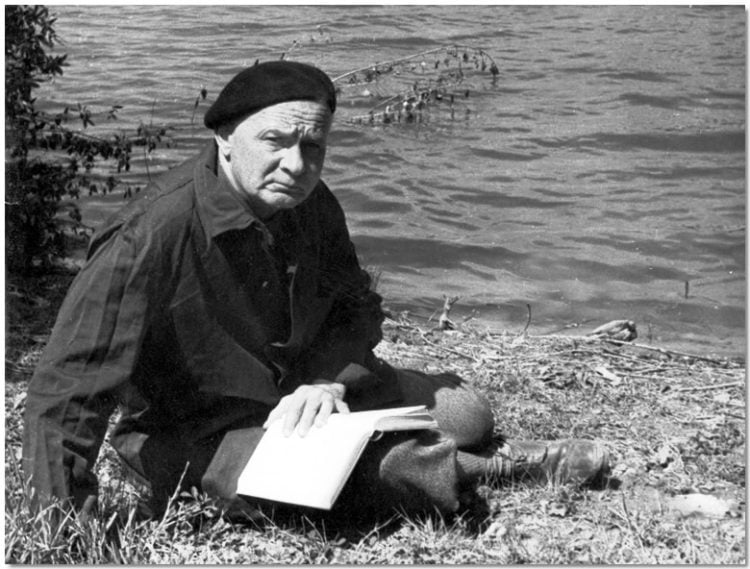
Hamvas in his later years.
His best-known quotes are:
“The secret of love is that out of two, there will become a union of one. The secret of friendship is the opposite: that out of one, there will become a partnership of two.”
“All wine is a wonderful social companion whose essence comes out best when it is consumed in good company.”
“There is really no mystery to the great journey called life. The mission we have is threefold: heaven tells us to be good, Earth tells us to become affluent and our human essence tells us to create order among us. But in the final analysis we have only one combined mission: to be true to ourselves.”
“Solitude can be difficult. To look outside into the gray daybreak in November, to come out onto the patio and there is no one in sight. This loneliness can be cured only by the knowledge that you have a better chance of deciphering the beauty of life in solitary confinement because that is when you begin to understand the essence of God who is one and only. You can be temporarily happier in a social setting, but you can only access God when you are by yourself.”
“The Parliament is a place where our injuries are often caused. The local pub is a place where those injuries are healed.”
“The essence of our human existence is to raise those who have fallen, to find the ones who are lost, to shed light onto the minds of those who see darkness, to cleanse those who have been disparaged. In sum, our mission is to lead our fellow human beings to salvation and redemption. We need to be lifted into the stratosphere onto another level of existence where our spiritual essence can be exposed.”
“A woman will often forget her past friends, but will tend to remember her great lovers. A man will often forget his lovers, but will always remember his friends.”
“There are four forms of friendship: the heroic, the intimate, the spiritual and the playful. True friendship will be found when all four of these are present at the same time.”
In addition to organizing a cultural festival to promote Hungarian-Polish friendship, Hungary will establish a foundation named after a 20th century Polish professor.
According to Hungary’s Ministry of Human Capacities, the new foundation, named after Wacław Felczak (1916-1993), a history professor at the Jagiellonian University’s Institute of History in Krakow, will research and promote Hungarian-Polish relations and support joint programs presenting the two countries throughout the world.
Felczak studied at Hungary’s Eötvös College in 1938-39 and returned to Budapest in May 1940 as member of the Polish resistance. He later served the Polish government in exile in London. He was arrested in 1949 and sentenced to life imprisonment in Poland, but was eventually freed in the wake of Hungary’s short-lived 1956 Revolution. The foundation will research and promote Hungarian-Polish relations and support joint programs presenting the two countries throughout the world, the ministry said in a statement.
The cultural festival will begin with a Hungarian-Polish music program, joint folk dancing and concerts in the Buda Fonó Cultural Center on March 21st. Additionally, Budapest’s Polish Institute will host a book launching event and a public forum on March 22nd.
On March 24th, Fonó will organize a conference with round table discussions, exploring the possibilities of projects combining folk, jazz and world music. The event’s chief patron is the Polish Ambassador to Hungary, Jerzy Snopek.