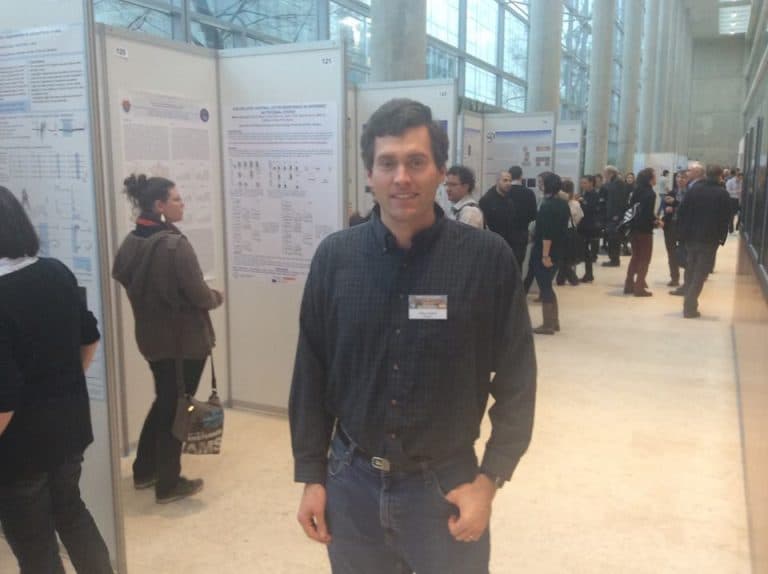
Jozsi Jalics, #Fulbright Scholar and Associate Professor of Mathematics and Statistics at Youngstown State University, attended the International Brain Research Organization (IBRO) Workshop 2014 held January 16-17 in Debrecen, Hungary and presented a poster entitled “Effects of tachykinin receptor activation on prefrontal cortex neuronal activity.” His research in computational neuroscience involves the development and analysis of mathematical models of neuronal networks using systems of differential equations. He is currently a Visiting Researcher at the Wigner Research Center for Physics, Hungarian Academy of Sciences in Budapest.
LORAIN — For most people, April 15 is the deadline for filing income tax. For the Rev. Peter Toth, pastor of the Hungarian Reformed Church, 1691 E. 31st St., Lorain, the date carried a different deadline. It was the day he almost died. Toth was in the backyard of the new home he and his wife, Brigitta B. Dalmi, moved into in mid-February. He decided to do a little spring pruning that began with slicing off the hefty limb of a weeping willow tree that stood 60 feet high in his backyard. Toth revved up his chain saw and began cutting into the limb that measured 40 feet in length and a foot in diameter. “The limb was waterlogged. It started to break and bend backward and I was behind the limb, standing on top of the trunk,” he said. The branch snapped back and hit him. Toth was leaning against another big branch at the time, so his right arm was crushed between the two big branches. A Hungarian friend of Toth visiting from out of state freed him from the tree and began walking him back to the house. Fortunately, Toth’s neighbors, Don and Lisa Dellisanti, were home at the time. Don called 911, while Lisa, a licensed practical nurse, began efforts to stop Toth’s blood loss. Lisa Dellisanti yelled to the out-of-state visitor to lay Toth down immediately. “His friend tried to walk him into the house,” Don Dellisanti said. “They’re both speaking in Hungarian. My wife called out to him to stop walking him and lay him down. He was on his side bleeding. My wife was checking his pulse. He was bleeding severely, all over the place. “We got towels and packed them around his arm.” “When I was waiting for the ambulance, the pain came to me,” Toth recalled. “It was overwhelming. I started to cry. The firemen came. They were very nice. They took my shirt off and then the ambulance came.” Seven months later, Toth has undergone 13 separate surgeries. “Hopefully, that is it. Thirteen is my lucky number,” he said. Toth suffered setbacks when infection set in. “My arm was almost hanging from a strip of muscle,” he said. “They shortened my arm by an inch-and-a-half. They’ve inserted a plate with 10 screws right above my elbow. They managed to put some screws and a plate in the lower part of my upper arm. It took five months for the bone to heal.” The orthopedic surgeon told him his right forearm was broken in three places. “They managed to save my arm,” he said. “It’s not functional yet. It will take about a year to heal. They say I have a good chance of it healing completely.” When it comes to his ministerial duties, Toth said he is being aided by members of his congregation. “The church members are helping me,” he said. “I can do most of the things as a minister, such as speaking, preaching, teaching, but physically, I am unable to do what I once did. It was the Hungarian community of Lorain that came to my rescue. “I can use my left hand to drive. So, that’s encouraging,” Toth continued. “I have some movement in my arm, but I am missing my bicep muscle. They took a muscle out of my thigh and made a muscle flap out of that. “I have a little feeling in my arm. It’s limited. But I’m full of hope.” While in the hospital, Toth said he was experiencing dark moods. “I was struggling with depression. But my friends visited me and really supported me,” he said. On Nov. 7, a fundraiser took place, called “Paprikas for Peter,” sponsored by the 90-year-old Hungarian Council of Lorain County, Inc., which is the umbrella group for all of the other Hungarian organizations and churches in the county. John Peters, president of the Council, said, “I wholeheartedly thank the people for their help with this fundraiser. It’s not just one man or one Council. Once more, we prove that, as Hungarians, when the time comes to help someone in need, we go out of our way to help them. His bills are skyrocketing and his insurance will not cover all of it.” The Hungarian Reformed Church donated the seasonings and the plastic foam carryout containers. Peters donated the cabbage rolls. And the church donated use of their facility for the event. “Paprikas for Peter” consisted of chicken, paprikas dumplings and two stuffed cabbage rolls for $12. “They held a food sale to support me. And they gave me a nice chunk of money, “$5,000,” said Toth, whose medical bills continue to mount. “I didn’t expect that to happen,” he added. “It was amazing. The Hungarian community supports me in many ways. “It was funny. A week before my accident, I gave a sermon about how life is full of changes and how we should be prepared for the unexpected in life.” Toth recalled.
Washington, DC – The Hungarian American Coalition invites qualified undergraduate students to apply for the Congressional Internship Program (CIP) for the spring, summer and fall sessions of 2014.
The continuity and expansion of CIP was made possible by a generous grant of The HungaryInitiatives Foundation, a US-based organization, whose mission is to build lasting value by reviving and strengthening the cultural, educational, and emotional bonds between the United States and Hungary, as well as the Hungarian-American community and its mother nation.
The CIP was established in 2005 to allow young Hungarian-Americans and well-qualified English-speaking Hungarians from Hungary and neighboring countries to get acquainted with the workings of the U.S. Congress and government institutions. The program aims to motivate students for civil service in their countries of origin, and to provide them the opportunity to build contacts in the US in their areas of expertise. The expanded program will allow for a larger number of host institutions and more opportunity for the applicants to gain experience in their particular area of interest.
The Coalition’s Internship grant will cover living expenses and local transportation expenses in the United States for the duration of internship. The internship’s duration will depend on the requirements of the host office but shall not be longer than four months. Depending on the host institution requirements, internship participants are expected to complete a Coalition project of mutual interest during their stay in the United States.
Eligibility criteria:
– must be a citizen of the United States or Hungary, or member of an ethnic Hungarian community in Slovakia, Romania, Serbia, Ukraine, Croatia or Slovenia;
– must be enrolled as students in their respective countries of origin or in the US, and must have completed at least one full year of their studies;
– must have proof of excellent written and oral communications skills in English;
– record of outstanding academic standing;
– letter of intent and CV in English;
– two letters of recommendation regarding the applicant’s personal and academic achievements.
Applications are accepted and evaluated on a rolling basis and should be sent to:internship@hacusa.org
Watching a nation’s best movies is a good way to really get to know the people, the way they think, the things they laugh at and the issues important to them or simply part of their everyday life. This is a diverse little selection of Hungarian films, with many genres so that everyone can find at least one movie of their favourite genre. From 50-years-old to brand new, from animation to black and white war-movie, from bitter comedy through political satire to family drama. The list is composed of the ten all-time best Hungarian films listed in chronological order. Enjoy!
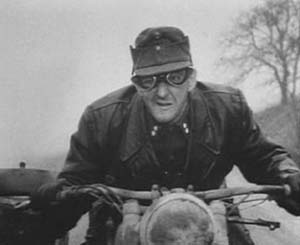
After many movies picturing soldiers as outstandingly brave war heroes, A tizedes meg a többiek (The Corporal and the Others) is a breath of fresh air. Our clumsy and gawky protagonists decide the desert military service isn’t their cup of the after all and head home in the very last weeks of World War II, along with a handful of hand grenades, all filled with money. Problem is they were stationed at the front line, so walking home with your pack thrown over your shoulder isn’t quite like a trip to the grocery store.
Needless to say, they find themselves in various unexpected situations as the little crew tries to avoid soldiers of the Hungarian Arrow Cross Party, the Germans and the Soviets all at once. You’ll find no spoilers here, but I can at least tell you that those guys aren’t lacking in twists on their journey.
A tizedes meg a többiek is timeless comedy about a topic most filmmakers are afraid to make fun of, and features the crème of Hungarian artists of the time.
After a World War II movie here comes another one about a similarly dark period of Hungarian history. A tanú became a cult favourite soon after its release that came more than a dacade after the film was finished. Its outspoken criticism of post-WWII communist regime in Hungary resulted in a ban of over 10 years. Its grotesque humour making fun of the incompetence of the Rákosi-regime made it a one of a kind movie: no other writer-director dared to go this far when it came to criticising the political system.
The film’s protagonist is a small and insignificant barrage-guard who unexpectedly gets imprisoned for illegal pig slaughter – strictly forbidden at the time. Pelikán – the barrage-guard – is freed shortly after and brought in front of a comrade who puts him in important government positions – ignoring the fact that he only knows how to guard a barrage and has absolutely no sense of political games. The combination of Pelikán‘s lack of any political talent and the importance of the positions he is put in brings awkward situations over and over again – the recipe for the best Hungarian political satire ever made.
Macskafogó is the only animation film that made into our list, and this is no accident. This masterpiece is enjoyable for children too, but is mostly directed at adults.
The events take place in 80 AMM (After Mickey Mouse) when “the well-organized, fully equipped gangs of evil cats are aiming to wipe out the mouse civilization totally, not caring for the old conventions between mice and cats. But in the last moment, when the mouse leaders are beginning to consider leaving the planet, a new hope rises…” – from the prologue.
This new hope would be Grabovsky, a retired agent of Intermouse. Grabovsky was sent to “Pokyo” to get the secret plan of a machine which could save mouse civilization. The cats obviously don’t want this to happen, so they send a couple of rat gangsters to stop the mice from succeeding.
Director Béla Ternovszky created a special universe with its own rules and social norms, and pictures the fight of good and evil with an unmatched atmosphere, and last but not least Macskafogó’switty script gave us an amount of sayings that almost none other movie has.
This masterpiece is Róbert Koltai‘s directorial début. Koltai was a well-known actor even before Sose halunk meg!, but it earned him instant recognition around the globe, it was so praised by critics.
Our protagonists are Imi and Gyula, with Imi being a guy that loves trotting-races and who just recalled some nice memories about his teen years when he was first taken to a trotting-race by his uncle, Gyula. After the first couple of minutes the movie takes place in the past (around the 60s) and pictures Imi‘s first memories about horses and betting. They spent a couple of days together, and while Imi watched his uncle chase big dreams – dreams, that he probably won’t ever reach -, he also learned a lot about freedom and women, and witnessed a whole new concept of life.
This one is going to be the odd one out, since its Hungarian origins are questionable. A napfény íze was written and directed by István Szabó, produced by Robert Lantos and András Hámori, and its cinematography was made by Lajos Koltai (all originating from Hungary), but it’s also played by almost only foreign actors and is English-speaking, so it is definitely something on the borderline.
It follows three generations of a Jewish family – originally called Sonnenschein, but later changed to the less Jewish-sounding Sors – during the changes in Hungary starting from late 19th century to the period after the 1956 Hungarian Revolution. The central male protagonists of all three generations are portrayed by Ralph Fiennes. The first generation of Sonnensheins gained great wealth by a family liquor business, and the following ones made many different career choices. The story of the family reflects on the typical problems and walks of life of the time, and this is what pulls you in. Different ages and problems played by the same actor all along, and even though his facial hair adapting to the trend of the time makes these characters distinguishable, you can easily link them to each other. Witness the journey of the Sonnenshein family throughout history.
Moszkva tér is a feel-good movie in its classic meaning, picturing four young boys just about to graduate from high school in 1989 – the year socialism collapsed in many European countries, including Hungary. These guys couldn’t care less about political actualities, their only important things are the parties, girls, making some easy money, and of course passing the forthcoming exams – with leaked questions.
The film shows us a day or two of their life and you won’t get to witness any life-changing events – or maybe some life-changing events from their angle -, but it reflects on the change of political system from a completely different side, that of the not-so-caring youngsters. You won’t actually see all these changes, you’ll just feel it. It’s in the air, everywhere, and this is what gives this movie so much power over the audience.
Pure comedy, nothing more, nothing less. Played by the best of Hungarian actors of our time, this is something worth watching.
The story is about three brothers, Ákos, a successful manager – also a sex maniac -, András, a poet and complete loser, and perhaps most importantly about Tamás, a young video clip and commercial director, who dreams about making his first feature film with the title “The Guilty City”. Only problem is he has no means to finance his project. When all of a sudden Tamás gets an e-mail from an American producer wanting to meet up for talking about details of financing The Guilty City, the three of them decide to make a good impression on him, which is where all hell breaks loose. Needless to say, they really suck at making a good impression, starting with their lack of English knowledge, followed by every kind of comic situations resulted from their… well… let’s say unique personalities.
Well, if you think about ticket inspectors, probably the first thing that crosses your mind isn’t the brilliant movie-subject they would make. A story about ticket inspectors still was made into a movie – and what a movie!
Our protagonists live in underground metro stations and have the appreciative job of standing in people’s way asking them questions that they clearly don’t want to hear. You might find the clumsiness of those guys and the unfortunate accidents that happen to them funny at first, but later on the film starts to visualise a dark absurdity, it breaks away from being realistic and goes deep into the world of fantasy – without the audience noticing it straight away. Kontroll has an unparalleled atmosphere which gets under your skin, a movie that keeps you up the night you watched it.
Don’t worry, I haven’t spoiled anything, the movie will still have its edge, just watch out!
This list wouldn’t be complete without a movie trying to process the unprocessable, the holocaust.Imre Kertész is a Noble-prize winning Hungarian author who wrote his most famous book under the same title, and this book, Sorstalanság was made into a movie a few years back. The screenplay written by original author Imre Kertész, directed by Lajos Koltai, a world-class Hungarian director and the cast joined by Daniel Craig made it clear that this is going to be something extraordinary.
Imre Kertész pictured the life of the concentration camp from a slightly different angle, his hero – after having been deported at the age of 14 – tries to see the barely existing brighter side, tries to learn to find happiness in the midst of hatred. Gyuri Köves (based on the author’s own experiences) survives and then – as coming home – he discovers that his life wasn’t the only life that’s changed.
Hungarians tend to think we only had dark periods in history – or at least mostly dark periods. Szabadság, szerelem (literally: Freedom, Love) tries to process the revolution of 1956 when the nation rebelled against the Soviets, and does so with the help of picturing the infamous Hungary-Soviet Union water polo final at the Melbourne Olympic Games the same year. Hungary won over the Soviets in that specific match, but it’s often considered the bloodiest water polo match in the history of the game. The Red Army suppressed the revolution – involving tanks on the streets of Budapest, and the underwater red battle was knowingly caused by the actual political situations. The movie catches the atmosphere of these events with fictional characters and parallel story-lines showing the water polo match in Melbourne, as well as the fight in Budapest.
We hope this article got you interested in at least some of the films, and we wish you a pleasant night of Hungarian movies!
Certified English and Hungarian translator and interpreter
USCIS, DOS, DOJ, Federal Courts
– Certified document translations.
– Consecutive and simultaneous interpreting for visiting or traveling professionals.
– Certified translation of Romanian, Slovak, Serbo-Croatian, and Ukrainian vital records as required for the “simplified” Hungarian naturalization process.
– Hungarian language and culture studies by native instructors: for travel, business, and fun! Now available also on Skype.
The United Hungarian Societies held its annual meeting on Saturday, January 18th at 10:00 am.
There were present 32 delegates from local Hungarian organizations. The session was officially opened by Michael Horvath who thanked all the delegates for their hard work and dedication to the Hungarian community thus contributing to the retention of its ethnic identity.
The meeting continued with itemizing the diverse Hungarian events – a vast list, organized and held by the diverse local Hungarian societies and organizations in 2013. The treasurer’s report was presented by Andrea Lazar.
At the meeting the “Bocskai Radio” became an official member of this long-standing organization.
Seven new officers were elected who vowed to duly fulfill the responsibilities of their office and to carry out their tasks to the best of their ability. The new leadership is composed of the following:
President: Valarie Ratonyi-Nagy
Vice President: Marika T. Megyimori
Treasurer: Andrea Lazar
Secretary: Péter Tapolyai
Notary: Marika S. Megyimóri
Auditors: Elemér Mészáros & Sándor Varga
Afterwards, Dr. Endre Szentkirályi gave a slideshow-presentation dealing with population statistics of Hungarians in America and Hungarians living in the Cleveland area, which will be subjects of his soon published two books.
The Bocskai Radio’s representatives gave a short update regarding their accomplishments in the previous year as well as saying a few words about the upgrades/updates of the www.bocskiradio.org website.
Every organization gave a short narrative about their association and presented a summary of their plans for 2014. The meeting was concluded with a comprehensive view of how the various Hungarian groups work together.
We hope to have many-many Hungarian events to report on in the coming months!
(CNN) — “Budapest” rolls off the tongue pretty easily, and the Hungarian capital itself feels as if it’s been around for a long time.
But Budapest is a relatively recent construct — the result of an 1873 merger between two distinct cities: Buda on the western bank of the Danube and Pest on the bank opposite.
The result, Budapest, sounds so much more natural than other twin cities — Minneapolis/St. Paul or Dallas/Fort Worth — it’s difficult to imagine that the alternative “Pestbuda” was floated seriously at the time.
Although they’ve been populated for centuries, Pest and Buda have developed so separately that the first bridge spanning the Danube, the imposing Chain Bridge, wasn’t built until 1849.
Károly Jokay, Executive Director, Hungarian-American Fulbright Commission, Budapest
Greg Sadlek, Dean of the College of Liberal Arts and Social Sciences, Cleveland State University
Endre Szentkirályi, Vice President, United Hungarian Societies, Cleveland
Fotó: Dávid Csaba
CLEVELAND, Ohio – Cleveland State University, with the support of several Cleveland Hungarian community organizations, is reestablishing Hungarian studies in its College of Liberal Arts and Social Sciences.
On Saturday CSU officials signed a cooperative agreement with the Hungarian-American Fulbright Commission in Budapest to establish a Fulbright visiting professorship in Hungarian Language and Culture.
About 105,000 people of Hungarian ancestry live in northeast Ohio. They have a rich local history and a vibrant community with many churches and social organizations, the university said.
After receiving pledges from the Cleveland Hungarian Heritage Society, the Cleveland Hungarian Development Panel, the Hungarian Association, the American Hungarian Friends of Scouting, the Hungarian Cultural Center of Northeastern Ohio, the Cleveland Hungarian School, the William Penn Association, the Hungarian Community of Friends and a private donor, CSU invited a Fulbright lecturer from Hungary to begin in the fall of 2014.
Long-time employee at Kent State to retire: Linda Harsh, Kent State University’s longest serving staff member, will retire this month after working 47 years at its Stark campus.
Harsh began her career while she was still in high school, working part-time in the registrar’s office.
“I was hired making 60 cents an hour to file and assemble admission packets,” she said in a KSU release. “When I graduated high school in 1966, I was hired for a full-time position in the admission’s office.”
Harsh moved back and forth between admissions and student services, working for the last 25 years in admissions, mainly processing applications, waiting on students in the office and answering questions.
Harsh reflected on the changes to the campus and her job.
“As a campus, our enrollment has increased by a great amount,” she said. “I remember when I used to register students with a piece of paper and a pen, but now, students do everything electronically.”
Her last day is December 23, but the university is celebrating her retirement today.
College textbook cost addressed in legislation: Legislation has been introduced in Congress to make college textbooks free.
Senators Dick Durbin, an Illinois Democrat and Al Franken, a Minnesota Democrat recently introduced the Affordable College Textbook Act. It would create a competitive grant program for colleges to expand the use of free online textbooks.
Textbook costs can be substantial. According to the College Board, the average annual cost for books and supplies during the 2012 academic year was $1,200.
Wes Anderson’s new film,THE GRAND BUDAPEST HOTEL, recounts the adventures of Gustave H, a legendary concierge at a famous European hotel between the wars.
Description
Wes Anderson’s new film, THE GRAND BUDAPEST HOTEL, recounts the adventures of Gustave H, a legendary concierge at a famous European hotel between the wars, and Zero Moustafa, the lobby boy who becomes his most trusted friend.The story involves the theft and recovery of a priceless Renaissance painting and the battle for an enormous family fortune — all against the back-drop of a suddenly and dramatically changing Continent.
András Schiff last performed the complete Beethoven piano sonatas at Wigmore Hall from 2004–6 to overwhelming critical acclaim, with the Guardian’s editor Alan Rusbridger describing one particular performance as ‘a riveting mixture of erudition, analysis, passion, wit and memory’.
On the day before each of the eight recitals in the series, the world-renowned pianist, pedagogue and lecturer gave a lecture-recital in which he explored the works to be performed. Deeply engaging and insightful, these thought-provoking lecture-recitals, recorded live at the Hall, are now available below to hear as eight lecture-recitals.
You can listen to the lecture-recitals online or to save the file so you can listen on an mp3 player: right-click the podcast link, select ‘Save Link As…‘ and save it to your computer.
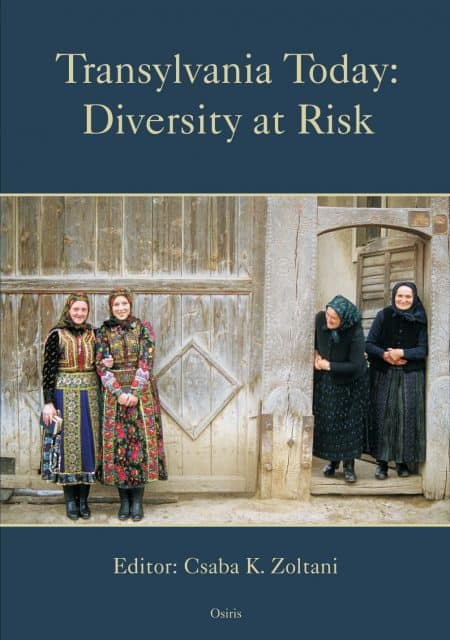
Transylvania Today: Diversity at Risk, written by noted experts, describes the issues faced by minorities in Transylvania in their effort to retain their identity in an adverse environment. The essays of the book capture some of the fault lines in Transylvania, created by the incorporation of a territory with western traditions into one of Byzantine culture. Minorities, according to the official census, constitute nearly one-quarter of the population of Romania. The fascinating world of people who intend to survive, retain their ethnic identity, and do more than go with the flow is highlighted. The contributors survey the facts on the ground regarding the reality that determines the quality of the lives of minorities in Transylvania with emphasis on, but by no means exclusively on the larger minority groups. After a historical overview, the book details the markers of the minority landscape in Transylvania. A chapter on the Saxons, German-speaking descendants, who have lived over eight centuries in Transylvania, is presented. Close-up of the once vibrant, now diminished presence of Jews is detailed. The Roma speak a variety of languages, are economically disadvantaged and often victims of discrimination. Their struggles to survive are discussed in detail. Churches play a central role in the lives of indigenous minority communities. Separate chapters deal with the Catholic, Unitarian, Reformed, and the Greek Catholic Churches. The lagging restitution of property seized from the churches and minority individuals by the Communists has its own chapter. Indigenous minority languages, as well issues related to their use in education are treated separately. Additional chapters treat the judiciary as it affects minorities and the problems of objectivity in the press. A final essay addresses the means that some groups feel is the key to minority survival: autonomy.
I was born in Gyergyóditró, the most populous village in Székelyföld, but we soon moved to Csíkszereda with my parents when I was 3 years old. In my early school days I have accumulated quite a number of teacher’s notes much to the chagrin of my parents. Despite of the fact that school required mandatory home reading assignments, playing football was my number one activity, which I pursued with great fervor along with my friends weather permitting or not. I married young which resulted in divorce and having a little girl to support. While raising my daughter, providence brought me a lovely wife whose life was marred by a family tragedy. Thus we have united two half families into one, given that, now I also have a son. The four of us have been living together in Cleveland in our new country since 2001.
At first we were concentrating on mere survival and the integration into a new life in a new country, but it was and still is very important for us to preserve our Hungarian heritage, and ethnicity. I always wanted to give to community. Therefore, I undertook the editorship and co-management of Bocskai Radio. Hopefully, through this medium we can significantly contribute to the survival of our Hungarian ethnicity respectively heritage through language retention, and by understanding our literature, our past, and our great history. That is the reason why we endeavor to provide every Sunday substantive, interesting programs as long as there is a demand for such. However, I am extremely glad to observe that the demand exists in deed.
The first 30 years of my life I spent in Székely-land, in Europe’s Lothlórien. During these 30 years I experienced good, great and dreadful moments too. I was a skinny little girl; I was never hungry and did not want to eat. The only way I was able to be fed when each bite of food was delivered by a spoon disguised as a choo-choo train, mostly through my dear father’s patience. My precious mother just kept saying, “Your kid should become a bad eater just like you!” Well, he did! To feed my dear son, Csongor, became a chore equivalent to a workout. Since then, the situation has much improved though. Moreover, fate has endowed me some 17 year ago with a sweet little girl, Kincső, who like her father, Lorand, also loves her belly. Back then, in many cases, having not yet finished their lunch, they already asked about what’s for dinner? Therefore, I had to cook, and I was most pleased to cook for them for their enjoyment; certainly, mine as well! It’s very heart-warming to watch one’s cooking being consumed with such enjoyment.
My grandparents were peasant farmers – straightforward, Székely people – I think my love for the usual rustic dishes comes from their life-style. I spent every summer vacation “serving” with them all the way, so to speak. There were a lot of scrambled eggs for breakfast, cheese polenta strudel, tarragon potato soup, stews, cabbage and noodles, and funnel cake. I love bean soup with smoked hocks; I love smoked bacon, onions, with thick-crusted crispy bread.
My parents were civil administrators, now retired and living in my hometown, in Ditró, where my one and only sister Gabriella lives with her daughter, Boroka.
It’s been close to 12 years now that life has brought us to Cleveland. It was not easy in the beginning, but we adapted to the American lifestyle pretty well. We have learned to live our life here, and we found our place in the U.S. as well. I love my job! I direct one of CTL’s department, a biotech company. I love the people here, the Cleveland Hungarian community – I like people in general. Maybe this is why the “Bocskai Radio Boys” could get me to “cook on air”. I think, throug this Hungarian Bocskai Radio, full-blooded Hungarian words will enter the vernacular of Cleveland Hungarians, as will the Hungarian recipes spice up their life.
There was never a time when things were naught! After all, even evil contains something good, one just needs to find it, and make it prosper!
PS – Cats are my favorite animals. They are just drop gorgeous! 🙂