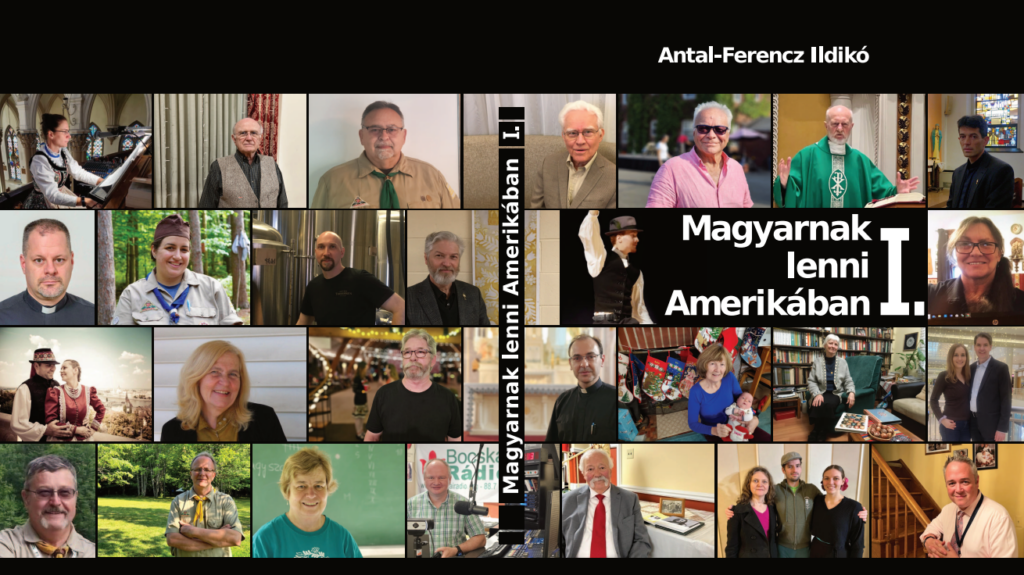
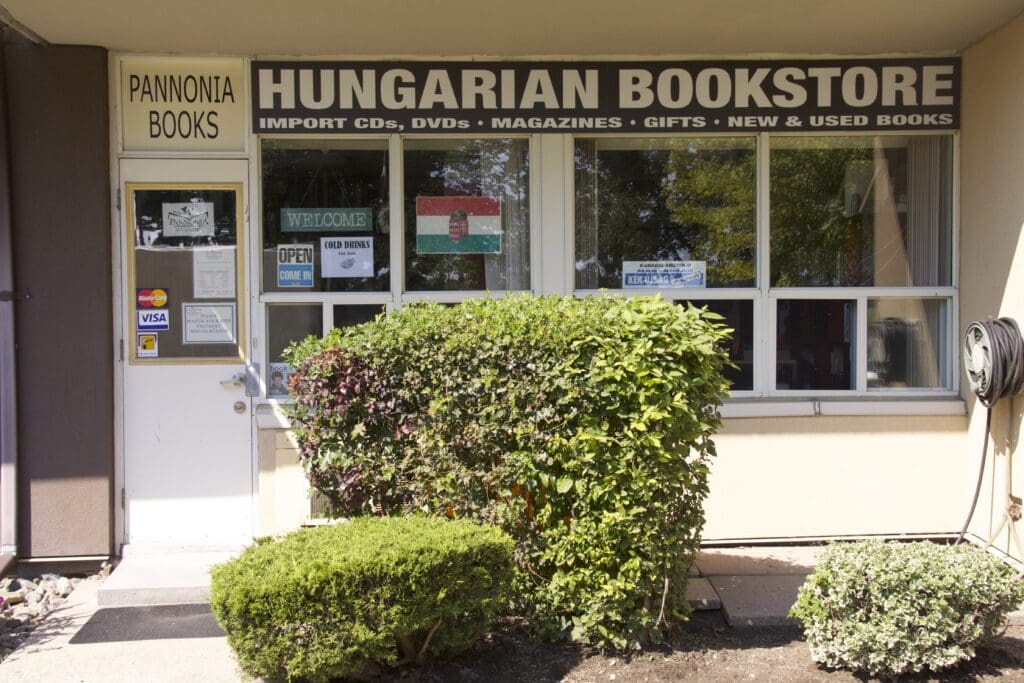
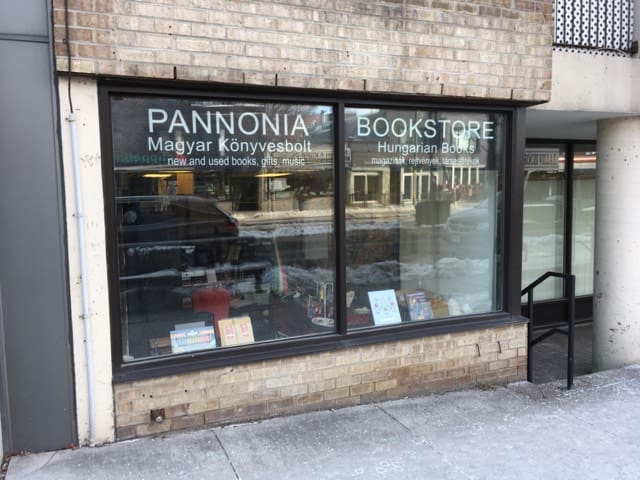
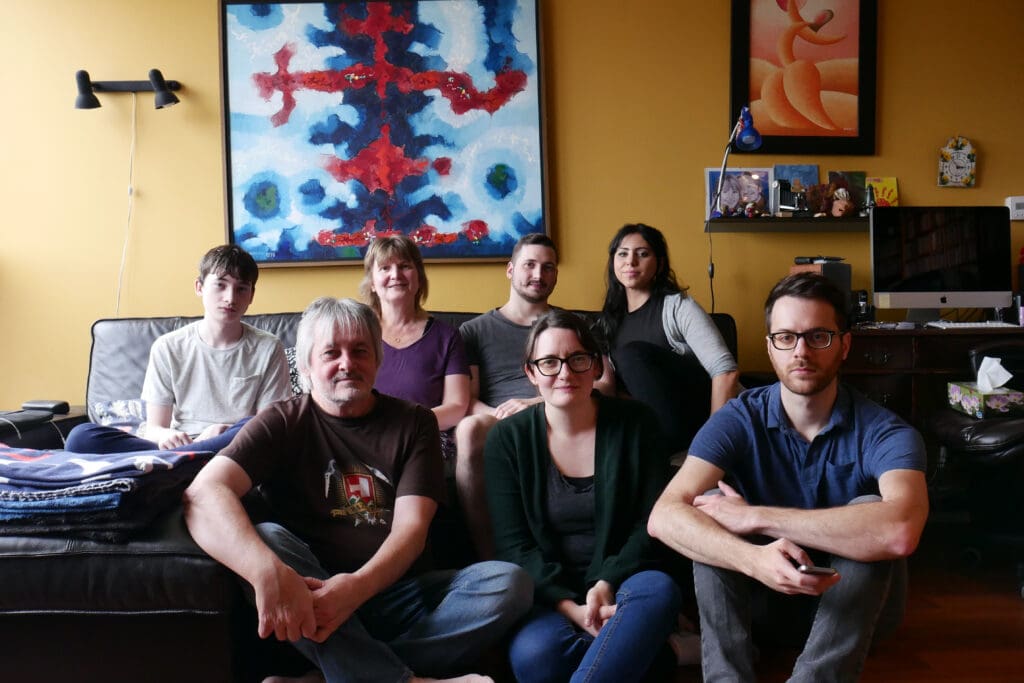
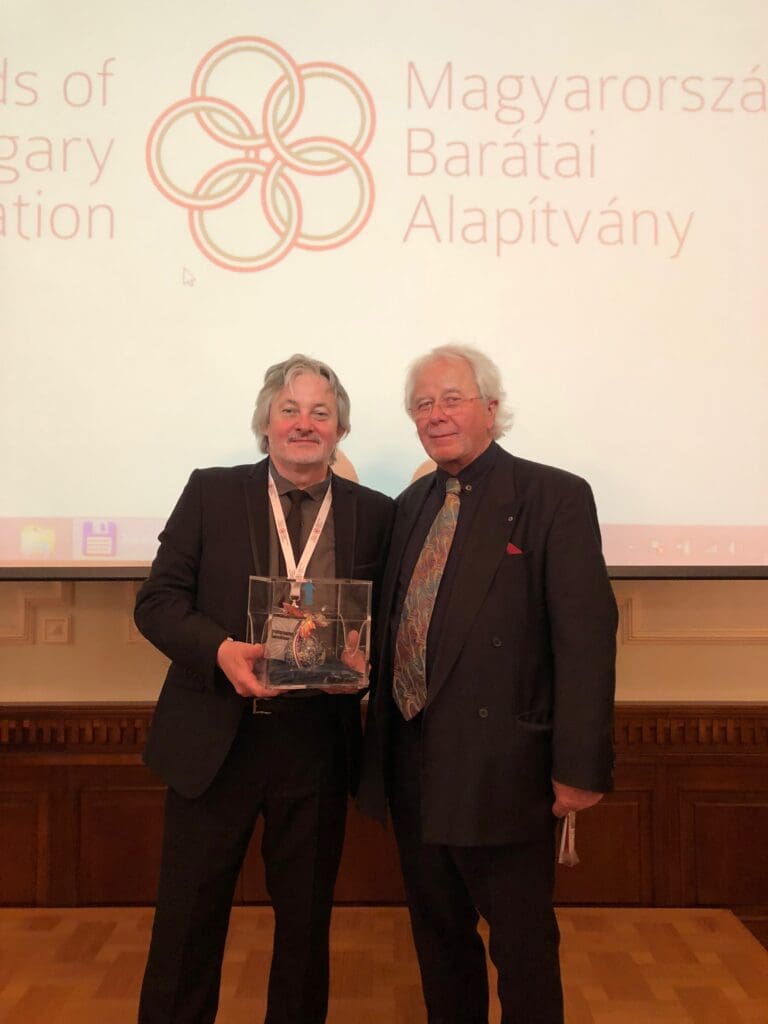
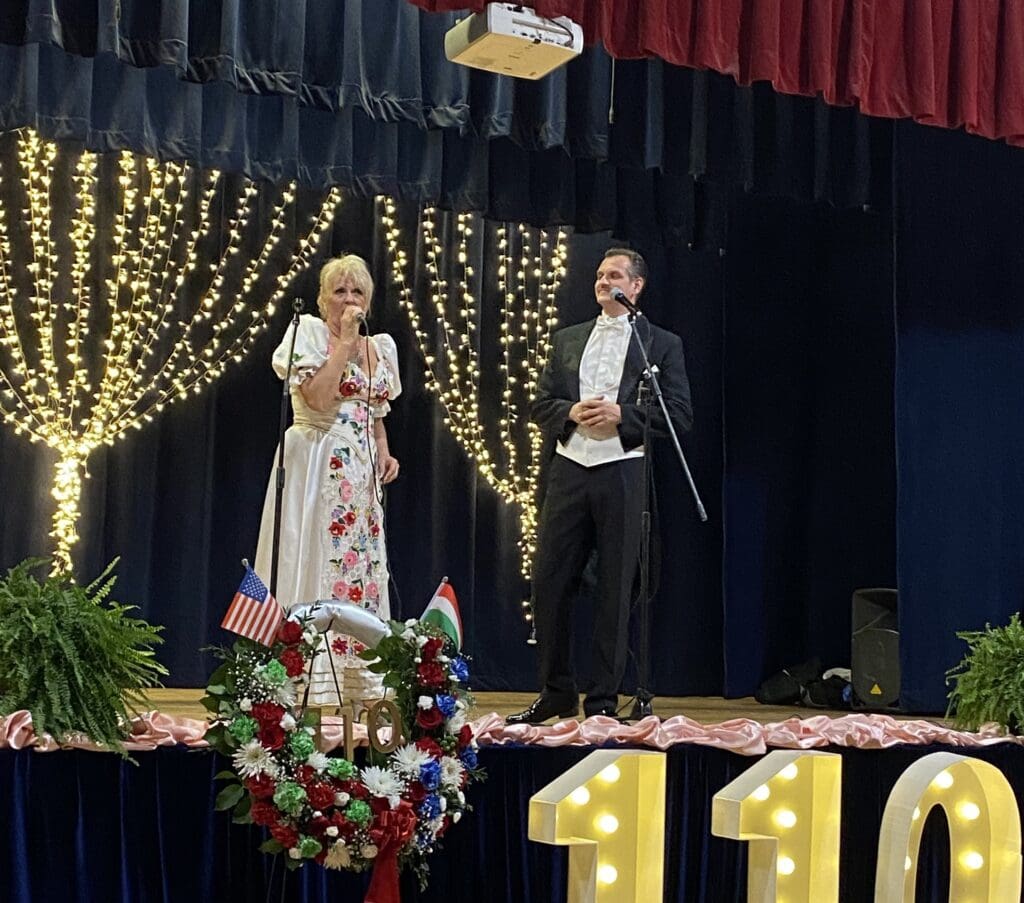
To Be Hungarian in America, a collection of interviews with prominent Hungarians living and working in the North American Hungarian diaspora, has recently been published by the Bocskai Rádió in Cleveland, Ohio. The author is our very own Ildikó Antal-Ferencz, a frequent contributor and the US diaspora correspondent to our site. She is a freelance journalist, who moved to Denville, New Jersey with her family in the summer of 2022.
‘The resilience and admirable community involvement of the Hungarian-Americans showcased in this publication—by which they essentially became the guarantee of the persistence of the Hungarian-American community—can serve as an example, inspiration, and reassurance for us all,’ she wrote in the author’s note for her book.
Dr Péter Szilágyi, Deputy State Secretary for National Policy in the Hungarian National Assembly also wrote a foreword of his own for the book (which was published with funding from the Hungarian government). He pointed out: ‘If I had to summarize the content of this book in one sentence, I would write: adventurous life paths, inspiring stories, outstanding personalities—all in one publication.’ As Mr Szilágyi points out,
each story in the collection is a battle won for the Hungarian community’s survival in the United States, thousands of miles away from the motherland.
One of the unique individuals interviewed is pianist Tünde-Ilona Krasznai. The Hungarian musician was born in Kolozsvár (Cluj-Napoca, Transylvania, Romania), but is currently living on the East Coast of the US, in Connecticut.
She learnt to play on a piano she got from her grandfather, which later turned out to be a highly valuable antique piece made in the mid-19th century. After graduating from the Liszt Ferenc Academy of Music in Budapest, Hungary as a concert pianist, she started travelling around the world, visiting places in the Middle East, Central Asia, and North America—where she eventually settled. Wherever she went, she always sought out the local Hungarian (and protestant) communities. When settling in Fairfield, Connecticut, she opened the Hungarian School of Arts. Why didn’t she opt for running a music-specific school? Because she believes that all art is a search for perfection, for something out of this world, maybe even for God; and is also a great tool for teaching and learning Hungarian language as well as for building a community.
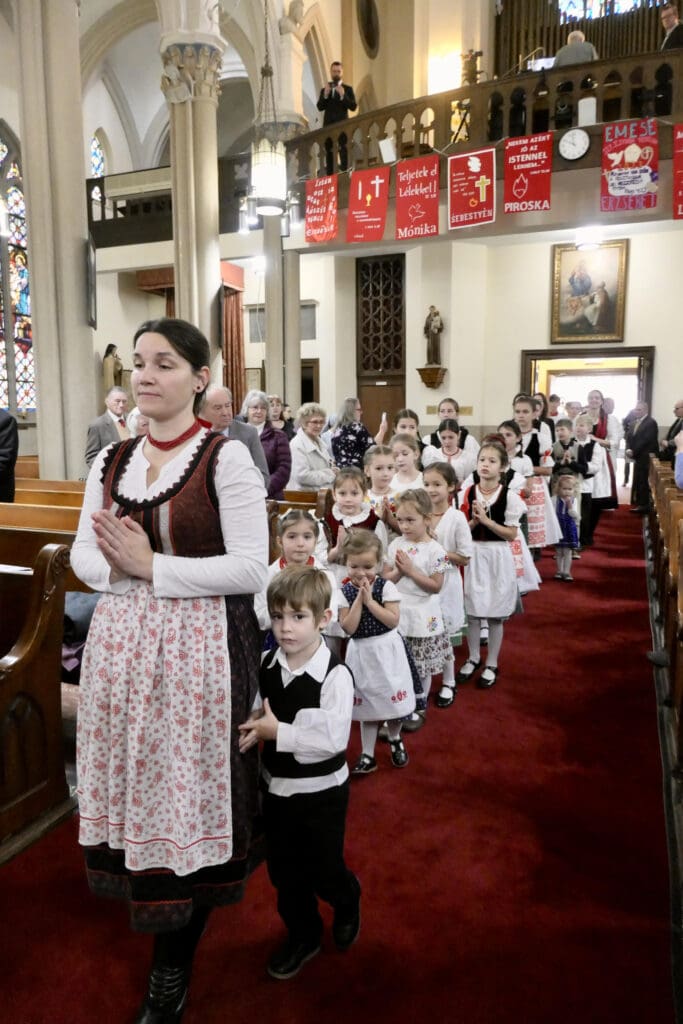
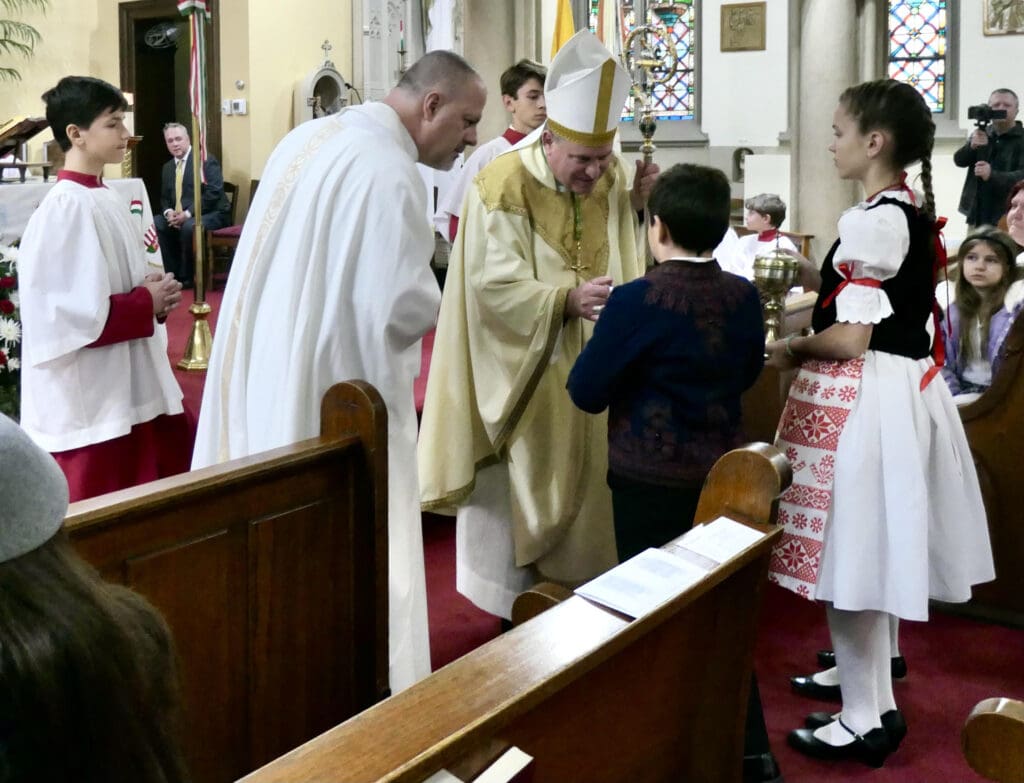
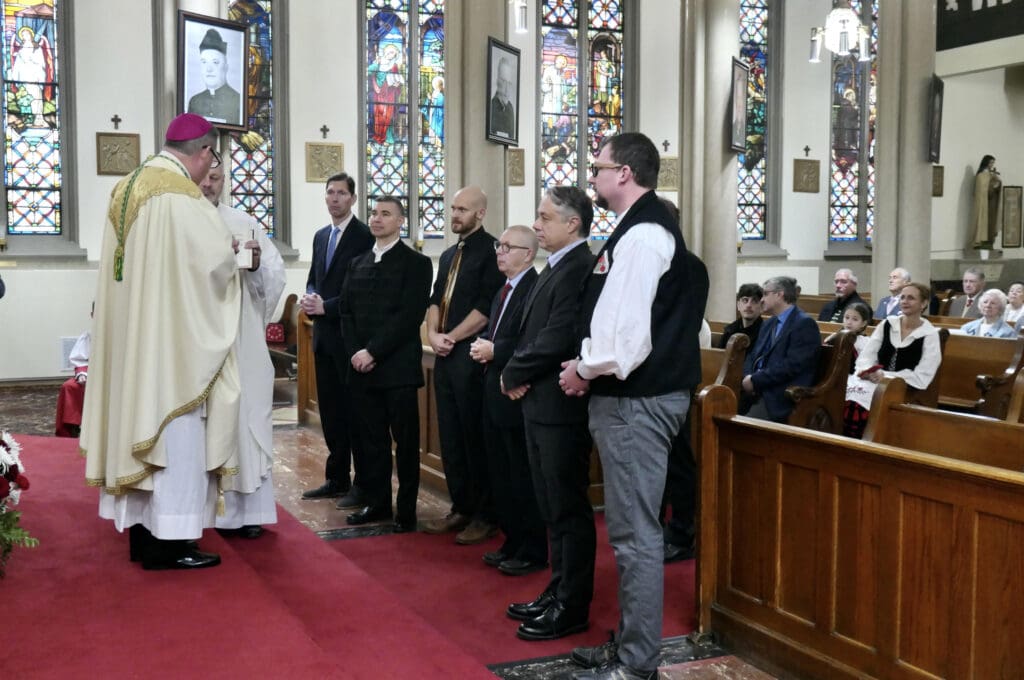
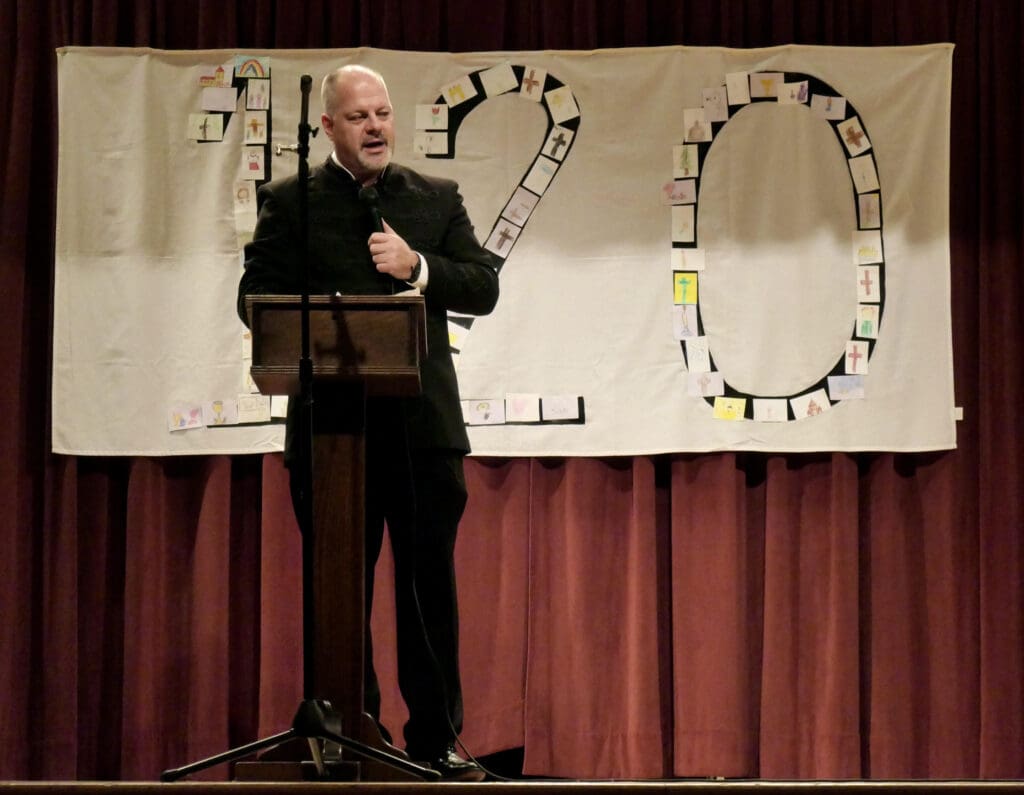
The St Stephen of Hungary Catholic Community in New York City, New York celebrated its 120th anniversary on 19 November 2022.
On the occasion, the author sat down with Róbert Winer, the president of the community’s civil council, who told her about the history of the Hungarian diaspora in New York City. The first major wave of Hungarian immigrants reached the shores of the United States in the second half of the 1800s, the majority of them arriving in New York City. Many of them moved along, however, also many of them ended up settling there. Today, the number of ethnic Hungarians living in New York is around 50,000. The St. Stephen of Hungary Catholic Community was founded on 2 August 1902, and has been a beacon of Hungarian community life in New York City since, even after the closure of the St. Stephen Hungarian Church, serving as a spiritual haven for a few dozen Hungarians, some of whom had been baptized, had found their life partner, got married, and/or requested to be buried there.
Many of our Hungarian brethren went to the United States to seek refuge from the tempests of European history. One of these people is Viktor Fischer, a former scoutmaster in New York, who fled Hungary in 1945 to escape the Soviet occupation. Sadly, while travelling through Austria, one of the trucks carrying their family cargo was hit by an American bomber plane. But, through all the perils, Mr Fischer and his family did make it to the United States by November 1951. Where he settled and ended up becoming a ‘lifelong scout,’ as he likes to refer to himself.
These are just three examples of the 36+1 pieces of exciting interviews, mostly with people from New Jersey, New York, and Ohio, but also one each from Connecticut, Pennsylvania, Michigan, California, and Canada. About half of the interview subjects are scouts, the other half are folk dancers or Hungarian school leaders, as well as five Catholic priests, two Reformed Church pastors, and the wives of two pastors. They are all dedicated and committed Hungarian Americans who are active in their local Hungarian communities, ranging from 17 years old of age to 84 years old.
This is the English translation of the interview originally published in Hungarian on Magyar Nemzet.
Miklós Schlóder was born in 1935 in Bonyhádvarasd, Hungary, to a Swabian family. His life is like a historical record: his father was a soldier in the Second World War, took part in the invasion of Transylvania in 1940, and then fought at the River Don, from where he returned home on foot.
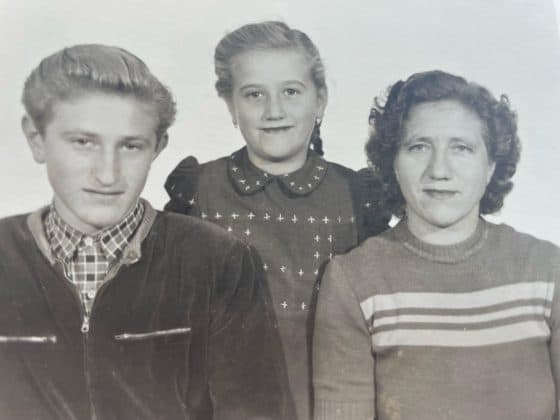
He was later drafted again and was taken prisoner by the Russians at the end of the war. His mother escaped from the Malenki Robot several times; the then 10-year-old boy witnessed multiple ‘visits’ by Russian soldiers on the run. Their fate was eviction and then deportation. His father and uncle, who had caught up with them in Germany, refused to go any further and waited there for the hoped-for Russian withdrawal, while the mother and her two children emigrated to America (New Jersey) after six years.
Thanks to his good drawing skills and technical acumen, Miklós managed to work as an engineer even with little education. Later he became the scoutmaster of one of New Brunswick’s most popular Hungarian scout patrols and led several Hungarian scout camps abroad. Meanwhile, he supported his mother in all things. Love and marriage found him at the age of 50, and since then, he has led a happy family life with his children from his wife’s first marriage, his grandchildren, and great-grandchildren.
***
Listening to the events of your childhood is like reading a history book.
When I was three years old, my parents moved to the small town of Bonyhád because my father, József Schlóder, a master weaver, could not sell as much of his materials in the village as he could in town. Bonyhád was a farming town with 7–8 thousand inhabitants at the time; they bought a house there with a workshop, to which he added newly built extensions as well. When we got back parts of Transylvania in 1940, my father was called away to be a soldier. He came back home, but around ‘42 he was drafted again; he fought at the River Don. They were ill-equipped, and the army was absolutely unfit to fight. The Germans promised them all the supplies, but nothing came true. My father walked all the way from the River Don to Kyiv in that terrible cold winter. He recovered, but in the spring of ‘44, they took him away again.
Meanwhile, our weaving machines were down, but as we also had land rented out, we could live off of it. We also had a big garden; my parents wove small things that people needed, like breadcloths. My sister Erzsébet Helma was born on New Year’s Eve in 1941. After being drafted again, our father did not come back for the third time — as we later learned, he was taken prisoner by the Russians, and we knew nothing about him for a long time. Then in the autumn of ‘44, the Russians appeared near Bonyhád. My mother was afraid, so she locked up the house in Bonyhád and we ran away to my grandmother’s house in the locality of Kistabód. My uncle, my mother’s younger brother Ferenc, was also at home because the regiment he belonged to was stationed at Lake Balaton, but he was wounded and was taken to hospital in Pécs. When he recovered, the doctors kept him there to help carry the sick, injured soldiers, so when the Russians marched in, my uncle Ferenc was the only able-bodied man in the village.
Do you have any personal memories of when the Russians came?
As a nine-year-old child, I was very impressed when the first stray Russian ‘visitors’ appeared. I only heard some of the details later when people told my grandmother about what happened. Our great-grandmother was also still alive at the time. My mother would occasionally go to Bonyhád—but always on the back roads—to see how the house was holding up. On 1 January 1945, we woke up to a boy on horseback coming into the village, shouting that the Russians had surrounded their neighbouring village and were taking the people away.
My mother jumped up, put on warm clothes, and wanted to run away, but my grandmother told her that she had heard that they were taking people to Vojvodina, to bring in corn. However, my mother said no, they were taking them to Russia; she had heard it in the German broadcasts back in Bonyhád. My mother called out to the neighbouring women as well and went off with them in the snow. She left us with our grandmother because she knew they would only be looking for people her age. My uncle was away at the time as he went to visit his other sister in Nagymányok. The husband of the sister of one of the neighbouring girls who was running away with my mother was a miller, so they ran to the mill, hid in a cave near it, and prayed. They stayed there in the cold January winter for ten days or so; it was the miller’s mother who brought them food.
Not long after my mother and my brother had fled, two Russian gunmen and an interpreter came. My grandmother and I were standing outside on the porch with my sister. First, they asked where our father was. My grandmother answered that she didn’t know; he was either in captivity or dead. Then they asked about my mother. Again, she said she didn’t know. They replied that they would come back tomorrow, and if the mother of the children would not be here, we all would be shot dead. My grandmother angrily replied that they could shoot her now anyway because she didn’t know where she was. The next day they came back and questioned her again, but then they gave up and finally left.
Shortly after, came the second collection of the Malenki Robot. A Hungarian policeman came to my mother from Bonyhád saying that my sister had to be enrolled in school in Bonyhád because she was a resident there. He took my mother with him, too. When they reached the outskirts of Bonyhád, a drummer was there and announced that all those whose family members had come to register for school in the morning should bring warm clothes and food for ten days. My mother said to the policeman, ‘You can shoot me if you want, but I’m not going there’. She turned around immediately and came home through the fields. The policeman had the decency not to shoot her.
In March, my grandmother and I were waiting on the porch when the Hungarian police came. My uncle was again in Nagymányok at the time, and my mother had gone to Bonyhád to see how the house and the workshop were. They wanted to take my grandmother away, but she told them that her mother-in-law was lying in bed dying, and she also had to take care of a small child, so she couldn’t leave. Eventually, they let her stay, but they took me and all the able-bodied people in the village to the mayor’s yard in Nagytabód. We were waiting in three separate groups when suddenly my uncle Ferenc appeared and, with a small barrel of wine, managed to arrange for everyone to be allowed to go home. I found out what we had missed afterwards: inhuman conditions, lack of basic sanitary conditions, dysentery epidemic, etc. There were immature thugs in the police force who treated people roughly—according to one horror story, they threw water and feathers on old ladies and made them dance. It was a mindless show of force. It was only by the summer of ‘45 that things began to settle down a bit.
A young Miklós Schlóder with his mother and sister.
What was the situation like with the schools at the time? What language was spoken at home?
We spoke both Swabian and Hungarian at home. I had no problem with Hungarian because we also went to kindergarten in Bonyhád, where we spoke Hungarian with the other children. We grew up bilingual. After the situation was more or less settled, we moved back to Bonyhád, but when the Russians left, they locked up the workshop and the house there, and we were chased out. Thus, we had to live out in Tabód again. I didn’t go to school, but I didn’t miss it, I had fun—I liked to hunt, I had a dog and used to catch rabbits with it. Yet, towards the end of ‘45, my mother enrolled me in secondary school, as I had completed four years of elementary school earlier. However, Tabód was six kilometres (four miles) from Bonyhád, so I used to ride my bicycle to go to school, but on the muddy hillside, it was only possible to push it. Therefore, my mother arranged with a family living in Bonyhád for me to stay with them; she brought them food, but I didn’t see much of it and didn’t learn either, so she finally took me away from there. She took me to an old lady she knew, where I finally started to learn. Aunt Brunner was like a mother to me for a few months. Later my mother found us a one-room flat in Bonyhád, opposite our old house. It was an unpleasant feeling to live there…
And a year later it was even more unpleasant…
We were approached by a man who used to regularly buy materials from us—he bought everything and paid in Deutsche Mark. He said that we were going to be deported to Germany, and the Deutsche Mark would be a good thing then. On 10 April ‘46, a letter did indeed arrive informing us that we were to be deported, but it did not say exactly where. It was a central decision; Szeklers from Bukovina were resettled in the area, but in the end, it was a local man who was placed in our old house in Bonyhád. A cart came for us on 1 June; we could only take a change of clothes and an eiderdown with us. The eiderdown was a very good idea. When they put us on the freight train, people were afraid that they were taking us to Russia, but on the way, they opened the door and shouted out to the workers in the fields. That’s how we knew we were going West.
In Austria, we spent three days at the border. Whoever brought food with them ate, and whoever didn’t, raided the potato field. We later learned that we had been standing for so long because the occupying military authorities were arguing about whether we could be deported or not. When they concluded that we could, because it’s the ‘Germans’, they let the train pass. In Germany, we were split up and taken to different villages. We were taken to a small village in Hessen, Völzberg, where we were given a small room. The Germans had to accept the ‘Hungarian Gypsies’—they were under the impression that only Gypsies lived in Hungary. We received some aid from the Germans; my mother did handicrafts, and I looked after cows. I remember I sang to them in Hungarian: I didn’t know any folk songs, but I sang the national anthem, military songs I knew by heart, and religious songs. When I started school, there was no paper, so we wrote on newspaper margins. Sometimes my mother would dictate in Hungarian so that I wouldn’t forget it; since we had to speak German, my knowledge of Hungarian was beginning to fade away. We left the village in the spring of ‘49, after three years; we briefly stayed in Munich, where we registered as refugees, so we lived there and later in Windischbergerdorf in so-called distribution camps. From January ‘50 we lived in the emigration camp in Dachau for more than two years, then in May ‘52 we were transported to Bremenhafen, from where we left on the 1st of June and arrived in America on the 10th.
Who else from your family was there? How did life in America begin?
In 1946, only three of us were deported to Germany: my mother, my sister, and me. My grandparents were only deported later, in ‘48, to a tiny village in the mountains of Thuringia. We knew nothing about my father for a long time. When we found out that he was in captivity, we could write him a letter of twenty-five words, which was transmitted to him by the Red Cross. When he was released from captivity, he followed us to Völzberg, but shortly afterwards he went to work elsewhere in Germany. For years afterwards, only the three of us lived together, while waiting to emigrate to America. My mother wanted to leave Germany at all costs, but my father did not want to go to America—he wanted to stay and eventually go back to Hungary ‘when the Russians leave’. At one point they divorced; we stayed with our mother, and by the grace of God, we finally got to America.
Our sponsors were nuns of Hungarian descent. They guaranteed our support through the family that had gone out before us: the Takács family, who lived on Plum Street next to the church, in what was then the ‘Hungarian quarter’, had to take us in and help get our life started there. We stayed with them for about a month, then rented an apartment. I got a job the third day after we arrived: I helped load trucks at the tobacco warehouse near the church, and in the winter, I worked in a box factory. Meanwhile, my mother sewed, and my sister went to St Ladislaus School. We could only buy the most necessary furniture. Unfortunately, my mother soon became depressed and couldn’t work for a while, but after a year she started to recover. In April ’53, I read my first book in English, and I also found books in Hungarian in the library; that was the first time I read the Eclipse of the Crescent Moon by Géza Gárdonyi. Later I worked in the workshop of a machine factory. I was hired as a simple labourer, but after a month I was already doing skilled labour. Then, two years later, I was asked if I could do any drawings. I had previously enrolled in a correspondence course where I had to do drawings, which I was very good at, so I easily got into the office; later I did engineering work as well (control system and mechanics).
In the first half of the 1950s, the Hungarian scouting movement started in America. When did you join?
I became a Hungarian scout in 1950—we belonged to the Gábor Áron Patrol No. 28 in Munich, as a so-called ‘scattered patrol’, where members and leaders often changed, going all over the world. In ‘50 we had our first big camp in Gauting, Germany, which I could only attend for three days because I was working as a fitter apprentice at the time. Then, when we emigrated to America, I didn’t join immediately. When I was 21, in the summer of ‘56, I joined the National Guard as a soldier. That was when we bought our first house, and I also had my first car by then. The house was in bad shape, and I didn’t know how to fix it up, but it felt good to finally have our own place. In late October ‘56, I was fixing the ceiling in the bedroom when an acquaintance asked, ‘Did you hear the big news? The revolution has broken out in Hungary.’ I replied, ‘It’s going to be a massacre—they’re not well-equipped’.
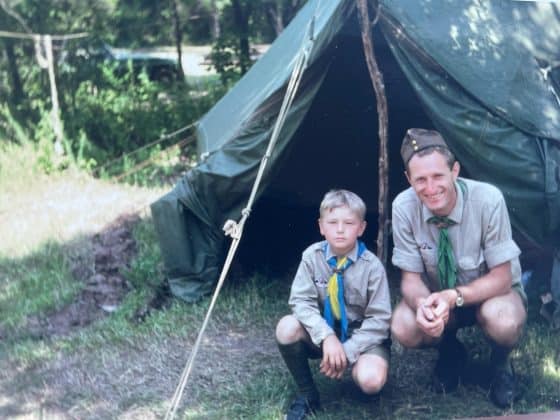
Miklós Schlóder as scoutmaster.
I was in the army for six years; I was discharged in ‘62. By that time, I was already a member of the New Brunswick Scouts. In ‘64, the Hungarian Scout Association in Exteris (Külföldi Magyar Cserkészszövetség, KMCsSz) bought the Sík Sándor Scout Park in Fillmore (upstate New York)—that was when I finished the scout leadership training camp. In ‘65, there was a small patrol camp I attended, and then the Jubilee summer camp in ‘66 as well. In ‘67, I applied for the scout leadership training camp as a trainer, where I was asked to join the New Brunswick Patrol No 5 as a scoutmaster. I took it on a temporary basis—then it lasted 14 years. There were no scoutmasters at the time because the previous ones had become college students and were out of town. I was lucky to have a Hungarian family from Canada move here; they had two boys, and the older one was very good with little children. Tomi Teszár was my saviour: while he took care of the little ones, I did the same with the bigger ones. We learned a lot of practical skills together and often went on different excursions. We tried to make the camps more interesting by taking the scouts, for example, to the New York Catskills and Adirondacks Mountains. When Erzsi Teszár became the leader of the girls’ troop, we all worked well together and built a good team.
Some say that those were the best years in the life of the New Brunswick scouts, when you were scoutmaster. What was your secret?
I don’t know. What I do know is that the most important thing is love.
You have to know how to love these mischievous little kids because they can feel it. They don’t say it, they don’t know it, they don’t think it, but they feel it. Back then, the children were very enthusiastic. Sometimes I organized trips where only the leaders could go. We had cooking competitions between the boys and girls, baked bacon, and went sledding in the beautiful moonlight. Things have changed a lot since then. Scouts, for example, now do many other things as well and, for the most part, don’t go to church anymore. They still go to Hungarian schools on weekends because their parents take them, but the church is out of their lives now. The parents grew up in the pre-communist era, and back then, they and the former scoutmasters would go to church every Sunday. I often said to the kids, ‘We’ll talk about it after Mass,’ or I deliberately organized football matches after the Mass. Thus, anyone who didn’t come missed it. The boys were always enthusiastic, they had a good time, and everyone wanted to be there.
Why did you go to church then and why do you still go to church every Sunday? Where does your faith come from?
When I was a child in Bonyhád, it was natural, I was never asked if I wanted to. There was a railing in front of the pews, where believers had to kneel to take communion. Boys were on one side, girls on the other, and we all had to behave properly. Our teacher was the organist, and he was always watching us. We had the litanies in May, and we would always go there earlier and have a headbutting match next to the church. The preserving force of faith helped us through many things in life. Many times, we had nothing else to cling to; in the absolute uncertainty, God was the only sure thing. There was a cross at the crossroads near my grandparents’ house. When they felt the need, my grandmother would go out there with the girls to pray. My mother prayed a lot later as well. In Germany, where we lived, there was no Catholic church, only Lutheran, but there was a Catholic priest who said mass once a month in a neighbouring village four kilometres (2.5 miles) away—we would always walk there to attend it.
You have always loved children and scouting, too. Why didn’t you want to be a scoutmaster?
Because I always had a lot of other things to do, and I couldn’t afford to live like most Americans of my age. Boy scouts became like family to me. If they had a problem at home, they came to me, and I was happy to give them advice. Once a boy came to me and said, ‘Uncle Miki, I want to talk to you. I can’t live with my father anymore. I’m moving out tomorrow.’ His father had an accident, he was on painkillers, and he was very difficult. I warned him, ‘Your mother and your three younger sisters need you. You have to hang in there.’ The next day he called: his father had died during the night. If I hadn’t given him that advice, I would have felt guilty that his father might have died because his son had left the family.
One of my best leaders was István Vajtay; his brother Tamás became the scout leader after me. Later I led the scout leadership training camp five times, and when I was asked to lead a camp in Venezuela and Brazil, I went there too. It was interesting to meet Hungarians there. Sometimes I missed a year or two, but there were times when I jumped in to help in the middle of a camp. In the meantime, there were several Jubilee camps as well, where I always led the younger age group of 11–13-year-olds. At the last one I attended in Toronto, there were 119 of us in the sub-camp, and only three of us were adults. My deputies were Imre Lendvai-Lintner, now KMCsSz president, and János Glázer from Montreal, Canada who wrote wonderful poems about the Hungarian Revolution of 1956. Imre and I prepared the whole thing together, and at the end, he complained that he had to lead the whole camp alone. I was always working on something else, and I sent him everywhere instead of myself. Not by chance: that’s how I prepared him. In the next Jubilee camp, I only prepared the programmes, games, and competitions in recitation and storytelling. I also showed them some Hungarian folk games and made competitions out of them. I stopped active scouting in 1986.
What happened afterwards? How did you start a family?
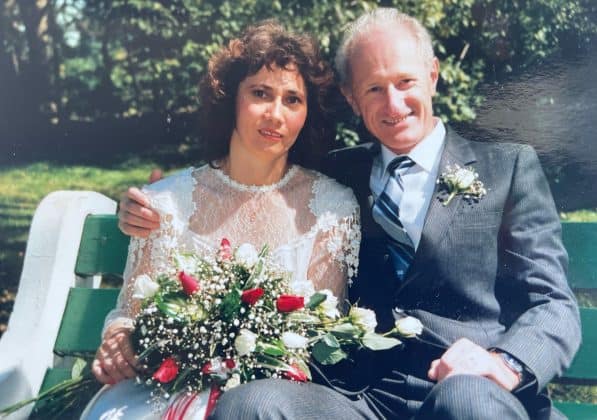
The Scout House in New Brunswick needed repairs. I got some dads together and fixed it up: replaced beams, repaired floors, replaced door locks. I was no longer involved with children at the time. In ‘87, the head of the Hungarian school asked me to teach history to the 13–15-year-olds until the new teacher, Eszter Tóth, arrived. The schoolmistress was smart and pretty, and although I was already 53 years old, I hadn’t thought about getting married before, as I didn’t even have time to court anyone. However, my mother and my sister were fine by then, so in ‘89, Eszter and I got married. In addition to her, I also ‘won’ a 19-year-old daughter, Éva, who was married in Hungary, and a 14-year-old son, Péter. In ‘91, our granddaughter Eszter was born, who later also came here with her mother, and Éva followed her mother in Hungarian education, too. Since then, we have already become great-grandparents, and our older great-grandchild is bilingual.
Miklós and Eszter Schódler on their wedding day.
When I proposed to Eszter, I promised her that I would retire soon, and we would live in Hungary. We even bought a flat where our grandchildren would come to visit and spend the summer with us; but we’ve been here ever since, and we also sold the flat… My mother became ill, which settled the matter. My whole life has always been guided by a sense of duty to my family.
Now we might as well go home, but we wouldn’t be any happier there. Relatives at home are now scattered all over the country, and we are not so mobile anymore either. Here we are part of our family and can help if needed. We live in a Hungarian community; we are happy here. If only we didn’t miss Hungary so much…
What happened to the relatives who stayed in Germany? Do you still see each other?
I visited my father several times in Germany. We kept in touch by phone and after the second sentence exchanged, we were usually talking about Hungary. He is buried in Bavaria. Since Ferenc’s fiancée stayed at home with her elderly parents, my uncle tried to run back for her twice, always without success. Still, he refused to come to America; like my father, he waited in Germany to return to Hungary as soon as the ‘Russians go home’. He finally stayed in Thuringia, started a family there, and is buried next to my grandmother in the Thuringian cemetery. We visited him in ‘94. His legs had been amputated because of diabetes, but even then he kept saying, ‘If I still had my two legs, I would already be at home in Tabód.’
How do you celebrate Christmas?
For me, early Christmas traditions continued in my own family circle, but Eszter didn’t practice religious faith regularly at home, and the communist regime did not support church attendance either, so her experience with the holidays was rather fragmented. Here, however, we have a real preparation period that is, or was, more typical only in the latter period of Advent’s time at home. Our Christmases are more peaceful and warmer despite all the frills and glitter. Our tuning in is more serious, we pray more, and we put our relationship with God first: Sunday by Sunday, we await the birth of the Saviour, strengthened by the Holy Mass. We have not adopted American customs, except that we put candles in the window during Advent and have an Advent wreath on our door, too, not only on the table, but we put up the Christmas tree only on 24 December.
Miklós and his wife with their daughter and granddaughter.
Christmas is also celebrated in the Hungarian way: on Christmas Eve we eat fish, once with our children, but now they spend it with their own families, so we invite our lonesome neighbours over. Afterwards, we attend midnight mass at the Hungarian St Ladislaus Church in New Brunswick, and then Father Imre Juhász’s birthday celebration that lasts until dawn. On Christmas Day, we attend Mass again, followed by a family lunch and gift opening. We gather around the tree, remembering why we are together: to celebrate the birth of Christ. We sing Christmas carols and then eat cookies. It’s physically more and more demanding but spiritually uplifting, so we go as long as we can; even the distance, a half-hour drive, can’t stop us.
Ildikó Antal-Ferencz
All the photos in this article are courtesy of the Schlóder family.
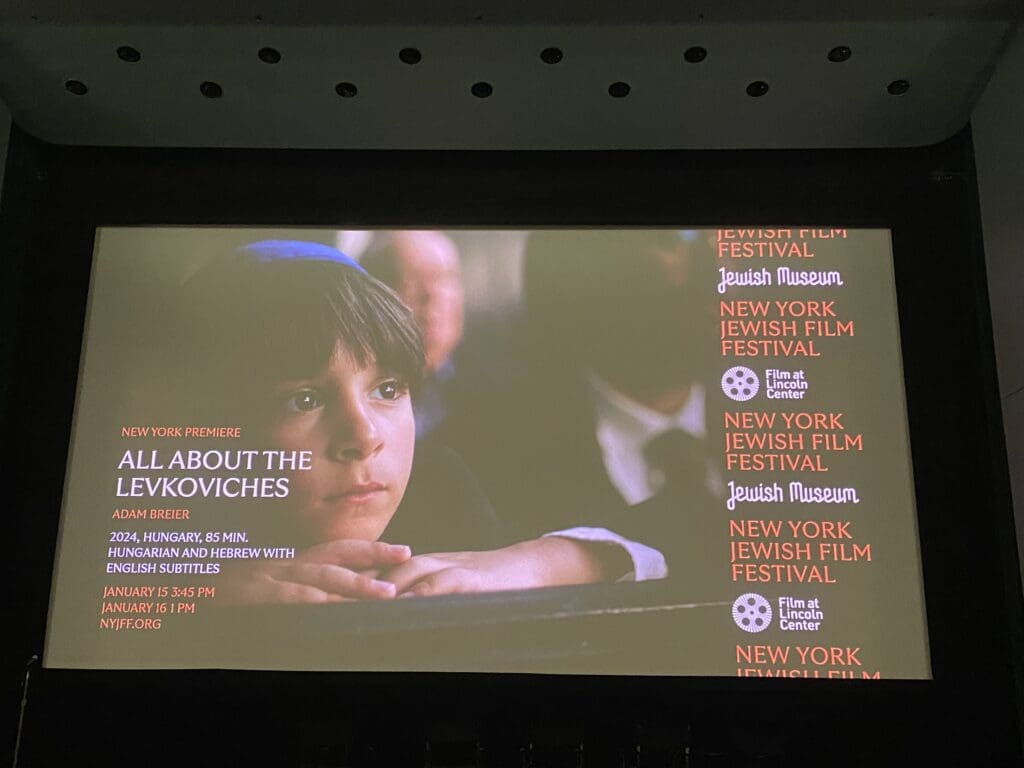
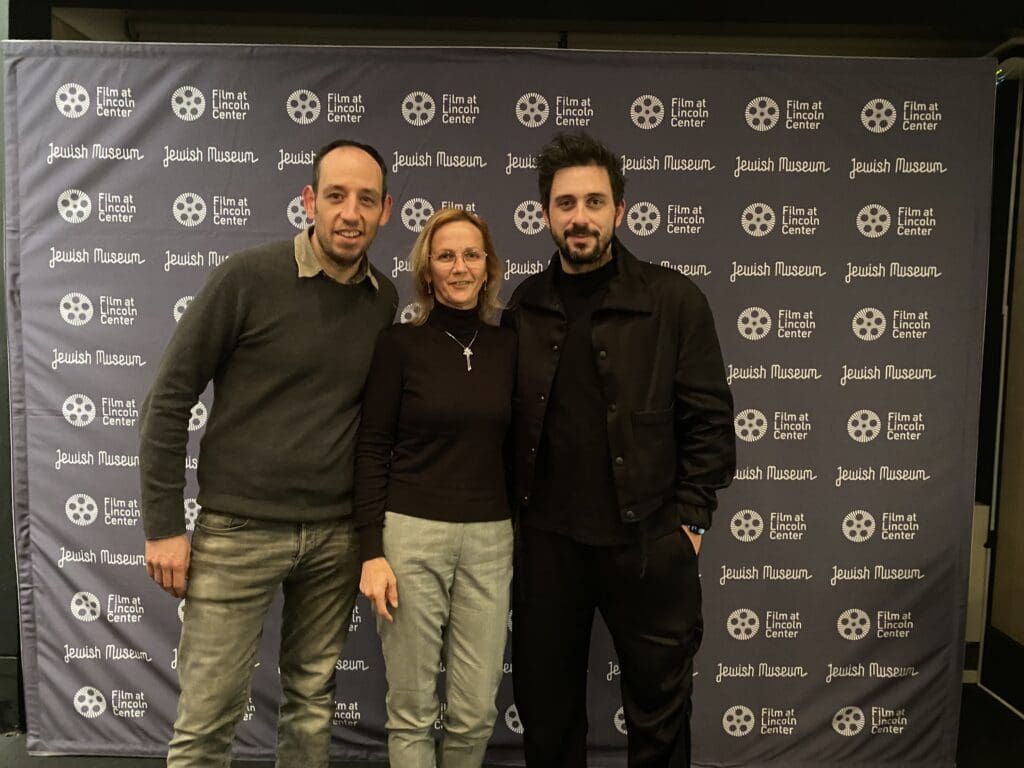
After the successful global release at the Palm Springs International Film Festival in California, the screening of Ádám Breier’s new movie, All About the Levkoviches was also a sell-out in New York. The ‘dramedy’ will also be screened at the Miami Jewish Film Festival before being launched in cinemas across Hungary on 22 February. At the screening at Lincoln Center’s iconic Walter Reade Theater as part of the New York Jewish Film Festival, the director was accompanied by co-screenwriter Bálint Csaba, producer Andrea Ausztrics and one of the lead actors, Tamás Szabó Kimmel, who also took part in a short public discussion afterwards.
Tickets were already sold out days before the screening in New York, and there was a long line of people at the box office an hour before the movie went on the silver screen, hoping to get in in the last minute.
PHOTO: Ildikó Antal-Ferencz
Since I arrived half an hour early, I had time to chat with the couple sitting next to me. The wife, with a Polish-Russian Jewish heritage, has been attending this two-week mega-film festival for 30 years, and her Colombian-born husband has been accompanying her for the past 24 years (since the time they met), supporting his wife in preserving her Jewish culture this way, too. The talkative man took the opportunity to ask the Hungarian journalist sitting next to him (i.e. me) about not only her life in the US, but also the situation of Jews living in Hungary, especially in light of the current war in Gaza. I was happy to tell him that, regardless of the war, one of the largest Jewish communities in Europe can practice its faith and live its culture undisturbed. I also mentioned to him that the synagogue complex of the Dohány Street Synagogue in Budapest, built in the 1850s, is the largest synagogue in Europe and the second largest in the world. So the movie, which was shown in Hungarian and Hebrew with English subtitles, had not even started, but I could already (or rather again) feel like a ‘cultural ambassador’ of Hungary and, after seeing the movie Semmelweis in the fall, once again be proud that so many people overseas were curious about a Hungarian cinema.
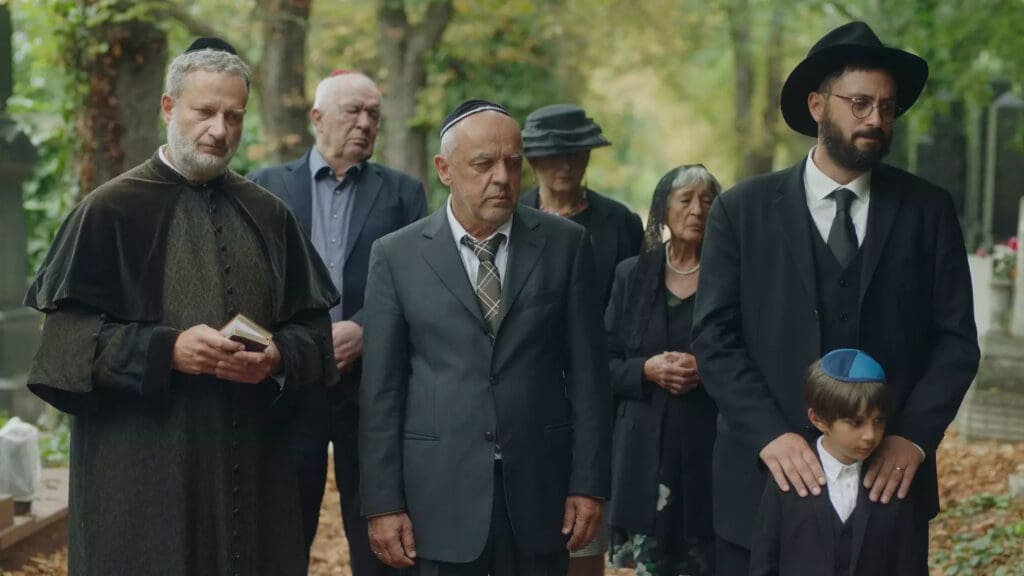
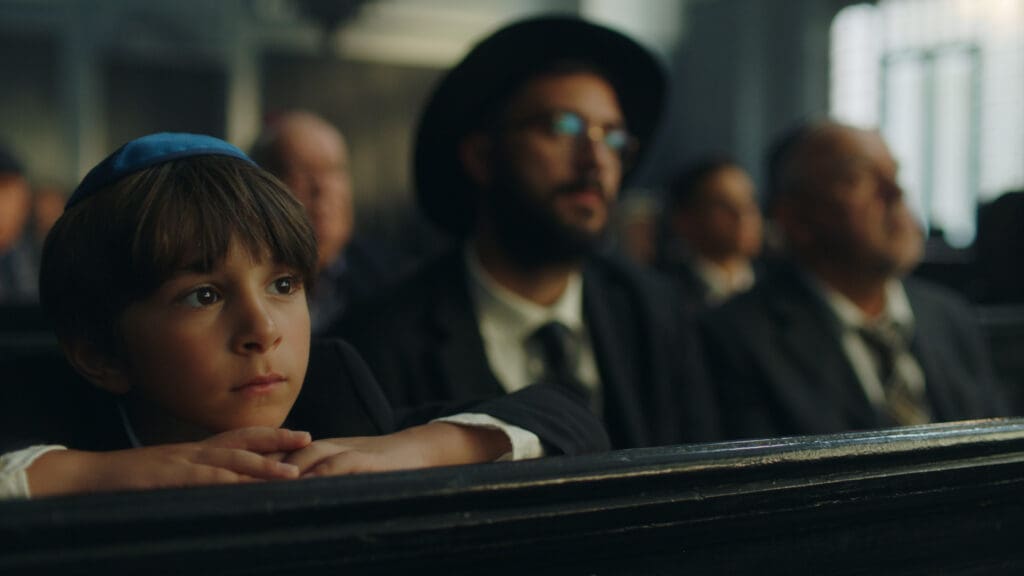
I did not know much about the movie before the screening, beyond the official press releases. The plot follows big-hearted but stubborn boxing coach Tamás Lefkovics (Zoltán Bezerédi) in Budapest and his son, Iván (Tamás Szabó Kimmel) who fled to Israel at some unspecified point in the past to escape from the permanent conflict with his father. He has started a family there as an Orthodox Jew, keeping in touch only with his mother (Ágnes Máhr) and he has not spoken to his father for years. When his mother dies unexpectedly, he returns to Budapest with his six-year-old son Ariel (Leo Gagel) for the shiva (a week of mourning in the family home) in accordance with Jewish traditions. However, his father does not observe Jewish traditions at all; thus the conflict is inevitable, as two worlds are pitted against each other through the two men, with the family’s future at stake.
Photo credit: New York Jewish Film Festival
I was curious to see what the first-time director brought out of this intricate plot, and not only was I not disappointed, but I felt very proud being part of the audience, who reacted with laughter and tears, and was delighted to receive congratulations afterwards from the couple sitting next to me, and then passing them on to the director and the main actor. The couple next to me even declared that they had seen lots of good movies at the New York Jewish Film Festival over the past thirty years including this year, but this one was outstanding. The moderator leading the post-screening discussion also spoke only in superlatives about the movie, so one thing is for sure: after California, it was a hit with the audience in New York, too, and will most probably be in Miami and, I am quite sure, it will be a success also in Hungary.
Ádám Breier, Ildikó Antal-Ferencz and Tamás Szabó-Kimmel (L-R) Photo credit: Ildikó Antal-Ferencz
Why is that? When we hear that this is the first movie for both the director and the co-screenwriter, we try not to set the bar too high, but —as the lead actor told the director upon watching the first cut for the first time—it does not feel like a first for either of them. As Ádám Breier revealed at the post-screening public discussion, he had an explicit ambition to make a movie about Jews living in Hungary, but for a long time he could not find the right story until he turned to his own family’s stories. Bálint Csaba, who was asked to co-screenwrite, did the same, adding some of his own Jewish family experience. But Jewish background was not a factor in the adult actors’ casting, and Tamás Szabó Kimmel, in response to a question, revealed that he is not of Jewish origin. Forming his character was a pure acting achievement on his part; which also had a physical aspect, beyond the beard: before the shooting he was asked to stop exercising, eat and drink a lot more to look ’authentic’ for the role. However, the third main character, the six-year-old boy, came from the local Hungarian Jewish community. The director revealed that after it became clear that the budget of the movie based on funding from the Hungarian Film Institute’s Incubator Programme (and some Hungarian Jewish community support) would not allow for the casting of a child actor from Israel, he approached Jewish communities in Hungary looking for a boy who could speak both Hebrew and Hungarian—that is how he found Leo. As he explained, even the experienced adult actors needed some rehearsal—unlike the boy, surprisingly, except for those ghostly scenes he did not understand at first.
Photo credit: New York Jewish Film Festival
In any case, these difficulties cannot be sensed in the movie, where, in addition to the two male protagonists, who are extremely talented and very convincing (also with their facial expressions in close-up camera shots), the little boy is also excellent throughout, not only with his bilingualism, but also with his equally talkative facial features. The result is a touching, humorous and charming family movie where we have the opportunity to look at serious, multi-layered family conflicts, the mourning process experienced in different ways by the actors and several Orthodox Jewish customs (especially but not only those related to mourning), with equal weight from both (father-son, non-Orthodox-Orthodox) perspectives. One can sympathize with both sides and therefore cheer them wholeheartedly to finally address the grievances that have accumulated over the years and were unaddressed until this point. These take place sometimes in the form of yelling angrily at each other, and sometimes through tense or even peaceful discussions. After a week of mourning (and an unexpected visit at a children’s hospital), there is finally reconciliation—so that life can go on with its usual everyday, but no longer insulting, arguments. Two generations and two cultures collide, painfully yet humorously, and with the conviction—perhaps naive to many, but very much welcomed by me—that the time spent together and the discussions, in spite of all the pain caused, can heal (almost) all the wounds we have inflicted on each other in the past.
The action takes place in our time, yet we have the feeling that we are seeing late-Communist Hungary. The main setting is a suburban, crumbling-walled, ‘70s-’80s-style apartment block and its shabby courtyard. For a moment, the Geodézia Zrt.’s building at Bosnyák Square appears, we see the tram of the Grand Boulevard and the building of a hospital (probably Heim Pál Childrens’ Hospital) and its garishly coloured plastic-chair corridor. Strangely enough, the celebration of the Sabbath (which the grandfather eventually attends and he even wears a kippah—as he mockingly calls it: a swimming cap) is taking place in a location that is unfamiliar to me; while the synagogue building on Dohány Street, which is recognizable from the outside, is not visible at all—at least I do not remember seeing it in the movie. Similarly, none of the iconic buildings of Budapest can be seen. Obviously, the shabby locations in the suburbs have been deliberately chosen, but I could not find out for what purpose; and as there was no opportunity for questions from the audience, I could not ask. Although it was a positive and nostalgic experience for me to see these scenes, I also wondered what kind of Budapest (and thus of Hungary) the audience will get to know through this movie.
Although I have not seen the other characters mentioned in the available press releases, I would like to highlight them as well: the boxing ‘apprentice’ Ferike (I have not been able to detect the young and talented actor’s name yet), who comes from a disadvantaged background and is seen by the grandfather as his adopted son, and who has the role of bringing the old man and his son closer to each other with his simply formulated questions, asked out of sincere concern. The grandfather’s friend Zsiga (András Török), the son’s Orthodox Jewish wife (I could not track her name either) and the rabbi (András Kardos) have the same tasks in the plot. The latter even allows himself to address a joke to the mourning grandfather who escapes to the toilet during the funeral reception.
The movie was supported by the Hungarian Film Institute’s Incubator Programme, co-produced by ULab and Proton Cinema, with the contribution of Zoltán Dévényi as director of photography, produced by Miklós Kázmér, Ádám Felszeghy and Andrea Ausztrics, and executive produced by Claudia Sümeghy. Andrea Ausztrics explained to the audience in New York how movies are being made and financed in Hungary and what their plans with this movie are: after the three American festivals (the next screenings are in Miami on 22 and 24 January), they plan to screen it throughout the US, and after the Hungarian premiere on 22 February, they also plan to have it introduced at several movie festivals across Europe.
More information about the Miami screenings can be found HERE and the trailer is accessible HERE.
This is an abridged version of the original interview first published on reformatus.hu.
Györgyi Papp and her husband, László Bőjtös, fled from Hungary to the United States on December 1, 1956, with the intention of returning soon. When history prevented their return, they alleviated their homesickness by serving the Hungarian community and cultivating the Hungarian intellectual and spiritual heritage in the diaspora. Since her husband’s death in 2021, Györgyi is less active in the Hungarian community, but her heart, soul and beautiful house are still open for all noble Hungarian causes.
***
You like to quote Hungarian poets and writers. Where does the enthusiasm for Hungarian literature and poetry come from?
I started secondary school in Pápa, Hungary, where I had a fantastic teacher of Hungarian language and literature. He always talked about something other than what was in the curriculum or what he was allowed to cover—since at that time we were already living the years of the emerging Communist dictatorship. He promised us: if we answered correctly, he would give us a book that was banned by that time, such as the famous The Tragedy of Man by Imre Madách.
Who else had a similar influence on you as a child?
We lived in Pozsony (Bratislava, at that time a town in Czechoslovakia; today the capital of Slovakia) as part of the local Hungarian minority until I was 13. My grandfather was very religious. He was a pillar of the local Reformed church. They had a mill, a huge plant with two hundred employees supplying the whole country. We lived in Cseklés, a village 15 kilometers from Pozsony and every month he asked a deaconess to visit us for a week to hold a daily Bible study for the whole family. It was mandatory to participate. When I was six or seven years old, I was already given an assignment: I had to read passages from the Bible, and then tell them the next day what those passages meant to me. We went to church every Sunday. I owe my deep faith to him, a great blessing from him that accompanied me throughout my life. And I had very good parents. My father, no matter how busy he was, played board games with me every night. My mother brought beautiful story books and piano pieces. They hired a Hungarian teacher who taught my cousin and me at home, and twice a week they took us to the only Hungarian school in Pozsony, where we were tested. I had a beautiful childhood, despite the fact that history interrupted my life at an early age. In 1938 we learned that our village was being returned to Hungary, while Pozsony remained part of Czechoslovakia. My talented aunt, who studied dress design in Vienna, sewed the Hungarian flag with a coat of arms out of silk and pinned it to the mill. She also made beautiful Hungarian clothes for my cousin and me, in which we welcomed the Hungarian soldiers with a bouquet of flowers and songs as they were marching in. Unfortunately, in the end, we remained part of Czechoslovakia (and shortly afterwards Slovakia). János Esterházy, the famous Hungarian aristocrat and politician, also lived there and tried to support the Hungarian cause through his connections, but he failed.
Another great source of inspiration was your husband, whom you often quote. How did you meet?
When the war ended and the population exchange agreement entered into force, my parents were told that our property would be confiscated, and they’d be sent to a labor camp. Our family lawyer found out that there was a water mill in Mihályi, Hungary, owned by a Slovak citizen and suggested that we try to swap the two properties. My mother was born and raised in America, because my maternal grandparents emigrated after World War I. After my grandmother’s death, my grandfather returned to Czechoslovakia, leaving behind two twenty-year-old sons and my teenage mother, and remarried. When my mother turned 19, her father invited her to live with him; that’s when she met my very handsome father, and they got married. My mother lived in Czechoslovakia, but she didn’t lose her American citizenship, and I also inherited the U.S. citizenship. My father suggested that we (my mother, my sister and I) should go to the U.S. to visit my two uncles, who were living in Cleveland, Ohio at the time, and if the mill exchange succeeded, we should return to Hungary, if not, he’d follow us.
We lived in America for a year; my sister and I went to school here. My father wrote to us in 1948 that he was living in Hungary, so we returned to him. I started attending the reformed college in Pápa, together with my cousin who was the same age as I. In January 1949, I attended a firemen’s charity ball, for which my aunt made my first ball gown. As soon as we entered the ballroom, a very tall young man approached us, and I danced with him for a long time. After that, he went back to Sopron where he studied, but I received a nicely worded letter from him. He was three years older than I. His father was a Lutheran deacon at Vadosfa, a nearby village. There was no Protestant church in our village (Mihályi), we belonged to theirs, our parents knew each other. Whenever he was at home, he always asked my parents if he could pay me a visit.
When did this summer romance become a marriage?
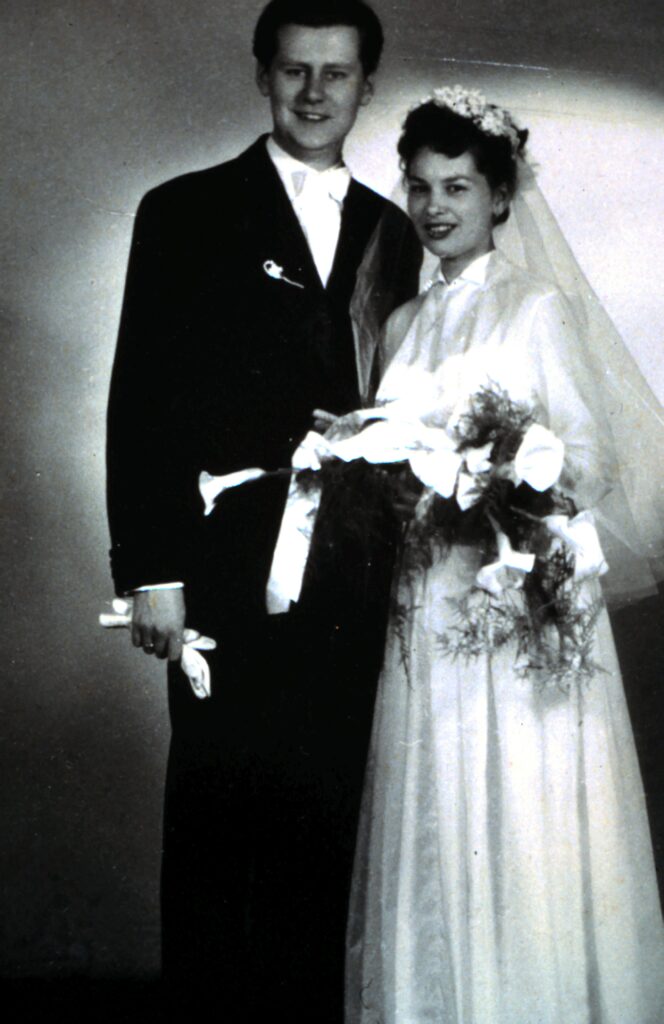
For a long time, life took us in different directions, but we were connected by many common interests and that certain little spark. I met him as a 14-year-old child, but I said yes to him as a 21-year-old adult. He was preparing to become a medical doctor, but he wasn’t accepted because of his father’s background, so he went to Tata to work at a construction site. After a year, he applied to the Faculty of Architecture in Budapest and managed to get in. Meanwhile, I attended the Kazinczy Ferenc Girls’ High School in Győr. Despite my love of literature, I majored in chemistry and physics. When I joined the Textile Research Institute in Budapest, we got in touch again, and by then it was obvious that we’d stay together. We got married on April 28, 1956.
Wedding picture of László and Gyöngyi Bőjtös PHOTO: Bőjtös family archive
My parents had already lost everything by then, Laci’s mother was widowed, so only the immediate family attended our wedding. We lived in a sublet apartment, yet we were happy. We went to the theater and opera a lot, and in the summer to Lake Balaton. Laci worked together with his best friend, Béla Szittya, with whose wife I made a lifelong friendship. Laci kept in touch with Béla while in America; I treasure their literary correspondence with great affection.
How did you escape to America?
On October 23, 1956, Laci went to the University of Technology, then marched with the students to the Bem statue. I had to stay at home, because I was waiting for the delivery of the coal supplies. Meanwhile, the demonstration turned into a revolution, and Laci came home in the evening with the news that there’s fighting at the radio building with dead bodies on the streets. It was awful. We didn’t participate in the organization of the revolution or the armed fight, but we went out to the major demonstrations and were shot at. We spent the following weeks in Győr and Vadosfa, but Laci occasionally went to his office in Budapest, where he was warned: if he didn’t escape, he would be in big trouble. We didn’t have any plans or goals in America, we fled with the intention of returning as soon as possible. We left on December 1. At night an acquaintance took us one by one on a motorcycle to a farmer whose land bordered Austria. The man led us across the border, checking potential landmines as he walked ahead with a long stick. The Russians and the border patrol were repeatedly firing light rockets, but the sound came first followed by the light, so we had time to lie on the ground and stay motionless for a while. At one point our guide told us that we were in Austria. We stood there in the cold night, homeless, insecure, aware that the freedom fight was crushed. The Austrian Red Cross took us to a school building, where many people were sleeping in a large room on rubber mattresses. One of Laci’s colleagues was already living in Austria, and he helped us contact the consulate to obtain the immigration permits. We succeeded in just a few months; the Lutheran World Federation became our sponsor. I know others waited much longer, but it also seemed very long…
We spent Christmas Eve in Austria. The Austrian ladies were kind: when we went to a grocery shop for two slices of meat, they paid for us. Still, Christmas Eve was very difficult, as we wandered the streets and saw many beautifully decorated windows, and we had nothing but our Bible, which we received from the Lutheran pastor István Szépfalusi, who was holding service for the refugees. I was reminded of Kányádi’s wonderful Christmas poem Behind God’s Back. Still, it was our truest Christmas. That’s when we felt the most what it meant. I’ll never forget how we sat on the straw beds in the empty Russian barracks, ready to leave and reading the Bible while waiting. No glitter, no gifts, just a message of peace, goodwill and love, and the joy of the Savior’s birth.
How did your life in America begin?
We arrived at Camp Kilmer Military Base in New York and stayed there for two weeks, after which we got a train ticket to Cleveland. We arrived in a dress and a coat, with all our possessions in a small cardboard box. My mother’s brothers were waiting for us, and they took us to the Lutheran church on Sunday, where I had to tell the church community what our professions were. An architect immediately approached Laci, took him to his business the next day, and in two days he had a job. He was hired as a draftsman because he first had to learn the different units of measurement and the language. I knew English better—my mother had taught me—, so after two months I was already working at a research institute. We didn’t think we would get jobs in our professions; we thought we were going to clean houses as many others did. The church rented an attic apartment for us. The landlady didn’t allow us to open the window, so every Sunday we went to the nearest cinema, whatever was playing, because it was cool there…
In the meantime, you started to make a lot of friends.
Yes, the 56ers were all equally poor; we were united. In the early ’60s our daughters Anita and Barbara were born; we bought a house in nearby Brecksville, and I worked at the research institute there. My mother was able to visit us several times, although it was difficult for her to leave my father at home. We returned to Hungary for the first time after our immigration in 1968. It was a wonderful feeling to set foot on Hungarian soil, and after that we went back often, even though we were being watched by the communist authorities. We were very homesick, missed our family, correspondence was so slow at the time… But moving home was out of the question until the regime change in 1989–90, when it was too late—we couldn’t start all over again. Laci felt that he could do more for the Hungarians from here than if he moved back. In 1990 József Antall became the prime minister of Hungary, and he visited the U.S. the next year. Four hundred people waited for him in Cleveland and Laci was selected to welcome him. Laci was appointed Honorary Consul of Hungary on March 18, 1993. This was the first appointment of its kind in the United States and he held it until his death, for nearly thirty years.
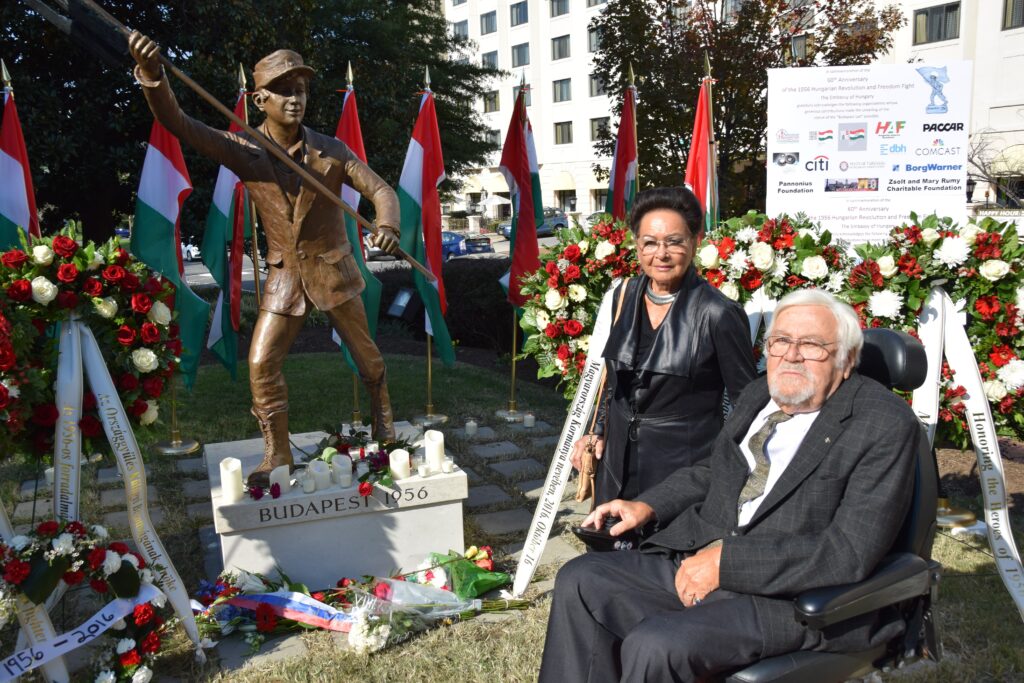
Györgyi and László Bőjtös at the statue of the Budapest Lad in Washington DC
How did your house become a Hungarian intellectual center?
A group of intellectuals from Transylvania came for the first time in November 1971 including writers and poets, András Sütő, Sándor Kányádi, Árpád Farkas and several actors. Sándor Püski, the owner of a small bookstore in New York, sent them to us and we embraced them. They were welcomed by Laci and the poet Gyurka Gyékényesi. Afterwards, Laci also organized many such trips for them and others. Our guestbook contains 82 entries from the early ‘70s to the ‘90s. These occasions also helped us endure our strong homesickness. Almost all of them became friends. Budapest-based leading intellectuals also visited us during these decades: Sándor Csoóri, Mihály Czine, András Görömbei, Béla Pomogáts, Lajos Für, István Csurka and others. We had many visitors from Felvidék (Highlands, today Slovakia), for example Péter Nagy Püspöki, Miklós Duray and László Dobos. We became especially close friends with the latter; we met with him every year and I cherish his wonderful letters.
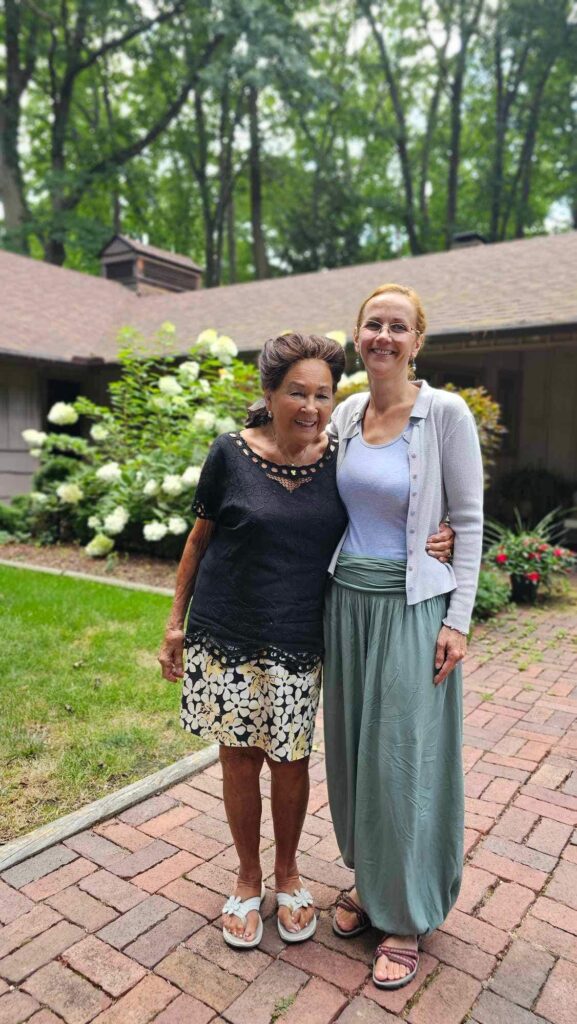
Györgyi Bőjtös and the author outside the Bőjtös family residence in 2023
But not everyone looked favorably on them; many people thought that those Hungarians who were allowed to come from the Carpathian Basin were all communists or their proxies. They were also punished at home for these trips. There were times when the church lent a room for the events, but they often simply took place at our house. It’s not ostentatious, but it’s warm and natural; the windows bring nature close. In our marriage, it was Laci who usually made the important decisions but I was the one who insisted on buying this particular house. When he was forced into a wheelchair at the end of his life, he became grateful for it, because we could take care of him at home (instead of an institution) and he could easily go out into the yard. He said: this is our paradise.
László also became the president of the Magyar Baráti Közösség (MBK, Hungarian Communion of Friends). How did he become such an intellectual engine in the diaspora?
The MBK, which organizes the ITT-OTT (Here and There) conferences, started towards the end of the ’60s, when we met many young Hungarian intellectuals who were preoccupied with the same matter: the uncertainty of the refugee status. The immigrant youth movements didn’t see the long-term perspective of being Hungarians in America. They believed that while the immigrant mentality leaves only two ways open, returning home or assimilating, the diaspora spirit made it possible to stay abroad. The diaspora mentality finds the meaning of Hungarian identity in the traditional folk values and advocates these throughout the world. It doesn’t isolate itself either from the world or from present-day Hungary but nurtures contact with both; builds and maintains relationships everywhere. The idea of a ‘borderless homeland’ was therefore formulated: ‘Wherever there is a Hungarian, there is Hungary.
In 1973 an annual one-week community gathering began, also organized by Laci, which moved to Lake Hope in Ohio after three years. Hundreds of Hungarian intellectuals paid a visit there, and then typically to us. Close to 300 people participated in the first conference. However, after the regime change, maintaining contact with Hungary became easier, and interest in these kinds of gatherings dropped.
Yet your house remained a frequently visited intellectual center.
Since the beginning of the ’90s, we’ve hosted professional and political organizations and individuals in Hungary and the Carpathian Basin, supported by the USIA and USAID programs: mayors, university delegates, business leaders and politicians, among others, Géza Entz, György Granasztói, György Frunda from Romania, György Tokay or József Kasza from (former) Yugoslavia, László Józsa or Iván Gyurcsík from Slovakia. In recognition of our hospitality, the Cleveland Council on World Affairs awarded us both a ceremonial diploma. In May 1999, Hungary joined NATO, and as a precursor to that, in August 1993, the U.S. Department of Defense asked the Cleveland National Guard to coordinate the preparation of the Hungarian military for NATO accession. We hosted Hungarian and American staff delegations three times during those years, for which the State of Ohio honored us with the Ohio Distinguished Service Award.
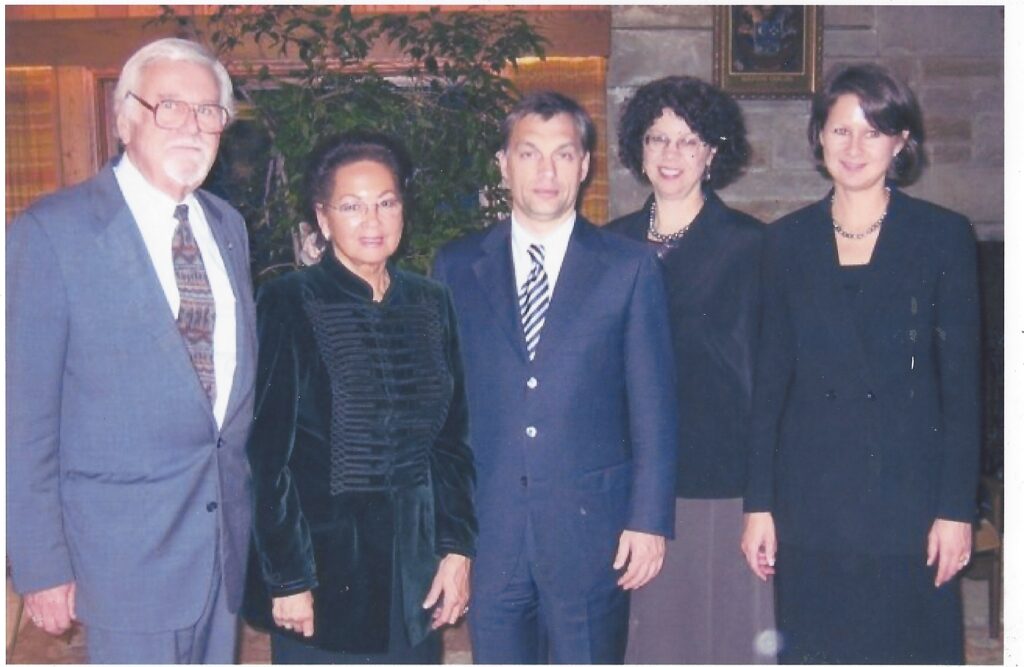
In 2000, Minister of Education Zoltán Pokorni and his delegation visited us here, too. In 2002, Hungarian President Ferenc Mádl awarded Laci the Middle Cross of the Order of Merit of Hungary for his activities in the interest of Hungarians and in 2003, he received the Pro Auxilio Civium Hungarorum commemorative medal from the Hungarian Minister of Foreign Affairs. On October 23, 2004, Prime Minister Viktor Orbán (at that time the leader of the parliamentary opposition), who was visiting Cleveland as a speaker, also had dinner with us. We met him previously as prime minister in Washington DC in 1998. In addition to being a president of the MBK, Laci was the three-time president of the Cleveland Hungarian Club, the president of the board of directors of the American Hungarian Foundation and a member of the board of trustees of the Hungarian American Coalition.
The Bőjtös family with Viktor Orbán in 2004 PHOTO: Bőjtös family archive
What about your business your husband supported from the background?
Laci built two churches in Chicago and once I accompanied him on his visit to the city. It was our wedding anniversary, so he took me to a jewelry store to buy me a beautiful ring from their unique, wonderful stock. At Laci’s suggestion, we bought some jewelry, and later we opened a small shop in a new shopping center in Cleveland. This happened 40 years ago, and today we have our own building, studio, goldsmith, and we work with international designers. It was very difficult at first; if I had known, I wouldn’t have started it. We had to be open from 10 am to 9 pm every day and it entailed a lot of risk. Fortunately, I never got into major trouble. My younger daughter Barbara got involved while she was a student. Laci wanted her to pursue architecture, but after our daughter spent a summer as an intern with him, she refused. At university, she studied business and programming, while her husband studied finance. This is a very good combination, they could make excellent use of it. We worked well together for a long time, then she took over the business.
You always stood by your husband, which I assume wasn’t always easy…
When we came to America, both of Laci’s kidneys were attacked by disease, it couldn’t be cured. I prayed a lot to the Lord to not let him go. His disease completely disappeared, and he could live a normal life until he retired. This was a miracle, since the doctor didn’t encourage us at all, yet he lived until the age of almost 90.
Everything he did for the Hungarian people, especially all those meetings, I was part of and loved them very much, just as well as baking and cooking for these occasions. He organized charity dinners for really affluent people: five men in suits and white gloves served food to very rich Americans, while the women prepared the soups and washed the dishes. A dinner for ten guests cost 3,000 dollars, but usually three more dinners were immediately booked. That was considered very serious money at the time. For example, we could buy and send several TV satellites to Transylvania, supply computers for schools in Hungary, medicine and equipment for hospitals, etc. He was a charismatic man…Everything we’ve been through connected us. That’s why it’s so hard without him… I’m eternally grateful to my daughters and grandchildren, because they surround me with endless love and constant care: we are in daily contact and have dinner together every Sunday. I’m praying that I’ll live until we properly record my husband’s legacy.
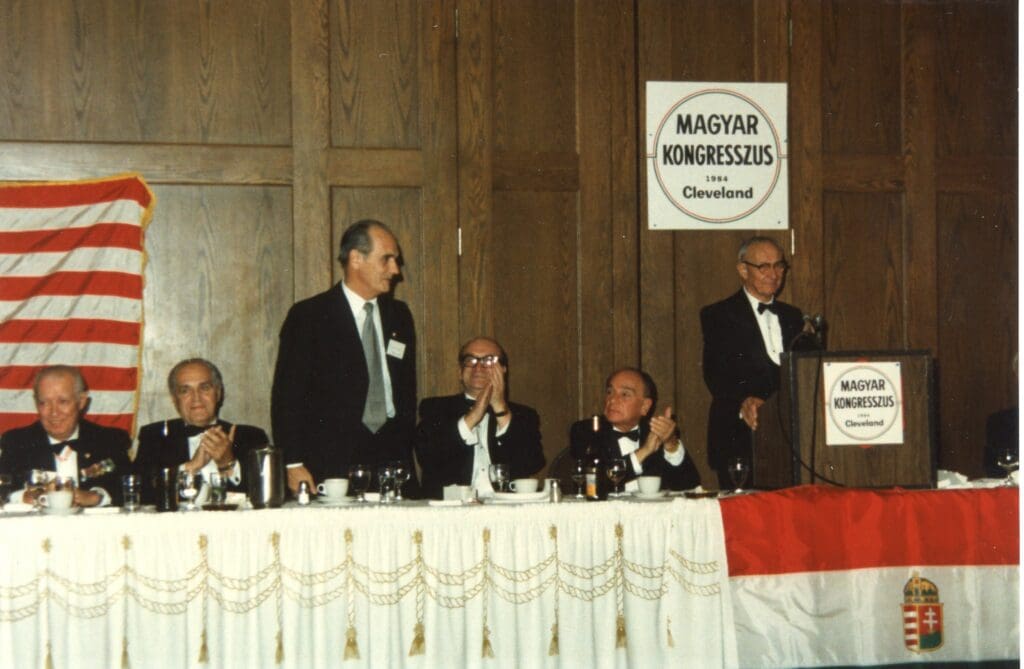
The 62nd Hungarian Congress organized by the Hungarian Association of Cleveland offered a diverse and valuable programme of scientific, economic and literary presentations as well as cultural experiences. Executive president Gabriella Ormay Nádas explained: the annual event and the organization itself were part of her husband’s (dr. János Nádas) family legacy; but she also inherited a family legacy of her own: commitment to the Hungarian diaspora in North America as well as the support of the Hungarian Reformed Church’s Collegiates in Transylvania.
***
Please tell us first about your family, so that our readers may get a better idea of your legacies.
My parents immigrated from the Érmellék region (Transylvania, now part of Romania) and were so-called 1945 refugees. My mother, Gabriella Ormay (nee Kiss), was a volunteer nurse during World War II; she left the country with the retreating German-Hungarian army and never returned. My father, Dr. József Ormay was a bomber pilot whose squadron surrendered to American forces in Austria. My parents married in England and emigrated to Canada; I was born there. My brother and I grew up on the Niagara Peninsula. Very few Hungarians lived there, but my father was often invited to speak at local Hungarian national commemorations, so we never questioned our Hungarian roots. When I moved with my family to Toronto to attend University of Toronto School of Pharmacy, my family became active in the Hungarian community. My mother taught Hungarian at Helicon Hungarian School and succeeded in getting these language courses accredited by the Province of Ontario. My father also served as the president of the Hungarian House for two years. My parents had an ingrained sense of duty to serve the Hungarian community. I think they were able to instill those emotions in us. I became a scout leader, joined the Helicon Youth Association, of which I later became president. The Helicon Association was founded by Canadians of Hungarian descent aiming to promote and disseminate Hungarian national heritage, culture, history and traditions in Toronto. Its golden age was in the ‘60s, but when I got there in the ‘70s, the youth association was still strong.
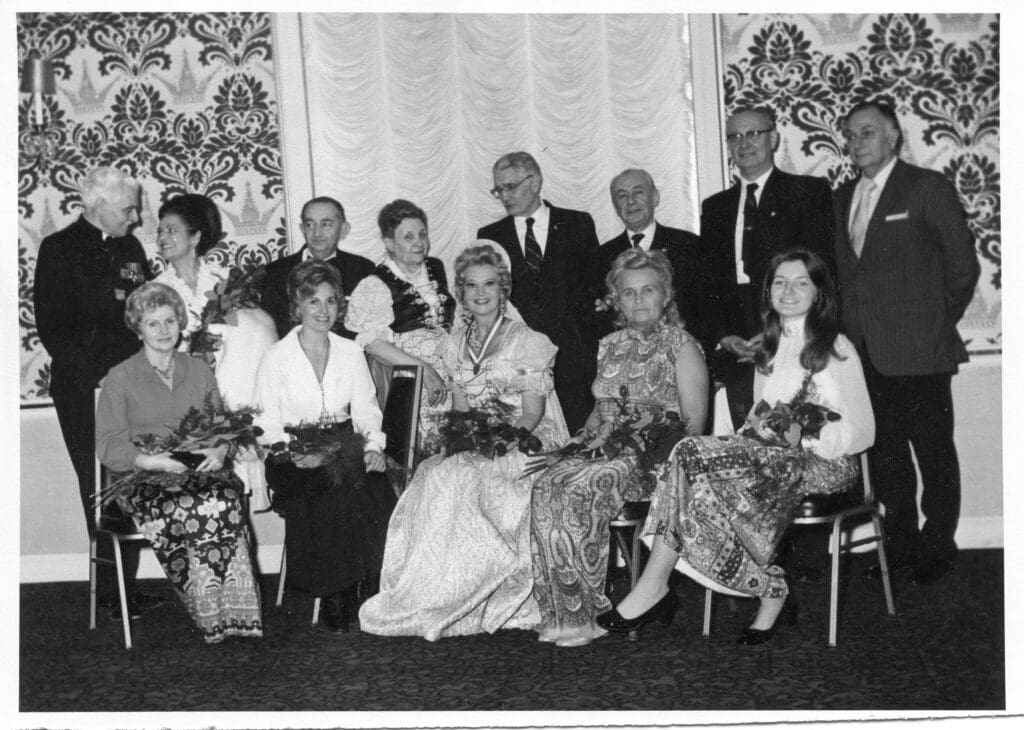
An evening of art from 1970. Standing: first from the left József Hamvas (Toronto), fifth from the left Dr. Ferenc Somogyi, second from the right Dr. János Nádas; sitting in the middle is renowned interwar actress, émigré Zita Szeleczky. PHOTO: Courtesy of the Nádas family
We met every two weeks on Fridays to listen to lectures and then socialize. Later, our group of about twenty friends took over the organization of the annual Helicon Ball, of which I became the president in 1980. It was an elegant event, a representation of our community to the outside world, attended by many Canadian politicians. I must also mention that I have been a member of the Hungarian Scout Organization in Exteris as a squad and patrol leader in Toronto, a troop leader in Cleveland and a member of the leadership training program. This scouting background was instrumental in maintaining my Hungarian heritage.
What about your husband’s family?
My father-in-law’s family originated in Kecskemét, Hungary, then lived in Kolozsvár (today Cluj, Romania) and were forced to return to Hungary after WWI. The three siblings, János, Gyula and Rózsa completed their doctoral degrees at the University of Economics in Budapest, and had promising careers until 1945 when they escaped to Austria from the incoming Soviet troops. Dr. János Nádas had already lived a very active community life back in Hungary: he represented the Hungarian youth at the Kossuth pilgrimage to the USA in 1928; he was the president of the Youth Association of the University of Economics and President of the National Association of Hungarian University Students. He was the editor and owner of the weekly newspaper Igaz Szó in Újpest, secretary of the Hungarian Press Chamber, and national secretary general of the Party of Hungarian Life. My father-in-law dr. Gyula Nádas was a financial advisor in the Ministry of Finance and Dr. Rózsa Nádas was the head librarian of the Chamber of Commerce and Industry in Hungary. Dr. János Nadás founded the Hungarian Association already in 1948 in the displaced persons camp in Austria, and then again in 1950 in Cleveland. He was joined by his siblings in the organization work, Dr. Rózsa Nádas was mainly in charge of the administration, Dr. Nádas Gyula organized the exhibits.
József Hamvas (Toronto, standing, C), to his right: Tibor Tollas (München), Domonkos Papp Gyallai (Toronto), and Dr. János Nádas at the podium. PHOTO: Courtesy of the Nádas family
How did the two of you meet?
When I attended the Hungarian Congress in 1980, I met Dr. Gyula Nádas’s son János. He was born in Innsbruck, Austria, in a refugee camp, came to America as a small child, got involved in the Hungarian community in Cleveland, taking advantages of all it had to offer: he had Hungarian fencing, swimming and violin instructors and was a member of the local Hungarian scout troop. Thanks to his Hungarian coaches, in 1970, he won the NCAA (National Collegiate Athletic Association) fencing championship in épée and that partially opened the door to his acceptance at Duke medical school. Once he got his degree in psychiatry in Chicago he did do some scouting and helped his family with the Hungarian Association’s Congress. We got married in 1981, which is how I moved to the USA and became part of the extended Nádas family. We lived in Indiana initially, very far from the Hungarian communities and my Toronto-based parents, so we moved closer, to about an hour south of Cleveland, and thus we were able to get involved in the local Cleveland Hungarian community.
What was the original purpose of the institution?
Their call was ‘to invite all Hungarians to join the Hungarian fraternal community, to cultivate Hungarian culture, to improve their own destiny, to promote the great Hungarian goals’. They wanted to provide a home where at least once a week, on Sunday afternoons and evenings, „ all Hungarian individuals and families, especially new immigrants, could meet in an intimate and relaxed atmosphere, at minimal cost”. Social events were regularly organized (chess, bridge and tarot clubs, social and dance evenings), as well as a series of free university lectures featuring Hungarian emigrant speakers who were experts in their fields. Literary and artistic evenings, commemorations and anniversaries were also organized. The organization, although conservative in its values, was non-political. However, if there was a need to protest the Communist regime, for example in ‘56, they spoke out, and organized protests. For example, in December 1956, President Dr. János Nádas and General Secretary Aladár Burgyán sent a letter to American decision-makers calling attention to the oppression of the Hungarian freedom fight. In addition, they focused on preserving the Hungarian identity of the youth: not only in encouraging parents to support the Hungarian scout movement, but also organized a special language school. In 1961, under the leadership of dr. Ferenc Somogyi a two-year ‘Hungarian Studies Academy’, was established. The success of the academy prompted the administration of the Western Reserve University Cleveland College to start a Hungarian cultural history course in Hungarian, also taught by dr. Ferenc Somogyi.
Why were the Hungarian Meetings necessary?
Hungary lost a significant part of its educated middle class at the end of World War II. The Hungarian intellectuals, who had made friends in refugee camps in Austria, were scattered all over the world, and when dr. János Nádas, dr. Béla Béldy and dr. Ferenc Somogyi decided to organize a Hungarian Congress in 1960, participants came from not only America, but Australia, Argentina, Brazil, Venezuela, and Canada to attend. Here individuals could freely discuss the challenges that the Hungarian immigrant community was facing. Over the years, its literary and artistic evenings, elegant banquets and Hungarian balls have become major events with a nationwide importance.
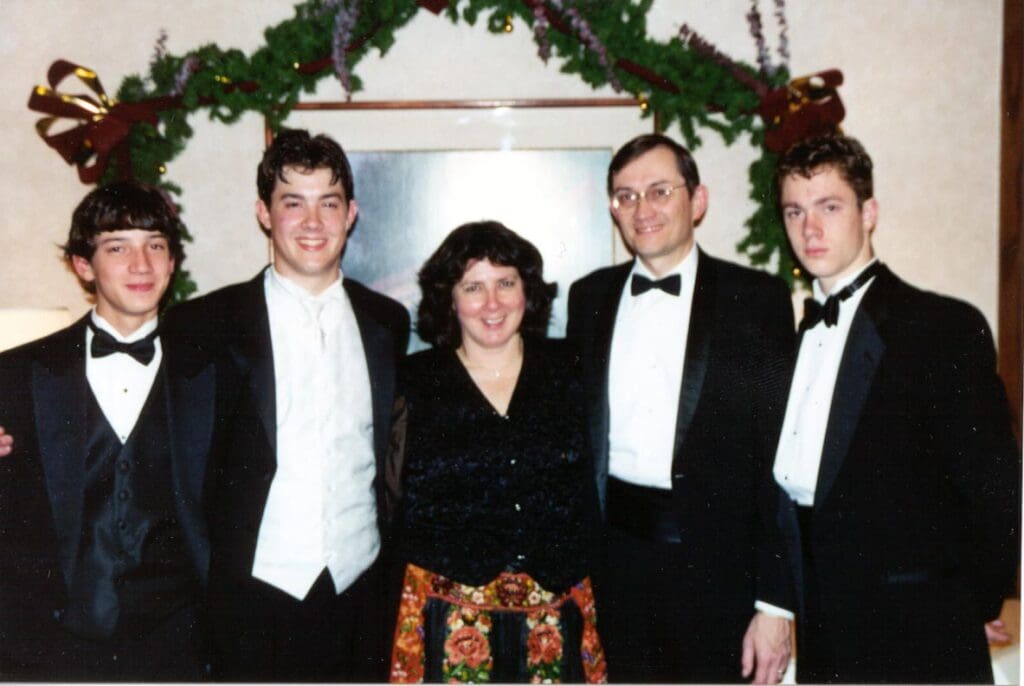
The Nádas family at the Hungarian Ball in 2001. PHOTO: Courtesy of the Nádas family
How and why was Árpád Academy founded?
In 1962, the Hungarian Association announced an annual competition and established annual awards to reward the most outstanding intellectual achievements. Gold, silver and bronze medals and certificates of honor named after Árpád, the first head of the confederation of Magyar tribes in the 10th century, were awarded. The first gold Árpád medal was a stylized copy of the Hungarian Golden Bull, drawing attention to the historical fact that the publication of this Hungarian constitutional charter of freedom in 1222 followed only seven years after the publication of the English Magna Carta. The establishment of the Árpád Academy was decided in 1965, to group together the winning competitors. Their aim was to search for, enumerate, professionally evaluate, preserve and promote the recognition of outstanding works of Hungarian authors, artists, researchers and professionals living in the Diaspora. Dr. Ferenc Somogyi, was the first general secretary and his legacy today is carried on by his son Lél Somogyi.
And how did you end up on the board of the Hungarian Association?
My involvement started only in the late 1990s when members of the previous generation passed away or were no longer able to carry on organizing the events because of their age. There was a functioning Board, which slowly grew to encompass a younger generation including people whose parents belonged to the Hungarian Association, such as the current vice-president dr. Márta Pereszlényi, Lél Somogyi or my sister-in-law, Panni Nádas Ludányi. Dr. Gyula Nádas took over the Presidency of the Hungarian Association in 1992 after Dr. John Nádas died. His son, my husband Dr. John Nádas took over the organization in 2004 as President. Currently we focus on organizing the Hungarian Congress, the meeting of the Árpád Academy and the Hungarian Ball every November. The Hungarian Community in Cleveland is very strong with many monthly meetings including lectures and exhibits by the Cleveland Hungarian Heritage Museum, Hungarian National commemoration by the United Hungarian Societies, and there are several Hungarian church and Hungarian scouting programs. Our yearly meeting further strengthens the community offerings.
How has the Hungarian Association adapted to a changing world?
This is a difficult issue. The people for whom these meetings were an integral part of their life have passed away. One challenge we face is that the event is on Thanksgiving weekend, which is a family holiday in the USA, and many of our members travel out of state to be with their families. On the other hand that is when a lot of college students come home, and the Congress gives them a chance to get together. This year, family values was our main theme, and for the first time, we introduced a family program with children’s games. This brought in the thirty- to forty-year-olds, who brought their children and while the children were playing, they could talk to each other or attend presentations. Ilona Gulden and János Szabó, organized a folk dance for families. We also had a puppet show re-enacting the folk customs of the Bethlehem Story. One of our legacies was debutante balls. At this moment being a debutante is not trendy, but the atmosphere of times long past was recreated by the Hungarian Scout Ensemble performance of the traditional Palotás Court dance. We are trying to recruit younger people as organizers; for instance, my husband’s niece, Krisztina Nádas, joined us recently as treasurer. Her daughter Réka and her sister-in-law Tímea Nádas gave lectures. The whole Nádas family participated at the Ball. Kata Nagy Nádas is planning to put together a Hungarian evening show performance for next year. Every year young Ferenc Somogyi, Lél Somogyi’s son, helps with the IT. But it is not enough to have one or two families help; this is not a family organization. We would like as many people as possible to come, we need people of all ages. This needs to be a community affair.
Let’s also talk about your other family heritage, the reformed (Calvinist) colleges in Transylvania.
After the change of regime, in 1990, I was asked by my mother’s cousin Dr. Kálmán Csiha, Bishop of The Reformed Church of Transylvania to be the administrator of the Calvin Synod’s mission to support the schools of the Reformed Church in Transylvania.
Gabriella Nádas standing next to Bishop Kálmán Csiha. PHOTO: Courtesy of the Nádas family
Our first fundraiser was for the construction of the dormitory of the Reformed Church Kolozsvár Boarding School which became the Diaconate building. Then we started the symbolic godparent program to financially support the students attending the school. The donations supported the building of the Diaconate building in Marosvásárhely (Târgu Mureș, Romania), the refurbishing of the Bolyai School in Marosvásárhely, and the building of the gym in the Székelyudvarhely (Odorheiu Secuiesc) Collegiate. Today we support four Reformed Church schools in Transylvania, with donations for school upkeep and student support. In total, more than two and a half million dollars have been donated to these institutions all from Hungarians living in the Diaspora. Initially we supported ten students; today we support 130.
School pastor Tibor Kovács (L), Gabriella Nádas and Árpád Székely, the principal of the Reformed Church Collegiate. PHOTO: Courtesy of the Nádas family
Are you coordinating all this? Why did you take it on?
Transylvanians have always been dear to my family. When Bishop Csiha was put in a Romanian prison for political reasons after 1956, my grandmother went into mourning. As a child, I did not understand what was happening, I just felt that it was something very serious. The fate of the Hungarian minority in Transylvania is something that has stayed with me for my entire life. I think many people in my generation are still emotionally very much attached to Transylvania. I do coordinate the Calvin’s Synod School mission, but I have had help and support from several individuals. Edith Lauer, my friend, was well versed in fundraising and provided much needed guidance. Rev. Béla Szigethy, who lived on the West Coast, and Rev. Sándor Babos, the only missionary of the Reformed Church, were my spiritual supporters, but they both passed away long ago. My job currently is meticulous background work: keeping in touch with our donors through newsletters, following up regularly, thanking them personally for their donations, commemorating deceased donors, etc. Thus, the whole donor community is like a circle of friends working together for a common cause. Some donate $100, others $150,000, depending on how much money they can afford and how emotionally attached they are to the cause. Those who pass away usually leave us larger legacy donations. Sadly, no new donors have stepped into their shoes, so this year there were only twenty-seven donors, but still $118,000 was collected, which is a large amount. I hope the next North American Reformed Church Calvin Synod bishop will support the mission, like our current Bishop, Rev. Dr. Csaba Krasznai does. Fortunately, the Hungarian government is supporting the Transylvanian churches and their institutions, so I no longer have the feeling that their financial fate depends solely on this mission.
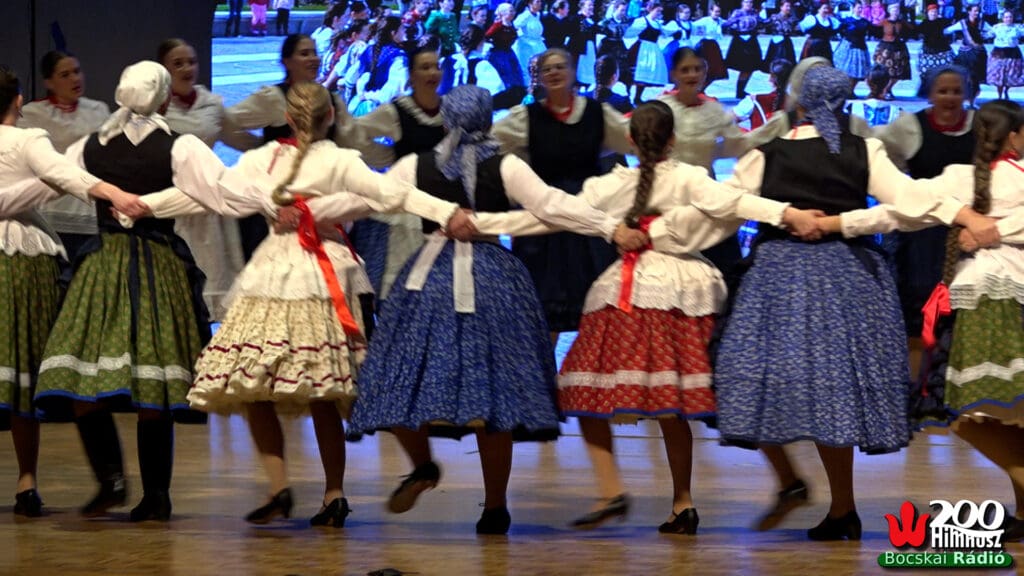
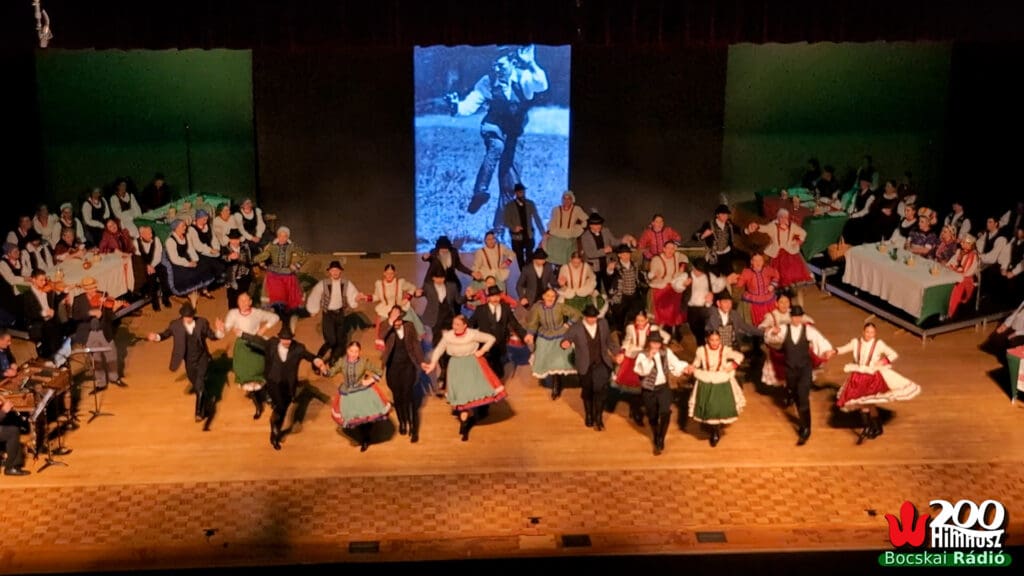
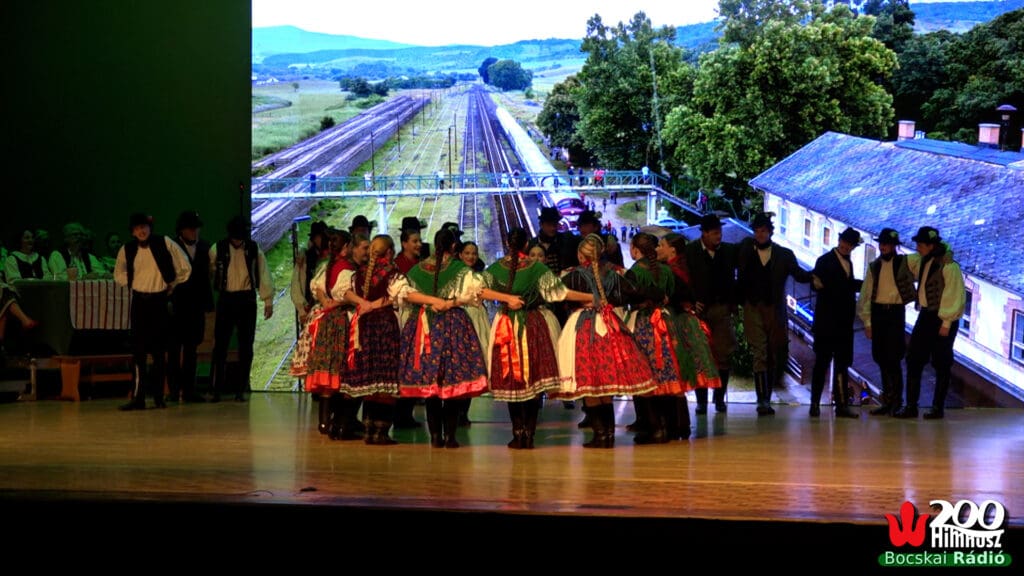
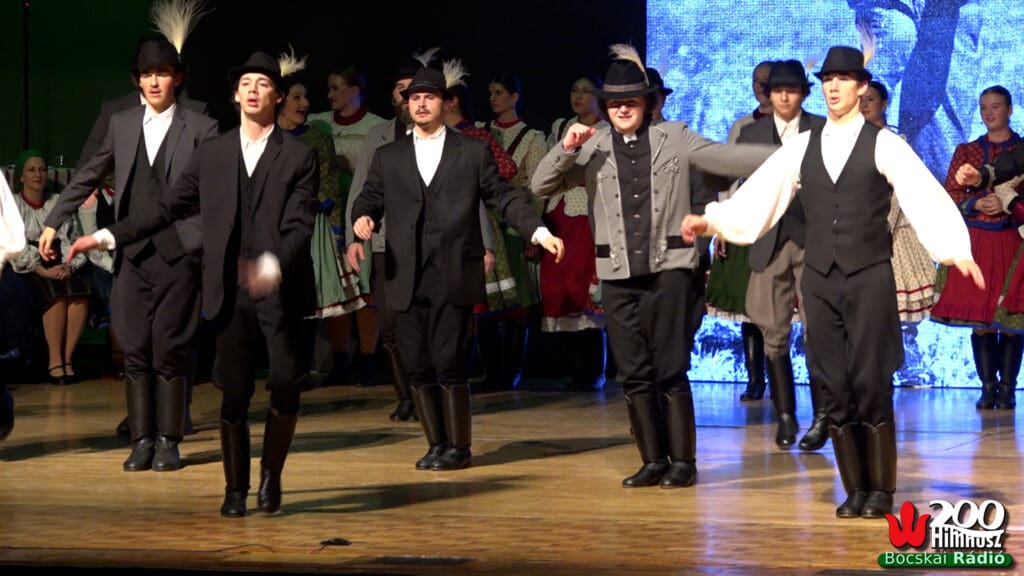
It was earlier this year at Pontozó, the largest Hungarian folk dance festival in North America (held in New Brunswick, NJ this year) that I had the chance to first see the Cleveland Regös Group perform. It was spring, yet their audience was enthusiastically invited to their Golden Wedding Gala organized for a November date. The Regös Group puts on a big performance every five years and this year marked their 50th anniversary of existence, and also aimed to showcase the cycle of human life beyond commemorating the past 50 years of the group. Although I finally did not make it to the gala, thanks to Bocskai Rádió’s recording, I could watch and get a taste of the atmosphere of this extraordinary performance lasting for several hours and staging hundreds of performers for more than a thousand spectators—a memory for the next five years, but more probably for a lifetime.
The Cleveland Regös Group, founded in 1973 by Magdi Keresztes Temesváry and her husband András, has had more than 400 members in 50 years. It is made up of local scout leaders above 14 years of age who lead their 6–14 year old scouts every Friday, while on Tuesdays learn and practice Hungarian folk dances and folk traditions including an Easter fertility ritual, setting up a maypole in May, and singing carols at Christmas. They also carry out regular ethnographic research and collections, organize camps every summer and once in every five years complete a three-week long trip to Hungary and the Carpathian Basin.
The anniversary gala was attended not only by current and former (alumni) scouts, but also by many scout friends and supporters from all over the Hungarian American diaspora. As Eszti Pigniczky, scout leader and former Regös Group director, the current costume designer and mentor to the group, explained to us earlier, the Regös do much more than just folk dance: when they are not preparing for a show, they are engaged in crafts, folk tales, ballads, folk music, in other words they explore the entire Hungarian folk tradition. Further, they also do fieldwork collecting. According to her husband, Endre Szentkirályi, president of the United Hungarian Societies of Cleveland, the anniversary gala events are similar to school reunions on a larger scale. He had been a member of the Regös Group for ten years, from the age of 14, and has helped organize the gala performances and tours to Hungary ever since. He also edited and published two related books: in 2008, he compiled an ethnographic collection of young Regös people in Cleveland entitled Are there still Hungarians in Cleveland?, and for this year’s anniversary gala, he produced a compilation of 700 photographs providing a comprehensive picture of the Regös movement worldwide.
Anikó Balássy Béres, one of the jurors of this year’s Pontozó festival, arrived from Hungary five years ago and has been mentoring the Cleveland Regös leaders since then. Her work ranges from research and collection to teaching dances. She said that the anniversary gala was an attempt to show how the group has lived through the past 50 years by bringing on stage small children of three and four years old first, and later the oldest members of the original Regös Group. Among the latter is Annamária Györky (also known as Nyuszi), who joined them 49 years ago, has been part of all the major performances and has helped the group ever since (for example by being wardrobe coordinator or sewing folk costumes). All her children are members or alumni of the Regös Group, and all of them performed at the Golden Wedding gala. She emphasized the joy of seeing familiar faces again, while Anikó pointed out the cohesion, cooperation and familial spirit within the group. After the welcome speech the show started with an old Hungarian blessing. Across the show, between the dance segments displaying various themes, short movie inserts reminded us of the past of the Regös Group; of how young the current and alumni members were 10, 20 or 50 years ago, as a symbol of the eternal cycle of life. After the choreography from Kisterenye, which they had learned on this year’s summer tour in Hungary, the youngest scouts performed a so-called ‘cricket wedding’, and then the scouts and the Regös Group joined up for a choreography from the Rábaköz region. Anikó found it very touching to see the different generations dancing together and shared that while she had been heavily involved in the folk dance movement back in Hungary, she never imagined experiencing such a spectacular and high quality performance in America.
Chilla Varga, the leader of the New Brunswick Regös dance group of about thirty people, explained that they contributed in the first part of the show with dances from the Gömör region. It was their first appearance as guests for an anniversary gala of the Cleveland Regös Group, which they would like to make a tradition of, since their Regös Group is very similar to the Cleveland group and their goal is the same: to preserve Hungarian folk traditions and pass them on to younger generations. Ambassador Szabolcs Takács explained enthusiastically that during the performance he felt like he was at home in Hungary, and he believes that this is the most that can be achieved in the diaspora. He paid the highest tribute to the performers, instructors and parents, appreciating their efforts in preserving Hungarian identity, and quoted Deputy Prime Minister Zsolt Semjén’s anecdote that Hungarians as a nation are similar to a three-legged stool; where Hungary, the Carpathian Basin and the diaspora are the three legs, and if any one of them falls, the stool will topple. He added that this is not the case in Cleveland since it still feels as the most Hungarian city in America, something of which not only the locals, but all Hungarians can be proud of, wherever they live in the world.
János Szabó, the other mentor of the Regös Group, who previously led the Nógrád Dance Company for 18 years in Hungary and is currently a KCSP (Kőrösi Csoma Scholarship Program) fellow in Cleveland shared his joy and heartfelt gratitude for being part of the creation of this miracle, which he did not escape without tears. He admitted that as a mentor and instructor, it is difficult for him to look at the performance from the outside, but he has had to learn this over time and can say that, for example, the lighting technique was elevated by two leagues in comparison with previous anniversary shows. He explained that the theme of the second segment was family life including dances from the Mezőség, Palatka, Szeklerland and Jobbágytelke regions performed by families. He said that the preparation process for him only started at the beginning of October and he felt that although he is not so young, he was energized by being heavily involved in the organization and all the background work over the last few weeks. Scout Leader Irén Dala congratulated and thanked everybody for the experience on behalf of the Hungarian Scout Association in Exteris (KMCSSZ). She emphasized the spectacle of the scouts performing with their grandchildren and the fact that the Cleveland scouts are one of the largest troops in the association, where the most serious scouting work is underway.
László Tihanyi and Hanna Szentkirályi, the current leaders of the Regös Group said that they had some doubts after the last rehearsal, but the performance went very well and they are proud of everyone. They have been rehearsing at least twice a week since mid-August, but they have actually been preparing for this show for two years, since September 2021. They also pointed out that the alumni group had to learn new dances. Eszti Pigniczky also confessed: she had concerns until the beginning of the show, but in the end she was very satisfied and happy because the event was a huge success for both groups, the locals and the guests from New Brunswick, too. In addition to their first successfully achieved goal (more than a thousand in the audience), their other goal was also achieved: they wanted to show Clevelanders and the world what the 50 years of the Regös Group’s past and present, and thus future, is all about. We want to let the world know that we are not only keeping but living our traditions, she explained, adding: in addition to the tremendous professional support they received in planning and putting together the event (Andrea Tábor Fricke was also involved in the design and sewing of the costumes; Ilona Solomon Gulden, Emese Kovács Chmielewski and Bea Tábor in the administration, financial administration and research), they also received invaluable technical assistance (Réka Pigniczky assembled the movie displays, Zsuzsa Daróczy the visuals, while Gyuri Kovács, Sára Péter, Keyshaun Smith and Carlton Guc took care of the various technical components).
Although the video recordings prove the huge amount of work they put in, the joy of dancing and being together, the nostalgic time travels and the reunions and the gratitude of the audience, I am sure that watching it in person must have been an even more exhilarating experience. I hope I can be there in five years’ time. Until then, God bless the Cleveland Regös Group! We wish them many more equally memorable anniversary performances.
“Due to the bad decisions of others, we must contend with having to live in an era of dangers,” the defense minister said in a video uploaded to his social media page. Kristof Szalay-Bobrovniczky said that 2023 brought wars and migration to Europe, and with it the threat of terrorism and explosive social tensions. Bad decisions such as the pro-war policies, the endless arms transfers and the encouragement and financing of migration, along with the social tensions, security risks and threat of terrorism immigration brings, also impact Hungary.
Zsolt Bede-Fazekas is passionate about the preservation and transmission of Hungarian culture in the diaspora. He is editor-in-chief of the Toronto Independent Hungarian Radio, co-founder of the Paraméter Club, which has hosted countless homeland performers from Tamás Cseh, the Bojtorján Ensemble and Péter Huzella to Miklós Jancsó; owner of the last Hungarian bookstore in the Western Diaspora called Pannonia; he is also the former cultural director of the Hungarian House of Toronto and recipient of the Friends of Hungary Award. At the congress of the Hungarian Association of Cleveland, a documentary movie by Anna Szakály was introduced showcasing his life and achievements. After the screening, we continued the discussion on the cultural situation of the diaspora.
hy did you relaunch the Paraméter Club only recently, long after the end of the Covid pandemic?
It is operated in a special building where disabled people are cared for, and the club has an office upstairs where the caregivers stay, who still wear masks. We also share the restrooms. However, if I had seen more activity in the Hungarian community, we might have started a little earlier. I would be lying if I said that the late start was not due to the fact that the cultural situation of our community has deteriorated a lot.
Renowned Catholic priest and mental health expert Ferenc Pál (known as Father Feri Pál) speaks at a Paraméter event in the 2000s.
Why do you think that is the case?
There’s a lot of unpretentiousness and indifference. I have always worked with various Hungarian institutions, and I have recently heard a lot of complaints about the managers who do not dare to do anything, or if they do, they do not provide any guarantees, because it is completely uncertain whether five or a hundred people would show up. You are enthusiastic about bringing a good artist here – from Hungary, with whom you agree that it would not cost too much – and you approach an institution with this idea; but the first thing the manager says is that they cannot organize it, because no one might come. Very disappointing answer that breaks your enthusiasm. In such situations, I get to the point where I do not want to continue. Then I hear or see something good and get enthusiastic again, but then might hit the wall again… This is because there are people in positions who do not know much about culture, yet they can decide who/what to perform, and sometimes the result is not even entertaining. At the same time, I believe that we have to push culture down people’s throats even if there is momentarily little demand for it.
The exhibit of the works of architect József Sebestyén organized by the Paraméter Club in 2013.
As someone in the documentary says, we have to go back to the roots and rebuild the whole structure from there. For this, we need the right people. A person in a position recently said that paid professionals should be brought from Hungary to run the Hungarian cultural institutions in the diaspora. I do not agree. It makes no sense to bring someone for a lot of money who has no local knowledge or contacts. If we cannot find competent people in the diaspora who are paid properly for their work, then it does not matter anymore. We ourselves have to ‘raise’ those who can run a Hungarian bookshop, club or house or radio.
The Pannonia Bookstore at its first (L) and its current location in Toronto, Canada.
Every community, all civil and parochial institutions have been equally struggling with revival since the Covid pandemic. Why do you think people are still reluctant to attend social and cultural events?
At the last Hungarian Congress before the Covid pandemic, after my speech there was a small discussion where young people asked: why organize live programmes when everything is available on Youtube? Why organize live concerts with the Kaláka band for instance when you can watch them online? During the pandemic, many people got hooked on online broadcasting and stopped physically going anywhere. Lot of community leaders made the mistake of continuing streaming their programmes online. Even today in churches you can see pastors saying goodbye to those sitting in front of the screen and wishing them bon appétit for lunch. I do not think this is the right direction. My son recently told me that when their company’s Montreal office announced that employees would have to go back to the office at least for a few days a week, many people quit. He added that if the Toronto office had the same decision, he might leave the company, too. This was shocking to me.
So it is not just about the health-related effects of the pandemic (with Canada having very strict restrictions by global comparison), but also about changing cultural consumption patterns. You mentioned the balls. Obviously your problem is not that there are balls organized…
It has never been a problem of having something, it is a problem of not having alternatives. When we moved to Toronto and wanted something culturally different from what existed there at the time, we created what we needed and what we loved so much: places and events offering a higher culture. But with the pandemic all that disappeared, and only the ballroom dancing came back. If you look at the diaspora in the West, Hungarian scouting, folk dancing and weekend schools are important, even dominant. But where are the parents? Most of them, unfortunately, do not attend any cultural events, they do not help maintain these events, clubs and houses, and therefore, as soon as their children will leave school and stop scouting and folk dancing, their Hungarian identity will also end.
Zsolt Bede-Fazekas with his family.
Hungarian teachers could also take their classes to cultural events…
Indeed! Once I begged a secondary school teacher, a good friend of mine, to bring the children to the performance of the storyteller András Berecz, as it would be a great experience for them. He came with all kinds of excuses. These are the phenomena that send us going down the drain day by day… I am sorry but I cannot see the future in pink: the Hungarian quarter has disappeared in Toronto, the Hungarian restaurants have closed: we used to have more than twenty restaurants, now we have only one or two. There are signs of decline everywhere, although the Hungarian diaspora is not necessarily declining in pure numbers. There may be even more people who identify themselves as Hungarian in Toronto or Canada these days than twenty or thirty years ago, but those who are actually nurturing and maintaining our culture and our communities are fewer and fewer.
Jesuit Father Tamás Forrai, who also lives and serves in Toronto, told me the same in a recent interview.
Father Forrai warned us the other day by saying: ‘I’m just a tourist here’. His time will soon be up and they will send someone else to replace him. Just by the time we got to know Father Szabolcs Sajgó better, he went back to Hungary and continued his fantastic work at home. Father Tamás has also done a lot of great things, like bringing the school back to the church, but he is still a ‘tourist’ who will soon be packing up and going home. That is why it is important: there is no need to bring professionals from home. Within the church, it is not realistic to expect and count on local replacements, i.e. priests or pastors born in the Hungarian diaspora, but with (Hungarian) culture it is different: it is our own responsibility to preserve it. Before the pandemic, there were plenty of opportunities for state grants, and there are still today, but fewer. I have no right to say whether or not something or someone is eligible to receive a grant, but I do have an opinion on the matter: there are many Hungarian communities who are not using this money in the right way. Every penny should be spent literally on surviving spiritually and culturally.
Zsolt Bede-Fazekas holding the Friend of Hungary Award he was bestowed on by the Friends of Hungary Foundation in 2019. Next to him is the creator of the award, sculptor István Madarassy.
Speaking about the next generation, is it not feasible to continue your work within your family?
None of them are going to be Hungarian radio speakers or cultural community organizers; they do not have the drive for it. Nor do they have the background that I had in Győr, Hungary, where I was constantly building up cultural contacts, which I have maintained also after my immigration to Canada. But it is not really my children’s age group we are missing here, but middle-aged parents somewhat younger than me.
Indeed, but can anyone have as many connections as you do? Can your very rich experience and broad network of connections be passed on to somebody?
I think so, if there was a demand for it, i.e. if I could see that there was someone who wanted to continue and would put their own effort in it. For example, if the Hungarian institutions said: although you are not our cultural director, we need your advice. Just like the people who recently asked me to help them to have a better programme and I suggested they work with Gyöngyi Écsi. I did not manage her or the relationship, I simply facilitated the connection and thus she was their guest, not mine, and now they have a relationship with her that they can build on. But institutions do not have this attitude, they make it more of a vanity issue and decide by themselves who/what to invite. It is sad because I would be happy to pass on my knowledge and to help with contacts though. Nevertheless, I could still make the Paraméter Club work, like in the good old days, if there was a demand for it; but it is time for someone to take it over. I am not getting any younger and we are very fond of Hungary, we would like to spend more time there. But that does not mean that there would not be a new impetus. We had (renowned Hungarian historian specializing in the research of the Communist era in Hungary) Zsuzsanna Borvendég join us recently and lots of people came together and I have some other ideas, for example (popular rock musician, composer, singer of the Hungarian band Magna Cum Laude) Misi Mező, who could also be a ‘big headliner’ to help relaunch the club. But, overall, I think it will never be the same…
What about the Independent Hungarian Radio? Does it have a future?
It has become an internet-based radio; so I can broadcast from anywhere, even from my kitchen in Győr, I do not need a studio anymore. In our home studio in Toronto we have a small mixing desk and two microphone stands, so we can have three people talking together, but by now such small mixing desks are available that I can easily carry in a bag. The radio in fact is becoming more and more popular. To my utter amazement, I have had people stop me here, in Cleveland telling me that they are listening to it.
Zsolt Bede-Fazekas in the early years of the Independent Hungarian Radio.
There are not many Hungarian radios left in the diaspora by now – Bocskai in Cleveland, ours in Toronto, Magyar Híd in Vancouver, ZeneBuona in Calgary, Mozaik Sydney in Australia – and they are all very different. People who listen to my programme are interested in how Hungarians live, how they think, and what they do all over the world. An actress from Szeklerland said: ‘Zsolt, you are building bridges between us, between Szeklerland and Hungary’. I am talking to a Hungarian from Győr or from Transylvania or from North America in the same way; they feel that bridges are being built between them.
You were the cultural director of the Hungarian House in Toronto some time ago, is that correct?
Yes, I was the cultural director for six years of the brown-brick old Hungarian House with the Budapest sign on it. It was very difficult to maintain that building, very uneconomical, but it was full of fantasy: there was a great hall with the Hungarian Saint Crown hanging in the middle, there was a restaurant section, the Matthias Cellar, where we also had Renaissance themed dinners, with my friend, the singer (énekmondó?) Zoltán Kátai – who has since passed away – of which I am particularly proud. In spite of the two hundred high quality and not unprofitable cultural programmes, despite the fact that we always had a vision, there were a lot of financial problems, since the monthly fixed cost of the house was twenty thousand dollars. Eventually we sold it and a few years later we bought the new house, but I never went back to become cultural director.
The old Hungarian House (L) and the Árpád Hall of the present-day Hungarian House.
You mentioned that you not only brought high culture from Hungary, but you also took it there, too. How?
I was the director of external relations for the Mediawave Festival for twenty years. From there I could easily manage things abroad, and in doing so I also got involved with the events organized back in Hungary. When I took a Canadian singer there, and the Canadian ambassador was present, it occurred to her that it would be good to have a Canadian movie week. I was happy to organize it, I got the movies together, I even asked George Lantos for some, and the result was a fantastic movie week of 10-15 Canadian movies in Hungarian cinemas, and I was invited to the opening ceremony. It was the first programme of its kind, thanks also to the fact that Eszter Rodé, the cultural attaché at the Hungarian Embassy in Canada was a human link between the Embassy and Hungarian culture; an outstanding person who sent Canadian diplomats to the Canadian programmes we organized and also to Mediawave. That is when we built all those relationships that grew into the movie week that I am very proud of. Later I also introduced Canadian artists, musicians and filmmakers to Hungary.
Pannonia is the only Hungarian book distributor in North America. Who are your major customers?
The Cleveland Scout troop orders gift books from time to time, but a lot of the boxes you saw in the movie go to libraries in Washington D.C., Cleveland, Toronto. They do not buy directly from Hungary because it is too complicated for both parties. Libraries like to place the order and get the books. But there is a lot of administrative work to be done in the background. My wife gets angry sometimes, because the libraries request us to produce a list of a few hundred books, translate the titles, etc., which she spends an awful lot of time on, but then they say half of those on the list should not be part of the order. A regular distributor would not do this. Libraries approach us, we put the order together, they give us a card number and we sort everything out. It would be difficult to do this from Hungary, and packages can get lost on the way. Sometimes Hungarian schools in North America also place orders with us, but less and less often, and sometimes teachers do not even use the gift vouchers received from the heads of their institutions… We often wonder whether Hungarians go to the libraries, because if no one borrows a certain type of book, the available funding will be reallocated to books in other languages. We are terrified of that, but for the time being it works. But once the libraries (also) stop, it will be a very serious blow for us…
Finally, you said that in the future you would like to spend more time in Hungary. Why and how?
We bought an apartment in Győr. It is small but beautiful and at a very good location, not in the downtown area, but still within the town borders, close to the Danube. We left a dark, smelly town at the end of the ‘80s and now we are going back to a magnificent, architecturally and culturally valuable place, where it is very nice to live.
Zsolt Bede-Fazekas as a teenager in Győr, Hungary in the 1970s.
If we did not have children, we would already be living there; but we did not want to put them in a difficult situation. The grown-ups would not come anyway, and we would not want to take the 17-year-old ‘little one’ away from his siblings. If they decide to go, they will go on their own. Which is a real possibility, because they really like it there. We have taken them not only to Hungary, but also to Szeklerland, Délvidék and Felvidék, to festivals, where they were sometimes bored, but they got the atmosphere. They also say that Canada does not have the quality of culture that Hungary has. My son, for example, was very much fond of the professionality and creativity of the House of Terror. Of course, there are museums here, too, but you would not find a Hungarian National Museum in a country that is a hundred and fifty years old.
Réka Sundem, the youngest speaker at the Hungarian Association’s annual conference in Cleveland, spoke to Hungarian Conservative about her experience as a student enrolled in one of the Balassi Education Programs in Hungary. Beyond the details of her scholarship, we also asked the 18-year-old about her mixed, Hungarian–American background.
***
Your background and family were not mentioned in your presentation. Tell us about them.
My maternal great-grandparents immigrated from Budapest; my grandparents were born ‘on the road’ in Austria; my mother was born in Chicago. Since my American father was in the military, we moved around a lot and all my siblings were born in different states. I was born in California, my sister in Georgia, where we lived for five years, and after my dad died, we moved to Cleveland. We’ve been living here for about 12 years. My mom’s partner is also American, so my life continues being half Hungarian, half American; we still speak both languages at home. With my mom, mostly Hungarian, but if her partner is present, obviously English. I have three brothers, the oldest is 24, and a sister who is 15.
How do you cultivate your Hungarian language, culture and identity?
Many of the Hungarian scouts have two Hungarian-speaking parents, but we speak much more English than Hungarian at home. For example, if it was about the American school, we would talk in English, but if it wasn’t about that, we would try to speak Hungarian. Often we would start speaking in English and my mother would reply in Hungarian, and she would do so until we realized that we should also speak in Hungarian. And there were times when she specifically asked us to speak in Hungarian.
I think that despite my mixed family background, my Hungarian was good enough because there are so many Hungarian programs here in Cleveland. We have Hungarian school on Mondays, Regös (traditional folk culture-focused) activities on Tuesdays, Hungarian scouting on Fridays; we also have performances and multi-day camps. That means that three or four times a week we have the opportunity to speak Hungarian outside the family. If these opportunities did not exist, I would definitely not speak Hungarian like I do. Of course, using the language at home is not to be neglected either, and it is very important, but it would not have been enough for us, even though our father was supportive in this respect. My brothers and sisters all went to Hungarian school and Hungarian scouting. The only thing that was not compulsory for us was the Regös group, that was our choice, but since this was also a good community, we all but one of my brothers signed up for it. I did not only participate because I wanted to learn Hungarian folk dances and more about Hungarian culture, but also because I had Hungarian scout friends there.
Réka (second from left) and her family. PHOTO: Courtesy of Réka Sundem
But you were the only member of the family to apply for the Balassi scholarship, which is a full-year program in Hungary.
Yes, even though I had planned to start university studies right after high school. Living abroad for a year was not part of my plans at all, but at the suggestion of a friend who was studying in Boston, I finally decided that it was more important to go to Hungary now and expand my vocabulary and learn about Hungarian culture, because during the Covid pandemic my language skills were weakening as we were unable to be part of the life of the community. I also knew that once I was in Europe, I could travel to other countries. Obviously the most important factor of my decision was learning Hungarian. When I arrived in Hungary, I felt like I was behind, and had a lot of catching up to do. Whenever I spoke with or in front of my teachers, I always felt I was speaking incorrectly. I am aware that even now I still make mistakes when speaking or writing. So it was quite difficult at the beginning, even though many of the participants did not even know Hungarian that well; some of them did not speak it at all.
Balassi students (Réka is second from left) and teachers at an excursion. PHOTO: Courtesy of Réka Sundem
Have you been to Hungary before?
Yes, several times. My mother has a good friend there whom she met when we lived in California; her husband was also in the military. Whenever we went to Hungary for two or three weeks, we always stayed at their place so my mom could spend more time with her. Almost all of our Hungarian relatives moved to America over time, only one or two distant relatives live in Hungary. However, a few years ago one of my American uncles married a Hungarian woman and they live there now, which was very good for me because it allowed me to get to know them and their young children better, since previously, during the Covid pandemic, we could not meet. This summer I was part of the three-week Carpathian Basin tour of the Regös group with my sister, but five years ago only my mom and two oldest brothers accompanied them, while my third brother, my sister and I were at a horseback riding camp. During another summer, my siblings and I took part in a sailing camp, while my mom was at a dance camp. So I had already participated at Hungarian programs, immersed myself in Hungarian culture, and felt that Hungary was my home. But at the same time, I felt like a tourist for the first few months, because I wanted to see everything. I did not know Budapest that well before. I also had to learn how to use public transport.
What was your most memorable experience from this year?
I think it was a great, life-changing experience, because we had a fantastic group and really cool activities. My friend from Boston became my roommate, but I got to know all of the 40 or so participants. I have kept in touch with them since then. A Spanish girl became one of my best friends. I was in the Hungarian language and culture program, but there were other kinds of courses, and there were about 200 of us living in the same hotel, so I met a lot of new people. Out of 40, the better Hungarian speakers were about 18-22 years old and most of them were scouts, those with more modest Hungarian skills were typically a bit older, about 18-35 years old.
The excursions will certainly remain an eternal memory. In the fall we were in and around Eger, and in the spring we visited Transylvania, around Torockó, where we got to closely experience traditional rural lifestyle. We also went to the Bugaci puszta for a whole day, listening to lectures and we also went to a wine tasting event. And during our lessons, we went to the Palace of Arts, the Ludwig Museum and once they took us to the theatre, too.
Transylvanian landscape. PHOTO: Réka Sundem
You said you were most proud of your final thesis. Why?
I wrote a twenty-four page essay in Hungarian, but not only the writing, but the whole research was also completed in Hungarian. I had to read and fully understand books in Hungarian, and how I wanted to include the relevant content in my thesis. This meant a whole year’s work: the topic had to be chosen by November, a draft outline produced by the end of the year, research was underway at the beginning of the year, the thesis had to be put in writing by May and defended by the end of June. My mentor was very helpful. The topic of my thesis was Matyó embroidery and I chose it because we had previously had a scouting program where we did embroidery. Each group was given a motif from a different region; I was given a Matyó rose to embroider. I really liked it, but I did not know anything about who the Matyós were, where they lived, why they embroidered such patterns, why they used such colours etc., so I started to get interested. That is how it started.
And what did you miss in the program?
The contact with regular Hungarian students should have been a bit closer, because we did not have the opportunity to meet locals. There were a lot of programs where foreigners met each other, but there were no programs or other opportunities to meet local Hungarians of our age, which I think would be very important and should be included in the program somehow. It would be useful to get to know them too, especially for those—and there are quite a few of them—who are contemplating on further plans in Hungary, like myself. The other is that there is no formal alumni program organized. I know that in the diaspora there are programs organized for various alumni, but not officially by the Balassi Institute. Finally, we could have been given more exposure to contemporary culture as well as popular culture. The museums were very interesting, I would have liked to go to more, as well as to galleries, theatres and cinemas.
What cultural differences did you have to get used to at the beginning?
In American shopping malls you find everything in one place, while in Budapest I had to go to separate stores a lot. I also had to get used to public transport because I drove everywhere in Cleveland. I do not have a car in Boston either, I use public transport there, but it is not as good as in Budapest. And I had to get used to the education model itself. We stayed in the same classroom and the teachers rotated, which is the other way around in America, and I also had to get used to learning in a small study group. There were only seven or eight of us in a class. I used to be in classes of 20-30 in the United States and if I did not want to answer a question from the teacher, I just simply did not look at her and it did not really matter, because there was always someone else who was willing to answer. But in our Hungarian study group we always had to say something regardless of whether or not you wanted to. I was also able to develop a much closer relationship with the teachers, which was good overall, just a bit unusual in comparison with my previous experience.
What did you do with what you learned during the program after you returned home? What are your plans for Hungary?
I do not know yet, but at the end of the school year I wanted to show the people here in Cleveland what I had covered in my final thesis. I had gathered so much knowledge about Matyó embroidery that I wanted to present it to the scouts, because I did not know much about it before. However, now I am so busy with my university studies that I do not have time for scouting at all. However, since I came back I have told others about the Balassi Institute, and I know some friends who want to apply for the program; it is worth promoting it that way. As for my plans for Hungary, I do not have any concrete plans yet, I just had such a good time there that I would like to go back, but I do not know when and how.
During his trip to Paris, Prime Minister Viktor Orban also gave an interview to French weekly Le Point, Mandiner reported. Hungary’s premier spoke among other issues, about Ukraine entering the EU, his relations with Russian President Vladimir Putin, national sovereignty, rule of law, migrants and the role of NATO.
The annual congresses of the Hungarian Association have been organized since 1961. They focus on issues that affect the Hungarian American community, providing educational, literary, scientific and motivational lectures, as well as screening films. The congresses recognize and honour, through the Árpád Academy, those Hungarian Americans who serve the community through outstanding volunteer and professional, literary, artistic or scientific activities.
The mission of the academy is to raise awareness about the Hungarian artists, writers and scientists living in the West
and their works, and thereby to awaken and enhance the Hungarian creative spirit in the diaspora. Thus, the database of the academy is a tangible testimony to the enormous loss of intellectual value suffered by the Hungarian homeland as a result of losing two world wars and the suppression of the 1956 Revolution and Freedom Fight. However, it also displays the intellectual gains of the host countries of Hungarian immigrants having provided them with the opportunity to live and work in the free world.
The 62nd Hungarian Congress was hosted by Dr János Nádas, the President of the Hungarian Association, his wife, Dr Gabriella Nádas, Executive Director, as well as Lél Somogyi, the Secretary General of the Árpád Academy on 24–25 November in Middleburg Heights, Ohio in the US.
The mission of the academy is to raise awareness about the Hungarian artists, writers and scientists living in the West
and their works, and thereby to awaken and enhance the Hungarian creative spirit in the diaspora. Thus, the database of the academy is a tangible testimony to the enormous loss of intellectual value suffered by the Hungarian homeland as a result of losing two world wars and the suppression of the 1956 Revolution and Freedom Fight. However, it also displays the intellectual gains of the host countries of Hungarian immigrants having provided them with the opportunity to live and work in the free world.
The 62nd Hungarian Congress was hosted by Dr János Nádas, the President of the Hungarian Association, his wife, Dr Gabriella Nádas, Executive Director, as well as Lél Somogyi, the Secretary General of the Árpád Academy on 24–25 November in Middleburg Heights, Ohio in the US.
Dr János Nádas and Gabriella Nádas. PHOTO: Bocskai Rádió
The most relevant presentation of the Psychology Symposium was given by Beáta Krasznai on the issue ‘how to raise bilingual children who can cope with two cultures?’. Born in Hungary, she has lived in America for more than 20 years. She is a clinical counselling psychologist at Cleveland State University, and holds degrees in school counselling and learning guidance.
In her presentation, Krasznai explained, based on the levels of Maslow’s pyramid of needs, that language as a social (communication) need appears at level 3 of the pyramid, only after the needs for existence and security have been met. She pointed out that shared language skills in the (grand)parent-child relationship help bridge generational and cultural differences; and play the most important role in conflict management: a parent who knows the language is always at an advantage, but the more the child knows about the parent’s language and culture of origin, the easier it is to manage conflicts within the family. Level 4 of the pyramid of needs relates to self-esteem; at this level, young people start to value bilingualism. As explained, a Hungarian American child with a healthy identity is ‘100 per cent Hungarian and 100 per cent American’, so the two cultures should not be set against each other; moreover, if skilfully combined, the result can benefit all children (and families).
Beáta Krasznai. PHOTO: Bocskai Rádió
To achieve this goal, it is worthwhile to follow a few rules and acknowledge a few facts, such as: children learn their language from adults (the role of the primary caregiver, who is not necessarily the mother, is crucial in this regard), so the sentiment that ‘the child cannot or does not want to speak Hungarian’ underestimates their intellectual abilities.
If the parent is unsure or potentially ashamed of their own language skills, their children will switch to another language to avoid the issue; therefore, we should not switch languages even if the environment or circumstances change (i.e. for the sake of others we should not speak to our child in a different language than we used to), and we should take up any resulting conflicts (also with third parties) in a courageous but civilized way. We should accept that there are differences even within families: the first child raised in the diaspora is typically the most proficient in Hungarian compared to younger siblings.
It is usually around the age of 10 when a child starts to be bothered by poor vocabulary, so it is very important to have them listen to and later read themselves as many Hungarian stories as possible.
It is not a problem if a child speaks English (even within the family); the important thing is that he or she also knows Hungarian. Instead of shaming, we should repeat to him or her in Hungarian what they told us in English during a conversation; and we should use all language learning resources and tools, as there are many opportunities (including communication tools) available to us nowadays. A positive attitude, good examples and playfulness (games, stories, humour) are also very important.
Level 5 is about self-expression, which is also about helping others. The speaker stressed the role of grandparents of Hungarian origin (as helpers within the family) and Hungarian communities (who are, not instead of parents, but in addition to them, also instruments for the cultivation and transmission of the Hungarian language and culture)—for this, however, the community must be attractive for the children: it must have an atmosphere where it is good to be Hungarian. ‘I have accepted that my children do not speak Hungarian like their parents, but this is not a surrender, it is a lifelong parental duty’, Krasznai concluded.
The Psychology Symposium was followed by a photo report about the summer tour of the Regös troop of the Cleveland scouts.
The young Hungarian American participants were able to discover the beauty of homeland landscapes, watch closely the everyday life of their hosts and get directly acquainted with local Hungarian folk culture: folk songs, folk dance, folk costumes and traditions. By staying with local families, they strengthened their Regös scouts commitment through their personal experience and connections, grew their knowledge base, and, upon their return, enriched the Hungarian community in Cleveland.
40 people participated, spending a total of 21 days in Palócföld (Kazár, Hungary), Székelyföld (Seklerland, Transylvania, Romania) and Csángóföld (Gyimes and Moldva, Romania). The initiator and organizer of all four tours so far was Eszti Pigniczky, a Cleveland scout leader, also the former leader and current professional staff member of the Regös troup.
After her explanation of the organizational and financial aspects of the tour, three young Cleveland-born participants (Enese Pigniczky, Ferenc Somogyi, and Kinga Turóczki) continued the presentation sharing their own experiences. What they found most exciting in Palócföld were the differences and similarities between the Hungarian customs they preserve in the United States and those learned there. They noted that the Hungarians in Székelyföld should also pay attention to preserving their traditions; and despite the poverty and forced assimilation in Csángóföld, people are characterized by hope, faith, joy, and vitality.
One of the most memorable presentations on the second day of the conference was delivered by Zsófia Dorgay, a native of Kárpátalja (Transcarpathia, Ukraine), who currently lives in Budapest.
Zsófia Dorgay. PHOTO: Bocskai Rádió
‘Are You at Home?’ was the title of the presentation, in which she illustrated, with lots of photos, the everyday life of the Hungarians of Kárpátalja affected by the Ukrainian-Russian war, and shared short stories and personal comments. Dorgay is currently a reporter-editor at the Religious Editorial Office of Duna TV and a contributor to Bocskai Radio in Cleveland. She continues to keep close contact with Hungarian church and civil organizations in Kárpátalja and visits her 85-year-old grandmother in the region (in a village called Szürte) every month, thus staying up to date with the daily life of local Hungarians.
As she explained, when the war broke out, many people had already been working abroad, so they were no strangers to cross-border family life, especially since the Covid pandemic, and they certainly have not returned home. The atmosphere on the streets is peaceful, but mainly women, the elderly, and small children can be seen, while the Ukrainian National Anthem and posters promoting the draft signify the presence of war. Those left at home, especially the elderly, have serious financial difficulties and women are the backbones of the families, since very few men are exempt from the draft: those having large families, caregivers of the elderly, and public sector workers.
Schools have been without normal education for almost four years by now; school days begin with a minute’s silence in memory of those who died in the war and in honour of those currently fighting. In the event of air strikes, classes continue in shelters (of schools or homes).
Churches are trying to support people spiritually and financially: a parish priest from Eger, who has been carrying out a mission there since the beginning of the war, also organized a family reunion camp at Lake Balaton in the summer. Ecumenism is on the rise, family days are organized in several places, and church renovations are being carried out with funding from the Hungarian state. Cultivation and transmission of traditions continue where possible, with choir rehearsals, talent contests, and harvest fairs to maintain the illusion of normality and hope for a viable future.
Many students go to school in Hungary, but summer holidays are a challenge for them; and those approaching 18 often say: ’This is my last summer at home’. Those who have left or leave their homes, often have to make a decision in a very short period of time and are forced to leave everything behind. Many say that they do not feel at home in Budapest and are homesick; others appreciate the ample opportunities, the security and the warm welcome they generally receive in Hungary. Most of them would like to return, but are uncertain. After the presentation, many questions were asked, most of them about help. Zsófi Dorgay brings home donations, including those from the St Emeric (Szent Imre) Church’s Laszlo Day-collection to the inhabitants of Szürte, for whom Bocskai Rádió already organized several similar campaigns in the last two years.
After lunch, Father András Mezei gave a presentation entitled ‘The Family is God’s Gift’.
Father Mezei. PHOTO: Bocskai Rádió
Father Mezey was born and raised in Ditro (Transylvania, Romania); and after serving in Keszthely and Csabrendek, he served as the administrator of the parishes of St Emeric and St Elisabeth in Cleveland for five years, then returned to Keszthely.
He emphasized that family is ‘the place of the sanctity of life’
and the priests are often present in the lives of families, preparing them for and serving them with the various sacraments: baptisms, first communions, confirmations, preparation for marriage, weddings, baptisms of children, and funerals. Many people do not take the sacraments of life seriously, because they think that ‘the paper is not important’. However, ‘the meeting of two bank accounts will not last for long,’ he warned, and added: if we set conditions for each other, we love ourselves, not each other.
Furthermore, a family is like a candle, and we need to feed its flame, that is, we need spiritual enrichment in the marriage. Speaking of his years spent in the United States, he recalled how much local Hungarians do for the community and how ‘shrines’ built from family photos are common in their houses—and reviewing those ‘equal to a spiritual exercise’. He mentioned that, in three years, he had visited more than a thousand patients at the local university hospital, touching most of them on their foreheads (despite the Covid pandemic), and some perceived it as an encounter with God. He also pointed out that the developments of the last two centuries have not been favourable to families: industrialization, urbanization, women’s entry to the labour market, the two world wars, and the treaty of Trianon, as well as the internet and smartphones have all undermined families.
Finally, to those who hope for a better future, he said: ‘Don’t just hope for it, do it’.
Lunch was followed by the meeting of the Árpád Academy, during which Dr János Pál Gyékényesi, this year’s recipient of the academy’s award, gave a lecture entitled ‘The Role of Space Research and Football in the Life of a Hungarian Refugee’, in which he described two parallel threads of his rich and active life: his 51 years at NASA and several decades of activity in the world of soccer.
Dr János Nádas, Dr János Pál Gyékényesi, and Lél Somogyi (L-R). PHOTO: Bocskai Rádió
The congress concluded with a documentary made by Toronto-born editor Anna Szakály about the life of Szabolcs Bede-Fazekas, a well-known Hungarian radio station and bookstore owner and programme organizer in Toronto. The gala dinner started with the opening dance of the Regös Group, followed by the introduction of the debutantes, presentation of the new inductee to the Árpád Academy, Dr János Pál Gyékényesi, and a ‘Quadrille Court Dance’ performed by ball attendee couples. The Harmonia band kept the party going until dawn.
At the turn of the 20th century, Hungarian Americans in Passaic had nothing. It was difficult to maintain a parish. At the turn of the 21st century, even today, when we seem to have so much, it is still very difficult to maintain a parish! We need to follow the example of those who came before us, by remembering that our faith needs to be in God and our strength needs to be in one another. If we keep this in mind, those preparing to celebrate the church’s 200th anniversary will turn to these chronicles for inspiration and guidance.’
The quote is taken from the 100th anniversary book of St Stephen RC Magyar Church in Passaic, New Jersey (NJ), founded in 1903. It was written by Tamás Marshall, teacher, scout leader, church council member and parish youth officer. His thoughts are perhaps even more relevant 20 years later, and so is his mission: to encourage the youth to visit the church, i.e., encourage their parents to come along, bring their children and actively participate in the life of the parish—thus passing on their faith and their Hungarian language, culture, and identity to the next generation.
When our family first visited the St Stephen Church on 3 July 2022, we immediately felt at home. The interior, the beautiful altar and the magnificent window decorations were much like the ones back home (even reminded me of my Transylvanian grandparents’ village church). Everyone we met spoke Hungarian (even though some with a peculiar American accent), and we were welcomed with openness and kindness. Father László (Laci) Balogh, celebrating his 25th Silver Mass on that day, greeted us as if he had known us for a long time; Father Levente Bokros, visiting from Hungary, who co-celebrated the mass, told us: ‘Jesus knew why you should come here’, and then addressed the others: ‘Welcome them, you are good at this’. He was referring to the fact that by now it is the only surviving Hungarian parish on the East Coast of North America. Over the past few decades, all the others have either closed and disappeared, as the St Stephen Church and parish in New York, or are no longer independent parishes, as the St Ladislaus Church in New Brunswick, NJ.
PHOTO: Emese Kerkay Maczky
The pastors’ words and the parishioners’ kindness meant a lot to our family of five, right after our arrival to a very new country. Since then, we have become active participants of parish life, including the celebration of the 120th anniversary on November 12. As I listened to Bishop Kevin J. Sweeney of Paterson’s homily, I recalled our first time there and wondered: how many people have been welcomed here before us during these 120 years? How many baptisms, first communions, confirmations, weddings and funerals have taken place within the walls of this building? I tried to read the signs of joyous and sad moments of this long history from the portraits of the former Hungarian pastors and administrators taken from the vestry and displayed on the church pillars to mark the anniversary. My thoughts echoed those of the bishop, who began his homily as follows: ‘Just think of how many baptisms —i.e. how many events where we first receive the gift of faith—have taken place here in 120 years!’ Referring to the Gospel of that day, he stressed that living in a society and culture that does not support the expression of our faith, it is particularly important to recognize our own responsibility and to take care—every day—of the ‘light’ (of the faith) we have received, preparing ourselves for any kind of situation that may arise.
In his homily, Bishop Sweeney repeatedly emphasized how happy he was to see so many young people: the altar boys, scouts and parishioners dressed in Hungarian folk costumes—who, he said, are here because of their parents, grandparents, and great-grandparents:
‘Our country has been blessed by people coming to us from other countries. Not everyone appreciates that, but your presence here today is a testament to the common faith we share and what these young people have received from their parents and grandparents who are also here with us today, whether in the church, in faraway Hungary, or in heaven. We are responsible for all what we receive in our family and what we pass on to our children and grandchildren. In today’s society and culture, the light of faith is threatened in so many ways, it therefore needs to be especially protected, and nowadays we can best do this at home, in our families.’
Holy Mass. PHOTO: Emese Kerkay Maczky
Referring to the forthcoming Thanksgiving, the bishop said: ‘The Eucharist is our prayer of thanksgiving. Every time we gather in church as God’s family and listen to His words, we give thanks to Him. Today we also give thanks for the 120 years, for this wonderful building with its beautiful windows, which Father Laszlo has cared for so well during the past few years, with your help, and for the glory we share within these walls. The feast of Thanksgiving reminds us that every day is a day of thanksgiving’. He concluded his homily by reminding us that we have so much to be thankful for: for God, for our parents and children, for the blessings we receive daily, for the gift of our existence and our faith, and for those who serve us through their vocation or profession. Later on, the new ushers were blessed by the bishop.
The blessing of the new ushers. PHOTO: Emese Kerkay Maczky
After the holy mass, a reception was held in the Mindszenty Hall of the former school building next to the church, followed by a festive show in front of approximately a hundred guests. It included recitation and performances by a choir and a folk dance group. In front of the nearly 100 guests, all were performed by those children of the community who receive religious education at the church. The festive programme was preceded by a speech from Father László Balogh, who has been serving in Passaic for five years, recalling the words of the founding pastor, Father Géza Messerschmiedt, who greeted the bishop consecrating the church on 21 August 1904 as follows: ‘This is the day the Lord has given us, let us rejoice and be glad in it’. He then asked: ‘What does 120 years mean; is it a lot or a little?’ And then answered it means 1,440 months, 43,830 days, 1,051,920 hours, 63,115,200 minutes, 6,240 hours of Sunday Mass, 11 parish pastors, who knows how many visits by bishops, countless guests and thousands of people who have come here, prayed, made peace with God, with each other or with themselves during these 120 years. Perhaps the latter is the most important, because all the others are based on it, he noted.
‘Church is a meeting point; the place where we meet with God who created us, who forgives us and strengthens us. The place where we say goodbye to those who have gone. Jesus gives us hope that we meet again on the other side. How many times has the bell tolled for the dead? Who can count it, or the tears, the words of praise, the children’s cries, the hymns, the prayers, the petitions, the thanksgivings, the eulogies, the Our Fathers, the confessions, the weddings vows—in all these 120 years?’
Father László Balogh delivering his remarks. PHOTO: Emese Kerkay Maczky
As he explained, in the kingdom of God there is no time and no place, it is eternity; and the church is the place where we meet eternity. Then he asked: ‘Do we feel the tension between 120 years and eternity?’
He went on to remind the audience that St Stephen is a Hungarian church, built and maintained with a Hungarian mind and heart, in the US, in the country that we have enriched with our own special Hungarian thinking and talent. ‘We are all more or less Americans, whether we deny it or not. We are all more or less Hungarians, whether we deny it or not. We are also children of God—I hope we don’t want to deny it. We are loyal to our earthly homeland—of which we have two: the United States and our Hungarian homeland, which is also the homeland of those who were born here or on the way coming here, and who call Hungary their homeland—and to our eternal homeland, which awaits us all. Let us give thanks to God, to the founders, to our ancestors, and pass it on to our children so that in 120 years a pastor could tell your great-grandchildren the same: thanksgiving, in English and Hungarian. God bless the parish of St. Stephen’s,’ concluded Father László.
After the ceremony, I turned to some of the most important figures of the community. Tamás Marshall, in charge of youth activities, organized the programme of nearly 30 children and a few parents on stage, with the help of catechists Ági Bíró Vámos and Orsolya Skreli, and folk dance teachers Tamás and Lívia Schachinger. He said that while contemplating the programme, they realized that they needed to show what is unique to the Hungarian American diaspora: the presence of many children and young people. ‘Today’s show is a nice representation of our community: there are people like you who are relatively new, and there are people whose grandmothers had already been born here—these people are connected by their common Hungarian language and culture as well as the significant experience they have together in this church, in the Hungarian school and in the Hungarian scouting. And it also shows that although there are both white-collar parents and simple blue-collar workers among us, when we are together, that does not matter either. We are all Hungarians who love our children, our community and God; these are the things that keep us together.’ As he was born here, he was able to attend the 80th and 90th anniversaries, and he helped organizing the 100th. The 90th anniversary service was also beautiful, but it was seen more as a ‘prelude’ to the 100th, which they had been preparing for two years: with a memorial book and a musical programme in cooperation with the Hungarian parish at New Brunswick, NJ. Similarly, this 120th anniversary occasion is also considered as a prelude to the 125th anniversary, for which preparations have already begun. They are planning again a memorial book, and they want to find and re-connect with certain senior parishioners who for various reasons no longer attend masses regularly. At Father László’s initiative, they have also started collecting a small piece of soil from each county of Hungary to place it under the altar as a message: the church is on Hungarian land.
Children after receiving their First Communion/being Confirmed on 20 August 2023. PHOTO: Emese Kerkay Maczky
Ferenc Keresztes (Feri to all) was the church cantor for fifty years, then moved to faraway Alabama last year with his family of seven. However, after the August 20 church farewell that he attended, he returned to Passaic again to serve as organist during the mass and the programme in the absence of the current cantor. He said he was honoured to be asked and was happy to accept, travelling 20 hours with four of his five children, aged between 5 and 14. ‘I love this church so much, the community here feels like my extended family, and I really hope that with love and acceptance of each other, they can be a real family and survive in the long term. It felt good to come back, the programme was beautiful, but it was sad to see that we only gathered a hundred people at most’.
István Horváth also expressed disappointment and regret because the number of participants was lower than expected, despite all the preparations and intensive publicity. He has been serving the church and parish for 15 years, as a kind of all-rounder: not only a permanent parish council member and often council president, but also responsible for the occasional renovations and regular kitchen duties (there is a monthly community lunch at the church). As always, he and his wife and their daughter, as well as his regular helper and best friend Eva Aminger, prepared the food offered. ‘As usual, we did not know in advance how many people would come, so we calculated with 100, and unfortunately it worked out.’
Emese Kerkay Maczky, the former principal of the Hungarian school (for 30 years), created the colourful panels that decorated the walls of the Mindszenty Hall, showing the rich life of the parish community, both literally and figuratively.
Emese Kerkay Maczky with the panels in the background. PHOTO: Ildikó Antal-Ferencz
In the 90s, she made a series of 20–30 Hungarian history wall panels for the then existing American Hungarian Museum in Passaic, on the themes of 1848, Trianon, 1956, etc. This inspired the 100th anniversary organizing committee to have the life and events of the parish over the past 100 years presented also in this spectacular way. Emese was asked to prepare a series of about 30 tables for the 100th anniversary. Ten years later, for the 110th anniversary, she only made a few, but now, as preparing for the 120th, she completed those as well. Before the digital age, she used paper photos that she had collected for several months, but this time, covering the last 10–20 years, she worked exclusively with photos taken by herself and her husband, László Kerkay, with considerably less collecting work, but still with a lot of volunteer hours invested: sorting the photos, writing photo captions, printing and gluing them took several days for each of them. From the last 20 years, the sections on the previous two pastors, Father Mustos and Father László Vas stand out, highlighting not only their services, but also their funerals. Emese has put together a tableau of the 110th anniversary of the church in 2013; one about the 2015 dedication of the Hungarian chapel of the Basilica of the National Shrine of Immaculate Conception (the importance of which for the United States is similar to that of the Basilica of Esztergom in Hungary), which was attended also by Cardinal Péter Erdő in Washington, DC; one about the transition year of 2018 (between Father Vas and Father Balogh), one covering the difficult years of the Covid pandemic, and another the Silver Mass of Father László in 2022. A summary of several August 20 picnics and celebrations also filled up a wall panel and there is a separate one displaying the memorable St Stephen’s Day celebrations of 2023, with the mass celebrated by Bishop András Veres from Hungary, when the parish had a first communion and confirmation of 26 children—a rare event in the recent half-century history of the parish or even in the whole diaspora.
May God bless and keep the parish of St Stephen of Passaic for at least another 120 years!
The Hungarian American Athletic Club of New Brunswick (HAAC) is one of the most prominent Hungarian social and cultural organizations in North America. For its 110th anniversary event, the ballroom of the club, believed to be the most magnificent one among the whole Hungarian-American community, was decorated with stunning elegance. The founding members were commemorated with photos and candles placed on the stage.
After the singing of the national anthems, the guests were welcomed by former club president Mózes Kovács, who has been temporarily leading the club, together with Mária Stumpf (also a former president), since the beginning of this year. Then István Pásztor, Hungarian Consul General of New York, welcomed the guests. The club’s folk-dance ensembles, Csűrdöngölő, Mákvirág, and Fészer Band, as well as award-winning operetta prima donna Ibolya Nagy and opera singer Gergely Boncsér of the Hungarian State Opera entertained the audience, while the Horváth Duo, featuring singer Tünde Csonka, made guests dance after the performances. Denisa Varga-Bottova, former club president and folk dance group leader, was serving as the master of ceremonies throughout the programme.
The Brief History of HAAC
As the commemorative booklet explains, when 13 enthusiastic, sport-loving young Hungarian men won an unforgettable victory, 16–2 against the most famous baseball team in Middlesex County at the time on July 4, 1913, the idea of founding a club was born.
The founders dreamt of a place that could support the aspirations of young Hungarians all year round, not only in sports but also in terms of entertainment and culture. On October 23 of the same year, HAAC was founded, with July 4 as its officially recorded date of foundation. The first home of the club was in the house of one of its founding members, Mihály Gödry. When the Roman Catholic parish of St Ladislaus built its school and large dance hall in 1914, they made sure that there was room for the youth, and thus the new club moved in, and the hall became a suitable sports and entertainment venue for its members. Arguably, the most significant event in the club’s history was the building of its own headquarters, thanks to the generosity of the Hungarian community of New Brunswick and its vicinity.
The massive building, inaugurated in 1959, became the centre of Hungarian life in New Brunswick and the central scene of its cultural and social life as well as its national celebrations.
When they had to move again due to the expansion of the neighbouring Robert Wood Johnson Hospital, they were initially offered a remote location, but the club’s management insisted on the ‘Hungarian neighbourhood’, so after lengthy negotiations, an agreement was reached on the future of the club. Thus the new, current building was built in 2006.
The ball room where the 110th anniversary celebrations for the Hungarian American Athletic Club were held in New Brunswick, New Jersey. PHOTO: HAAC
The club’s most important task continues to be to get the Hungarian community together; and their aim is to host events for all Hungarian organizations. They are members of the Committee of Churches and Associations; they commemorate national holidays together with other Hungarian organizations; they hold monthly Friday dinners, as well as an annual harvest ball and Christmas party. The Hungarian school holds its end-of-year celebrations and recitation competitions there as well. The club also hosts the Hungarian scouts for their Santa Claus celebrations, and also provides a permanent home for their two folk dance groups, which performed at the 110th anniversary event, too.
During the COVID pandemic, the demographics of the club membership have changed dramatically, with many older members moving out from the neighbourhood, retiring or passing away, while the daily routines of younger families were upended. Although in 2022, the regular programmes, such as the annual Hungarian Festival and other traditional events were restarted, and the dance groups continued their weekly practices and regular performances, the number of volunteers has dropped dramatically, and the club has been struggling to find its feet ever since.
Now, Mózes Kovács and Mária Stumpf, both former presidents of the club, are working together to keep the organization running smoothly and to find a suitable successor to lead it.
The survival of the club during the COVID pandemic can largely be attributed to grants from the Bethlen Gábor Fund set up by the Hungarian Government.
The club, and especially the folk dance teachers, are assisted by scholarship recipients of the Kőrösi Csoma Sándor (KCSP) programme, also established by the Hungarian Government. In the framework of this scholarship initiative, the recipients, who normally come from Hungary for a period of nine to ten months, work with the locals to develop Hungarian community life and folk traditions.
The 110th Anniversary
In his welcoming speech, former president (and current trustee) Mózes Kovács referred to the 110th anniversary of the club as a milestone worthy of recognition, which he said is a symbol of Hungarian heritage; and then called the presence of István Pásztor, the Consul General of the Hungarian Consulate General in New York, a symbol of national solidarity between Hungarians in the old country and those in the diaspora.
Group photo of the leadership of the Hungarian American Athletic Club of New Brunswick. PHOTO: HAAC
‘As we look back on this long and eventful journey, we commemorate those who were here before us, who led the way for our community, who dedicated their time, energy, and love to keep this Hungarian club alive for future generations. These individuals have left a lasting mark. Today, we pay tribute to them and to all unknown heroes, who made it possible for us to gather here and continue the work they started’, he said. He then added that volunteerism is a key aspect of the club’s history, since it is through the selfless efforts of countless volunteers that the club has flourished. Volunteers put their hearts and time into organizing events, maintaining facilities, and showing future generations the profound importance of volunteering for the Hungarian community.
Kovács also noted that while celebrating 110 years of the past, we must also look into the future.
‘The importance of the young generation should not and cannot be underestimated. Without their energy, innovation and dedication, the legacy of our institution would remain in the past.
They are the ones who carry on the traditions, values, and community spirit that we hold so dear. Without them, there is no future. But it is also very important that the younger generation understands the importance of commitment and volunteering.’
For this to happen, he said, young people need to be educated to recognize the value and importance of giving, volunteering, and community involvement to ensure a future where the community continues to thrive and grow. ‘Today I urge us to encourage and support the younger generation and help them to become committed volunteers. Let us encourage their participation and support their initiatives, ensuring that our club, this beautiful Hungarian house, remains active, meaningful, and true to its original vision.’
He went on to express the board’s gratitude to all club members and to the committee organizing the ceremony, and asked them to continue to honour their ancestors, to protect and cherish the heritage entrusted to them, to keep alive the spirit of volunteerism and to support the younger generation, because ‘they are the guardians of the future, of the next 110 years’.
Denisa Bott-Varga, the Master of Ceremonies of the event, gave a brief history of the well-known local folk dance ensemble Csűrdöngölő, which delighted the hearts and souls of the guests with their dances from Balázstelke. In 1992, under the leadership of Mária Sárközi, the Hungarian Club’s folk dance group was launched, i.e. for the past 30 years the club has been providing local young people with the opportunity to learn Hungarian folklore and folk dance. In 1998, adult members of the group joined forces with the Regös group of the local Hungarian scouts to take part in the Flower Carnival of Debrecen, New Brunswick’s sister city. After the successful performance, they continued to work together as a single folk dance group, practising in the club to this day.
Although the Csűrdöngölő dancers have changed over the years, the current members are also working as instructors of the club’s children folk dance group (Mákvirág) these days, ensuring that Hungarian folk dance and folk music will continue to be available to the New Brunswick community. The Mákvirág children’s folk dance group has been averaging 80–100 children at its weekly practice meetings in recent years. As she said, the Mákvirág dancers make the club’s events more colourful and memorable, all the while promoting the variety of Hungarian culture at international festivals. Their dancers are successful every year at the Pontozó international Hungarian folk dance competitions in North America, both in the group and solo categories, and have won numerous awards from Hungarian folk dance teachers and choreographers, too. During the evening, they performed dances from the Southern Lowlands region of Hungary and closed the show with the traditional birthday toast performance.
Between the two performances of the local folk dance group, Ibolya Nagy, award-winning operetta prima donna and honorary ‘Operetta Ambassador’ took the stage who, as Denisa explained, promotes operetta as a so-called ‘Hungaricum’. She was a leading artist of the internationally renowned InterOperett show and a founding member of Dankó Radio, where she hosted an operetta programme. She has performed in almost every theatre in Hungary, singing some of the most significant prima donna roles in the genre, and has also been invited to perform in operas and musicals. This musical genre is her life, and she proclaims that operetta is nothing but the music of smiles. Gergely Boncsér, who began his career as a member of the Miskolc National Theatre’s chorus, made his debut in 2008 on InterOperett and then became a fellow of the Opera House as a member of its studio, under the direction of Géza Oberfrank. In 2010, he won the Ferenc Lehár Operetta Singing Competition; while in 2016, he was awarded the József Simándy Memorial Plaque. In 2021, he was recognized with the Golden Cross of the Hungarian Order of Merit and he was also named Chamber Singer of the Opera House.
Ibolya Nagy and Gergely Boncsér performing at the 110th anniversary event for the Hungarian American Athletic Club of New Brunswick (HAAC). PHOTO: HAAC
After the performances, Rev. Zsolt Ötvös, pastor of the Hungarian Reformed Church in New Brunswick, and Imre Juhász, priest of the St Ladislaus Roman Catholic Church took the microphone briefly.
Reverend Ötvös stressed the importance of education, preserving the Hungarian heritage and spiritual gifts, and passing them on to future generations. Father Juhász asked for God’s blessings on the food and drinks prepared with loving care and on all those ‘who do good in the name of God’.
As I learned from Zsuzsa, the wife of Mózes Kovács, who was also actively involved in organizing this event, Ibolya Nagy is their old best friend; she also performed at the 100th anniversary celebrations of the club ten years ago. Although I’m not familiar with the operetta genre, I enjoyed the performance, especially the beautifully rendered, famous air ‘Hazám, hazám’ from Ferenc Erkels’ opera Bánk bán. I also learned from Zsuzsa Kovács that the delicious dinner was provided by the catering company of club member Zoltán Papp.
The concept and design of the ballroom and stage decorations were credited to Mária Stumpf, the club’s first woman president and current trustee. The elegant decorations, full of twinkling lights, provided an appropriate setting for the commemoration and celebration.
On the stage, 13 candles were lit in memory of the club’s founding members and all those who are no longer with us, expressing the eternal gratitude of the current community to their predecessors.
Next to the candles, a photo of the current leadership was also displayed. Further, a laurel leaf wreath, half of which was decorated with red-white-green flowers, while the other half with red-white-blue flowers and matching flags, symbolized the homeland they had to leave and the new homeland in the host country they ‘built 110 years ago’ where they ‘enjoyed and cherished their Hungarian traditions’.
Next to the wreath, there was a candle, ‘still burning today, which we gladly pass on to the next generation with a hand extended to them, so that they feel and know the important role the club plays as a Hungarian institution and feel and embrace the importance of its survival’. And finally, a photo of more than a hundred dancing children was also on display, representing faith in the future generation and the hope that the next generation will take over and keep the Hungarian Club alive, with the caption: ‘Tribute to the past, honour the present, hope for the future. The force that connects generations is our Hungarian identity. God bless the Hungarians; God bless the 110-year-old HAAC and keep it for at least 110 more years!’
This is the English version of the interview originally published on Magyar Nemzet.
The Hungarian folk dance movement started in North America in the 1970s. Kálmán Magyar Jr, a successful lawyer in Canada and America, still considers the folk music education his parents provided, as well as performing and entertaining Hungarians living abroad, extremely important.
***
You work as a lawyer but have never stopped making music. Where does this vocation come from?
My parents weren’t musicians, but my sister and I were sent to violin lessons with Erika Boyd, who learned the observation, listening, and imitation teaching methodology from Japanese master Suzuki. This is excellent for future folk musicians. Later, at the Manhattan School of Music, we engaged in more complex studies: classical violin and viola, music theory, ear training, composition, choir, jazz, and chamber music, and even played in a symphony orchestra. We studied with the school’s director, Stanley Bednar, who cared little for repertoire and worked more on tone, posture, the use of the bow, and musicality. He asked me to stop playing the Transylvanian contrapuntal accompaniment (balanced accompaniment emphasizing the rhythm, mainly played on the bass violin with a deeper tone) because it made my left wrist very tight. If I played it one night, he immediately noticed it the next morning. Nevertheless, I continued to play folk music, especially in the summer, when I could learn from people like famous Hungarian folk musician Béla Halmos in the camps in Jászberény and elsewhere.
Your parents led the Hungária folk dance group. Later you also joined it and even formed the band Életfa (Life Tree) with your sister. Why was it important for you to practice folk music in so many ways?
My parents formed the Hungária children’s group when we were also children, in which we performed several times. Like many other first-generation immigrant children, I spent my weekends cherishing my Hungarian heritage. I went to folk dancing every Friday night, Hungarian school on Saturday mornings, scouting in the afternoons, and then altar services, community lunches, and cultural commemorations on Sundays. I didn’t have much of a social life in secondary school, I didn’t play sports, so I missed out on many of the things that are part of life for young people in America. I felt comfortable in the Hungarian community, although I was a bit of a black sheep: the aforementioned activities were only secondary to my music studies.
The latter was the foundation of all the good things in my life: my university studies, my marriage, and my vocation. In 1987, we founded the band Életfa, at which time we no longer danced at the Hungária, but my sister and I often played music together and we also found a double bass player. Attila Papp was a member of Hungária, so we started as a house band, but soon we also started to be invited to perform in Toronto and Montreal, and we regularly played in New York at the dance halls of the Hungarian House, too.
Then, during my university years, new members joined Életfa again. My sister graduated from medical school in Hungary, after which her husband joined us for contrapuntal accompaniment and my wife for singing and dancing, so we already had an extended Életfa family. Since then, it has grown into an open band of family and friends, even a movement.
You mentioned that your life had been different from that of your contemporaries. How difficult was it? How did it feel when your parents said no to your quitting music?
We have gone through this dilemma with my family, too. When quitting music, my daughter and I agreed that she had to take up tap dancing instead, which she has been doing ever since, after school, 25 hours a week. My son also had to stop playing music when he started playing professional football. But last year he studied in Hungary for a year, where he began to play the violin again. Thanks to the Óbuda School of Music, his musical knowledge is now much more developed, and he has a different approach to folk music. Sometimes he tells me off when I don’t play authentically, saying ‘I’m faking it’. And he is right. When I was a teenager, I didn’t have access to the original musical materials. My parents could have been more lenient too, but with them, music was the only thing on the table. It is still very difficult to say no to Kálmán Magyar Sr today. He believes that you can’t stop doing things, but you have to stand behind them even harder. That is why he was able to achieve so much in the field of folklore.
Today you play in Canada with the band Gyanta (Resin). Have you ever been in danger of burnout?
The band Gyanta was formed by musicians from Toronto, Montreal, and Ottawa, and now I’m the one leading it. We play mainly at dance events, sometimes festivals and balls, with the addition of stage performances. I’ll be 50 in November, and I really feel now that making music, with all the travelling and little sleep, is more for the young. This year I’m taking my son to see Gyanta perform, so he can witness what we do. And I would like to take on less and less, especially since we are moving to Florida in a few years. I’ll come back for a gig or two from there as well, but I will not be able to take all the East Coast travel anymore. I see the future in young folk musicians, and I like to inspire others, but it’s something that is hard to pass on. A wise dancer, Norbert Kovács, said to me a few weeks ago that people in Hungary should learn from those in the diaspora to cultivate their culture with a pure heart and love. What is needed is not a competitive, one-upmanship, critical attitude, which is unfortunately the case within the movement, especially in Hungary. My son is right when he tells me that I don’t play accurately, but what is most important to me is that everyone has fun. This is the attitude that should be taught.
How ‘Hungarian’ is the youth community in America today? How much do they go back to Hungary?
When I was born, my parents had only lived in America for ten years. Naturally, their circle of friends was all Hungarian, with only a few American colleagues or neighbours. Those born here, on the other hand, have a more mixed circle of friends, and our children have an even more mixed circle. One could criticize my children, for example, for not going to Hungarian school, scouting, or church. However, our American and Canadian friends might say as well that they are not American or Canadian enough. My daughter Csenge studied at the Bartók Conservatory in Budapest in ninth grade and wants to go back. She is now studying psychology and economics, will finish university next year, and then wants to get a master’s degree in Hungary and continue her folk music studies there. My son Soma was in eleventh grade also in Hungary last year and is now finishing secondary school here. He has not stopped playing folk music and has found his place in Gyanta, too. My younger daughter Bíbor is only in tenth grade, but she will probably not study in Hungary, as she cannot leave the dance studio for a long time.
How do you build the folk dance movement today?
No longer by performing at events, but with special projects. As a first step, during the pandemic, I launched a podcast titled Táncház Talk in English. On Facebook, I saw a Serbian guy from Chicago playing music and talking about events from the eighties. I found it so funny that I started something similar, which later evolved into an interview show. More than fifty broadcasts of Táncház Talk teach about Hungarian folk music and the Hungarian dance house movement in America. My children speak Hungarian, and my grandchildren might, but my great-grandchildren probably won’t, so I want them, too, to be able to use what I’ve collected.
Another initiative I’m working on is an awareness-raising organization promoting tours, camps, and festivals. My parents founded a similar thing in the seventies, but it has died since they moved back. Now we are starting a new organization called the Hungarian Folklife Association, where everything related to Hungarian folk culture in America will be available. There will be a common calendar, for example, to avoid clashes, or a historical catalogue describing the entire Hungarian folk dance movement in the US to date. In America, not only Hungarian dance companies have been created, but also an international dance movement, which is very special and unique. With my legal and musical skills, I hope to pass on the knowledge to future generations as well. However, I have to do it completely differently from my parents, as young people can only be reached through apps now. I want to create something like the Hungarian Heritage House. Part of the project is also the University of Chicago, a hands-on skills meeting place for folk dancers and folk musicians. There will be a course for dance teachers on how to teach the Mezőség turns or for musicians on how to run a dance house.
Is the Hungarian Heritage House also aware of the initiative?
Of course. According to Director General Miklós Both, they cannot help with the creation, but they can cooperate with the finished project. I would like to finish this off if only because when I was wandering around the Budapest building last year, I happened to come across a cassette in the database that said ‘Béla Halmos’ conversation with Kálmán Magyar’ on the back. Incredibly, out of hundreds of thousands of cassettes and tapes, I touched just that one. That is what I call a real confirmation.