



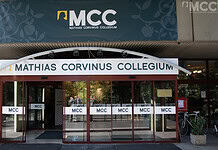


Hungary’s education and foundation landscape is facing a historic turning point. The Mathias Corvinus Collegium (MCC) and the Blue Planet Foundation are being dissolved in their current form. Starting August 31, the Hungarian state will take control of the functions and assets of the institutions concerned.
In a video message posted on his social media page, Prime Minister Péter Magyar announced plans to end the special status that had been granted to several prominent institutions with important roles in Hungary’s educational and civic life.
In addition to MCC, the measure affects the Batthyány Lajos Foundation and the Blue Planet Foundation, an environmental foundation established by former President János Áder.

The state is stripping the organizations of their status as public-interest trust foundations and will terminate their existing activities as of August 31.
The foundations were officially notified by the Prime Minister’s Office on the day of the announcement that their responsibilities would be transferred to the state starting next week, according to the announcement. The move marks the end of state special funding and of the organizations’ autonomous control over state assets previously transferred to them.
The foundations will be free to continue their work in the future as ordinary civil society organizations, raise their own donations, and organize programs, Péter Magyar said. The state, however, will henceforth directly take over the core responsibilities in the fields of education, research, climate protection, and culture, he added.

Founded in 1996, the Mathias Corvinus Collegium had been regarded as Europe’s most influential and best-funded think tank with an explicitly national-conservative profile. Until this summer, the institution’s board of trustees was chaired by Balázs Orbán, Viktor Orbán’s longtime political director. As a multidisciplinary institution focused on talent development, MCC offered a free, elite supplementary education program alongside the regular education system—from programs for elementary school students (FIT) and high school students (KP), to university programs (EP) and doctoral colleges.
With locations throughout Hungary and in Hungarian-speaking communities abroad—including Transylvania, Slovakia, Transcarpathia, and Vojvodina—as well as offices in Vienna and Brussels, the institution had developed an extensive international network.
Its educational programs were complemented by in-house think tanks, including the Migration Research Institute and the Institute for Climate Policy, as well as conferences and its own publishing house, MCC Press.
Alongside MCC, the Blue Planet Foundation (Kék Bolygó Alapítvány) is also losing its existing structure. Led by former President János Áder, the organization focused on environmental and climate protection, the circular economy, and green technologies.

In addition to educational initiatives and major events such as Planet Budapest, the foundation used its own venture capital fund to invest in startups working in water management and renewable energy.
The Blue Planet Foundation said Thursday that it considers the proceedings against it unacceptable and the decision by the Prime Minister’s Office unlawful, and that it will seek legal remedies.
With the state takeover, the model of conservative foundations that had played a major role in shaping Hungary’s education and think-tank landscape for years is now coming to an end.
Featured image: mcc.hu