A gyűjtőpontra történő könyvgyűjtés egyelőre felfüggesztésre került, jelenleg szervezeti és személyi irathagyatékok gyűjtése zajlik, melyek az adott címről lesznek elszállítva. A programnak három kutatója van az Egyesült Államokban február legvégéig. Deák Nóra a keleti parton, New York központtal, dr. B. Stenge Csaba Közép-Nyugaton (Chicago, Detroit, Cleveland) Chicago központtal, és Sághy Miklós a nyugati parton, San Francisco központtal. Ha tudnak olyan történeti értékű hagyatékról, melynek hosszú távú fennmaradása itt nem biztosított, és elküldenék Magyarországra a programon keresztül, kérjük, vegyék fel a kutatókkal a kapcsolatot a térségek központi magyar szervezetein keresztül, illetve az alábbi telefonszámokon:
“This year, a historical task has been put before European countries: defending Christian culture”, Hungarian Prime Minister Viktor Orbán wrote in his Christmas message published by right-wing daily Magyar Idők over the holiday weekend. Below we are sharing the full English translation of the original Hungarian text.
***
“We await the Christian world’s great festival: the birth of our Lord Jesus Christ. In silent waiting we raise our eyes, we free ourselves from the worries of everyday life, and the soul’s horizon opens up. In this special atmosphere we can sum up the past year and think once more about the nature of our tasks in the world for the year ahead.
Whether or not we admit it or realise it, we Europeans live in a culture ordered in line with the teachings of Christ. Here I can quote the well-known words of an earlier Hungarian prime minister, the late József Antall: “In Europe, even an atheist is Christian.” We Hungarians rightly regard ourselves as a Christian nation. Our mother tongue, through which we have grasped and shaped reality, is not related to that of any other European nation. This also has valuable consequences.
From Mihály Babits we know that the Hungarian spirit was born when our Eastern character met Western Christian culture. And we can add that this was the source of the Hungarian worldview and mentality. But this has also caused much difficulty, incomprehension, loneliness and, occasionally, a feeling of being strangers to those around us. Nevertheless, for a thousand years our Christian essence and our living faith have kept us in the heart of Europe. This is why, right down to the present, we remain true to the culture of our mother tongue, and we are proud of the contribution made to the rise of Europe by our nation’s achievements over the course of a millennium.
According to the Gospel of Saint Mark, Christ’s second commandment is “Love your neighbour as yourself”. There has been much talk of Christ’s commandment in Europe nowadays. It is used to rebuke us for declaring ourselves to be Christian, while at the same time declaring that we do not want millions of people from other continents settling in Europe – and that we even refuse to let them in.
But this commandment consists of two parts, and our accusers have forgotten the second part: we must love our neighbour, but we must also love ourselves. Loving ourselves also means accepting and protecting everything that embodies what we are and who we are. Loving ourselves means that we love our country, our nation, our family, Hungarian culture and European civilisation. Within these contexts, our freedom – Hungarian freedom – has unfolded, and can unfold, time after time.
For centuries our lives were shaped by the knowledge that Hungary’s freedom was also a guarantee of Europe’s freedom. It was with this sense of mission that we stood our ground during the period of Ottoman conquest, it was this which sharpened the blades of Petőfi and his fellow rebels, and it was this which emboldened the Lads of Pest. Our Fundamental Law says, “We are proud that our king Saint Stephen built the Hungarian state on solid ground and made our country a part of Christian Europe one thousand years ago”, and “We recognise the role of Christianity in preserving nationhood”.
When we draw the boundaries of our identity, we mark out Christian culture as the source of our pride and sustaining strength. Christianity is a culture and a civilisation. It is within this that we live. The essence is not how many people go to church, or how many pray with true devotion. Culture is the reality of everyday life: how we speak and behave towards one another; the distance we keep from one another and how we approach one another; how we enter this world, and how we leave it. For European people, Christian culture determines the morals of our daily lives. In borderline situations, this gives us a benchmark and a compass. Amidst the contradictions of life, Christian culture shows us the way. It determines our understanding of justice and injustice, the relationship between men and women, family, success, work and honour.
Our culture is the culture of life. Our starting-point – the alpha and omega of our philosophy of life – is the value of life, the dignity that every person has received from God. Without this we could not evaluate “human rights” and similar modern conceptions. This is why we doubt whether we can export this into the life of civilisations built on other foundations.
The fundamental elements of European life are now under attack. There is now a threat to the self-evident nature of European life: those things one should not need to think deeply about, but on which one only has to act. The essence of culture is that if it is not self-evident, we the people will lose our reference points: one will have no footholds, and one will have nothing against which to check one’s clock or one’s compass. Regardless of whether or not we attend church – or if so, which one we attend – we do not want to be forced to celebrate Christmas behind drawn curtains to avoid hurting the feelings of others.
We do not want our Christmas markets to be rebranded, and we definitely do not want to have to retreat behind concrete barriers. We do not want our children to be deprived of the joys of Saint Nicholas, Santa Claus and the Christmas angels. We do not want to be robbed of the Feast of the Resurrection. We do not want our religious festivals and ceremonies to be haunted by anxiety and fear. We do not want our women and daughters to be molested in crowds of New Year’s Eve revellers.
We Europeans are Christians. All this is ours, and this is how we live. Hitherto we have seen it as natural that Jesus was born, died on the cross for us and then rose from the dead. For us our religious festivals are self-evident, and we look to them to give meaning to our everyday lives. Culture is similar to the human body’s immune system: as long as it is working properly, we do not even notice it. It becomes noticeable and important to us when it is weakened. When crosses are airbrushed from photographs, when people seek to remove the cross from a statue of Pope John Paul II, when they try to change how we celebrate our festivals, then every right-thinking European citizen bristles with anger. This is also true of those for whom Christianity – as Gyula Juhász brilliantly put it – is “just paganism with holy water”. And it is even true of those like Oriana Fallaci, who feared for Europe as “an atheist Christian”.
Today the attack is targeting the foundations of our life and our world. Europe’s immune system is being deliberately weakened. They do not want us to be who we are. They want us to become something which we do not want to be. They want us to mix together with peoples from another world and, so that the process will be smooth, they want us to change. By the light of Christmas candles we can clearly see that when they attack Christian culture they are also attempting to eliminate Europe. They want to take our life from us, and exchange it for something that is not our life. In return for the life we have lived up to now they are promising one which is new and more enlightened. This, however, is a utopia: not the essence of real life, but distilled from abstract, theoretical sophistry. Utopias are dreams: potentially wonderful, and therefore alluring. But they are just as incoherent, impenetrable, obscure and meaningless as dreams are. One cannot live in them, or be guided by them.
We cannot claim that Christian culture is the peak of perfection. This is precisely the key to Christian culture: we are aware of imperfection, including our own imperfection; but we have learned to live with this, to draw inspiration from it and to derive impetus from it. This is why for centuries we Europeans we have been striving to improve the world. The gift borne by imperfection is that we are given the opportunity to improve. Those who promise a beautiful, new, mixed world now want to take this opportunity from us. Now they also want to destroy everything that we must preserve for future generations; our duty to do so is derived from the knowledge that, when called upon to do so, our ancestors shed blood to preserve it for us.
Although the fact was forgotten for a while, ever more frequently nowadays I hear that sixty years ago the European Union’s founding fathers marked out the route: Europe, as Robert Schuman said, will be Christian, or it will be nothing. The year 2017 has presented European countries with a historic task. A new task has been given to the free nations of Europe and the national governments elected by free citizens: we must protect Christian culture. We must do this not to oppose others, but to defend ourselves, our families, our nation, our countries and Europe, “the homeland of homelands”.
In 2017 we also saw that leaders of the European countries approach the task in different ways: there are those who say that this problem does not exist; others believe that this is progress itself; and still others have set out on the path of surrender. There are also some who sit on their hands and wait for someone else to solve this problem for them. Hungary’s one-thousand-year history proves that we are not like this. We tread a different path. Our starting-point has always been that we have the right to our own life. And we have defended this right whenever we have had the strength to do so. That is why for years we have been working to strengthen Hungary so that it can finally stand on its own feet again.
As far as 2018 is concerned, we can say that for as long as the national government leads the country, we shall work intelligently, calmly but uncompromisingly to ensure that our homeland remains a Christian culture and a Hungarian country. And we shall do our utmost to ensure that Europe remains European.
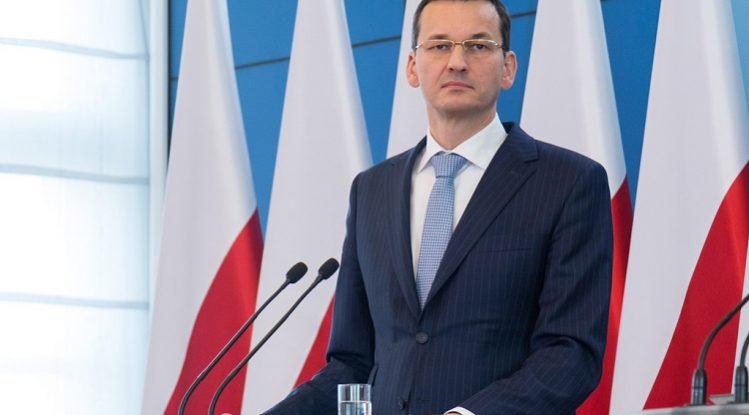
Poland’s new Prime Minister will pay his first official foreign visit to Budapest to meet his Hungarian counterpart on 3rd of January 2018, Viktor Orbán’s press chief said on Thursday.
Mateusz Morawiecki, who took office on December 11, will be accompanied by Foreign Minister Witold Waszczykowski, Bertalan Havasi told news agency MTI. The Hungarian prime minister last paid a visit to Poland in September. He held talks with then-prime minister Beata Szydlo, as well as with the heads of the Polish Sejm and Senate and the leader of the governing PiS party.
Earlier in December, Viktor Orbán sent a congratulatory message to Poland’s newly-appointed PM Mateusz Morawiecki. In his letter, the Hungarian Premier said he believed that by “working closely together at the European level, he and Morawiecki could create opportunities for their countries that could also contribute to the success of the whole of central Europe.”
Meanwhile, the European Commission has launched the so-called Article 7.1 procedureagainst Poland over its controversial judicial reforms. The Hungarian Deputy PM Zsolt Semjén called the move a “politically motivated procedure” against the Polish government and said Hungary would veto it.
Commenting on EC measures against to Poland, Viktor Orbán said in a recent radio interview that “if somebody attacks Poland, the whole of central Europe is under attack”. Hungary’s interest is to show solidarity with the Poles and make it clear that no EU punishment can be introduced against them, the Prime Minister insisted.
via hungarymatters.hu and MTI; photo: Mateusz Wlodarczyk – Nurphoto
For Hungarians and Christians across the globe, Christmas is the most sacred holiday event of the year. Families spend the “holy evening” (Szenteste) making final preparations for the Christmas tree to be decorated with carefully placed candles, then place the nicely wrapped presents under the tree prior to “lighting” the candles and the sparklers.
I remember those Christmas preparations so vividly. My father dropped me at my grandparents’ apartment on Karinthy F. út at about 4 in the afternoon. Grandpa Jenő let me watch some television on his Videoton set (especially if there was a Fradi soccer game on) and then he and I took tram No. 61 to the small chapel at Karolina út where he played the church organ and sang traditional Christmas songs. I proudly stood next to him and sang along. Father Vidor who celebrated the mass then wished us Merry Christmas and we either took the tram again to my parents’ apartment or my father came to pick us up by automobile (or more accurately with his Trabant).
By the time we got back to Baka Street, the doors to the inner room were closed and my younger brother and I were not allowed in until all grandparents arrived and my Dad rang a special bell to allow us into the room where the beautifully decorated Christmas tree was placed. Of course, we had to sing along with the parents and the grandparents those special songs “The Angel from Heaven” (Mennyből az Angyal), “Oh Tannenbaum” and “Shepherds, Shepherds, rejoicing” (pásztorok, pásztorok örvendezve), etc.
Christmas in Hungary has traditionally been about the birth of Jesus, the majestic songs (mostly German-inspired), grandma’s beigli, the Christmas tree, the candles and the sparklers. Hungarian tradition holds that it is Baby Jesus (Jézuska) who delivers the presents and not Santa, like most Americans believe. In most European countries Santa Claus (St. Nicholas) actually visits the homes on December 6, which is a separate and unique, although smaller holiday.
While few of the kids actually believe these myths to be true, they play along, since expectation, harmony and tranquility are all important part of the holy celebration. The music, the decorations, the church sermons, the food and the spirits are all carefully prepared and tailored for this holiday.
The Christmas dinner usually consists of Hungarian fish soup (made of carp or some other freshwater fish) or stuffed cabbage. Afterwards and for the forthcoming days, of course, there is always plenty of home-made beigli with poppy-seed or walnut filling.
For religious families, the midnight mass is another integral part of the Christmas celebration. Of course, younger children do not stay up for that. Hungarians traditionally used to wish each other Áldott Karácsonyt (Blessed Christmas) or Boldog Karácsonyt (Merry Christmas), however, during the Kádár era they were encouraged to use another toned down version: Kellemes ünnepeket (Pleasant Holidays)! In response to this more politically correct version one of our elder friends (CF) used to say: “kellemes” can typically be a foot bath, but not Christmas… Christmas can only be holy, blessed, majestic and/or magical.
The way Hungarians celebrate Christmas is largely similar to the way most Europeans celebrate this holy day. However, of the more than 2 billion Christians worldwide, various countries celebrate Christmas using some of these common features cited in the above.
Christmas in the United States
Christmas in America begins around the end of November with a major kickoff on Black Friday as most Americans focus on buying presents rather than focusing on the religious aspects of this holiday. However, the Christmas spirit is tremendous among Americans as they are overtaken by the spirit of the holiday and decorate their homes with special lighting and practically compete in most neighborhoods as to who has the most extravagant lighting effects and decor. There are some debates going on as to how we should wish each other Merry Christmas in America as multicultural influences now demand that people scale back from the Christmas spirit and focus on the non-denominational aspect of the holiday, wishing each other just Happy Holidays instead of Merry Christmas. This was especially true under the Obama years, the current president Donald Trump is attempting to reverse all that. Americans hold that presents are delivered not by Jesus, but by St. Nicholas or better known as Santa Claus. Santa climbs through the chimneys and the presents will be opened the morning of the 25th rather than the evening of the 24th.
The traditional Christmas meal in America is either roasted turkey with stuffing, ham or roast beef. A replay of the Thanksgiving meal in many ways. There is also some special egg nog served besides the meal. Of course, Christmas in New York is mesmerizing with the music, the decorated storefronts, the ice rink at Rockefeller Center and the mass at St. Patrick’s Cathedral. Christmas in America is a joyful holiday season.
Christmas celebrated in other Christian populated areas of the world
There is no space for us to outline how various countries celebrate Christmas, but it should be noted that practically all nations have some type of a Christmas celebration other than, of course, the Muslim nations. Even some African and most Asian nations celebrate Christmas, although the Christian populations there are in a minority. For central and south Americans Christmas has special significance as they are committed Catholics even more so than North Americans are.
On the other hand, Christmas is totally banned in North Korea. South Koreans, of course, are allowed to celebrate Christmas just like other nations do.
Whatever your religious affiliation and/or nationality, people all over the world hold this time of the year to be very special and wish each other Merry Christmas, Feliz Navidad, Joyeux Noel, God Jul, Fröhliche Weihnachten, Wesolych Swiat or Buon Natale. Jewish people might say “Happy Hannukah” or the Back to Africa movement now impresses upon their followers to say “Happy Kwanzaa”. All of that is fine as long as we do not demolish each others’ churches and do not persecute people for their religious beliefs. Peace on Earth and goodwill towards Men! And yes, “men” in this case (old English) infers that women are naturally included.
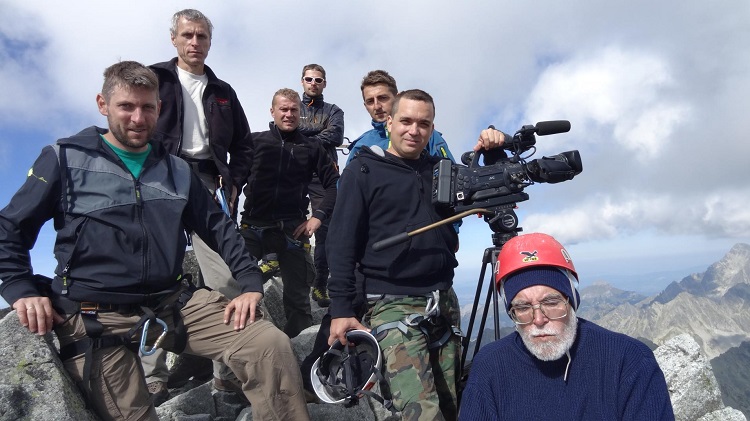
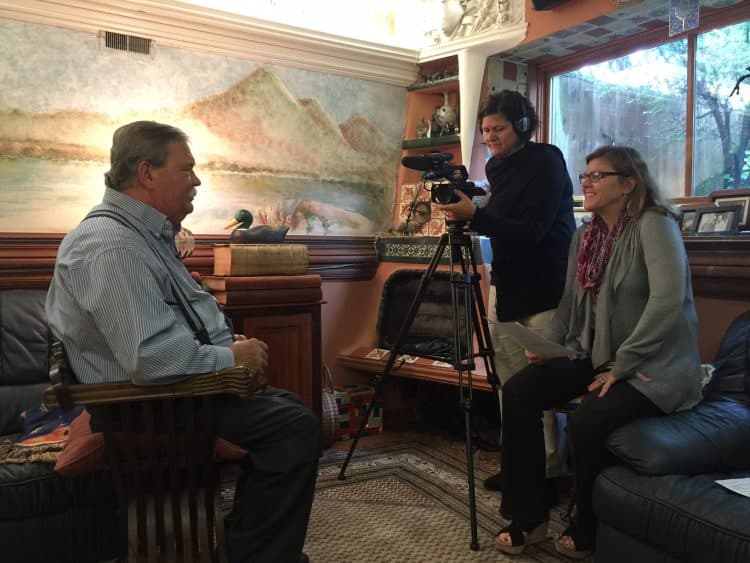
Hungary Today had the opportunity to sit down for an interview with renowned documentary film maker and director Zoltán Moys, whose cultural travel show ’Hazajáró’ (’Home-runner’), which is screened on Hungarian public television on a weekly basis, won the 2017 Prima Primissima Audience Award.
photo: Hungary Today
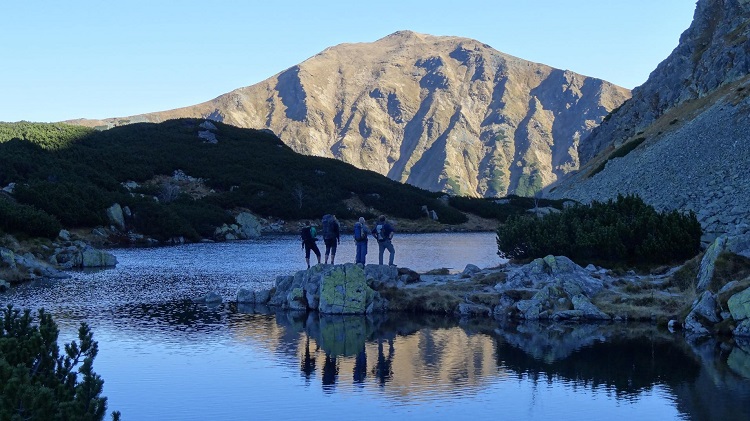
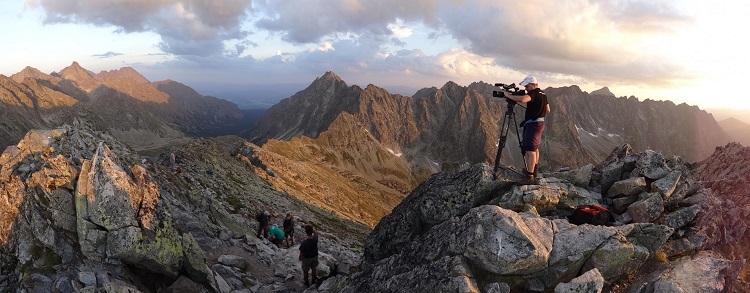
’Home-runner’ gets on its boots every week to range through the magnificent landscapes of the Carpathian Basin, in order to get acquainted with natural and cultural values, the built historical heritage, and the everyday life of inhabitants of the historic homeland of Hungarians. Their road leads through Transsylvania, Upper-Hungary (Slovakia), Carpathian Ukraine, Vojvodina, Moravia, Burgenland and inner Hungary, sometimes by foot or by wagon, sometimes by bike or by canoe. From the majestic ridges of the Carpathian Mountains and colossal castle ruins through little wooden churches and bloody battlefields to small, sleepy towns – the never-ending road of the “Homerunner” is accompanied by plenty of Hungarian memories.
photo: Hazajáró (Dextramedia)
This interview has been edited for clarity and concision, and translated from the original Hungarian.
***
In 2017, the show Hazajáró (‘Home-runner’) won the Prima Primissima audience award. How did it feel to accept the award from E. Sylvester Vizi, chairman of the board of the Friends of Hungary Foundation? What does this recognition mean for the show’s creators, and how does the award speak to the show’s viewers?
As I said at the award ceremony, this was an incredible honor for us. It felt very good to win, with the Prima Primissima, the award that is most valuable to us, the audience award. We work, first and foremost, for our viewers, and this was a wonderful response from them that we are on the right track. It seems that the message, the ethos, the spirituality, the imagery that we present in our show has struck a chord with a great many people. First and foremost, then, I would like to thank our viewers. This award was an important moment in the history of Hazajáró. It also comes with great responsibility, since it shows that many people are paying attention to us. For this reason, going forward, we hope to do our work with even greater élan, humility, and precision.
Let’s jump back a bit. The show was launched in October of 2011, and there have been over 200 episodes filmed since then. What was the inspiration for the show, how did this concept come about, and how did you make it onto the air?
Even before the show, some of the members of our group were already “Home-runners.” In our free time we traveled quite a lot around the Carpathian Basin, mainly hiking trips. Alongside the beautiful mountains we encountered historical memories, our built historical heritage, cultural sights, and local Hungarian communities. We made many friends and had countless adventures. This experience gave so much to us, that we decided to introduce it to others in the form of a TV show, so that they might see why it’s good to be a ‘Hazajáró.’ We were already working in media, when the stars aligned and a spot opened up for our planned show at Duna TV. We are grateful that, for six years running, MTVA has given us this opportunity, and this platform. From the beginning, we built our show on the following three pillars: natural wonders, built cultural heritage, and local communities. While our job is naturally easier in Hungary proper, we have had incredible experiences in Hungarian communities abroad as well. We’ve been to places where, not only has there never been a camera crew, it’s also possible that tourists have never even set foot there before. We have the opportunity to showcase regions, people, and communities that people have never been curious about before.
photo: Hungary Today
How do preparations for a single episode look? How much time does it take, what does the technical execution of filming look like?
First, hunched over a map, we think about where it is we want to go. At the beginning, we sought out spots that we had already been without a camera, but at this point there’s very few such spots left, and so now we go to increasingly remote areas. We receive many invitations as well: many people are proud of their hometowns, and would like us to showcase the region where they live.
As a first step, we find local people who are the “engines” of local knowledge, local history, and nature, who are also key to the continued existence of the local Hungarian community. In addition to getting in touch with people, we undertake thorough research in order to discover what would be worth visiting in a particular area. Our main concept focuses on smaller regions, ones that formed organically, over the course of centuries, on a geographical, cultural, or historical basis. In our show, we also endeavor to quote from famous Hungarians, and discuss what they experienced in a given region decades or centuries ago.
Researching these resources also takes a great deal of time. Generally it takes about 2-3 days to film an episode, but a filming trip generally takes longer than this, since we shoot 2-3 episodes while on the road. One of the central points of filming is always a hike, which is a rather intense test of strength, one which is greatly influenced by terrain and weather conditions. While filming, every trail takes much longer than it would if one were hiking without a camera.
Finding cultural institutions (for example, getting into a temple, or getting permission to film inside a historic landmark) isn’t simple either, especially in regions where Hungarians no longer live. When introduce a local community, we are not looking first and foremost for an “official” view, but rather authentic “Hungarian life”; in other words, those people who carry the reality of their organic culture with them in their everyday lives. Showcasing this everyday life, this “silent struggle,” is one of the main goals of our show.
Filming is followed by editing work, which is likewise not an easy task, since we have to whittle down 4-5 hours to just 26 minutes. Our colleague Zoltán Farkas barely leaves the editing room. Generally, six of us go out to film, and over the years our crew has been forged into a true community of comradery. In addition to our two “hazajáró” hosts (Oszkár Kenyeres, who also takes part in editing, and Sándor Jakab from Upper Hungary [the region of Slovakia inhabited by a sizeable Hungarian minority]), I would single out the exceptionally difficult work done by our cameraman (Dávid Schödl) and our sound engineer (József Tóth). Our team is further strengthened by our driver-technician colleague, who first and foremost helps out with logistical issues, while I try to pull together the production as a whole. Hazajáró’s crew is made up of people who not only put their eyes, ears, and mouths into the production, but their souls as well.
photo: Hazajáró (Dextramedia)
In the course of your work, have you run into any unusual or noteworthy difficulties in regions of the Carpathian Basin that have never been inhabited by Hungarians?
Naturally it’s harder to work in areas where there isn’t a shared linguistic or national identity. The amount of ethnic tensions and national conflicts that have filled the Carpathian Basin over the course of the 20th century are well-known. Generally, though, we only notice this on the larger, political level, and occasionally in cities, where the negative trends that go hand-in-hand with urban life can be seen. In the countryside, in tiny villages, we have never encountered a negative attitude toward Hungarians. In fact, everywhere we have been welcomed with great enthusiasm. People respect and value that a Hungarian film crew wants to show how locals live. We always look for the values of communities living organically in the local soil, and for this reason we have showcased Ruthenian and Slovak communities as well.
Anyone, who feels at home in a given region and who is capable of taking care of it, who can live together without exploiting or crippling it, have a place in the region regardless of nationality. If we want to look for dividing lines, we won’t find them between nationalities, but rather between individuals’ modes of thought. We regularly notice that, the more isolated of a place we go to, the more positive personalities we come into contact with. Many people in isolated regions, even today, live lives rooted in tradition, which go beyond the pursuit of wealth, and which carry eternal values in them. At the same time, whenever we visit a larger settlement, we see the spread of globalization and the materialist, consumerist society that goes along with it. We love regions where we can find communities living in harmony with the natural world.
Could you mention one or two memorably positive or negative filming experiences?
We are now past the 200 episode mark, meaning that we have had tons of adventures and experiences. We have had many more positive ones than negative ones. The greatest experiences are those when we find Hungarians in areas where we didn’t expect to do so.
One example of this is the little village of Maradék [‘Remainder’], which is located even beyond the Kingdom of Hungary’s historical borders, at the foot of the mountain Fruška Gora in northern Serbia, whose very name is quite revealing. When we visited the settlement there was no longer a minister to oversee spiritual life and hold the Hungarian community together. We found just one old married couple, who told us, in tears, that in this southern region Hungarians are going to die out. There were tears in our eyes as we said goodbye to Uncle Géza and his wife. Nevertheless, later we heard that, thanks in part to our show, a minster agreed to take on the responsibility of serving the village. Now, there is a Hungarian House in the village, and ever-more people are returning to their roots. There, they actually succeeded in pulling the breaks on assimilation and emigration.
The difficulties we encounter are generally physical ones. The Parâng Mountains, located in the southern Carpathians, is what first comes to mind. There, we went on a winter hike and ended up in a snowstorm, meaning that we had no chance of reaching the 2519-meter peak. We spent our night in a ramshackle stone ‘shelter’. Before sleeping, though, we had to move meters of snow just to be able to get into the shelter. Filming this struggle required great emotional strength, and was a trying task. We weathered the below-zero temperatures of the night, but even this bore fruit: we received many positive responses from our viewers, they appreciated that we were showing not just sunny mountain peaks, but difficulties and mountaineering failures as well. There has never been a filming where there weren’t moving or difficult moments, and these adventures have really brought our team together.
photo: Hazajáró (Dextramedia)
What are your future plans? How long will the show continue, what ideas do you still have in your saddle-bag?
We always used to say that “the path of the ‘Home-runner’ is endless.” The more places we go to, the more we realize how many undiscovered treasures there still are in the Carpathian Basin. We will continue to do the show as long as state media gives us the opportunity to do so. We feel that this “home-runner” is starting to become a sort of lifestyle, which goes far beyond the show.
One result of this is the ‘Hazajáró’ Homeland Studies and Tourist Club, which operates in symbiosis with the show. From the beginning, our main goal was to get our viewers out of the house, so that rather than just sitting on the couch watching the show, they get up and hit the road as we have. It seems that this has come to pass, this desire was what brought the Club into being as well, which, we hope, will carry on the spirit of the show long after there are no new episodes. Our studio is also working on other projects, and will continue to work in the future, but will do so under the same principles that have informed Hazajáró.
Are you thinking about exploring Hungarian regions outside of the Carpathian Basin?
Definitely, partially because we have gotten so much feedback from across the Atlantic. We have held, and are planning, a number of Hazajáró meetups, film-screenings, and talks, both at home and abroad. Combining business with pleasure, we plan on brining cameras with us as well.
Many people have told us stories about how they, or their ancestors, were from a region that we visited in the show. There were some, who had never themselves been in their ancestors’ home regions, and watched the show with tears in their eyes. Others, inspired by Hazajáró, hit the road and went back to Hungary, for a longer or shorter time, from the opposite side of the world. We would like to produce a film about Hungarians living in the western diaspora as well, since we know that there are Hungarians all over the world who hold on to their roots, who proudly preserve and pass on their language and culture. This is a very important mission as well, this is why we view showcasing these communities as a great challenge. At the same time, this is a serious responsibility as well, since we don’t want to lose sight of our most important goal, the preservation of Hungarian communities in the Carpathian basin. There are huge differences between individual generations’ emigration stories; for example, in the last few decades, economic issues have come to the fore. For our part, we would not like to, even accidentally, push anyone to leave their homeland. In fact, the opposite is true! It is my belief that the road to the future lies in building a livable Hungary and a livable Carpathian Basin, where it is worthwhile to stay here and live as a Hungarian. In this building, we are counting on those living as emigres as well, since they can help Hungarian causes even from afar.
Many people living abroad, whose ancestors left Hungary generations ago, don’t speak Hungarian well enough to follow the show without difficulty. Perhaps it would help the international reputation of Hungary and its neighboring countries if Hazajárówere released with foreign subtitles as well. What do you think?
Yes, this would be an important mission! On individual occasions and screenings we have already added subtitles, but we haven’t gotten to the translation of the bulk of our episodes. Our resources of limited, but if there were significant demand we would definitely move in this direction.
Outside of Duna TV, where can those interested view old and new episodes of Hazajáró?
Thanks to an enthusiastic viewer they are on YouTube. We are also on mediaklikk.hu, but Facebook is where we provide our followers with the latest information on our show.
Where is Hazajáró headed next?
We’re near the end of the year now, the last episode of this season will be released on December 30th. Generally, at this time we take a look back at some of the greatest moments of the past year, and we are currently working on such an episode.
Our next trip is probably going to be to Upper Hungary [in Slovakia], maybe to the Pohronský Inovec mountain range. In the spring we’ll be heading to the Apuseni Mountains in Transylvania and to Zakarpattia Oblast in Ukraine, as well as to a spot that has long been a dream of ours: we are preparing to film an episode in Bukovina on the forgotten world of the Rarău and Giumalău Mountains, and the Szeklers of Bukovina.
Andrea Lauer Rice (right) with Documentary Filmmaker Réka Pigniczky, at the premiere of the latter’s film “Lövészek (Cold Warriors)” at the Uránia Film Theatre in Budapest
Recently, Hungary Today had the opportunity to interview Andrea Lauer Rice regarding her work on the Memory Project, a visual oral history project focused on collecting the stories of Hungarians who were forced to flee their homeland following the Second World War, and later after the defeat of the 1956 Revolution.
In addition to her work with the Memory Project, Lauer is President of the Hungarian American Coalition, President of Lauer Learning, and founder of the Atlanta Hungarian Festival. Over the course of the interview, she discussed her personal background, how the Memory Project came about, and where it is headed.
This article has been edited for concision and clarity.
Could you tell us a bit about your personal background?
I was aware that I was half Hungarian my entire life, but only learned to speak Hungarian as an adult. We traveled back to Hungary every couple of years during my childhood, starting in the 70s. Every holiday, family trip, and on phone calls, my mother spoke Hungarian with my grandparents (which is probably why I eventually wanted to learn the language – I was tired of them talking about things in front of me!) I grew up hearing the stories of Hungary, the 1956 Revolution and the horrors of communism and because of these stories that were shared with me, certain ideals became second nature – family is the most important thing, get an advanced education, always stay informed and vote in elections, value your freedom, and more. Aside from that, I had a typical American upbringing.
We lived in New Jersey when I started college in Pennsylvania in 1990. One day my mother called me to tell me she was taking me into New York City for the weekend. Several of my friends had these special trips with their moms and went to Broadway shows and shopping, so I was excited…until she told me we were going in to demonstrate in front of the Romanian Embassy because of their treatment of the Hungarians living there. This was the moment when pride in my Hungarian heritage translated into more active involvement in the Hungarian American community.
I moved to Hungary in 1990 to work in the Határontúli Magyarok Hivatal and several years later, became director of the Center for Independent Journalism, funded by the New York Times Company Foundation. Those first years after the transition were quite incredible – filled with grand adventures, meaningful work and young people working together to shape a new world. (That is when I first met Réka Pigniczky). I lived in Budapest for 6 years, eventually moving back to the US in 1997 to attend business school at Emory University in Atlanta, Georgia.
Could you take us through some of the milestones that led to the creation of the Memory Project? How did someone who had previously worked on books and video games related to 1956 move on to documentary film a decade later?
After working on a number of ways to pass on information about the 1956 Revolution to the next generation for the 50th anniversary – computer game, graphic novel, oral history website and books – MP just evolved out of a conversation with my longtime friend Réka Pigniczky. I’m not even sure which one of us came up with the idea first, but it just seemed like a natural progression to create the project and work on it together. It was a great blend of our two areas of expertise and interest.
Andrea Lauer Rice (right) with Documentary Filmmaker Réka Pigniczky, at the premiere of the latter’s film “Lövészek (Cold Warriors)” at the Uránia Film Theatre in Budapest
Journalism has always been my background, so that is the foundation for all of these projects. I love hearing people’s personal stories, learning what they have been through in their lives, what motivates and inspires them. I also grew up hearing stories about the 1956 Revolution from all of my relatives – my grandparents, my aunt and uncle and my Mother – and know the profound effect that living under communism, witnessing the Revolution and making the decision to immigrate to the US, had on their lives. Our interviews help record those stories for others and pass it on to the next generation to make sure these important memories are never forgotten.
This is one of my real areas of passion. I’m always looking for ways to reach the next generation. My children do not speak Hungarian, and neither did I growing up, so I think it is incredibly important to create resources in Hungarian and English to share this history with 2nd and 3rd generation Hungarian American kids and non-Hungarian spouses. Even without the language, my sons are very much aware of their Hungarian heritage and proud of it. I want to continue to reach them and teach them about their heritage and their family history – whether it’s through graphic novels or firsthand accounts like Memory Project. It is all about recording personal stories that young people can access and relate to and learn from.
To date, the Memory Project has conducted interviews with over 120 people. How do you choose your interview subjects?
We have a database of interview subjects who have contacted us over the years, or people we know personally, or stories we may have heard. In some cases, recommendations or contacts come from our mothers – Edit Lauer and Katalin Vörös, who are both ’56-ers and well-known throughout the Hungarian American community. But primarily, we contact the leaders of the local Hungarian American community we are planning to visit to ask for their suggestions ahead of any trip we plan. Since we both have little kids, it’s difficult to travel, so we generally plan 5-day trips to an area with the goal of completing 10 or so interviews. We do a good amount of research ahead of each trip and try to strike a good balance between DPs and ’56-ers.
On the Memory Project’s website, a distinction is made between those interview subjects who left Hungary after the Second World War (so-called “DPs”) and those who emigrated following the defeat of the 1956 Revolution. Are you planning on conducting interviews with other groups as well, for example those who emigrated during the late Kádár era (1970s-80s) or those who have left in the decades since the end of Communism?
We do hope to expand Memory Project to include more recent immigrants, but at the moment, we are very focused on getting the stories of DPs and ’56-ers, because of their age. It is amazing to think that within the next decade or so, there won’t be many freedom fighters or DPs alive anywhere in the world to share their own personal stories. We don’t want to miss the opportunity to get their stories. It’s really a race against the clock.
The 1940s were a particularly tragic period for Hungary. How do you go about asking difficult or painful questions of those who lived through that era? Have any of your interview subjects been offended by your questions or unwilling to answer them?
Since we are both daughters of ’56-ers, we approach our interviews with a great deal of respect and admiration for the people sharing their stories. We often send our questions ahead of time so people can start thinking about the past in a bit more detail and prepare any archival materials – like documents or pictures – they may have. Oftentimes, the interviews seem to be therapeutic for our subjects. But I think it all comes down to the fact that people trust us to help share their stories, and that is based on the fact that we have both been working – in our own ways – to document the story of 1956, immigration after WWII and the history of our Hungarian American community for more than a decade.
In 2016, controversy erupted in Hungary over the case of László Dózsa, a revolutionary whose photo was widely used to promote the 60th anniversary of the Revolution. Later, reports emerged, and were confirmed in court, that the person in the photo was in reality a man named Pál Pruck, who had since passed away. To what extent, and how, do you check the validity of your interviewees’ stories? Where do you draw the line between exaggeration and outright lies?
Personal histories are based on the memories of our interview subjects, and our questions are often asking about things that may have happened 70 years ago. We don’t fact check the stories people share with us. In some cases, stories may have been a bit exaggerated or details forgotten, but to me oral history is about the overall body of work. When you listen to a similar story told by 4-5 different people, it becomes part of the history of that time. It is simply a different way to record historic events. But the real benefit in a visual archive is hearing the people themselves tell their stories, seeing their emotions and understanding what is behind their unique perspectives. It is amazing to me – though not at all surprising – that 60 years later, the moment when people stepped across the border to leave Hungary still evokes such raw emotion in almost everyone.
The Memory Project is partially financed by the Hungarian government. Has this fact ever impacted your choice of interview subjects?
We are very lucky that we have been funded from different organizations and many individuals, including some funding from the Hungarian government. Funding sources have never in any way influenced the project, choice of interview subjects or any content. Memory Project is completely independent and nonpolitical. We are all about recording personal recollections and sharing them.
The Memory Project has already interviewed world-famous Hungarian-Americans such as Joe Eszterhas and Andy Vajna. Do you plan similar interviews in the future? Will there someday be interviews with Charles Simonyi, George Soros, or Thomas Peterffy on the Memory Project site?
Yes, we are hoping to add a number of new interviews to Memory Project in the coming months, among them some celebrities. Stay tuned…
What are your future plans? Will the Memory Project become a global program?
Our goal is to take Memory Project global. The next step would be to create a global internship program where we train and empower two-person teams in major cities across the US and Canada to add to the archive. We are particularly excited about this expansion, because not only will it add interviews to the archive, but it will allow us to build strong, cross-generational relationships in local communities and help bridge the generational gap.
We are also working to build partnerships with leaders in other diaspora communities to make this a worldwide project. The great news is that our methodology and approach can work anywhere. We have worked with well-respected leaders in the US oral history industry – Shoah Foundation, Digital Storytelling Center and National Public Radio StoryCorps – to create our own methodology that we would like to share. Time is of the essence, so we are offering to become the clearinghouse for interviews from across the globe and make them available online. Obviously, we would need expanded funding to help execute a much larger project, but we feel like MP is uniquely positioned to be in this role.
We are also working to help scan and preserve documents, pictures and other artifacts people brought with them from Hungary. Some people we interview have personal diaries, maps, tickets, the welcome letter from US President Eisenhower and even original documents or armbands from the 1956 Revolution or WWII. These are important to preserve. After we spend 2-3 hours learning someone’s personal story, they often feel comfortable enough with us to show some of these treasured artifacts. It’s a unique opportunity to scan them, store them digitally and make sure they are not lost.
It is all part of our Hungarian American community and our unique history.
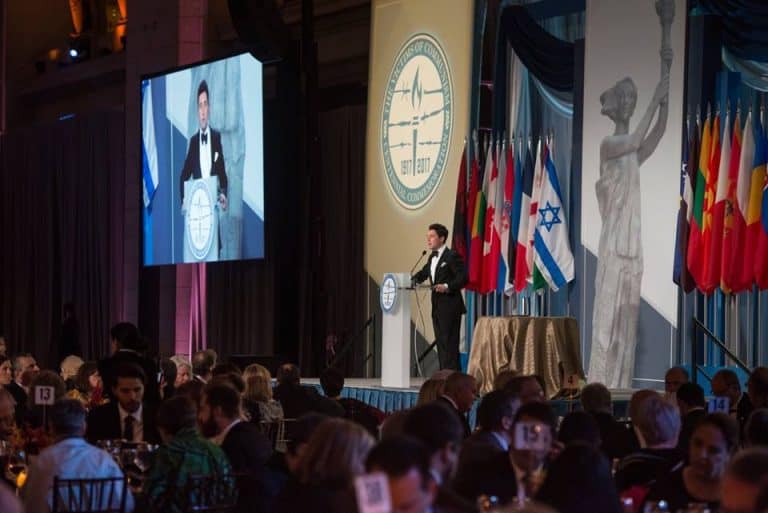
Washington, DC – On December 2, 2017 the Hungarian American Coalition (Coalition) held its Annual General and Board Meetings at the House of Quakers in Washington DC, after hosting its 26th annual Mikulás Dinner the previous evening at the Embassy of Hungary.
Andrea Lauer Rice, president of the Hungarian American Coalition, summarizes the Coalition’s annual Mikulás Party held on December 1, 2017 at the Embassy of Hungary in Washington, D.C.
On December 1, more than 100 Coalition members and guests attended the traditional Mikulás Dinner hosted by Ambassador László Szabó at the Embassy of Hungary.
Master of Ceremonies Endre Szentkirályi greeted the distinguished gathering and special guests, including hosts Ambassador Dr. László Szabó and his wife Dr. Ivonn Szeverényi; the evening’s keynote speaker Ambassador Kurt Volker, U.S. Special Representative for Ukraine Negotiations and Ms. Ia Meurmishvili; Ambassador April H. Foley, former Ambassador of the United States to Hungary and Chairman of the Board of The Hungary Initiatives Foundation; Ambassador Thomas Robertson, former Deputy Chief of Mission at the U.S. Embassy in Budapest; Ambassador Ferenc Kumin, Consul General in New York and Ms. Zita Bencsik, Consul General in Chicago; Dr. Ágnes Virga, Coalition Chairman of the Board; Mrs. Andrea Lauer Rice, President of the Coalition; Ms. Susan Hutchison, Chairman of the Washington State Republican Party.
Other guests included Dr. Matthew Shank, President of Marymount University and his wife Mrs. Lynne Shank; Mr. Joseph Foster, Vice President of Marymount University and his wife Mrs. Stephanie Foster; Ms. Eszter Sándorfi, Head of the Department of North America at the Hungarian Ministry of Foreign Affairs and Trade (MFA); Ms. Dóra Loydl, US Foreign Policy Coordinator, MFA; Ms. Andrea Gulyás, State Secretary at the Hungarian Ministry of Agriculture; Mr. Zsigmond Perényi, Deputy State Secretary for International Affairs, Prime Minister’s Office; Mr. László Hámos, President of the Hungarian Human Rights Foundation; Mr. Imre Lendvai-Lintner, President of the Hungarian Scouts Association in Exteris; Mrs. Enikő Molnár Basa, Executive Director of the Hungarian American Educators Association; Mrs. Anna Smith Lacey, Executive Director of Hungary Initiatives Foundation and Mr. Marion Smith, Executive Director of Victims of Communism Memorial Foundation.
Mr. Szentkiráyi also welcomed Honorary Consuls Mr. Phillip Arnoff (TX); Mr. Miklós Bartsch (CA); Coalition Member Mrs. Eva Voisin (CA); Mr. John Parkerson (GA) and Ms. Alicia McCart; Ms. Katalin Pearman (WA); and Coalition Vice President Ms. Csilla Grauzer (MN). He also greeted Mr. András Juhász, Trade Commissioner from Chicago and Ms. Judit Czakó, Economic and Trade Commissioner, New York.
From the local Washington community, Mr. Szentkirályi welcomed Coalition Vice President Mr. Stefan Fedor and Mrs. Erika Fedor, founders of the American Hungarian Heritage House; Mr. Gabe Rozsa, Chairman and Executive Director of the Kossuth Foundation; Ms. Kinga Révész, President of the Hungarian Science Club of Washington; Mrs. Kinga Hydras, Hungarian Academy, Washington, DC and her husband Mr. Labros Hydras; Dr. István and Mrs. Krisztina Hargitai, DC Hungarian Scouts. He recognized Coalition Internship Program Alumni present, including Mr. Márton Aichelburg, Mr. László Baksay, Ms. Lilla Fördős, Ms. Noémi Szakonyi and her husband Mr. Máté Vincze, as well as current Kőrösi Csoma Sándor Internship Program participants Mr. Gábor Balogh and Ms. Eszter Rácz.
He also gave a special welcome to all the hardworking members of the Embassy of Hungary, including Dr. Zsolt Hetesy, Deputy Chief of Mission; Dr. Béla Gedeon, Press and Public Affairs Officer; Mr. Péter Gyombolai, Hungarian Diaspora Liaison and his wife Mrs. Eszter Gyombolai; Ms. Zsófia Koncz, Foreign Policy Officer; Ms. Dorottya Mártonffy-Nagy, Trade and Investment Attache; Dr. Krisztina Osvát, Counselor, Hungarian Diaspora Affairs; Mr. Zoltán Patai, Financial Director in Charge of Managing the Economic Region and his wife Mrs. Renáta Patai-Szabó, Consul; Mr. Lőrinc Páva, Economic and Trade Attache and his wife Mrs. Réka Páva; Dr. Dávid Singer, First Secretary, Cultural Affairs and Mrs. Nikolett Singer; Dr. Mónika Varga, Consul; Mr. Krisztián Janzsó, Head of the Economic and Trade Section; Ms. Dóra Zombori, Political, Military and Energy Officer; Ms. Szilvia Németh-Dudás, Office Administrator and Mr. Benedek Kovács, Assistant.
Finally, Mr. Szentkirályi welcomed all members of the Coalition, especially President Emeritus Maximilian Teleki and Mrs. Wendy Teleki; and Chair Emerita Edith K. Lauer.
Next, Ambassador László Szabó welcomed all the guests, and delivered a message from Prime Minister Viktor Orbán, who at a meeting with Ambassador Szabó described Hungarians living in the US as “Hungary’s most important asset”. Ambassador Szabó underlined that the Coalition is the largest Hungarian umbrella organization in the US, and the US has the largest diaspora of Hungary. The Ambassador also highlighted the importance of the common ground created in the previous centuries and the welcoming environment that allows Hungarians to preserve their identity while being American citizens. He emphasized the fruitful cooperation between the US and Hungary since the system change, and pointed out the defense and security sectors as the greatest achievements. The Ambassador named areas where Hungarian and US foreign policy is completely aligned: fighting against terrorism; working on energy related projects to decrease the Russian influence in Central and Eastern Europe and assuring Ukraine’s territorial sovereignty. Ambassador Szabó concluded by stressing how remarkable work the Hungarian American Coalition is doing to preserve the identity of Hungarians in the US.
After the dinner, a video was shown on the Coalition Internship Program (available here) followed by Coalition President Andrea Lauer Rice’s welcoming remarks. Mrs. Lauer Rice provided a detailed description of her recent presidential trip to Hungary and Subcarpathia in November 2017, which she said was a perfect example of the kind of the behind-the-scenes work the Coalition does throughout the year and the unique role the Coalition plays in the Hungarian American community. During the trip, the following areas of Coalition work were included: diplomacy and advocacy; promotion of art, culture and history; Hungarian-American community outreach; building bridges between our nations; monitoring Hungarian human rights in the Carpathian basin and developing future leaders. Mrs. Lauer Rice stressed the significance of Hungarian language and education in maintaining Hungarian communities in Ukraine. As part of the cultural outreach, in 2017 the Coalition celebrated the premiere of the documentary “Cold Warriors,” which grew out of the Coalition-sponsored Memory Project: Hungarian American Visual History Archive of which Lauer Rice is a co-founder. She described the 7th annual meeting of the Diaspora Council, an event where 25 American representatives joined other global leaders of the Hungarian diaspora communities at a conference hosted by the Hungarian government. Following up on the video, President Lauer Rice highlighted the many achievements of the Coalition Internship Program that has helped train 82 Hungarian interns since 2005, with many participants who now work in leadership positions in Hungary and the Carpathian Basin. The President concluded her speech by thanking Mrs. Susan Hutchison, Ambassador April Foley and all Coalition members for making this program possible. She also gave special thanks to Zsolt Szekeres for his extraordinary effort with CIP and the Presidential trip.
In a surprise award ceremony, Edith K. Lauer, Coalition Chair Emerita recognized Ambassador Thomas Robertson, former Deputy Chief of Mission of the US Embassy in Budapest on behalf of the Board of Directors of the Coalition “for representing the best traditions of American diplomacy during Hungary’s historic transition and beyond”. The laudation also included: “His years of service on behalf of freedom and democracy and his friendship with the Hungarian people have earned the enduring gratitude of Hungarian-Americans”. Ambassador Robertson thanked the Coalition the help they provided in opening doors to work on issues of mutual interest and he also emphasized the role of the exchange and internship programs in maintaining Hungarian-American cooperation and friendship.
Coalition President Andrea Lauer Rice then introduced the evening’s keynote speaker, Ambassador Kurt Volker, US Special Representative in Ukraine negotiations. Ambassador Volker began his address remembering his times spent in Hungary during the preparation for NATO membership, and the Bosnian war in which Hungary was a reliable partner of the US. Next, he listed some challenges that the entire transatlantic community faces today: on the foreign side, there are China, Russia, ISIS and the deeply felt effects of globalization; on the domestic side, there are the elites, populists, threats to jobs, security, tradition, family and values. The first thing he stressed about the answers to these challenges is that we need to know who we are; and secondly, we need to take a stand. Thirdly, we have to recognize that not all who do not belong to us are our enemies. Fourth, we must hold our leaders to account and finally, we must be patient. Hungary and the US are friends who have some differences but these are not fundamental ones of who we are. Thus, to deal with the challenges, we have to face the real enemies and not those we perceive to be. Finally, Ambassador Volker brought up the new education law and minority rights in Ukraine. He stressed, that the citizens of Ukraine have to speak Ukrainian but at the same time the minorities must have the right to speak their own languages. He added that there is a greater problem that needs to be solved first, which is the changing of borders in Europe by a foreign nation.
The dinner concluded with Hungarian Christmas caroling led by Ms. Noémi Bánhidi, Program Coordinator of the Coalition and a Mikulás toast from Coalition Chair Dr. Ágnes Virga.
At the Annual Meeting held on Saturday, December 2, Chairman of the Coalition Ágnes Virga greeted all members before presenting her formal report of the Coalition’s remarkable accomplishments in 2017. Next, members heard the detailed report given by Coalition President Andrea Lauer Rice about the organization’s 2017 projects and activities. The Annual Meeting voted to renew the terms of the following individual board members: Mr. Stefan Fedor and Mr. Peter Wm. Forgach.
Mr. László Hámos reported on the ReConnect Hungary Birthright Program by showing two videos and asked participants to spread the word about the program for the 6th round of call for applications. Mr. Gabe Rozsa also gave an update on the current state of Kossuth House, happily reporting that the Kossuth Foundation finally owns the building, but it will take a lot of time and effort until the building can be used again.
In the afternoon Board Meeting the three-year term of the following organizational board members were renewed: Hungarian Cultural Society of Connecticut, Hungarian (Magyar) Club of Chicago, Hungarian Society of Massachusetts, Civic Enterprises. The Board also approved Sarolta Borzási (Cluj Napoca, Romania) and Ms. Susan Hutchison as new individual members.
At the Board meeting, Mr. László Hámos and Mrs. Eva Voisin reported on the seventh Diaspora Meeting, and Mr. Hámos also asked participants to review and sign the Minority Safepack Initiative. Ms. Csilla Grauzer then presented her project ‘Medical Supplies Donation Program’ to Hungary, which is part of her non-profit Creative Cultural Exchange, Inc.’s Power Of Positive Impact (P.O.P.I.). In the framework of this program, they collect, organize and facilitate the shipment of basic medical supplies donations for mission purposes to hospitals in need throughout Hungary or in regions with Hungarian minorities mainly in Transylvania, Romania and Subcarpathia, Ukraine. Ms. Grauzer reported that they have already shipped more than 160 boxes to Budapest in August, 2017.
The meeting concluded with Andrea Lauer Rice saying a special thank you to all Coalition leaders, members and CIP interns who had worked so hard throughout the year.
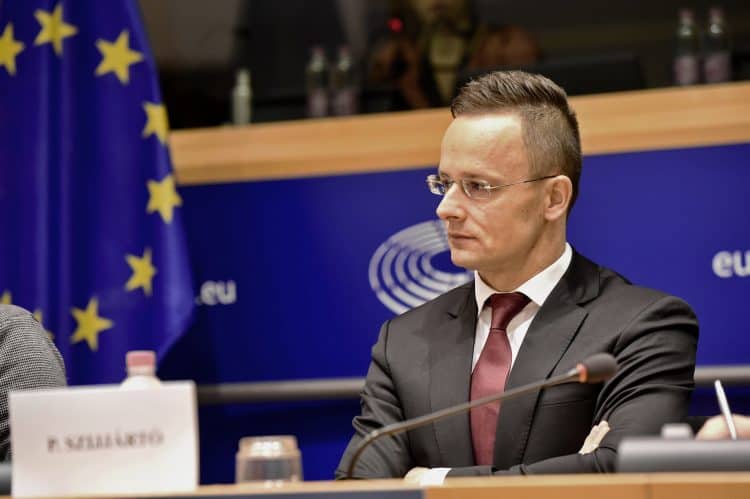
Hungarian Foreign Minister Péter Szijjártó at a hearing of the European Parliament’s Committee on Civil Liberties, Justice and Home Affairs (LIBE) focusing on the rule of law in Hungary (Photo: MTI/Hungarian Ministry of Foreign Affairs and Trade)
Addressing a hearing of the European Parliament’s Committee on Civil Liberties, Justice and Home Affairs (LIBE) focusing on the rule of law in Hungary, representatives of Hungarian rights groups criticized the government of Prime Minister Viktor Orbán for restricting fundamental rights.
The hearing itself is unique in that it is the first instance in the European Union’s history that the EP is undertaking an investigation into whether EU values are being upheld in a member state.
Initiated by Dutch Green MEP Judith Sargentini, the hearing will ultimately lead to a report recommending whether the Parliament should trigger Article 7 proceedings against Hungary over “the deterioration of democracy and rule of law” in the country.
You can view Sargentini’s speech at the hearing below:
At the hearing, Márta Pardavi, co-chair of the Hungarian Helsinki Committee, told LIBE that the government had systematically weakened its system of checks and balances, putting the fundamental values of the EU at risk. She added that
A free press and a strong civil sector are key in a democratic state for ensuring government accountability.
The Helsinki Committee, a human rights group that was nominated for Council of Europe’s Václav Havel Human Rights Prize this year, is one of the nearly two-dozen NGOs who have turned to Hungary’s Constitutional Court over the Orbán government’s controversial law requiring civil groups receiving foreign donations above a certain threshold to register as organizations funded from abroad. Since the bill’s passage, human rights and civil society groups worldwide have condemned the law as a move to silence “critical voices in society.”
At the hearing, Gábor Polyák, the head of the Mérték Média Monitor, accused the government of handling criticism as “an attack” and
Using the media as a political communications tool.
Opposition Socialist (MSZP) MEP István Ujhelyi said Hungary had again been “shamed” as an EU member for “the government’s sins”.
Péter Niedermüller, an MEP for the leftist opposition Democratic Coalition (DK), called the government “pathetic” or failing to engage in a real debate and instead “repeating its own propaganda lines”.
Following the end of the hearing, Dutch Liberal MEP Sophia in ‘t Veld urged the European Peoples’ Party (EPP) to kick Orbán’s Fidesz out of its grouping, arguing that
In a democracy there is pluralism, and that is what Orbán wants to kill. For eight years Orbán has been stifling opposition, criticism, it is a fake democracy.
Fidesz Reactions
Hungarian Foreign Minister Péter Szijjártó at a hearing of the European Parliament’s Committee on Civil Liberties, Justice and Home Affairs (LIBE) focusing on the rule of law in Hungary (Photo: MTI/Hungarian Ministry of Foreign Affairs and Trade)
Miklós Szánthó, the director of the pro-government Center for Fundamental Rights, claimed that it was an “illusion” that Hungary had failed to observe EU laws, arguing that Hungary was a steady mid-fielder among EU member states from the point of view of the number of infringement procedures launched against it.
Meanwhile, Fidesz MEP Kinga Gál argued that she was baffled by the criticisms directed at Hungary, a country, she said, where demonstrators are not treated violently by the authorities, opposition politicians do not get arrested and journalists are not murdered. Lívia Járóka, also a ruling party MEP, said Brussels applied double standards against Hungary.
Speaking the LIBE hearing, Foreign Minister Péter Szijjártó turned away from issues of press freedom, democracy, and corruption, and toward one of the Orbán government’s favorite talking points: that Hungary rejects illegal migration and the quota system, and would
continue fighting for the interests and security of the Hungarian people.
He said the government would not shy away from debate, but claimed that there was a wide gap between the views of Budapest and Brussels on most aspects of the issue, including “the concept of nation, respect for traditions, border defense and security”. He claimed that the EU, which has itself been the target of the Orbán government’s “Stop Brussels!” billboard campaign earlier this year, was “attacking” Hungary.
Szijjártó continued this line of commentary about migration issues at a press conference following the LIBE hearing, where he claimed that the committee and a large majority of European parliamentarians see illegal migration as a positive development, while the Hungarian government considered it a dangerous trend.
The Foreign Minister argued that the European Parliament’s decision on mandatory migrant quotas “cannot be implemented” because there is no mechanism in place for keeping people settled within the Schengen Area in a given country. Further, the mandatory migrant quotas “run totally counter to sober mindedness as well as to European laws and conventions.”
He added that the Hungarian government considers it a
violation of sovereignty if the EU wants to deprive them of the right to decide whom they allow to enter their territory.
Moving into conspiratorial language, Szijjártó claimed that he had “no doubt” that the report on Hungary “is already in place” and strongly reflected the political motivation behind “the political witch hunt” against Hungary. He said the report would not be “independent of the position of US financier George Soros.”
The Hungarian-American billionaire is currently the target of a lengthy Fidesz billboard and ‘National Consultation’ campaign, calling on people to ‘give their opinions’ on the so-called “Soros plan.” Both Soros and other observers (including Hungarian EU Commissioner Tibor Navracsics, a member of Fidesz) have argued that there is no evidence that any such “plan” exists, and that the entire ‘National Consultation’ is in fact nothing more than a
deceptive propaganda campaign.
Via MTI, Hungary Matters, europarl.europa.eu, index.hu, and EUobserver
Earlier this month, we had the opportunity to sit down for an interview with Réka Pigniczky, a Hungarian-American journalist and documentary filmmaker whose work often touches on deeply personal topics related to her own cultural upbringing.
Pigniczky, who lives in California, was in Budapest for the premiere of her latest film, Cold Warriors (Lövészek). Over the course of our discussion, she touched on her personal background, her directorial style, and the controversial paramilitary group at the heart of her new documentary, as well as her work on the Memory Project, a program aiming to document the oral histories of Hungarians who left their homeland for various reasons.
This interview has been edited for clarity and concision, and translated from the original Hungarian.
Filmmaker Réka Pigniczky (standing, center) filming as part of the Memory Project
You often introduce yourself as a journalist and documentary filmmaker. Which is more important to you?
In the past, I was more of a TV journalist, mainly at the Associated Press TV, but nowadays I work more with documentaries; I see this as a natural evolution toward longer and more involved topics. My journalistic background certainly has an impact on my films, in that I do a lot of research before filming, but they are not all necessarily TV documentaries. Director Zsuzsanna Varga-Gellér once memorably told me that a documentary is not just a document, but also a film. I wanted to evolve to that point, and I hope that I have.
When did you decide to get into filmmaking?
It actually happened accidentally. After my father—who had never returned to Hungary after the 1956 revolution was crushed —passed away, my sister and I decided to find out more about his past, since he had never spoken much about it. We were curious as to what, exactly, he had done as a freedom fighter in the revolution. We decided to film everything we could over the course of our research, and, while I hadn’t planned on it while we were recording, it was this material that ultimately became Journey Home.
In addition, I had studied documentary filmmaking at Columbia University, although I ultimately chose broadcast news, because it was a field where you could actually make money. When I decided to make Journey Home, I applied for two grants from the Hungarian government and won both of them; this really launched me onto my current path.
Most of your films have some sort of thematic connection to Hungary. Is this deliberate, or have things just worked out that way?
It’s not deliberate. In Journey Home, there’s a roughly six-minute segment where I explain the perspective I was coming from in making the film, as well as my relationship to the 1956 Revolution. As a Hungarian-American who grew up in an ethnic “incubator,” I have a different view of 1956, as do others who grew up this way. When I showed a few scenes from the film in Hungary, people were surprised by some of the archival material [on Hungarian-Americans]. People had no idea how large and vibrant the Hungarian-American community in the United States is.
Later, I decided to make Inkubátor. This film paints a picture, for Hungarians in Hungary, of how Hungarians who fled to the US, as well as their descendants, live, while also examining Hungarian-American identity.
Your latest film, Cold Warriors, is about the Hungarian-American Rifle Association, a group of Hungarian emgirés undergoing paramilitary training in preparation for a second Hungarian Revolution. How did you find this topic?
Andrea Lauer Rice, who co-founded the Memory Project with me, was actually the one who found the story. A colleague of hers on the board of Lehigh University in Pennsylvania told Andrea about a certain farm in the area [also in the film], where Hungarians were ‘constantly shooting.’ According to her, it was like a small army. After this, she learned that the farm’s current owner kept some the group’s paraphernalia left on the farm, and had made a small exhibit of sorts out of them. Andrea called me the next day, asking if I’d heard of this group. My only answer was “No, I think you’ve been drinking too much coffee,” since through the course of my work I’ve gotten to know nearly every Hungarian-American organization, and I thought it was impossible that a small Hungarian army existed here without us knowing about it.
Despite this, I looked into it. It turned out that there really had been a boy scout-esque, militaristic group, but no one really wanted to talk about them. The sense I got was that they didn’t want to talk about them because they were afraid we would mix them up with the Hungarian scouts, who had traditionally had a poor relationship with this paramilitary group. After a bit of searching, I found András Ludányi, who had thoroughly documented the group’s past, and who as very happy to find a way to save the group’s memory.
In an earlier interview, you mentioned that you originally conceived of a trilogy of films dealing with Hungarian-American identity; Cold Warriors is now the fourth film on this topic.
That’s true. After we completed Heritage, I actually was planning on taking a break from films about Hungarian-American topics, since I’ve already dealt with questions concerning Hungarian-American identity, with 1956, and with how Hungarians abroad live their lives. The story of the Cold Warriors was one that I found to be quite fascinating, as it was something that very few people knew about. Just like the rest of my films, this one was also financed mostly through grants, in particular Hungarian ones tied to the 60th anniversary of the 1956 Revolution. I have to add that these are not the only topics that I would like to make films about; and if these grant opportunities hadn’t presented themselves, I might not have been able to tell these stories.
The Rifle Association was decidedly militaristic in nature. Considering that, historically speaking, such groups were often closely tied to extreme-right political ideologies such as fascism, to what extent was this true of the group?
I didn’t want to make a film about an Arrow-Cross [Hungarian Nazi] organization, because that’s not something I’m interested in. To start with, politically speaking I lean towards the liberal end of the spectrum, as those who are familiar with my work already know. Despite this, there are people I know who didn’t even come to the premiere due to the film’s subject matter. I’m sad that they made that decision, because it shows that they are not open enough to get to know more about a topic that is alien to them. The people in the film are more patriotic than nationalist, and these two terms have very different connotations in the United States than in Hungary. I read all of the publications of the Cross and Sword Movement [Kereszt és Kard Mozgalom—the organization that sponsored the Rifle Association], and spoke to multiple historians regarding the group. Based on this research, I would say that the Rifle Association was not an anti-Semitic group, but it is true that there were older members who supported the Arrow Cross Party. Nevertheless, among the younger generation the group’s politics were simply anti-Communist. Overall, then, the Rifle Associations’ members, the ‘Shooters,’ weren’t extremists, but it was a conservative group.
Didn’t a paramilitary organization of this sort raise alarm among America’s security services?
One thing is certain, that this group never could have come into being in Germany or France, while in the United States it received an official charter. They did receive a few visits from the FBI, since it was an armed militia after all. Since they were anti-Communists, though, no one was worried by their activities, since this was during some of the hottest years of the Cold War. Their political views fit with America’s Cold War stance. My film tries to concentrate on all that these people were willing to do in order to bring freedom to Hungary. They would have, in all seriousness, set off to war with the Russian army, even if it would have put their lives in jeopardy (András Ludányi, who I mentioned, and who is in the film, had never even been to Hungary at this time).
Do films on this topic interest American audiences?
Surprisingly, Cold Warriors decidedly did. Many people wrote to me on Facebook, asking me why I don’t host a screening in San Francisco. This Hungarian-American militia caught peoples’ interest.
Two years ago, you launched the Memory Project, a digital visual history archive, which works to preserve the stories of Hungarians around the world in long-form interviews. What is the goal of this project?
The Memory Project is a bit like a start-up company, and we’ve now gotten to the point where we need to expand. We have conducted 125 interviews so far, but going forward the two of us, Andera Lauer Rice and I, won’t be nearly enough, since we would like to expand the project globally. It is particularly important for us that this project should bring Hungarians living abroad and those living in Hungary closer together. I hope that through this project we can help establish a dialogue of sorts between these two communities.
What topics do you plan to work on in the future?
There is a topic I’ve been working on for close to six or seven years. It’s about the legalization of marijuana in California, and with the exception of one participant it has no Hungarian connections at all. We’ve collected tons of material on it over the years, and have spent plenty of money on it. Full legalization, which is coming in January, will be an interesting, explosive development.
Reporting by Balázs Horváth and Tom Szigeti
Images via Tamás Komporday (Instagram: @tamaskomporday) and Réka Pigniczky
Hungary’s Izabella Pörös has won the Top Shorts Online Film Festival’s award for Best Indie Filmmaker for Runaway, a music video featuring Hungarian vocalist Barbara Kiss, which gives voice to the tragedy and heartbreak of abusive relationships.
Like all of Pörös’ films, Runaway focuses on issues affecting women. Violence against women, both physical and mental, are recurring themes in her work. She has consciously chosen to focus her filmmaking efforts on the sensitivities of the female psyche.
Top Shorts, which on its official site claims to be “the world’s leading online film festival,” offers awards in 11 categories. The festival focuses on short, low-budget films, as well as music videos, webs series, and short experimental films.
Runaway has also been nominated for Best Director in the Music Video Underground November 2017 competition. Established in Paris in 2016, the Music Video Underground is a monthly competition 100% focused on music videos. Runaway is the only European video nominated in this category. You can view the video in its entirety below:
Born in Hungary, Izabella Pörös claims that her fascination for films began as a child. With her mother being an English language teacher and her father a film critic, she grew up watching English-language movies. Wanting to be a filmmaker, she attended screenwriting workshops, such as James V. Hart’s master class in Budapest, Hungary, and studied acting for five years; this training later helped her to work with actors.
In addition to her latest music video, Pörös has acted in a number of short films, and has worked as a director and writer. Her first short film, It’s a long way, premiered in New York and won several awards. The film went on to become a 2015 New York City International Film Festival finalist (not to be confused with the much larger New York Film Festival) in the Best International Short Film Category. Pörös was nominated for Best Director as well.
Via Gulden Comm, IMDB, topshorts.net, and izabellaporos.com
The High Court of Cassation and Justice, Romania’s supreme court, in a final judgement annulled a decision of the National Council for Combating Discrimination (CNCD) from 2014. The decision in question was a milestone as far as minority rights protection is concerned, since it stated that the lack of bilingual street name signs in Târgu Mureș/Marosvásárhely constitutes discrimination and suggested that the Mayor’s Office placed the street name signs in two languages: Romanian and Hungarian. As a reaction to this, the Mayor’s Office brought the CNCD and the NGO that put up the bilingual street signs to court, asking for the Council’s decision to be annulled.
The supreme court’s decision comes after the Mureș Court of Appeal’s first degree ruling in favour of the Mayor’s Office. It is worth mentioning that the Romanian Law on the Local Public Administration clearly states that in the territorial-administrative units where the citizens belonging to the national minorities account for over 20% of the inhabitants, the public local authorities must ensure the use of that language in relations with them. Interpretations of these provisions lead to applying the law exclusively in the case of the name signs of the settlements and the inscriptions of the respective authorities, but not the street name signs.
Moreover, Romania has ratified the European Charter for Regional and Minority Languages in 2008, in which it undertook to use the place-names in regional or minority languages in conjunction with the name in the official language. In a 2012 report on the application of the Charter, several recommendations were included, interpreting the term “place-name” as meaning not only the name of settlements, but also street names, for example. Nota bene, Târgu Mureș/Marosvásárhely is a city in Transylvania, Romania, having a 45% Hungarian population.
Anti-Hungarian hate-speech persists in Romanian football
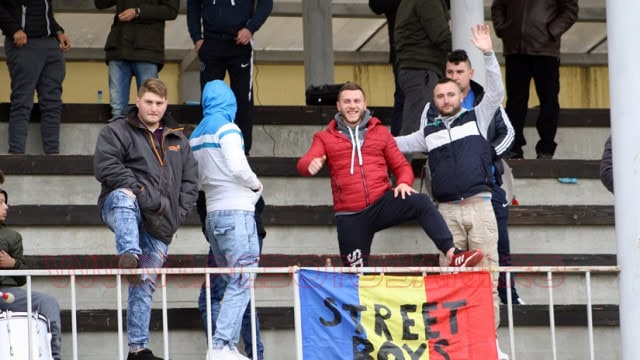
Throughout this year our organisation has been drawing attention to the increasing xenophobia that Hungarian football players and their supporters have to endure in the Romanian football league. However, anti-Hungarian hate-speech during football matches does not seem to be abating.
During a recent football match between two U19 teams, FC Botoșani and FK Csíkszereda Miercurea Ciuc/Csíkszereda, the players and the supporters of the latter were exposed to very vulgar and racist language coming from the fans of the hosts. The referee did not stop the game, nor were there any measures taken after the match had ended.
Xenophobic and racist slurs by Romanian supporters during games
Following the incident, the president of FK Csíkszereda, Zoltán SZONDI, addressed letters to the Romanian Football Federation and to the Central Committee of Referees, in which he complained that this is not the first instance in which the junior teams of his club have to endure xenophobic and racist slurs during games. He demanded for adequate action to be taken in such cases, and for the rules stipulated by the Romanian Football Federation to be respected. Only by taking firm action against racism and xenophobia can such incidents be avoided in the future.
Barabás Lőrinc Hungarian jazz trumpet player and producer will be on tour in the US between 16 November and 6 December playing in New York and San Francisco.
Occupying a musical world on the border of jazz, world music, electronic music and pop, Lőrinc has published six albums through his career, all of them exceptionally well-received. Originally educated in jazz, he also draws on a wide range of influence from Bartók’s music to Native American culture.
The classically trained Hungarian trumpeter and composer showcases his versatility in style and elevation of classical jazz in a new era that fuses many genres of music from electronic, to pop and Euro-house, layered with synthesizers that perfectly blend the analog and digital worlds together to create a sound ripe for this generation.
Where many think of a one-armed trumpet player as impossible, Barabás Lőrinc can only imagine himself as “I’m Possible” in his seamlessly effortless stage shows and musical productions, where he takes on the roles of artist, producer and composer, whether in collaboration with a live band, as a one man band or scoring for films.
Having many generations of painters and sculptors in his family, Lőrinc’s affinity to visual arts is important. He describes his music as “playing with shapes and colors”. Lőrinc chose to concentrate on the trumpet, going on to make his mark in the world of music. Lőrinc has performed in Hong Kong, Sydney, New York, Paris and Moscow, played at the Montreaux Jazz Festival and at the North Sea Jazz Festival among others. He spent years in London and lived in the US as well.
Barabás Lőrinc in his musical formation and collaborations shows that he sees no borders when it comes to the art of music because music is truly a universal language that cuts across all man-made boundaries, limitations and labels.
Lőrinc is unstoppable in his zeal to present the sounds of his city Budapest and classical trumpet around the globe as he seeks more collaborations and fusions worldwide. Barabás Lőrinc is definitely an artist to watch in 2017 as he continues to shine his star power on the world, one tour at a time.
You can meet him and feel his illuminating power both with his solo act and with local musicians in various formations in the US.
Barabás Lőrinc Live Act
Trumpet player and producer, Barabás Lőrinc, has been a mover and shaker of the improvisative music scene in Budapest. Over the past decade his club events and bands provided fertile ground for kindred spirits experimenting at the crossroads of jazz and electronica. He gained wider international recognition on events such as the Montreaux Jazz Festival, iTunes Festival in London playing with Valerie June and also shared stage with the likes of Thievery Corporation and Bonobo.
His solo project blends dance grooves, meditative moods and all the shades in between. His live performances always have the excitement of a journey through unexpected modern tribal landscapes.
The unique repertoire of Barabás Lőrinc’s solo set is based on the concept of Elevator Dance Music (2015) and Sastra (2013) albums. On the stage he juggles keyboards, trumpet, effects, laptop and a loop station accompanied by cinematic projections.
Today, the National Day for the Victims of Communism, marks 100 years since the Bolshevik Revolution took place in Russia. The Bolshevik Revolution gave rise to the Soviet Union and its dark decades of oppressive communism, a political philosophy incompatible with liberty, prosperity, and the dignity of human life.
Over the past century, communist totalitarian regimes around the world have killed more than 100 million people and subjected countless more to exploitation, violence, and untold devastation. These movements, under the false pretense of liberation, systematically robbed innocent people of their God-given rights of free worship, freedom of association, and countless other rights we hold sacrosanct. Citizens yearning for freedom were subjugated by the state through the use of coercion, violence, and fear.
Today, we remember those who have died and all who continue to suffer under communism. In their memory and in honor of the indomitable spirit of those who have fought courageously to spread freedom and opportunity around the world, our Nation reaffirms its steadfast resolve to shine the light of liberty for all who yearn for a brighter, freer future.