 Watching a nation’s best movies is a good way to really get to know the people, the way they think, the things they laugh at and the issues important to them or simply part of their everyday life. This is a diverse little selection of Hungarian films, with many genres so that everyone can find at least one movie of their favourite genre. From 50-years-old to brand new, from animation to black and white war-movie, from bitter comedy through political satire to family drama. The list is composed of the ten all-time best Hungarian films listed in chronological order. Enjoy!
- A tizedes meg a többiek (The Corporal and the Others) – 1965
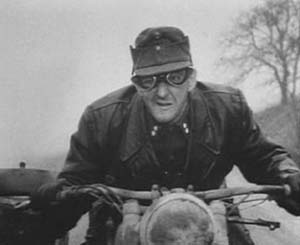
 After many movies picturing soldiers as outstandingly brave war heroes, A tizedes meg a többiek (The Corporal and the Others) is a breath of fresh air. Our clumsy and gawky protagonists decide the desert military service isn’t their cup of the after all and head home in the very last weeks of World War II, along with a handful of hand grenades, all filled with money. Problem is they were stationed at the front line, so walking home with your pack thrown over your shoulder isn’t quite like a trip to the grocery store.
Needless to say, they find themselves in various unexpected situations as the little crew tries to avoid soldiers of the Hungarian Arrow Cross Party, the Germans and the Soviets all at once. You’ll find no spoilers here, but I can at least tell you that those guys aren’t lacking in twists on their journey.
A tizedes meg a többiek is timeless comedy about a topic most filmmakers are afraid to make fun of, and features the crème of Hungarian artists of the time.

- A tanú (The Witness) – 1969
 After a World War II movie here comes another one about a similarly dark period of Hungarian history. A tanú became a cult favourite soon after its release that came more than a dacade after the film was finished. Its outspoken criticism of post-WWII communist regime in Hungary resulted in a ban of over 10 years. Its grotesque humour making fun of the incompetence of the Rákosi-regime made it a one of a kind movie: no other writer-director dared to go this far when it came to criticising the political system.
The film’s protagonist is a small and insignificant barrage-guard who unexpectedly gets imprisoned for illegal pig slaughter – strictly forbidden at the time. Pelikán – the barrage-guard – is freed shortly after and brought in front of a comrade who puts him in important government positions – ignoring the fact that he only knows how to guard a barrage and has absolutely no sense of political games. The combination of Pelikán‘s lack of any political talent and the importance of the positions he is put in brings awkward situations over and over again – the recipe for the best Hungarian political satire ever made.
- Macskafogó (Cat City) – 1986
Macskafogó is the only animation film that made into our list, and this is no accident. This masterpiece is enjoyable for children too, but is mostly directed at adults.
The events take place in 80 AMM (After Mickey Mouse) when “the well-organized, fully equipped gangs of evil cats are aiming to wipe out the mouse civilization totally, not caring for the old conventions between mice and cats. But in the last moment, when the mouse leaders are beginning to consider leaving the planet, a new hope rises…” – from the prologue.
This new hope would be Grabovsky, a retired agent of Intermouse. Grabovsky was sent to “Pokyo” to get the secret plan of a machine which could save mouse civilization. The cats obviously don’t want this to happen, so they send a couple of rat gangsters to stop the mice from succeeding.
Director Béla Ternovszky created a special universe with its own rules and social norms, and pictures the fight of good and evil with an unmatched atmosphere, and last but not least Macskafogó’s witty script gave us an amount of sayings that almost none other movie has.
- Sose halunk meg! (We Never Die!) – 1993
This masterpiece is Róbert Koltai‘s directorial début. Koltai was a well-known actor even before Sose halunk meg!, but it earned him instant recognition around the globe, it was so praised by critics.
Our protagonists are Imi and Gyula, with Imi being a guy that loves trotting-races and who just recalled some nice memories about his teen years when he was first taken to a trotting-race by his uncle, Gyula. After the first couple of minutes the movie takes place in the past (around the 60s) and pictures Imi‘s first memories about horses and betting. They spent a couple of days together, and while Imi watched his uncle chase big dreams – dreams, that he probably won’t ever reach -, he also learned a lot about freedom and women, and witnessed a whole new concept of life.
- A napfény íze (Sunshine) – 1999
This one is going to be the odd one out, since its Hungarian origins are questionable. A napfény íze was written and directed by István Szabó, produced by Robert Lantos and András Hámori, and its cinematography was made by Lajos Koltai (all originating from Hungary), but it’s also played by almost only foreign actors and is English-speaking, so it is definitely something on the borderline.
It follows three generations of a Jewish family – originally called Sonnenschein, but later changed to the less Jewish-sounding Sors – during the changes in Hungary starting from late 19th century to the period after the 1956 Hungarian Revolution. The central male protagonists of all three generations are portrayed by Ralph Fiennes. The first generation of Sonnensheins gained great wealth by a family liquor business, and the following ones made many different career choices. The story of the family reflects on the typical problems and walks of life of the time, and this is what pulls you in. Different ages and problems played by the same actor all along, and even though his facial hair adapting to the trend of the time makes these characters distinguishable, you can easily link them to each other. Witness the journey of the Sonnenshein family throughout history.
- Moszkva tér (Moszkva square) – 2001
 Moszkva tér is a feel-good movie in its classic meaning, picturing four young boys just about to graduate from high school in 1989 – the year socialism collapsed in many European countries, including Hungary. These guys couldn’t care less about political actualities, their only important things are the parties, girls, making some easy money, and of course passing the forthcoming exams – with leaked questions.
The film shows us a day or two of their life and you won’t get to witness any life-changing events – or maybe some life-changing events from their angle -, but it reflects on the change of political system from a completely different side, that of the not-so-caring youngsters. You won’t actually see all these changes, you’ll just feel it. It’s in the air, everywhere, and this is what gives this movie so much power over the audience.
- Valami Amerika (A Kind of America) – 2002
Pure comedy, nothing more, nothing less. Played by the best of Hungarian actors of our time, this is something worth watching.
The story is about three brothers, Ákos, a successful manager – also a sex maniac -, András, a poet and complete loser, and perhaps most importantly about Tamás, a young video clip and commercial director, who dreams about making his first feature film with the title “The Guilty City”. Only problem is he has no means to finance his project. When all of a sudden Tamás gets an e-mail from an American producer wanting to meet up for talking about details of financing The Guilty City, the three of them decide to make a good impression on him, which is where all hell breaks loose. Needless to say, they really suck at making a good impression, starting with their lack of English knowledge, followed by every kind of comic situations resulted from their… well… let’s say unique personalities.
- Kontroll (Control) – 2003
Well, if you think about ticket inspectors, probably the first thing that crosses your mind isn’t the brilliant movie-subject they would make. A story about ticket inspectors still was made into a movie – and what a movie!
Our protagonists live in underground metro stations and have the appreciative job of standing in people’s way asking them questions that they clearly don’t want to hear. You might find the clumsiness of those guys and the unfortunate accidents that happen to them funny at first, but later on the film starts to visualise a dark absurdity, it breaks away from being realistic and goes deep into the world of fantasy – without the audience noticing it straight away. Kontroll has an unparalleled atmosphere which gets under your skin, a movie that keeps you up the night you watched it.
Don’t worry, I haven’t spoiled anything, the movie will still have its edge, just watch out!
- Sorstalanság (Fateless) – 2005
This list wouldn’t be complete without a movie trying to process the unprocessable, the holocaust.Imre Kertész is a Noble-prize winning Hungarian author who wrote his most famous book under the same title, and this book, Sorstalanság was made into a movie a few years back. The screenplay written by original author Imre Kertész, directed by Lajos Koltai, a world-class Hungarian director and the cast joined by Daniel Craig made it clear that this is going to be something extraordinary.
Imre Kertész pictured the life of the concentration camp from a slightly different angle, his hero – after having been deported at the age of 14 – tries to see the barely existing brighter side, tries to learn to find happiness in the midst of hatred. Gyuri Köves (based on the author’s own experiences) survives and then – as coming home – he discovers that his life wasn’t the only life that’s changed.
- Szabadság, szerelem (Children of Glory) – 2006
Hungarians tend to think we only had dark periods in history – or at least mostly dark periods. Szabadság, szerelem (literally: Freedom, Love) tries to process the revolution of 1956 when the nation rebelled against the Soviets, and does so with the help of picturing the infamous Hungary-Soviet Union water polo final at the Melbourne Olympic Games the same year. Hungary won over the Soviets in that specific match, but it’s often considered the bloodiest water polo match in the history of the game. The Red Army suppressed the revolution – involving tanks on the streets of Budapest, and the underwater red battle was knowingly caused by the actual political situations. The movie catches the atmosphere of these events with fictional characters and parallel story-lines showing the water polo match in Melbourne, as well as the fight in Budapest.
We hope this article got you interested in at least some of the films, and we wish you a pleasant night of Hungarian movies!
Source: www.funzine.hu