
Legend has it that when Turkish and Tatar troops broke into Transylvania in 1661 – one of many such incursions – a Tatar unit raided the Franciscan church in the small village of Csíksomlyó (Şumuleu Ciuc). Their commanding officer, having had recognized the value of a devotional statue of the Virgin Mary, ordered his troops to take it with them. But the statue resisted: it became so heavy that eight pairs oxen couldn’t even budge it.
The officer then unsheathed his sword and went on to hit the statue several times in blind rage – the wounds are still said to be visible. The government of modern Romania seems to display the same irrational fear. At least we cannot think of any rational explanation for them blocking the admission of the Whitsunday pilgrimage of Csíksomlyó in the UNESCO intangible world heritage list back in 2016.
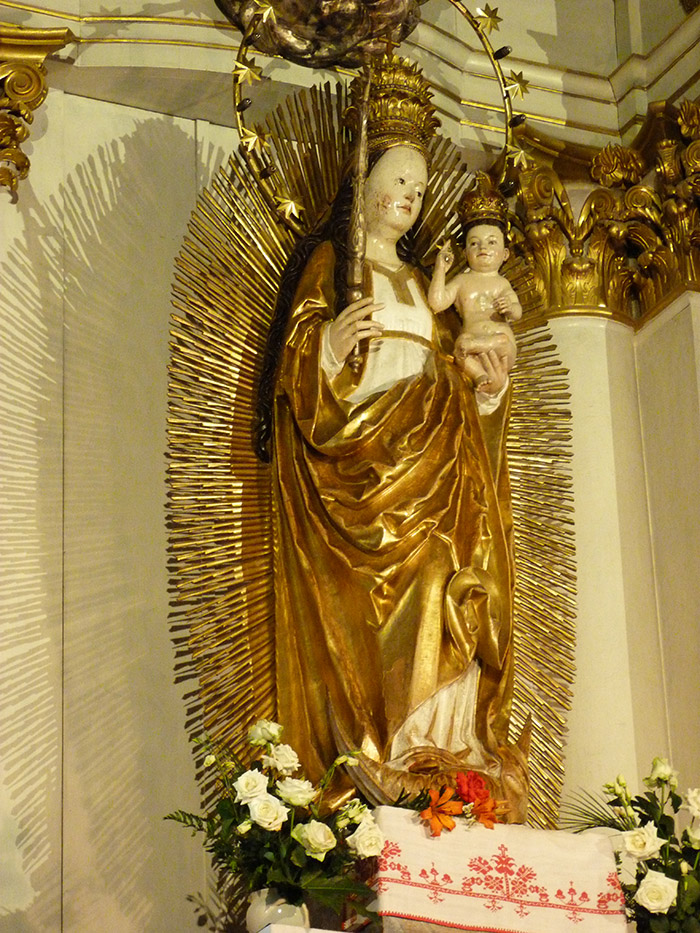
The Whitsunday Pilgrimage of Csíksomlyó is the largest religious and ritual event of Catholics in the Carpathian Basin, attested in the area around the Franciscan monastic settlement of Somlyó since 1442, both by ecclesiastic documents and oral tradition.
The central element of the pilgrimage is the veneration of the Virgin Mary. Hundreds of thousand participants express their gratitude with donations and commemorative plates, showing their devotion through prayers and religious folk practices.

Pilgrims come from Transylvania and Moldova, from rural and urban settlements of Romania, Hungary, Slovakia, Germany, Brazil and Australia – just to name some of them.
In 2011, Romanian Minister of Culture Hunor Kelemen and his team launched the procedure to include the Pilgrimage into the Representative List of the Intangible Cultural Heritage of Humanity.
The nomination file was carefully compiled with the involvement of professional organizations, the Franciscan order, local cultural institutions, all levels of municipal and state authorities, researchers, heritage specialists and national museums. It included a thorough description of the site and its religious significance, plans for safeguarding the values, as well as for promotional and awareness-raising activities.
Representatives of the Roman-Catholic community, the local administration authorities, cultural institutions, non-governmental organisations and professional associations gave their agreement for nominating the Pilgrimage of Csíksomlyó on the Representative List of the Intangible Cultural Heritage.
In 2012 the nomination file was submitted to UNESCO. That was also the time when Romanian authorities began to display cold feet: they simply did not reply to Unesco’s questions related to the application, thus the file was not evaluated further.
But the team involved in the original bid never gave up: in 2014, when Kelemen was again appointed Minister of Culture, the file was re-submitted with the clarifications requested by UNESCO. The file was evaluated by Unesco and submitted for final approval to the Intergovernmental Committee for Safeguarding of Intangible Cultural Heritage. The meeting of the Committee took place in Addis Abeba, Ethiopia, from 28 November to 2 December 2016.
At the meeting, the representative of the Romanian government, a state secretary from the Ministry of Culture did not support the inscription of the Pilgrimage of Csiksomlyó in the UNESCO list. When asked to make a single verbal clarification he refused to do so, but later gave exhaustive answers during the debate about another file submitted by Romania. He actually asked UNESCO to return the Csíksomlyó file to Romania.
This unprecedented approach caused a major uproar both in the Hungarian community in Romania and throughout the world. It was a clear indication that the Romanian government, lead by Dacian Cioloș had no respect at all for the cultural heritage of the Hungarian community from Transylvania. The Washington Post published an AP report about the discrimination against the largest Catholic pilgrimage in the region.
This is also the first time in Romanian history that a so-called technocrat government perceived Hungarian pilgrims and their devotion as a threat. Despite all this, hundreds of thousands of pilgrims go each year to Csíksomlyó, to pray for the souls of everyone.
Neither the Turks, nor the Tatars, not even Ceausescu, Romania’s feared dictator managed to harm the pilgrims in their adoration of Virgin Mary. So goverments might come and go, but the Csíksomlyói Szűzanya (the Holy Mother of Şumuleu) will still stand there and shine peace and wisdom upon all those souls that pray to her.
Source: transylvanianow.com